Crypto
Missing Cryptoqueen Ruja Ignatova’s links to Bulgaria underworld


BBC Eye Investigations, Panorama team and The Missing Cryptoqueen podcast,BBC World Service and BBC News
 Shutterstock
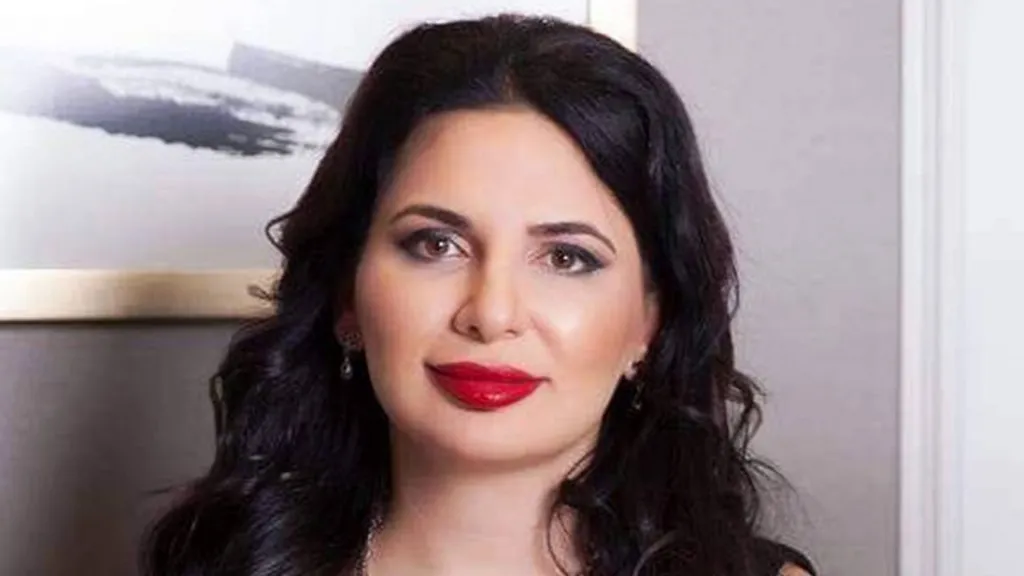
Now we have gone on her trail to try to discover her fate. BBC Eye Investigations and Panorama have looked at her close ties to a suspected Bulgarian organised crime boss and allegations she was brutally murdered. Did Ms Ignatova enjoy the stolen billions or was she killed by the very people paid to protect her?
Oxford University graduate Ruja Ignatova was born in Bulgaria and raised in Germany, pursuing a successful career in finance before launching the cryptocurrency OneCoin in 2014.
Ms Ignatova convinced millions of people around the world to invest in OneCoin, promising to eclipse the kind of huge returns seen by early Bitcoin investors.
But in reality, Ms Ignatova – known to many as Dr Ruja – had created a cleverly-disguised investment fraud, without the digital record that underlies legitimate cryptocurrencies like Bitcoin.
As investigators from Germany and the US closed in on Ms Ignatova in October 2017, she took an early morning Ryanair flight from Sofia to Athens, never to be seen again.
For the past year, BBC World Service’s Eye Investigations and Panorama have been trying to find out more about what happened to her, and whether she is even alive.
Key to this was establishing who her inner circle was.
Richard Reinhardt, who began the investigation into OneCoin for the US Internal Revenue Service alongside the FBI, told the BBC about a key character investigators have never publicly named before.


The Missing Cryptoqueen: Dead or Alive?
CEO of fake cryptocurrency OneCoin, Ruja Ignatova, is the FBI’s most wanted woman. She stole billions, then vanished. New evidence reveals what may have happened. Is she missing or was she murdered?
Watch now on BBC iPlayer (UK only) or on BBC One at 20:00 on Monday 3 June (22:40 in Wales). Outside of the UK, watch on YouTube
Or listen to The Missing Cryptoqueen on BBC Sounds

The BBC understands it is the man who had been given the role of keeping Ms Ignatova safe – Hristoforos Nikos Amanatidis, commonly known as Taki.
“We were told, allegedly a big-time drug guy was in charge of her physical security,” Mr Reinhardt told us in his first interview since retiring in late 2023.
“Taki came up more than once, it wasn’t like it was a one-off. That was a recurring theme.”
This chimed with the information we already had – US government lawyers had said in 2019 that Ms Ignatova’s head of security was a major organised crime figure in Bulgaria but hadn’t named him.
“We do have evidence that a very significant, if not the most prolific, drug trafficker of all time in Bulgaria, was closely linked to OneCoin – served as [Ruja Ignatova’s] personal security guard,” an assistant attorney said.
This was the same “head of security” a different US government lawyer said was “involved in the disappearance” of Ms Ignatova in court a day earlier.

According to Mr Reinhardt, Ms Ignatova was a far more sophisticated criminal than most people realise.
“This is like a white-collar criminal combined with a drug trafficker or mafia guy on steroids.”
This theory appears to be supported by leaked Europol documents, seen by the BBC, which show that – before Ms Ignatova disappeared in 2017 – Bulgarian police had established connections between her and Taki.
In the documents, police suspect Taki of using OneCoin’s financial network to launder the proceeds of drug trafficking.
In his native Bulgaria, Taki has an almost mythical status – an El Chapo or Pablo Escobar. He is widely suspected of being the head of a Bulgarian organised crime organisation and a prolific drug smuggler. He and his associates have been investigated there for armed robbery, drug smuggling and murder, but he has never been successfully prosecuted for anything.
 Interpol
“When we talk about Taki, he’s the head of the mafia in Bulgaria. He’s extremely powerful,” says a former Bulgarian deputy minister, Ivan Hristanov, who in 2022 investigated allegations Taki ran a criminal network with the help of corrupt officials – and believes that was the case.
“Taki is the ghost. You’ll never see him. You only hear about him. He’s talking to you through other people. If you don’t listen, you just disappear from earth.”
“The only person who can protect her [Ignatova] from all those investigations, including from foreign agencies – it was Taki.”
The BBC wrote to the Bulgarian government about the allegations regarding corrupt officials. It did not respond. The prosecutor’s office in the capital Sofia says it “does not cover up crimes and persons who have possibly committed crimes”.
Taki is now believed to live in Dubai, where Ms Ignatova bought a luxury penthouse and where her bank accounts received tens of millions of dollars from the OneCoin fraud.
While it’s not known how Taki and Ms Ignatova met, or whether he was involved with OneCoin from the start, multiple sources say they had a close personal relationship and that he was the godfather to her daughter.
One Bulgarian source close to Ms Ignatova told the BBC she may have paid Taki up to €100,000 a month for protection
There appear to be other financial ties between Ms Ignatova and Taki.
The Europol documents mention a complex deal to sell a plot of land, on Bulgaria’s Black Sea coast, that links one of Ms Ignatova’s companies to Taki’s wife.
The secret police documents were passed to the BBC by Frank Schneider, a former spy and adviser to Ms Ignatova who has since disappeared.
He told us that his old boss was working with “crooks” and “gangsters”.

When we interviewed Mr Schneider at his home in France, he was under house arrest, awaiting extradition to the US in connection to the OneCoin scam. He was not, however, prepared to reveal names.
“I’m not going to tell you who, because I have a family… This is real serious organised crime.”
But in the end, Ms Ignatova’s protector may have turned aggressor.
In 2022, Bulgarian investigative journalist Dimitar Stoyanov and his colleagues at the investigative news outlet bird.bg were handed a police report that had been found at the home of a murdered Bulgarian police officer.
In the document, a police informant details overhearing Taki’s brother-in-law drunkenly saying Ms Ignatova had been murdered on Taki’s orders in late 2018, and her body dismembered and dumped off a yacht in the Ionian Sea. Mr Stoyanov says this account is “very, very possible”.
The authenticity of the police document was confirmed by Bulgarian officials, and multiple criminal associates of Taki believe the theory he had her murdered to be true, Mr Stoyanov says.
However, the BBC has been unable to independently verify the claim.
The associates’ rationale being that the wanted Ms Ignatova became a liability to Taki, who wished to eliminate his links to the OneCoin fraud.
Those associates include Krasimir Kamenov, known as Kuro, wanted by Interpol on murder charges.
Mr Stoyanov says Kuro told him he had heard Taki discussing his criminal business in front of Ms Ignatova, and when Kuro had challenged Taki on whether he should be doing that, Taki had answered: “Don’t worry, she’s as good as dead.”
Kuro had also claimed to have talked to the CIA about Taki, including about the allegation that Taki had ordered Ms Ignatova’s murder. Sources close to Kuro confirmed to the BBC that this meeting took place in late 2022.
In May 2023, Kuro was assassinated in his Cape Town home, along with his wife and two others who worked for him. South African police are still searching for the killers, but Bulgarian former deputy minister Hristanov believes Kuro’s murder is linked to Taki.
“Certain people had to be removed because they knew too much about Taki.
“It was kind of a public execution that looked more like a statement. Be careful who you deal with,” he told us.
Since publishing allegations of Ms Ignatova’s murder, journalist Dimitar Stoyanov says he and his colleagues have faced death threats, forcing him to temporarily leave Bulgaria for the fourth time in his career.
Mr Stoyanov doesn’t claim to know a motive for any alleged murder, but property records show, and eyewitnesses have told him, that since her disappearance, a number of her Bulgarian properties are now being used by people connected to Taki.

Taki has never been arrested over claims he had Ms Ignatova murdered. Her body has never been found and investigators say they don’t have enough evidence to prosecute him.
But former IRS investigator Richard Reinhardt thinks Ms Ignatova is likely to be dead. Although he has not seen any evidence linking her death to Taki, he says it fits with how drugs cartels operate.
“There’s no honour among thieves… knowing how violent cartels are, if [Taki] thought she was a threat to him… he would probably take her out instead of getting caught.”
The BBC wrote to Taki’s lawyers about the allegations in this investigation – they didn’t respond.
In 2022, Ms Ignatova was placed on the FBI’s Ten Most Wanted list – where she remains today.
The BBC team behind The Missing Cryptoqueen podcast has received various sightings and tip-offs about Ms Ignatova’s whereabouts after her alleged murder took place – including details of an unsuccessful police operation in Greece to catch her in 2022.
It could be that rumours of her death are just another brilliant manoeuvre to throw everyone off the scent.
If that is the case, as the years go by, it is likely to become increasingly difficult for her to stay on the run.
“At some point it becomes like Elvis Presley might be still alive… It’s not really very likely,” says Mr Hristanov.
According to Mr Reinhardt, the FBI “don’t just keep people in [the] Top Ten list for fun”. But they would only remove someone if there was “definitive proof” they were dead. And given the circumstances, with Ruja Ignatova there may never be.
And that means, for now at least, the missing Cryptoqueen remains a hunted woman.


Key Takeaways
Word Play With a Warning
Robert Kiyosaki, the author of the best-selling personal finance book “Rich Dad Poor Dad,” is recasting a familiar piece of investing advice. In a post on X, he argued that many investors only believe they are protected, adding:
“De-Worse-ified means they think they are diversified, but they have all their diversified assets, such as gold, silver, Bitcoin, stocks, bonds, real estate, and oil, in one asset class.”
His point is that spreading money across many holdings does not help if those holdings all move the same way in a crisis. When a liquidity shock hits, correlations rise and supposedly diverse portfolios can fall in unison, leaving investors “de-worsified” rather than diversified.
The commentary is consistent with the stance Kiyosaki has pushed throughout 2026 as he recently named bitcoin among the safest investments for the year, grouping it with what he calls real assets. He has repeatedly listed gold, silver, oil, food, bitcoin, and ether as his preferred holdings, framing them as scarce stores of value that printed money cannot dilute.
He has paired that view with stark price calls, setting a target of $250,000 for BTC by year’s end alongside a longer-term goal of $1 million. At current levels, the move would require a gain of more than 230%. On the precious metals side of things, he recently suggested a possible $200-per-ounce silver level this year, calling the metal’s climb a signal of mounting financial stress.
Kiyosaki’s broader thesis is darker still, warning investors of a historic market crash that he ties to surging global debt and fragile private credit markets, urging followers to build income streams, learn trade skills, and accumulate hard assets before the storm.
Timing Is Everything
The “de-worsified” warning arrives at a tense moment for markets, especially as bitcoin posted its worst week since the 2022 collapse of Sam Bankman-Fried’s FTX exchange, sliding below $60,000 as record exchange-traded fund (ETF) outflows and risk-off sentiment gripped the sector.
That is exactly the kind of broad drawdown scenario (where bitcoin, equities, and other assets fall together) that Kiyosaki has used time and again to illustrate his point.
That said, he has become an increasingly polarizing voice within the broader economic landscape, with skeptics pointing out that his crash predictions are frequent and his price targets aggressive (and that he has issued similar warnings for years). Supporters argue his core message of owning scarce assets, avoiding hidden correlation, and preparing for volatility is a reasonable hedge against an era of heavy money printing and rising debt.
Whether or not his $250,000 bitcoin call lands, the distinction he is drawing is a real one, as true diversification really does depend on owning assets that behave differently (not simply owning many of them). In a market where everything from gold to crypto to stocks can move on the same macro headlines, that lesson may matter more than any single forecast.

North Carolina lawmakers on Tuesday advanced a bill to protect consumers from cryptocurrency kiosk fraud.
House Bill 920, which passed the House with a 115-to-0 vote, aims to regulate an industry that its author claims is unregulated in the state.
“It’s the wild, wild West,” Rep. Neal Jackson, R-Moore, said during a committee discussion on Tuesday. “There is no regulation whatsoever in North Carolina. That’s what we’re trying to do here.”
Lawmakers cited a growing amount of fraud as the reason for the bill. About $389 million in losses were reported last year through cryptocurrency ATMs, a 58% increase from 2024, according to the FBI. The majority of those impacted are 60-plus.
The bill now goes to the Senate for consideration. It seeks to:
- Require licenses for all kiosk operators under the Money Transmissions Act.
- Place operators under the supervision of the Commissioner of Banks.
- Require fraud warnings and transaction receipts for every transaction.
- Require compliance and consumer protection officers that are always available.
It also seeks to place limitations on transactions in an effort to reduce fraud, requiring a $2,000 daily limit for the first 30 days for new customers and a $5,000 daily limit for existing customers, who would qualify after 30 days.
While other states have service fees between 20% and 30%, Jackson suggests putting a cap at 14%.
State Rep. Tim Longest, D-Wake, expressed concern about having the kiosks at all in the state. He said the bill’s protections could be stronger.
“These machines can be the subject of fraud, basically facilitating fraud on seniors and other vulnerable individuals and in those cases,” Longest said. “… In crafting regulations, I think it’s important that we ensure consumers are adequately protected by those regulations and I do not believe that, under the language of the bill currently before you, those regulations are sufficient to protect consumers.”
Jackson pointed to this bill as an effort to regulate, not shut down, cryptocurrency kiosks in the state and said there are even more consumer protections in place.
David N. Tente, the executive director of the ATM Industry Association, said the bill — and others like it — is problematic because it requires operators to provide refunds to fraud victims in certain instances.
“In most cases, the cash in the ATM/kiosk does not belong to the operator, which means that returning any of it would be, technically, theft,” Tente said. “If you give someone cash for something, and you change your mind after they leave, you probably won’t get it back.”
He added: “We certainly feel sorry for those being scammed, but there are very simple things you can do to avoid it.”
Tente said these kinds of scams have existed for centuries, adding: “They are still here — just using different means of payment.”

Key Takeaways
- Zcash surged 11.3% to $478, reclaiming its top privacy coin status over monero after an 80% rally.
- The ZEC spike wiped out $11.5 million in short positions within 24 hours as bitcoin dropped below $63,000.
- Analysts like Matthew Brienen watch Zcash next to see how the market prices in the 2022 Orchard pool bug.
The Orchard Vulnerability
Privacy coin Zcash (ZEC) surged on Tuesday, jumping 11.3% to $478 as it maintained a steady recovery that began shortly after it plunged to just under $265. At the time of writing (5:32 a.m. EST), the privacy coin’s latest climb pushed its gains since June 5 to approximately 80% and saw ZEC’s market capitalization reclaim the $8 billion threshold.
The coin, alongside rival monero, was one of a handful of altcoins that logged gains exceeding 5% even as bitcoin dipped below the $63,000 threshold. ZEC’s surge above $470 on June 9 resulted in $11.5 million in short positions on the coin being wiped out in 24 hours, compared with $2.43 million in liquidated long bets.
While Zcash has since wrestled back its top-dog status from chief rival Monero, the asset is still trading at a steep discount compared to its pre-June 5 peak of just over $600. Before the correction, ZEC was riding a powerful wave of momentum, fueled by a resurgence in the crypto-privacy narrative and high-profile endorsements from industry heavyweights like Arthur Hayes. However, that bullish trajectory ground to a sudden halt. The catalyst for the reversal was the unsettling discovery of a critical vulnerability within Zcash’s Orchard shielded pool—a zero-knowledge security flaw that had quietly lay dormant since 2022.
Despite this, supporters of the privacy coin believe the uncovering of the bug has not damaged ZEC’s long-term appeal. Posting on X, Eunice Wong insisted there is an extremely low likelihood an exploit was executed and said traders who offloaded their holdings had overreacted.
“Long-term thesis hasn’t changed. In an AI-driven world where every transaction is tracked, financial privacy will become the scarcest asset, and ZEC is still one of the strongest privacy plays in crypto. Catching this falling knife is going to look like a genius move,” Wong wrote.
Matthew Brienen, managing partner at Cryptocharged, said while he recently reduced his ZEC holdings, it was purely a risk-management decision rather than a change in conviction. Nevertheless, he offered an explanation for why caution is warranted even if there is no proof that ZEC was counterfeited.
“The Orchard bug isn’t a confirmed inflation event. It’s a confirmed inability to prove supply integrity. Those are not the same thing. The most important fundamental fact to remember is that turnstile accounting is not the same as proving Orchard balances are legitimate. You can track what entered. You can track what exited. That doesn’t prove every claim inside the pool was valid,” Brienen explained.
He added, however, that if counterfeit Orchard notes do exist, they could remain hidden until redemption is ultimately forced. According to Brienen, the recent price action suggests that is exactly what the market is trying to price in.
-
 News25 minutes ago
July 1 brings big student loan changes. Here’s what you need to know
-

 Los Angeles, Ca2 hours ago
Los Angeles High School locked down as police search for armed juvenile
-

 Detroit, MI2 hours ago
‘Diarra From Detroit’ sets date for second season on Paramount+
-

 San Francisco, CA2 hours ago
San Francisco police release video of shootout that critically wounded officer
-

 Dallas, TX2 hours ago
3 Dallas educators among FIFA World Cup volunteers
-

 Miami, FL2 hours ago
Miami Gardens man arrested after fleeing Florida Keys deputies at 125 mph, sheriff says
-

 Boston, MA3 hours ago
Boston gives update on plans for 3 a.m. last call at bars, outdoor drinking areas during World Cup
-

 Denver, CO3 hours ago
One Invitation Can Change a Life: Called By Name Campaign Inspires Future Priests For a Second Year in Denver

