JERUSALEM — A deadly Israeli airstrike on a tent camp in Rafah late Sunday drew widespread international condemnation Monday — focusing further scrutiny on Israel’s controversial offensive against Hamas in the south and the desperate plight of Gaza’s civilians.
Washington
Eyewitnesses describe horrific scenes after Israeli strike on Rafah camp


Tal al-Sultan tent camp as of May 24
SAMUEL GRANADOS/THE WASHINGTON POST

Tal al-Sultan tent camp as of May 24
SAMUEL GRANADOS/THE WASHINGTON POST
In an address to parliament Monday, Israeli Prime Minister Benjamin Netanyahu called the Rafah strike a “tragic accident.” It was a departure from public statements by the Israeli military, which had previously referred to a targeted strike on a Hamas compound using “precise munitions” and “precise intelligence.”
The Israel Defense Forces said two militants were killed in the attack, including the commander of Hamas operations in the West Bank. “There were many measures taken before the attack to minimize harm to non-involved people,” the IDF said Monday, adding that the incident was under investigation.
GET CAUGHT UP
Summarized stories to quickly stay informed
A spokesperson for the White House National Security Council, speaking on the condition of anonymity to discuss a sensitive matter, said the images from Rafah were “heartbreaking.” “Israel has a right to go after Hamas,” the spokesperson said, noting the killing of the two militants, but “Israel must take every precaution possible to protect civilians.”
The United States has yet to weigh in publicly on Friday’s ruling by the International Court of Justice ordering an immediate halt to Israel’s offensive in Rafah. Nearly a million Palestinians have been displaced this month, the vast majority from Rafah, which had been a place of last refuge for tens of thousands of families.
On Sunday night it was the site of one of the most horrifying scenes of the war.
Mohammad Al-Haila, 35, was headed to buy some goods from a local vendor when he saw a huge flash followed by successive booms. Then he saw the flames.
“I felt like my body was freezing from fear,” Haila, who was displaced from central Gaza, told The Washington Post by phone.
He ran toward the area to search for relatives.
“I saw flames rising, charred bodies, people running from everywhere and calls for help getting louder,” he said. “We were powerless to save them.”
Haila lost seven relatives in the attack. The oldest was 70 years old. Four were children.
“We were not able to identify them until this morning because of the charred bodies,” he said. “The faces were eroded, and the features were completely disappeared.”
Ahmed Al-Rahl, 30, still hears the screams.
He and his family were preparing for bed when they heard several large explosions, said Rahl, who is displaced from the north. Their tent shook. Mass confusion took over the camp.
“No one knew what to do,” he said. “Children who were with their families in those tents rushed to us, asking us to save their parents who were burning.”
Rahl had a fire extinguisher and rushed to help.
“I didn’t know what to do to help people as they burned,” he said. Around him there were “dismembered bodies, charred bodies, children without heads, bodies as if they had melted,” he said.
There was no water to extinguish the fire, which consumed the cloth and plastic tents. Gas canisters used for cooking exploded, Rahl said.
“I saw with my own eyes someone burning and crying for help, and I could not save his life,” he said.
Mohammad Abu Shahma, 45, rushed to check on his extended family when he heard that the fire was spreading. His brother’s tent was about a quarter-mile from the worst of the carnage. Shahma figured he must be safe.
He found his brother, a father of 10, and his 3-year-old niece, Palestine, dead. There was blood everywhere, Shahma said. Shrapnel had struck his brother in the chest and neck; the child had been hit in the head. Another daughter, 9-year-old Jana, was injured.
Around 10 p.m. Sunday, the dead and wounded began pouring into the area’s few field clinics.
Twenty-eight people were dead on arrival at a temporary emergency trauma center run by Doctors Without Borders less than two miles from the strike site, according to Samuel Johann, the group’s emergency coordinator in Gaza. The clinic treated 180 additional patients with severe burns, shrapnel wounds, missing body parts and other traumatic injuries, he said.
Farther west, at a clinic run by International Medical Corps, plastic surgeon Ahmed al-Mokhallalati described family members searching desperately for loved ones.
One little girl, he said, was asking everyone she passed if they had seen her parents. Mokhallalati said they were among the dead.
Many people came in with horrific wounds and required amputations, he said, as shrapnel flew across the camp and pierced people’s tents. Over a grueling, relentless night, he and his colleagues conducted at least 12 hours-long surgeries, Mokhallalati said.
They ran out of medical gloves, gowns and other basic supplies to treat open wounds. “We are running out of everything, literally,” he said
Patients needing further care had few places to go, he said. Rafah’s two main hospitals have been evacuated. The smaller Kuwait hospital said Monday that it had to close after repeated attacks. One of the only options left was al-Aqsa Martyrs Hospital, a rough ride away in central Gaza.
Mokhallalati recounted operating on a 6-year-old girl with deep shrapnel wounds that stretched from her thigh to her abdomen. She died early Monday morning, he said.
The makeshift camp in Tal al-Sultan was outside Israel’s designated evacuation zone in Rafah, and residents were not ordered to leave before the strikes.
The area was at the edge of, but not included in, a map of humanitarian zones provided by the IDF online and in recent announcements. Gazans, however, short on bandwidth and cellphone battery power, often rely for information on word-of-mouth and Arabic-language pamphlets dropped by the IDF. Residents complain that the evacuation orders and accompanying maps are confusingly worded and difficult to follow. Many believed they were in a safe place.
In its statement, the IDF said “the attack did not take place in the humanitarian area in Al Mawasi,” referring to a coastal region northwest of Rafah where it has ordered evacuees.
New arrivals to Mawasi have told The Post the area is desolate, overcrowded and devoid of even the most basic services. Some families, many who have already been uprooted numerous times during the war, decided to stay in Rafah.
French President Emmanuel Macron said Monday that he was “outraged by the Israeli strikes that have killed many displaced persons” and called for “an immediate cease-fire.”
Canadian Foreign Minister Mélanie Joly also demanded a cease-fire, saying, “This level of human suffering must come to an end.” A spokesperson for the ministry said the country was following up on reports that two Canadian citizens were among the dead in Rafah.
The Foreign Ministry in Germany, one of Israel’s most stalwart supporters in Europe, said in a statement on X on Monday that the images from the attack were “unbearable” and that “the civilian population in Gaza must urgently be better protected.”
Shahma spent Monday packing up. His extended family of 50 people had decided that women and children would move to Mawasi, he said, and the men would stay in nearby Khan Younis.
“We did not even find time to grieve for those we lost,” he said. “All that matters to us now is to save those who remain.”
Haila spent the day searching scorched corpses at the clinic in Tal al-Sultan for any sign of his missing family members.
“What we live in this life cannot be described,” he said. It was like being “on the waiting list” to die.
Harb reported from London. Sarah Dadouch in Beirut, Rachel Pannett in Sydney, Niha Masih in Seoul, Lior Soroka in Tel Aviv, Hazem Balousha in Cairo and Tyler Pager in Washington contributed to this report.


There are some movies you admire. There are others that surprise you.
“Young Washington” grazes the first category while falling into the second.
I wasn’t expecting to be swept away by a relatively modest historical drama about George Washington before he became the father of a nation. And for a while, I wasn’t.
The film takes its time introducing the future president, and that deliberate pace occasionally borders on sluggish. The first half struggles to find its rhythm, and there are moments when the story feels more interested in checking historical boxes than pulling us into the drama.
But somewhere along the way, something changed.
I stopped watching a history lesson and started watching a young man trying to figure out who he wanted to become.
By the end, I found myself surprisingly invested. Not because “Young Washington” is a perfect movie. Because it reminded me why stories about imperfect people often make for the best history.
A surprisingly ambitious production
One of the first things that stood out was just how good this movie looks.
This isn’t a blockbuster with the budget of films like “The Patriot” or “The Last of the Mohicans.” In fact, when you consider what those productions cost – and adjust for inflation – the difference is enormous.
That’s what makes this film’s production value so impressive.
The costumes, locations, and battle sequences all feel authentic enough to transport you back to colonial America. There are moments where it’s clear the filmmakers had to be creative with their resources, but more often than not they make those limitations disappear.
It’s a reminder that good filmmaking isn’t always about having the biggest budget.
Sometimes it’s about knowing exactly where to spend the money you do have.
An uneven cast, but strong performances where it matters
The acting is a bit of a mixed bag.
There are performances that occasionally feel stiff and a few scenes where the dialogue doesn’t land with the emotional weight it’s reaching for.
Fortunately, those moments never completely pulled me out of the movie.
Ben Kingsley brings a welcome sense of gravitas whenever he appears, and Andy Serkis continues his remarkable ability to disappear into whatever role he’s given. Their performances help ground the film and elevate several key moments.
More importantly, the actor portraying the young Washington succeeds where it matters most.
He made me curious.
Rather than presenting Washington as the flawless hero we’ve seen in countless paintings and history books, the film allows him to be uncertain, ambitious and, at times, deeply conflicted.
That humanity gives the story life.
The best history asks bigger questions
What I appreciated most wasn’t simply learning facts about George Washington’s early life. It was watching the experiences that slowly shaped the leader he would become.
The movie explores questions that feel surprisingly relevant today.
Why do we chase success? Is ambition about building our own legacy? Seeking recognition? Or is it about leaving the world a little better than we found it?
Washington makes mistakes, he learns hard lessons and his failures become just as important as his victories.
Whether every conversation happened exactly as portrayed is almost beside the point. The film captures something emotionally true about leadership – wisdom is usually earned, not inherited.
That’s where “Young Washington” found its strongest footing.
A finale worth waiting for
For much of its runtime, I’d describe “Young Washington” as good. Not great.
The pacing continues to wobble, and I occasionally found myself wishing the story would move with a little more urgency.
Then came the final act.
Without spoiling anything, the emotional payoff finally arrives.
The themes the movie has been quietly building suddenly click into place, and what felt like a slow burn becomes something genuinely moving.
I left the theater feeling more invested than I expected, and that ending elevated the entire experience.
Sometimes a great conclusion doesn’t erase a movie’s flaws. It simply reminds you why the journey mattered.
What parents should know
“Young Washington” is PG-13, and that seems appropriate. There is no vulgar language, no sexual content, but it is a war movie, and it can get violent. It’s not gruesome or graphic, but there are battle scenes, deaths, and some blood. Young viewers may find it unsettling, and some older viewers may cover their eyes a time or two.
The violence is not romanticized but rather shown to depict the horrors of war.
Conclusion
“Young Washington” isn’t the definitive Revolutionary War epic.
It has pacing issues, some performances are uneven, and the script occasionally struggles to maintain momentum.
But I also found myself thinking about it long after the credits rolled.
In an era when so many historical films try to overwhelm audiences with spectacle, “Young Washington” focuses on something much simpler: the formation of character.
It asks how ordinary choices become extraordinary leadership. How failure shapes conviction. How service ultimately matters more than personal glory.
Watching it on the eve of the Fourth of July felt especially fitting.
As America celebrates 250 years, this movie serves as a reminder that the nation’s founding wasn’t accomplished by mythical figures who always knew the right answer. It was shaped by real people who stumbled, learned, and ultimately chose something bigger than themselves.
That’s a story worth telling.
And despite its imperfections, “Young Washington” tells it well enough that I walked away feeling just a little more grateful, and a little more excited, to celebrate this great country I have the opportunity to call home.

July 4 weekend is a quiet one for new indie releases, leaving the field to Angel Studios’ PG-13 wide release Young Washington on 2,700 screens.
From Angel and Wonder Project, the film, timed to the 250th anniversary of the founding of the U.S., stars British actor William Franklyn-Miller as the young man who would go on to become the nation’s first president.
Directed by Jon Erwin (I Can Only Imagine, Jesus Revolution), with Mary-Louise Parker as George’s mother, Ben Kingsley as Virginia Gov. Robert Dinwiddie, and Kelsey Grammer as wealthy nobleman Lord Fairfax. See Deadline review.
Synopsis: “Before he was the Father of a Nation, he was a soldier fighting to survive. A single misstep thrusts young George Washington into the center of a global conflict, testing his honor, loyalty, and courage. As alliances crumble and the frontier erupts into war, he must confront not only his enemies but the man he’s becoming.”
The action is set in the 1750s with Washington as a young man eager to fight, initially as a British officer in a period of complex loyalties. He enlists at 23 and leads a disastrous campaign against the French in Ohio but fights brilliantly and his career takes off.
Elsewhere this frame, Music Box Films is out with a 4K restoration of Ross McElwee’s Sherman’s March July 3-9 at Film Forum. It will lead into Venice award-winning Remake, McElwee’s new documentary, which premieres at the NYC art house July 10.
Sherman’s March, which won the Grand Jury prize at the 1986 Sundance Film Festival, was ranked as one of the highest-grossing documentary films of all time until the mid-1990s. In it, McElwee sets out to make a movie about Union Gen. William Tecumseh Sherman’s March to the Sea towards the end of the American Civil War, but keeps getting sidetracked by his own love life. He’ll appear in-person for post-screening Q&As on July 8-9.
Kino Lorber opens Sasha Waters’ Mary Oliver: Saved By the Beauty of the World, on the Pulitzer Prize-winning poet, at the IFC Center in New York today, expanding to select theaters nationwide in the coming weeks. The documentary includes new recitations of her work by fans as varied as Stephen Colbert, Lucy Dacus, Steve Buscemi and Oprah Winfrey and Helena Bonham Carter alongside stories from longtime friends like John Waters.
World premiered in March at the True/False festival in Columbia, MO, screened at DOC NYC Spring Selects, the Martha’s Vineyard Film Festival and the Miami Film Festival. Waters gained access to Oliver’s personal archives to make the film.
Citizen Kane is also back via Fathom Entertainment at about 900 theaters on July 5 and July 8. It’s for the 85th anniversary of the 1941 classic directed by and starring Orson Welles as publishing tycoon Charles Foster Kane. The rerelease includes exclusive insight from Leonard Maltin.

-

 West Virginia3 minutes ago
Two Mountaineers Could Be on Team USA’s Radar in the Near Future
-

 Wyoming10 minutes ago
Audit spots some errors, but gives Wyoming Business Council passing grade
-

 Crypto13 minutes ago
Zcash Price Climbs 13% in a Week as Network Preps Ironwood Upgrade
-

 Finance18 minutes ago
Former top Treasury adviser warns that HMRC plans to track personal finances with AI
-

 Fitness25 minutes ago
The Fitness Secrets of Wimbledon’s Top Tennis Pros
-

 Movie Reviews33 minutes ago
1986 Movie Reviews – About Last Night, Big Trouble in Little China, The Great Mouse Detective, Howling II, Psycho III, Under the Cherry Moon | The Nerdy
-

 World38 minutes ago
Turkey's Erdogan Says Israel Must Not Scupper US-Iran Deal
-
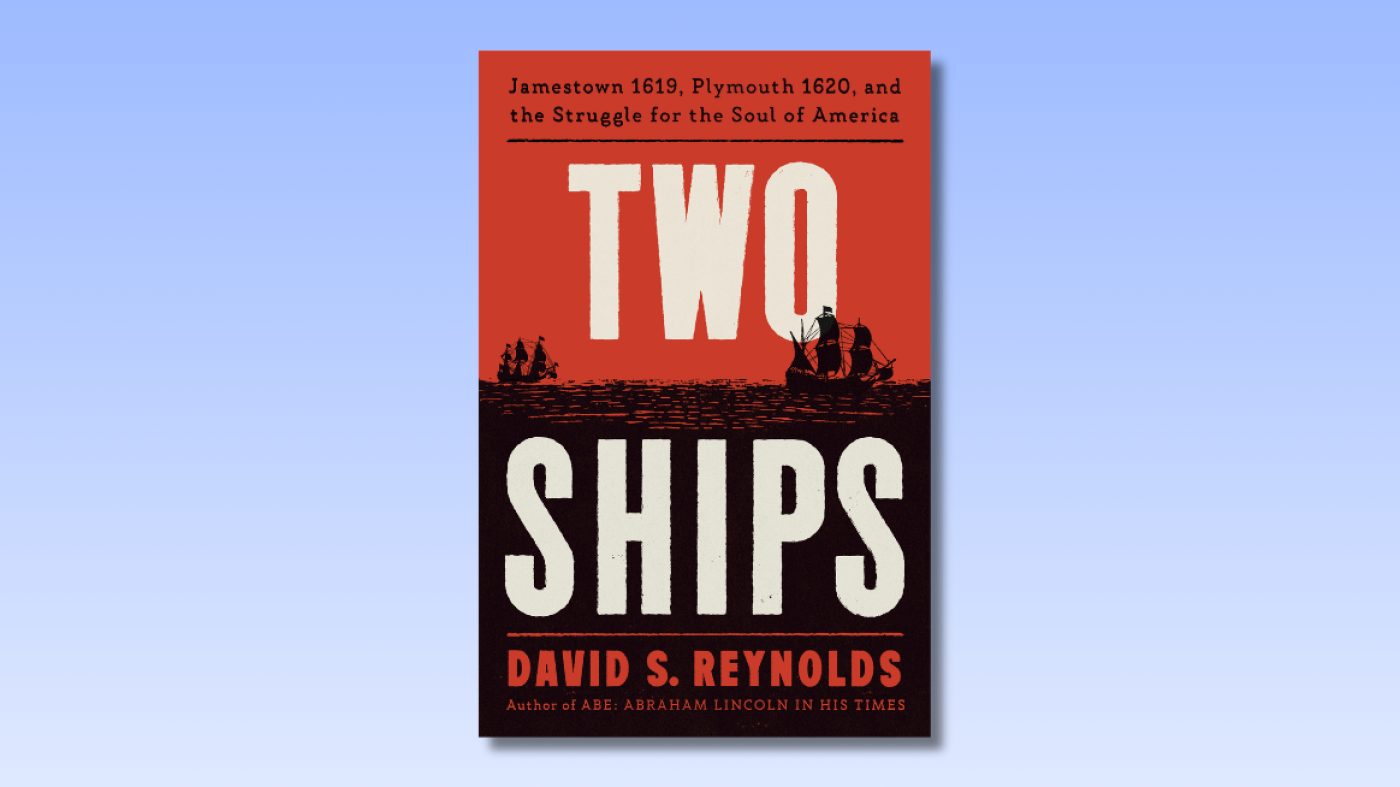 Lifestyle1 hour ago
You know the Mayflower. What about the White Lion? Here’s the story of ‘Two Ships’

