Vermont
Gov. Scott aims to be ‘voice’ of moderate Vermonters as he navigates party of Trump


MONTPELIER, Vt. (WCAX) – The legislative session is in the rearview mirror and Vermont campaign season is ramping up. But as Republican Governor Phil Scott pushes for more political balance at the Democratically-controlled Statehouse, experts say he has to thread a fine needle.
The dust from a whirlwind legislative session is beginning to settle and Governor Phil Scott, who announced his reelection plans this past weekend, once again finds himself at an electoral crossroads.
“Somebody needs to be there to be the voice of Vermonters, and right now, I think we’re so out of balance that we’re not hearing from everyone,” Scott said Wednesday.
And for the first time in a long time, Scott is engaging his own party. He’ll be speaking at the Vermont Republican Party Presidential & Platform Convention on Saturday alongside vice presidential hopeful North Dakota Governor Doug Burgum.
While other moderate Republicans like New Hampshire Governor Chris Sununu have lined up behind Trump, Scott has not. He says his appearance at the GOP event does not tie him to the former president. “Even if my good friend Doug Burgum becomes a VP candidate, I won’t be supportive of the ticket,” Scott said.
Scott critics like Vermont Democratic Party Chair Jim Dandeneau aren’t buying it. “He can reach out to moderate Democrats all he wants but when his first pitch for his reelection campaign is going to come standing alongside Doug Burgum, the Republican governor from North Dakota who signed one of the strictest abortion bans in the county, signed one of the most restrictive anti-trans bills in the county and is coming to Vermont fresh off his stop outside of Donald Trump’s trial. I don’t know how that’s going to land with folks,” Dandeneau said.
Previous polls have shown Scott wins by wide margins because he consistently draws support from Democrats. But Dandeneau says that cross-party support could be slipping away because of Scott’s positions on issues like education and the environment, and that’s why he’s courting Republican voters. “He’s not going to turn to Democrats to bail him out of problems he’s created for himself, he’s going to turn to Republicans,” Dandeneau said.
Scott says he hopes to challenge the supermajority in Montpelier by recruiting more like-minded candidates, not just Republicans but fiscally conservative Democrats and Independents who would sustain his vetoes. GOP leaders are also trying to recruit more moderates.
“We’re building a coalition that we think can support Governor Scott when he does need to veto those things that are crossing the line and are not helpful for Vermonters,” said Vermont Republican Party Chair Paul Dame.
Matt Dickinson, a political science professor at Middlebury College says that in Scott’s quest for balance at the Statehouse, he has to weigh recruiting from a party dominated by Trump with also not alienating Democratic supporters. “The risk is the moderate image he’s cultivated, one that’s premised in part by being one the first governors to reject Trump, can be tarnished,” he said.
At the same time, all eyes in Democratic circles are on former Governor Howard Dean, who has said he’s exploring another run. The deadline to file for the August primaries is in about two weeks.
Copyright 2024 WCAX. All rights reserved.



Powerball, Mega Millions jackpots: What to know in case you win
Here’s what to know in case you win the Powerball or Mega Millions jackpot.
Just the FAQs, USA TODAY
The Vermont Lottery offers several draw games for those willing to make a bet to win big.
Those who want to play can enter the MegaBucks and Lucky for Life games as well as the national Powerball and Mega Millions games. Vermont also partners with New Hampshire and Maine for the Tri-State Lottery, which includes the Mega Bucks, Gimme 5 as well as the Pick 3 and Pick 4.
Drawings are held at regular days and times, check the end of this story to see the schedule.
Here’s a look at July 19, 2026, results for each game:
Winning Pick 3 numbers from July 19 drawing
Day: 1-4-2
Evening: 5-3-0
Check Pick 3 payouts and previous drawings here.
Winning Pick 4 numbers from July 19 drawing
Day: 8-8-8-0
Evening: 6-7-5-2
Check Pick 4 payouts and previous drawings here.
Winning Millionaire for Life numbers from July 19 drawing
06-22-35-40-52, Bonus: 04
Check Millionaire for Life payouts and previous drawings here.
Feeling lucky? Explore the latest lottery news & results
Are you a winner? Here’s how to claim your lottery prize
For Vermont Lottery prizes up to $499, winners can claim their prize at any authorized Vermont Lottery retailer or at the Vermont Lottery Headquarters by presenting the signed winning ticket for validation. Prizes between $500 and $5,000 can be claimed at any M&T Bank location in Vermont during the Vermont Lottery Office’s business hours, which are 8a.m.-4p.m. Monday through Friday, except state holidays.
For prizes over $5,000, claims must be made in person at the Vermont Lottery headquarters. In addition to signing your ticket, you will need to bring a government-issued photo ID, and a completed claim form.
All prize claims must be submitted within one year of the drawing date. For more information on prize claims or to download a Vermont Lottery Claim Form, visit the Vermont Lottery’s FAQ page or contact their customer service line at (802) 479-5686.
Vermont Lottery Headquarters
1311 US Route 302, Suite 100
Barre, VT
05641
When are the Vermont Lottery drawings held?
- Powerball: 10:59 p.m. Monday, Wednesday, and Saturday.
- Mega Millions: 11 p.m. Tuesday and Friday.
- Gimme 5: 6:55 p.m. Monday through Friday.
- Lucky for Life: 10:38 p.m. daily.
- Pick 3 Day: 1:10 p.m. daily.
- Pick 4 Day: 1:10 p.m. daily.
- Pick 3 Evening: 6:55 p.m. daily.
- Pick 4 Evening: 6:55 p.m. daily.
- Megabucks: 7:59 p.m. Monday, Wednesday and Saturday.
- Millionaire for Life: 11:15 p.m. daily
What is Vermont Lottery Second Chance?
Vermont’s 2nd Chance lottery lets players enter eligible non-winning instant scratch tickets into a drawing to win cash and/or other prizes. Players must register through the state’s official Lottery website or app. The drawings are held quarterly or are part of an additional promotion, and are done at Pollard Banknote Limited in Winnipeg, MB, Canada.
This results page was generated automatically using information from TinBu and a template written and reviewed by a Vermont editor. You can send feedback using this form.
Vermont
‘If we don’t write it down, it disappears’: Independent historian gathers Vermont veterans’ stories before they are lost to history – VTDigger

This story by Danielle M. Crosier was first published in the Bennington Banner on July 15, 2026.
DORSET — Charles “Max” Fish doesn’t think of history as something that lives only in textbooks or timelines. For him, it lives in the voices and the stories of everyday people — the way that someone pauses before naming a place, or the way a memory changes with perspective, maturity, knowledge and time, and with the telling.
Over the last year, the Dorset-based independent historian has been collecting those voices from Vermont veterans, recording their experiences for the Library of Congress Veterans History Project. Over the past year, his work has taken him across Southern Vermont — from American Legion halls to farm kitchens — sitting with men who went to war and then came home to towns that had mostly moved on.
What Fish is trying to save isn’t just military history. It’s a way of understanding the past through another’s lived experience, and he worries that that particular form of history is quietly disappearing from the record.
“If we don’t write it down, it disappears,” he said. “A lot of these stories only exist in one person’s memory. Once they’re gone, we’ve lost a whole way of seeing who we were.”
A life of listening
Fish’s commitment to storytelling began long before this particular and current project. As a high school sophomore, he called historical societies and a VA hospital until he found a World War II veteran willing to talk — an Army aviator named Thomas O’Rourke, who had served in the Pacific.
The resulting hourlong interview, cut to 45 minutes and paired with wartime images, became a school project. Sadly, O’Rourke died less than two years later.
“I realized that what I had from him, especially because it was so short before he died, was something really valuable,” Fish said. “It was a piece of history that wouldn’t have existed otherwise.”
Later, as a history major at Tulane University, Fish worked with a New Orleans queer archive, digitizing photographs, letters and ephemera from LGBTQ+ communities whose lives often went undocumented. “It was community preserved through history,” he said. “People who might feel isolated could see that people like them had always been there.”
Those experiences have shaped how he now thinks about archives: not as neutral repositories, but as living records that can either include or erase whole groups of people, depending on who gets asked and who gets heard.
Turning toward Vermont’s veterans
Fish discovered the Veterans History Project through National Public Radio’s StoryCorps, listening with his parents in the car. Founded in 2000, the project gathers oral histories, letters, photographs and other materials from U.S. veterans and their families.
When he moved back to Vermont and wanted to return to historical work after a stretch in retail, Fish saw an opening.
He contacted the Dorset Historical Society, where he had previously volunteered as a docent and digitized archivist, and began working independently to contribute Vermont veteran interviews to the Library of Congress collection.
Over the following roughly six to seven months — late summer and fall of 2025 into 2026 — he drove around southern and central Vermont, reaching out to historical societies and American Legion posts and asking, in essence, the same question, “Would you be willing to tell me your story?”
“At first, it was just handshakes at Legion dinners,” he said. “Once one person agreed, they’d say, ‘You should talk to my buddy,’ and it grew from there.”
Now, those interviews span Korean War service, Vietnam tours on the ground and at sea, and peacetime Cold War deployments. And, according to Fish, some of the men have never described their experiences in such detail, even to their families.
What gets lost when a story isn’t told
Fish is quick to say he’s not interested in definitive conclusions. For him, the power is in particularity — the concrete detail that never makes it into formal histories.
He talks about a submariner, Buzz Fisher, who earned his “dolphins,” the qualification pin for submariners, by learning every system on his boat. “He knew every inch of that submarine,” Fish said. “That pride, that sense of mastery — it’s a part of history you can’t see in a list of ship deployments.”
Another interview subject, Dorset’s Dave Yandell, who served on the aircraft carrier USS Ranger during Vietnam, told Fish that no one had ever simply asked him to tell his story from his own perspective, “(For him,) everyone wanted something very specific confirmed or debunked,” Fish said. “No one said, ‘What did it feel like? What did it mean to you?’”
When Fish did, Yandell described seeing the USS Ranger for the first time and then the last, tearing up and overcome with emotion at the retelling. It is those moments, Fish argues, that complicate the flat, heroic or purely critical versions of military history that can often dominate public debates.
“Official records can tell you where a unit was and when,” he said, referencing the young men who worshiped the veterans of World War II and Korea only to find themselves ostracized following service in Vietnam. “They can’t tell you what it did to someone to come home and feel like they couldn’t talk about it for 50 years.”
He worries that, without sustained efforts to collect such stories, a whole layer of historical understanding will vanish — not just facts about battles, but how those battles reshaped the people who fought them, and the communities and families that they returned to.
Barriers to an accurate historical record
Despite the importance of these accounts, Fish has found that getting them formally archived is not a simple undertaking. It is complicated. It is messy. And the subjects are often deeply unwilling.
The Veterans History Project requires veterans to sign consent forms that transfer ownership of their recorded interviews and of any donated materials to the Library of Congress. For some Vermonters, that step has been too difficult.
“Some of the men were comfortable talking to me, but not comfortable signing a document that said their story now belongs to a federal institution,” Fish said. “They’d already given up a lot of control once in their lives.”
Others hesitate for different reasons
Several Vietnam veterans whom Fish spoke with wrestle with guilt and unresolved questions about their own survival and their service — feelings that they may be willing to voice in conversation, but not ready to see published with their names forever attached.
Fish described a conscientious objector who served as a medic in Vietnam, risking his life repeatedly without carrying a weapon. In one ambush, pressured by the chaos around him, he set aside his medical kit to haul ammunition for a machine gunner — an act that technically violated the terms of his conscientious objector status.
“Everyone in his unit saw what happened and understood why,” Fish said. “But from his perspective, putting that on the record is complicated. It’s not just about policy, it’s about how he sees himself.”
Additionally, there are even more deeply rooted concerns about reprisals and judgments that could come in the wake of exposure — and fear of appearing critical or disloyal to those who served alongside them, to the chain of command under which they served, to the mission that they believed themselves to be fighting for, or to the decision-makers in the federal government. It’s almost like a collective case of Stockholm syndrome.
“You hear, you know, like ‘no man left behind,’ but that’s only true when you can afford it to be. And, I think what I hope people take away is that men like (those interviewed) are just average everyday Americans in impossible situations. You hear about stories like ‘Hacksaw Ridge’ and ‘Saving Private Ryan’ and you think, ‘That’s got to be Hollywood’ until you meet men that have actually walked and lived those stories,” Fish said. “I hope that … it just becomes a little more real to people.”
“And again, we as Americans have been so disconnected from war for so long (even though) our Army’s been fighting in every single war all over the place, but not (on the home front)”, Fish said.
A loyalty that can often complicate the truth of a lived experience
One of the most striking patterns in Fish’s interviews is the tension that he has found veterans feel between loyalty to the military and honesty about the feelings of what they lived through.
Around the stories of battles and bases, he hears a quieter struggle — a struggle of men who still love the institution that shaped them, yet carry deep doubts about the wars that they were sent to fight.
Every veteran he spoke with remembered training with true and deep affection — the sense of purpose, the discipline, the friendships that formed under pressure.
“Whether you come in because you’ve got nothing better to do, or because you’ve always wanted to be there, you come out part of something bigger than yourself,” Fish said. “Every single person I talked to really values that feeling.”
But he also found a sharp divide between those who served at a distance and those who were face to face with combat. Sailors on aircraft carriers recalled celebrating after dropping their “millionth ton” of TNT. Infantrymen in the jungle, by contrast, emerged with what Fish describes as a kind of permanent disillusionment.
“The men who were right on the front lines often had a very different takeaway,” he said. “They realized that all of the lies that had been told to them up until that point were just that: lies. It becomes this desperate, chaotic scramble to survive.”
Many of those front-line veterans, especially from Vietnam, told Fish privately that they felt the war should never have been fought, or that it was abandoned in a way that betrayed both allies and the American dead.
Yet, despite their convictions, when it came time to sign the Library of Congress paperwork, they pulled back. They worried that speaking plainly would “do a disservice to the institution,” as one man put it, or undermine the pride and identity that service had given them and given to others, including those who serve today.
In short, it was a brotherhood, and one that they could not betray. And, for Fish, that reluctance is itself a crucial part of the story.
“These are men who still feel bound to the people they served with and to the uniform they wore,” he said. “They’re proud of the training and the camaraderie, even as they question the reasons they were sent. That makes it incredibly hard to put their full truth on the permanent record – but it’s exactly why those stories matter.”
Stories as a safeguard and on the record
Fish has completed and submitted several interviews to the Library of Congress, with more in the editing queue as he prepares to leave for Austria to pursue graduate study. But he’s also keenly aware that many of the stories he’s heard will likely remain off the official books, preserved only in his notes and in his memory.
“Even when the paperwork doesn’t get signed, the conversations still matter,” he said. “They’re a reminder of how much history never makes it into the archive at all.”
Underneath the practical information about the Veterans History Project and how people can participate is a quieter argument: that listening to individual stories is not a sentimental exercise but a form of civic responsibility.
“We’re in a country where most of us are several steps removed from war,” he said. “If we only understand it through movies, speeches, textbooks or policy debates, we’re missing something essential.”
Fish believes that hearing veterans describe, in their own words, what they saw and how it changed them offers a check against abstraction — the kind that can make it easier to accept future conflicts without fully grasping their human cost.
At the same time, he resists framing veterans solely as symbols or lessons. “These are ordinary people in impossible situations,” he said. “Their stories are a part of our history, whether we record them or not. The question is whether we’re willing to listen in time.”
Powerball, Mega Millions jackpots: What to know in case you win
Here’s what to know in case you win the Powerball or Mega Millions jackpot.
Just the FAQs, USA TODAY
The Vermont Lottery offers several draw games for those willing to make a bet to win big.
Those who want to play can enter the MegaBucks and Lucky for Life games as well as the national Powerball and Mega Millions games. Vermont also partners with New Hampshire and Maine for the Tri-State Lottery, which includes the Mega Bucks, Gimme 5 as well as the Pick 3 and Pick 4.
Drawings are held at regular days and times, check the end of this story to see the schedule.
Here’s a look at July 18, 2026, results for each game:
Winning Powerball numbers from July 18 drawing
09-14-44-50-56, Powerball: 03, Power Play: 4
Check Powerball payouts and previous drawings here.
Winning Pick 3 numbers from July 18 drawing
Day: 8-8-3
Evening: 1-5-3
Check Pick 3 payouts and previous drawings here.
Winning Pick 4 numbers from July 18 drawing
Day: 5-2-3-8
Evening: 8-6-1-3
Check Pick 4 payouts and previous drawings here.
Winning Megabucks Plus numbers from July 18 drawing
03-07-13-32-40, Megaball: 06
Check Megabucks Plus payouts and previous drawings here.
Winning Millionaire for Life numbers from July 18 drawing
18-23-28-32-49, Bonus: 03
Check Millionaire for Life payouts and previous drawings here.
Feeling lucky? Explore the latest lottery news & results
Are you a winner? Here’s how to claim your lottery prize
For Vermont Lottery prizes up to $499, winners can claim their prize at any authorized Vermont Lottery retailer or at the Vermont Lottery Headquarters by presenting the signed winning ticket for validation. Prizes between $500 and $5,000 can be claimed at any M&T Bank location in Vermont during the Vermont Lottery Office’s business hours, which are 8a.m.-4p.m. Monday through Friday, except state holidays.
For prizes over $5,000, claims must be made in person at the Vermont Lottery headquarters. In addition to signing your ticket, you will need to bring a government-issued photo ID, and a completed claim form.
All prize claims must be submitted within one year of the drawing date. For more information on prize claims or to download a Vermont Lottery Claim Form, visit the Vermont Lottery’s FAQ page or contact their customer service line at (802) 479-5686.
Vermont Lottery Headquarters
1311 US Route 302, Suite 100
Barre, VT
05641
When are the Vermont Lottery drawings held?
- Powerball: 10:59 p.m. Monday, Wednesday, and Saturday.
- Mega Millions: 11 p.m. Tuesday and Friday.
- Gimme 5: 6:55 p.m. Monday through Friday.
- Lucky for Life: 10:38 p.m. daily.
- Pick 3 Day: 1:10 p.m. daily.
- Pick 4 Day: 1:10 p.m. daily.
- Pick 3 Evening: 6:55 p.m. daily.
- Pick 4 Evening: 6:55 p.m. daily.
- Megabucks: 7:59 p.m. Monday, Wednesday and Saturday.
- Millionaire for Life: 11:15 p.m. daily
What is Vermont Lottery Second Chance?
Vermont’s 2nd Chance lottery lets players enter eligible non-winning instant scratch tickets into a drawing to win cash and/or other prizes. Players must register through the state’s official Lottery website or app. The drawings are held quarterly or are part of an additional promotion, and are done at Pollard Banknote Limited in Winnipeg, MB, Canada.
This results page was generated automatically using information from TinBu and a template written and reviewed by a Vermont editor. You can send feedback using this form.
-

 Pennsylvania4 minutes ago
Pennsylvania Opens First Phase of New Motorized Recreation Area
-
 Rhode Island10 minutes ago
Man and woman arrested in Baltimore County after chase connected to Rhode Island kidnapping
-

 South-Carolina16 minutes ago
South Carolina Lottery Pick 3, Pick 4 results for July 19, 2026
-
South Dakota22 minutes ago
SD Lottery Millionaire for Life winning numbers for July 19, 2026
-
Tennessee28 minutes ago
TN Lottery Cash 3 Evening, Cash 4 Evening winning numbers for July 19, 2026
-

 Texas34 minutes ago
Texas cop saves driver from burning car moments before it goes up in flames, heart-stopping video shows
-
 Utah40 minutes ago
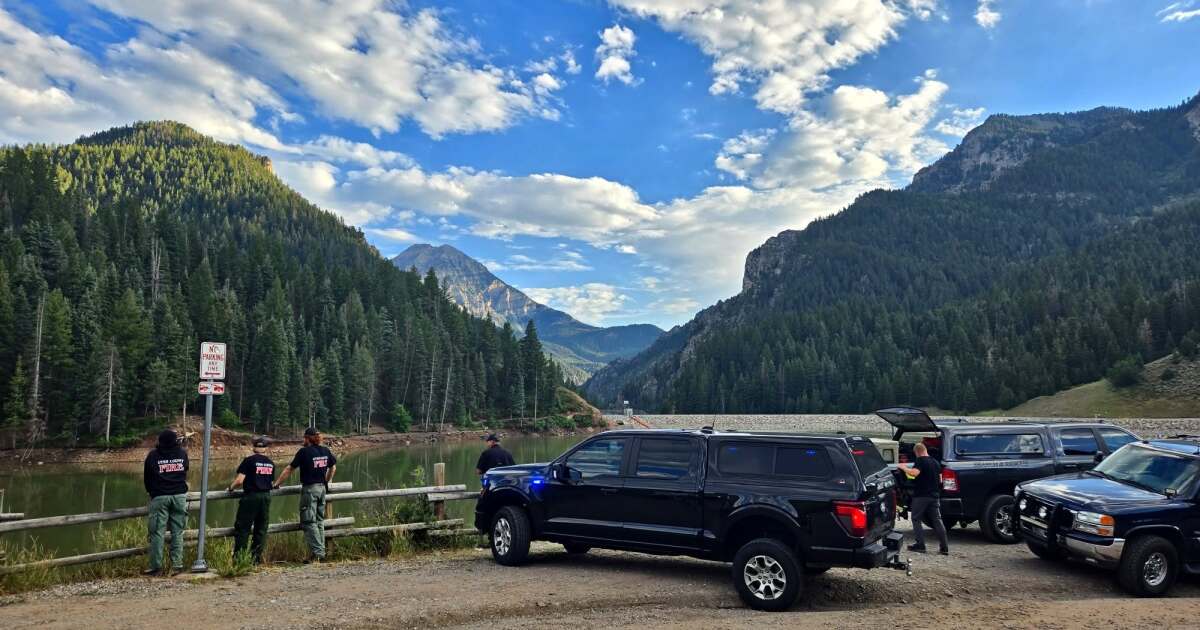
Crews searching for possible drowning victim at Tibble Fork Reservoir
-
Vermont46 minutes ago
VT Lottery Pick 3, Pick 3 Evening results for July 19, 2026

