South Dakota
How SDSU put South Dakota at forefront of precision ag revolution


BROOKINGS, S.D. — South Dakota State University’s new precision agriculture program has had success at persuading in-state and some other Midwestern farmers to use more technology in their operations, while other states lag in their adoption of it.
SDSU was the first university in the country to create a
program that teaches and helps farmers use precision ag
, the science of new technologies and traditional methods that make operations more efficient to increase crop yields while reducing environmental impacts. For example, the use of global positioning satellites helps target chemicals and fertilizers where they’re needed most.
Ali Mirzakhani Nafchi, an assistant professor at the precision ag center, said the school is working to increase usage through education and research to make the technology more practical for farmers.
“I am very, very optimistic it is going to work. And we will see the changes not only in South Dakota, in the nation and in the world,” he said.
South Dakota has one of the highest percentages of usage, with 53% of farmers using precision ag technology,
according to a study from the U.S. Department of Agriculture.
Other Midwest states where more than half the farmers also use precision ag include North Dakota, Iowa, Illinois and Nebraska,
according to a study done by the SDSU Ness School of Management and Economics
.
Nationally, just 27% of farmers use precision ag practices to manage crops or livestock, the Ness study found.
Precision ag benefits, challenges to adoption
The most widely adopted precision ag technologies include auto-steering in machinery and guidance or “georeferencing technology,” the process of taking digital images.
Satellite imagery is the next most widely adopted technology, with nearly 60% of farmers having used it, according to the Ness study.
The technology typically increases crop production by 4% and fertilizer placement efficiency by 7%, according to a study done by the
Association of Equipment Manufacturers
. Precision ag also reduces herbicide and pesticide, fossil fuel and water use.
Despite the benefits of optimizing returns and yields, factors such as cost and lack of general knowledge about precision ag have prevented most farmers from using the tech products as widely as originally hoped.
Bart Pfankuch / South Dakota News Watch
Anna Karels, a student at the precision ag center, said it takes money to get started but will save money in the long term.
“I think it’s hard for a lot of farmers to (understand) that, yes, it (might increase) my costs … upfront, but it pays off over a certain number of years,” she said.
Nafchi said lowering the initial rate will incentivize more farmers to use the technology.
“Initial costs for variable rate application is too high,” he said. “So imagine if we get help. Somehow maybe make it less inexpensive, or lower the initial costs, or just go and do an incentive, investment for them, and ask them to just try it. And then they see the return on their investment is really good. I’m very optimistic they will use it.”
If the initial costs are unattainable for some farmers, there are programs in place to help operations use this technology. USDA and the National Science Foundation have provided almost $200 million for precision ag research and developmental funding from 2017 to 2021,
according to the U.S. Government Accountability Office
.
Another factor for the low adoption rates is the lack of knowledge about the new technology. But there are options for South Dakota farmers to learn more.
“Dealerships like John Deere, I know they have a lot of clinics that they put on and stuff like that. (The school) does a lot of that to where they go out and show farmers, ‘OK, this is what this does and how it can help you and benefit you’ and kind of like go through and show them how to use it,” Karels said.
The Raven Precision Agriculture Center
The
Raven Precision Agriculture Center
was built for students in the major to learn about precision ag in interactive ways.
The building features rooms full of equipment and precision ag products students use to learn through hands-on technology. The $46.2 million building opened in August 2021, making it the first precision ag program in the nation.
Kasiviswanathan Muthukumarappan
, endowed department head and professor at the center, said the department is proud of being the first but is now changing its curriculum to become the best program in the nation.
“We would like to grow our precision ag program to the next level, and elevate the experiences for our students,” he said.
One change is to add more specialized majors to collect more data on precision ag.
“Previously, we had one recipe for all the students who are enrolled in (the) precision ag program, meaning that we combine agronomy and technologies together and make it one robust program,” Muthukumarappan said. “Now, we are making it more user-friendly. And we have three different tracks. One is for technology track. The other one is for agronomy track. And the other one is for data track, electronic strikers.”
The program, with 66 students currently, is trying to raise enrollment rates by 20% in the next five years to make this goal attainable. SDSU’s mission is to simplify this technology and make it more practical for farmers, Nafchi said.
This story was produced by South Dakota News Watch, an independent, nonprofit news organization. Contact Greta Goede at greta.goede@sdnewswatch.org.


Oklahoma didn’t suffer any strong wind damage this week, but wind farms in South Dakota certainly did.
Several wind turbines were toppled by the 130 MPH winds that hit the central part of the state Monday morning. They were described as straight line winds and not tornadoes. But the winds compared to those recorded in some tornadoes.
The 131-mph wind was recorded at Holabird in Hyde County at 6:15 a.m. local time.
A picture of the extensive damage showed at least 7 of the wind towers were bent over by the powerful Mother Nature.
According to a report by Energy News Beat, storm chaser Jakob McMillin documented the scene in a widely shared post on X (formerly Twitter), showing multiple wind turbine towers collapsed or heavily damaged, with blades and structural debris scattered across the prairie. In replies to his post, McMillin stated he observed “over 20” turbines destroyed or critically damaged.
The Affected Wind Farm
The damaged facility is the South Dakota Wind Energy Center (also known as the Highmore Wind Energy Project or Highmore Wind Farm), located approximately 10 miles south of Highmore.
- Number of turbines: 27
- Turbine model: GE Vernova 1.5s (1.5 MW each)
- Total nameplate capacity: 40.5 MW
- Commissioning year: 2003 (South Dakota’s first major wind farm)
- Owner/Operator: NextEra Energy Resources (formerly FPL Energy)
- Power purchaser: Basin Electric Power Cooperative
The South Dakota Lottery offers multiple draw games for those aiming to win big.
Here’s a look at June 29, 2026, results for each game:
Winning Powerball numbers from June 29 drawing
10-14-41-53-59, Powerball: 03, Power Play: 2
Check Powerball payouts and previous drawings here.
Winning Lotto America numbers from June 29 drawing
08-13-29-30-31, Star Ball: 04, ASB: 03
Check Lotto America payouts and previous drawings here.
Winning Millionaire for Life numbers from June 29 drawing
04-25-26-31-36, Bonus: 04
Check Millionaire for Life payouts and previous drawings here.
Feeling lucky? Explore the latest lottery news & results
Are you a winner? Here’s how to claim your prize
- Prizes of $100 or less: Can be claimed at any South Dakota Lottery retailer.
- Prizes of $101 or more: Must be claimed from the Lottery. By mail, send a claim form and a signed winning ticket to the Lottery at 711 E. Wells Avenue, Pierre, SD 57501.
- Any jackpot-winning ticket for Dakota Cash or Lotto America, top prize-winning ticket for Lucky for Life, or for the second prizes for Powerball and Mega Millions must be presented in person at a Lottery office. A jackpot-winning Powerball or Mega Millions ticket must be presented in person at the Lottery office in Pierre.
When are the South Dakota Lottery drawings held?
- Powerball: 9:59 p.m. CT on Monday, Wednesday, and Saturday.
- Mega Millions: 10 p.m. CT on Tuesday and Friday.
- Lucky for Life: 9:38 p.m. CT daily.
- Lotto America: 9:15 p.m. CT on Monday, Wednesday and Saturday.
- Dakota Cash: 9 p.m. CT on Wednesday and Saturday.
- Millionaire for Life: 10:15 p.m. CT daily.
This results page was generated automatically using information from TinBu and a template written and reviewed by a South Dakota editor. You can send feedback using this form.


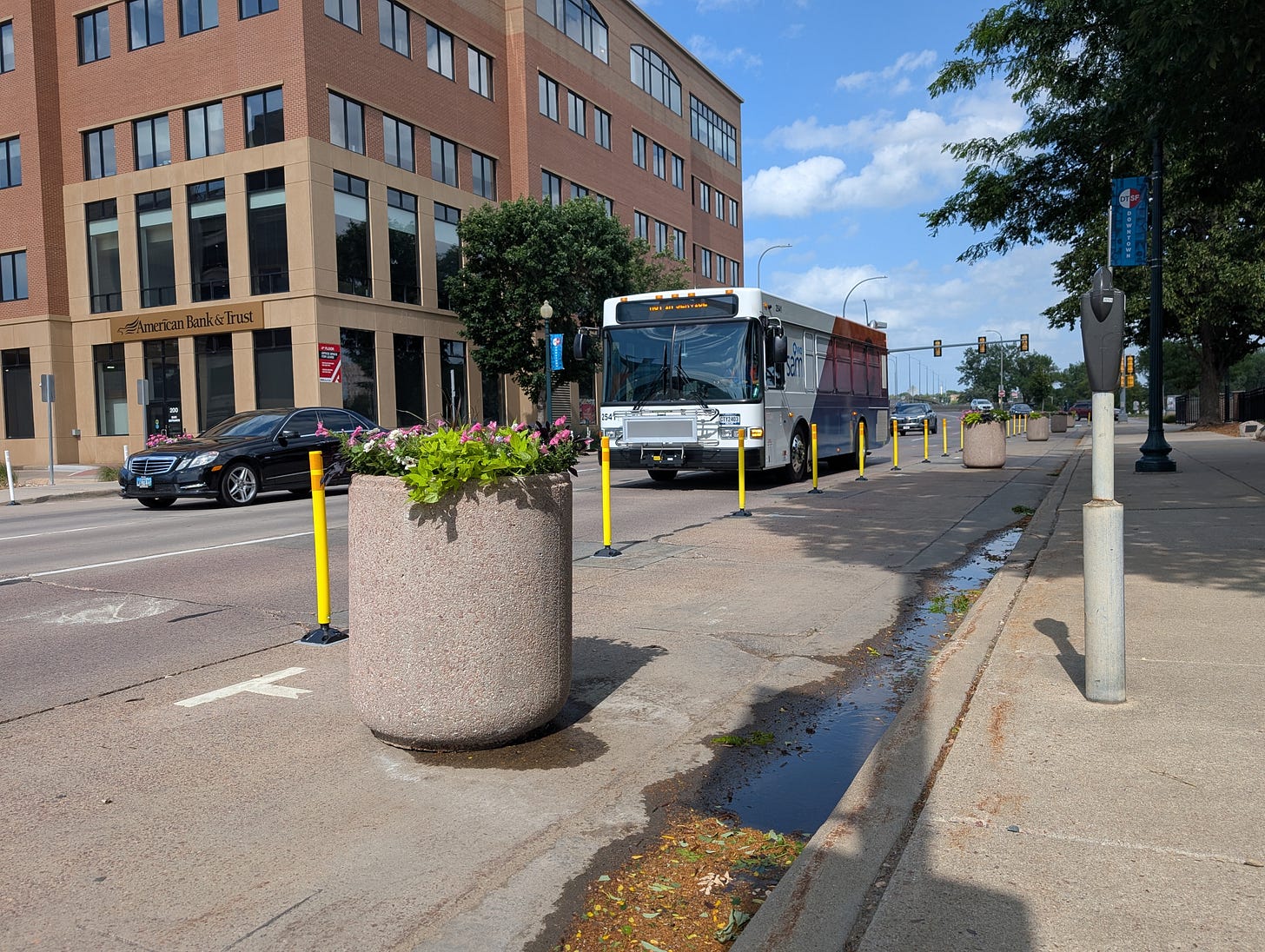
Deliberately slowed rush-hour traffic in downtown Sioux Falls is serving as a preview for commuters ahead of a major, yearslong overhaul of the city’s aging viaduct overpasses.
And Downtown Sioux Falls Inc. is using the opportunity to study traffic patterns in advance of the reconstruction of the 10th and 11th street overpasses on the east end of the core commercial district. Though the state-led project is still years away, the temporary traffic-calming measures are helping engineers gather data on vehicle speeds, volumes and behaviors.

2026 general election ballot set after referral effort falls short



-

 Texas6 minutes ago
Phoenix Merchant Partners and Texas Capital Alternative Asset Management Form Strategic Relationship
-

 Utah9 minutes ago
Therapy dogs offer a welcome break for firefighters battling Utah’s Iron, Cherry fires
-

 Vermont14 minutes ago
She moved from Paris to Vermont and found her ‘dream job’ opening a bakery – The Boston Globe
-

 Virginia21 minutes ago
Reopening date set for Virginia Creeper Trail after months of work
-

 Washington24 minutes ago
Colorado Democrats punish Washington ties in primaries
-

 Wisconsin29 minutes ago
Missing Wisconsin teen Joniah Walker found safe 4 years after disappearing from home
-

 West Virginia36 minutes ago
Transmission line proposals raise ratepayer cost concerns in West Virginia
-

 Wyoming39 minutes ago
Wyoming Department of Health warns of scam callers using official phone number

