Tennessee
The week in politics: Tennessee GOP passes red flag preemption bill in final days of session


A year after Gov. Bill Lee told lawmakers Tennesseans deserved a vote on a law to keep guns out of those deemed a danger to themselves or others, House Republicans passed legislation to block local governments from passing their own version of an extreme risk protection order.
The vote finalized the legislation, which Senate Republicans passed earlier this month.
Democrats sharply criticized the legislation as a power grab over local control, as well as pointing out that Republicans have continually blocked red flag legislation from any substantive debate in legislative committees in recent months.
“We’ve not even had the debate, and before we can have the debate, we’re going to prohibit local governments from having that debate as well,” said Rep. Bob Freeman, D-Nashville. “In Tennessee right now, firearms are the No. 1 killer of kids. The No. 1.”
Bill sponsor Rep. Jody Barrett, R-Dickson, said he brought the bill to maintain “consistency,” but also noted an ideological opposition to red flag laws.
“If we leave this to their own devices, what I fear is a division of the state of Tennessee upon multiple layers with laws that are different,” Barrett said.
When asked by reporters earlier this month if he would consider vetoing the legislation that would pre-empt local control and bar local enactment of a policy he championed last year, Lee said he was not yet familiar with the bill.
“I would have to see more specifically what that what the bill says and what it implies before I could really comment,” Lee said.
Vice President Kamala Harris blasts Tennessee over armed teachers bill
Vice President Kamala Harris on Wednesday blasted Tennessee Republicans in a social media post denouncing legislation passed that would allow trained teachers with district and law enforcement permission to carry guns inside classrooms without notifying parents.
“Arming teachers is not the solution. We know what actually works: universal background checks, red flag laws, safe storage, and an assault weapons ban,” Harris wrote on X, the site formerly known as Twitter. “Shame on extremists in the Tennessee legislature for failing to protect our children.”
In response, House and Senate Democrats thanked Harris for her support, while Republican lawmakers who supported the bill shot back to defend it.
“Have you read the bill, Madam Vice President?” wrote Rep. Jason Zachary, R-Knoxville. “It is permissive, allowing a teacher to carry with the approval of the principal, sheriff, and head of school. Requires 40 hours of tactical training, mental health check, and enhanced carry permit, to name a few. 30+ states have this on the books today. TN teachers in distressed counties have been able to carry since 2016 without incident. We will take every step necessary to protect children in rural communities.”
“The mental health/acuity test before you could carry would most certainly disqualify you and Papaw,” wrote House Majority Caucus Chair Jeremy Faison, R-Cosby. “Not sure you would even pass the background check tbh.”
Lee has not yet signed the bill into law but said Thursday he planned to do so.
Age appropriate gun safety training coming to schools
Public school children as young as pre-kindergarten will be taught age-appropriate firearms safety concepts in school beginning in the 2025-26 school year, as Lee signed into law a measure requiring the safety concepts training.
Required instruction topics include: safe storage of firearms, how to avoid injury if a student finds a firearm, never to touch found firearms, and to immediately notify an adult of the location of a found firearm.
Training would be conducted through viewing of videos and online content. Live ammunition, live fire and live firearms would be prohibited. The bill does not specifically prohibit non-functional model weapons. Proponents of the safety concepts training have likened it to mandatory school fire drills.
Lee signs Jillian’s Law
Lee signed into law a measure to require certain criminal defendants who are deemed mentally incompetent and unable to stand trial to be committed to a facility for mental health treatment, and bar them from legally buying or possessing guns, legislation sparked by the shooting death of Belmont University student Jillian Ludwig last year.
A judge must consider evidence to determine if an individual is not competent to assist in their defense. A finding of incompetency would mandate in-patient treatment and later, if a person is released, outpatient treatment.
Ludwig, a Belmont University freshman, was killed by a stray bullet that police say was fired by Shaquille Taylor, who had previously been deemed incompetent to stand trial for another violent crime but did not meet the standards for involuntary commitment.
“The heartbreak inflicted on the family of Jillian Ludwig and others like them is unimaginable. Jillian’s Law will bridge a wide gap we have within our judicial and mental health systems so that no family will endure the kind of pain and suffering they have,” said House Majority Leader William Lamberth, R-Portland, who sponsored the bill.
“I will be forever grateful to Matt and Jessica, who, with incredible strength, continue to fight for their daughter by working to prevent others from becoming victims. We could not have passed and funded Jillian’s Law without their advocacy.”
Death penalty for child rape goes to governor
A bill that would allow the death penalty for defendants convicted of raping a child — in an effort to challenge a 2008 U.S. Supreme Court ruling — is headed to Lee’s desk.
Senate Bill 1834 would allow capital punishment for adults convicted of raping a child, with certain aggravating factors. Only seven other states have passed similar laws permitting capital punishment for rape of a child under 12, which each chip away at Kennedy v. Louisiana.
In that 2008 case, the U.S. Supreme Court struck down as unconstitutional a Louisiana law that allowed the death penalty in child rape cases that do not involve the victim’s death, finding that it amounts to “cruel and unusual punishment.”
November designated as ‘Christian Heritage Month’
Lee on Monday signed into law a bill designating November as “Christian Heritage Month,” to “encourage citizens to learn more about Christian heritage in this state.”
The legislation follows a new law signed by Lee that designates the Aitken Bible, alongside 9 other works, as official “state books.”
Tourism records signed into law
Lee signed into law a bill allowing the Tennessee Department of Tourist Development to exempt certain documents from public records laws for up to five years if the tourism commissioner and attorney general deem them “sensitive.”
Proponents of the bill have said it would help the state attract large tourism deals. Rep. Andrew Farmer, R-Sevierville, who presented the bill to the House in February and repeatedly said the option of secrecy would help Nashville “get the Super Bowl.”
Public records advocates and others criticized the legislation. The bill took effect immediately.
Let’s talk about sex, baby
Lawmakers voted to bar instruction on “topics related to sexual activity” in the state’s mandatory family life curriculum for children in kindergarten through fifth grade.
“Instruction in topics related to sexual activity are not age-appropriate for students in any of the grades kindergarten through five (K-5) and shall not be taught to students in any of the grades kindergarten through five,” the bill states.
During debate on the bill Monday, Sen. Heidi Campbell, D-Nashville, noted that young girls can begin experiencing menstrual periods as early as fourth or fifth grade – and questioned whether the bill bars instruction in human sexual actualization or only outlaws instruction on topics pertaining to sex between two individuals.
The bill permits children in grades K-5 from receiving instruction in “detection, intervention, prevention, and treatment of child sexual abuse and human trafficking in which the victim is a child.”
Having received approval from Republicans in both the House and Senate, the bill is now on its way to Lee’s desk.
Catch up on the week
Legislative session ends with failed voucher push, tax overhaul and party feuds
AG argues qualified doesn’t mean certified in fight over education commissioner
House passes bill allowing armed teachers, sending measure to the governor
Tennessee House, Senate reach deal on franchise tax bill — including public disclosures
Majority of $1.5B franchise tax refunds would flow out of Tennessee, new records show
Got a question for us?
Got a question about state politics you would like us to tackle? Let us know. Email us at mabrown@tennessean.com, vjones@tennessean.com or statehouse@tennessean.com.



JACKSON, Tenn. (WBBJ) – An exciting day of sporting clays in West Tennessee is doubling as a major fight against hunger.
Today’s “Shooting Hunger” event took place at the Carroll County Shooting Sports Park in Huntingdon. It’s a partnership between Tennessee Farm Bureau, Tennessee Farmers Co-Op, Farm Credit Mid-America and Rural First.
Since 2015, Shooting Hunger has helped provide more than three million meals to Tennesseans with money going to food banks, backpack programs, and local hunger relief. A $500 scholarship will also go to the top youth shooter in each flight.
“We’re joining together to raise money for school backpacks to feed hungry kids. We do these, we actually do three of these across the state of Tennessee so at the end of the day we take, we take all the money we put it into a pile and when we divide equally amongst all 95 counties across the state of Tennessee,“ said Bryan Wright, executive vice president for the Tennessee Farm Bureau.
Organizers say events like this matter because one in six children in Tennessee struggle with hunger.
Copyright 2026 WBBJ. All rights reserved.

Tennessee director of track and field Duane Ross gauged the hunger of the men’s 4×100-meter relay team to pull off the upset.
“They said, ‘Coach, we’re going to win,’ ” Ross said. “When they bring you that much confidence, you can grab your popcorn and enjoy the meet.”
No popcorn was consumed, but the appetite was there from the start.
Traunard Folson, Davonte Howell, T’Mars McCallum and Elijah Clark finished in a school record time of 37.98 seconds at the NCAA Outdoor Championships on June 12 in Eugene, Oregon. It was the the program’s first national title in the 4×100 since 1983 and the fourth-fastest in NCAA history.
Four other relay teams never crossed the line. Auburn, the two-time defending champion, had run an NCAA-record 37.75 in the semifinal, but had a botched handoff on the last exchange. Arkansas, the reigning SEC champion, also dropped its baton, along with Oregon and Houston.
McCallum said staying clean through a race of chaos starts with a focus on winning, even in practice.
“In the moment we can’t really worry about anything else, just what we can control,” McCallum said on June 18. “We came to practice every time with the idea of, ‘OK, we’ve got to make sure this is fixed, because we know if we run that time, we can win.’ “
It was the final event of McCallum’s college career. It didn’t fully hit until the long flight home to Knoxville.
“I was like, we really did it,” he said. “Now we have a school record, the first team to ever go under 38 seconds here.”
Whether belief had anything to do with what went wrong in those four other lanes isn’t something Tennessee’s runners can answer. It’s exactly what they point to for why theirs didn’t.
Clark, a freshman who ran the anchor leg, said winning was just a matter of starting the race.
“We knew we had it the whole time,” he said. “No matter who did what, what happened, we knew what the outcome would come to.”
Ross said the victory wasn’t a surprise inside the program either.
“I wouldn’t say unsung,” Ross said. “I’ve watched this team all year long, and we were expecting to come out of there with the championship. It was a tight competition down to the last event.”
Tennessee finished third in the men’s team standings with 46 points, its best total since 2002.
Howell, a junior who ran the second leg, said the belief behind the relay team’s confidence was built long before the race.
“Three of the four of us already ran under 10 seconds,” he said. “Last year we all trained together during the summer, all lived together. We already had the bond, and adding the freshman on anchor was just a cherry on top. He figured it out at SECs, ran a 10.1, season’s best, and we trusted him to bring it home.”
Clark said the title is already part of something bigger to him.
“The goal is to always make history,” said Clark, who was hired by Tennessee four years ago after a successful run at North Carolina A&T. “It’s been one of my dreams. To be able to be on the wall, especially at a school like this, I couldn’t ask for anything more.”

With OTAs and minicamp now behind us, all we have before the preseason gets underway is training camp. The Titans will enjoy the next month off before getting started with camp in late July.
This time of year is always fun because you get to see a few players come out of nowhere and work their way into the roster discussion. You also get to see if the young players have made progress, and we get a good idea of what the depth chart is looking like. Today, let’s go over eight players who were winners at camp and four who didn’t have the best showings.
Winner: Cam Ward | QB
Cam Ward has to be considered a winner. The quarterback faced a ton of criticism for his performance at OTAs, and if he had gone out and had a bad showing at minicamp, you can just imagine what the talking points would be.
Luckily, Ward looked much more relaxed and efficient during minicamp. On Tuesday, Ward made a few very nice throws, including a sidearm touchdown pass to Gunnar Helm that I’m sure everybody has seen by now. On Wednesday, Ward showed off his chemistry with Wan’Dale Robinson and Chimere Dike, in particular, as both guys caught several passes.
I think we saw what we needed to see from Ward this offseason. He’s a young passer learning a new offense, it’s not crazy to think there are some kinks to work out.
Winner: Tyjae Spears | RB
It seems like many forgot about Spears this offseason. After the talk of Jeremiyah Love around the draft and Nicholas Singleton being added, it seems like not many were expecting big things out of Spears.
However, Spears has done nothing but impress this summer. The Tulane product looks as explosive as ever and had a couple of really nice runs. Spears also caught some passes and mentioned that he actually wants to get even better as a pass-catcher. Spears did well enough this summer that Robert Saleh already said Spears and Pollard will be the bellcows. That has to be a win.
Winner: Xavier Restrepo | WR
Xavier Restrepo was the most productive wide receiver on the team this offseason. The receiver had more catches than any other pass-catcher and legitimately looked like an NFL-caliber player. Restrepo also had probably the most impressive catch of the summer on Wednesday. That’s really saying something, too, considering this receiver room is incredibly deep.
I still think Restrepo still has an uphill battle to make the final roster, but it would have been very difficult to have a better couple of months than Restrepo has had.
Winner: Chimere Dike | WR
Someone who definitely WILL make the roster is fellow receiver, Chimere Dike. Dike was a Pro Bowler and All-Pro as a rookie thanks to his special teams prowess, but he showed off his talent as a wide receiver too this summer.
Dike caught a ton of passes during minicamp and finished behind only Restrepo in total catches this offseason. He offered plenty of value already as a returner, so if he can give more on offense as well, watch out.
Winner: Austin Schlottmann | C
Austin Schlottmann was signed this offseason, and at the time, the deal didn’t exactly make a ton of headlines. It was expected that Schlottmann would be battling for the starting center job with several other players, but it already seems clear that the veteran is the leader for the job.
Schlottmann was made available to the media, which usually is a good sign that the player is in the team’s plans. Teammates and coaches have praised Schlottmann’s leadership and familiarity with Brian Daboll’s offensive system. Schlottmann looks primed to step into the largest role of his career in a system he’s familiar with.
Winner: Pass Rushers
There are several defenders on the line who deserve praise. This defensive front made life hard for the offensive line, especially on Wednesday. Truman Jones, Earnest Brown, Jacob Martin, and Jermaine Johnson II were all credited with would-be sacks on Wednesday.
This is another group that didn’t seem to have the best depth, but looks much better now. The line was able to dominate even without Jeffery Simmons and Femi Oladejo, too, which is more impressive.
Winner: Alontae Taylor | CB
Alontae Taylor was a big-ticket addition for the Titans and is expected to play a crucial role in 2026. Taylor missed some time at OTAs, but if there were any worries about that, those should be put to rest now.
At minicamp, Taylor showed why the Titans valued him so highly. The veteran is talkative and always seemed to be around the ball. The defender almost came down with an interception on Tuesday on a nice play and then had another nice pass breakup on Wednesday. Jim Wyatt noted that Titans fans will love Taylor’s “scrappy play and feistiness.”
Winner: Keydrain Calligan | CB
Keydrain Calligan isn’t a name that was on many radars a month ago. That’s changed now, as the depth corner took full advantage of his opportunities at OTAs and minicamp. Calligan came down with an interception and had several pass breakups over the last few weeks.
I was worried about the corner depth, and I’m still not thrilled with it, but Calligan has made me feel better. The former undrafted free agent also has some versatility and can play safety as well. Perhaps nobody more helped their chance to make the roster than Calligan.
Loser: Hendon Hooker and Will Levis | QB
I didn’t want to just pick on Will Levis, as Hendon Hooker was also underwhelming. Both passers had a perfect chance to impress, considering Mitchell Trubisky missed the first part of OTAs, and neither were able to do so.
There was probably no scenario where Levis or Hooker earned the QB2 spot, but with a good offseason program, they could’ve forced the Titans to keep a third quarterback. Instead, the young passers were either bad or mediocre for the majority of the offseason. I don’t see a scenario where either quarterback is on the final roster.
Loser: Kalel Mullings | RB
As I mentioned above, Saleh has already appointed Pollard and Spears as the team’s top running backs. Rookie Nic Singleton should also factor in as well, but there’s likely going to be four running backs on the roster. This meant that Mullings seemingly entered the offseason with a great shot to stick.
Unfortunately, Mullings didn’t take advantage of his opportunities. Michael Carter, who is also competing for a spot, made more plays, and Julius Chestnut probably has the edge due to his special teams prowess. Mullings still has time, but it would have been nice to have seen him do more this summer.
Loser: Femi Oladejo | EDGE
It feels bad to put Oladejo here because injuries are unavoidable. However, it’s objectively disappointing that Oladejo wasn’t able to do much this offseason. The young pass-rusher missed minicamp with an unspecified injury, missing out on valuable offseason reps.
Oladejo has a shot to fill an important rotational role this year. After losing most of his rookie season, it would have been nice for him to get some hype going this summer. Instead, we’ll head to training camp still not knowing what to expect from Oladejo.
Latrell McCutchin Sr. | CB
I was very high on McCutchin when the Titans signed him right after the draft. McCutchin has good size for the boundary and had a ton of pass breakups in college. With the lack of depth the Titans have at corner, I thought McCutchin had a great shot to make the team.
Instead, McCutchin has been overshadowed by Keydrain Calligan and Micah Robinson. I had McCutchin making the roster over those two originally, but if the season started tomorrow, I’d have the rookie behind both. McCutchin needs a strong camp and preseason to avoid landing on the practice squad.
 Add us as a preferred source on Google
Follow
-

 Sports52 seconds ago
World Cup Red Cards: 2026 Has More Red Cards Than Each Of Last 2 World Cups
-

 Technology4 minutes ago
China’s brain chip breakthrough raises big questions
-
 Business9 minutes ago
Ranch lovers can soon travel with a TSA-friendly kit of the popular American dressing
-
 Entertainment16 minutes ago
At the Fonda, Jane Remover’s violent yearning heralds a new kind of stardom
-
 Lifestyle19 minutes ago
Beer, with a twist? SoCal dads find solidarity through an unexpected activity
-
 Politics24 minutes ago
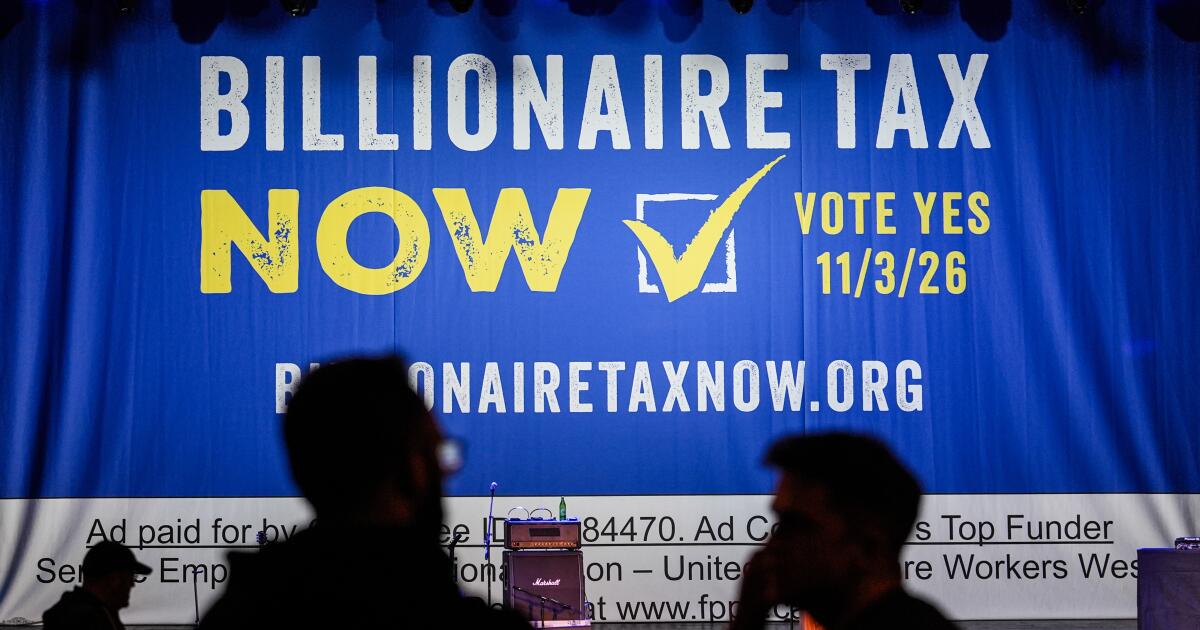
Billionaire tax proposal faces hurdles as it moves closer to November ballot
-
 Science31 minutes ago
Here’s why the Lincoln Memorial Reflecting Pool went green so fast
-
 Sports34 minutes ago
Shohei Ohtani out of Dodgers’ lineup vs. Orioles for birth of his second child

