Sign up for the Today newsletter
Get everything you need to know to start your day, delivered right to your inbox every morning.

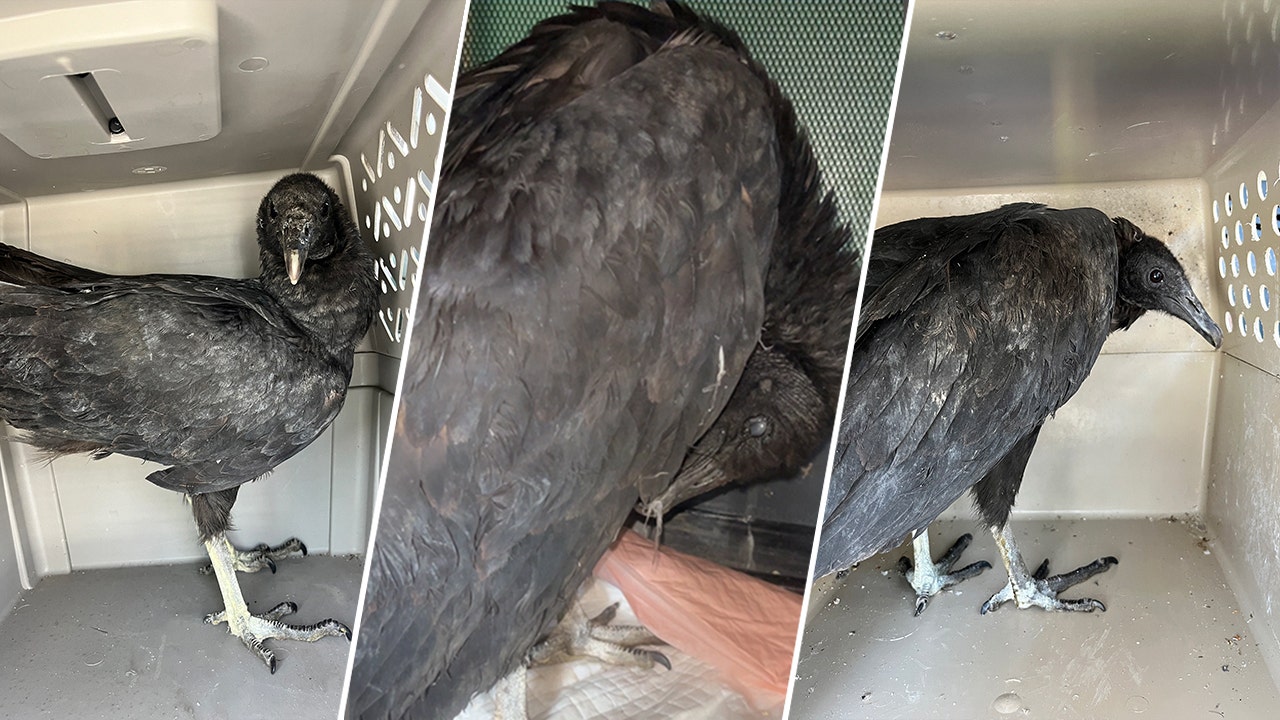
Perhaps these solar eclipse spectators had a little bit too much fun preparing for the event — two black vultures found “drunk” inside a dumpster in Watertown, Connecticut.
The vultures were rescued by Watertown Animal Control the day before the eclipse on April 7, and transported to A Place Called Hope, a wildlife rehabilitation center just under an hour away in Killingworth.
“The most peculiar symptoms had to do with the fact that they were in and out of consciousness,” A Place Called Hope Director Christine Cummings shared in an interview with Fox News Digital.
VIOLA THE CIRCUS ELEPHANT WITH HISTORY OF ESCAPES BREAKS FREE AGAIN IN MONTANA, HEADS TOWARD CASINO SLOTS
“One moment, [they] passed out, the next they were explosive and feisty. We had to run a battery of tests to eliminate our theories, and kept fearing the worst.”
The many tests determined that the dumpster-diving birds of prey were simply “too drunk to fly.”
Two black vultures were discovered in a Watertown, Conn., dumpster “drunk” off of fermented foods. They were then rehabilitated by A Place Called Hope, a rehabilitation center for wild birds. (A Place Called Hope)
According to Cummings, working with drunken birds is nothing new, as the two likely became intoxicated after feasting on fermented foods in the uncovered garbage bin.
“We have dealt with intoxicated songbirds from fermented berries in the fall, and drunken crows who also consumed fermented bar fruit from a dumpster behind an establishment,” she said.
However, these intoxicated vultures mark a first for the wildlife center, as birds of prey “eat [a] whole prey diet, whereas corvids and vultures are omnivores and take advantage of the foods they scavenge.”
CALIFORNIA AQUARIUM PAIRS STRANDED SEA OTTER PUPS WITH SURROGATE MOMS
The two vultures required what any human would need after enjoying a raucous night out — plenty of rest, fluids, and a hearty breakfast.
A Place Called Hope released the birds back into the wild on April 9, where they immediately regrouped with their colony.
Two black vultures were discovered in a Watertown, Connecticut dumpster “drunk” off of fermented foods. They were then rehabilitated by A Place Called Hope, a rehabilitation center for wild birds. (A Place Called Hope)
Cummings offered an important reminder to folks eager to rescue an animal in distress: “For anyone who comes across a wild animal in distress, they should consider the dangers involved with the species and the way they defend themselves before attempting to contain,” she said.
“The predatory birds of prey species can be dangerous to handle due to their taloned feet, so some experience is necessary.”
Two black vultures were discovered in a Watertown, Conn., dumpster “drunk” off of fermented foods. They were then rehabilitated by A Place Called Hope, a rehabilitation center for wild birds. (A Place Called Hope)
It is recommended not to approach wild animals, but to swiftly call local animal control or relevant authorities instead.
While birds flying intoxicated may not be illegal in Connecticut, “These two [vultures] were underage!” Cummings said.
For more Lifestyle articles, visit foxnews/lifestyle
Read the full article from Here


The Pennsylvania Department of Health (DOH) is working directly with local health care and community partners to address the increasing number of measles cases statewide among people who are not fully vaccinated, particularly in the Lancaster-Lebanon region.
The Department is working around the clock to mitigate the spread of this highly contagious virus, with experts and medical professionals ready to respond to any new cases that may emerge.
“The single most effective way to avoid contracting or spreading measles is to get fully vaccinated. We know Pennsylvanians care about their communities, and doing their part to protect our youngest and most vulnerable residents creates the immunity we need in every city and town to keep this disease at bay,” said Secretary of Health Dr. Debra Bogen. “High rates of vaccination in a community reduce the spread of the highly contagious measles virus. The Department of Health is working hand in hand with a host of community partners to ensure people across the state have access to accurate information and to vaccines close to home.”
In 2026 so far, 84 measles cases have been identified in Pennsylvania, with 72 cases in the Lancaster-Lebanon region alone, beginning in late April, including: Berks (2), Dauphin (2), Lancaster (41), Lebanon (20), Northumberland (6), and York (1) counties. Earlier in the year, cases were identified in Lancaster (8), Montgomery (3), and Chester (1).
The Department, along with many partners, is increasing vaccine information and access across the Commonwealth. This year, state health center staff administered more than 1,300 doses of the measles, mumps, and rubella (MMR) vaccine to Pennsylvanians. DOH continues to host pop-up MMR vaccine clinics, providing more than 430 doses to residents in the Lancaster-Lebanon region since cases were first identified there in late April.
Making vaccine accessible
Two doses of the MMR vaccine provide the best protection against measles, as it is 97% effective at preventing a person from ever contracting it. The vaccine has long proven effective over several decades. Since the vaccine was introduced in the early 1960s, measles cases and deaths in the U.S. have decreased by more than 97% compared to the pre-vaccine era.
Educating health care providers
According to the Centers for Disease Control and Prevention (CDC), people most at risk are:
• Unvaccinated
• Infants too young to have received the MMR vaccine.
• People from parts of the world where there is low vaccination coverage or where there is circulating measles.
More information on measles is available at — www.pa.gov/measles.
L&I preparing students for life
The Pennsylvania Department of Labor & Industry (L&I) this week showcased the ongoing success and impact of its Summer Academies for high school students who are blind or visually impaired, and for students who are deaf or hard of hearing.
These week-long programs — hosted annually by L&I’s Office of Vocational Rehabilitation (OVR) and held at Penn State’s University Park campus — provide students the tools and training needed to live independently, pursue higher education, and secure meaningful employment.
L&I Secretary Nancy A. Walker met with 18 students attending the Summer Academy for Students who are Deaf and Hard of Hearing. Last week, she visited 18 students participating in the Summer Academy for Students who are Blind and Visually Impaired. Both programs are offered at no cost to students or families through federal Pre-Employment Transition Services (Pre-ETS) funding.
“These summer academies provide students with disabilities an immersive experience on a college campus where they can socialize with peers and develop the practical skills needed for a successful transition to college and the workforce,” said Secretary Walker. “Every student faces unique challenges, and we know students with disabilities often benefit from additional support.”
Gov. Josh Shapiro’s proposed 2026-27 budget calls for an additional $1 million investment in OVR, which helps people of all ages with disabilities find employment through personalized services such as vocational counseling and guidance, goal setting, training, and job placement.
Each year, OVR engages with more than 76,000 students and adults with disabilities across all programs. Last year, nearly 18,000 students with disabilities received Pre-ETS, and OVR placed more than 6,400 individuals into competitive integrated employment.
Students participating in OVR’s Summer Academies experience authentic college living, including dormitory accommodations, dining hall meals, and team-building activities. The curriculum covers mobility training, requesting accommodations, use of assistive technology, emotional and social development, career planning, and adaptive sports.
Highlighting plan to improve health
Pennsylvania Department of Human Services (DHS) Secretary Dr. Val Arkoosh and Pennsylvania Department of Agriculture Secretary Russell Redding this week shared the Shapiro Administration’s proposal to demonstrate how consistent access to healthy foods can have a tangible impact on a person’s health and well-being.
Programs that use food as medicine in Pennsylvania and around the country have been shown to improve the trajectory of chronic illness and help shift health care spending – a strategy the Shapiro Administration is looking to expand here in Pennsylvania.
“Our health is so much more than access to care – what we eat, where we live, and our sense of community and support affect how healthy we are, how we manage illness and disease, and our overall quality of life,” said Secretary Arkoosh. “Investments in Health is our opportunity to make strategic investments in proven prevention efforts like ‘Food Is Medicine’ that will help Pennsylvanians be healthier and improve our state’s financial health as well by using strategies that lower Medicaid spending. When we take a positive, proactive approach to improve Pennsylvanians’ health and quality of life, everyone benefits.”
Food-as-medicine strategies can significantly reduce hospital admissions among people with diet-sensitive conditions and lower health care spending by an average of 16%. Currently, PA DHS works with community-based organizations to provide medically tailored meals under Medicaid on a limited basis.
With a $900,000 investment in state funds, Pennsylvania could leverage additional federal matching funds, bringing total funding to $2.3 million.
“Fresh, high-quality food can be our best preventative medicine,” Pennsylvania Agriculture Secretary Russell Redding said. “That makes Pennsylvania farmers our best pharmacy. The Shapiro Administration is committed to investing in a strong, resilient food system as an investment in increased health and food security for the future of all Pennsylvanians.”
Investments in Health will provide funding in three key areas:
• Food Is Medicine: $900,000 in state funds to leverage federal investment for a total of $2.3 million to support a pilot program that will bring medically tailored meals to Medicaid recipients with diet-sensitive health conditions;
• Reentry Supports: $900,000 in state funds to leverage additional federal funding for a total of $2.7 million that will support pre-release Medicaid coverage for incarcerated individuals returning to their communities from State Correctional Institutions; and
• Housing Stability: $1 million in state funding to leverage additional federal funding for a total of $2.5 million to launch a pilot that will help Pennsylvanians experiencing homelessness connect to stable housing and services.
Targeted budget investments in these proven services can improve people’s health and quality of life, reduce health care costs and hospital visits, improve public safety, support economic and workforce development, and reduce recidivism.
Reach Bill O’Boyle at 570-991-6118 or on X @TLBillOBoyle.

Local News
A car carrying a family of three went into the Seekonk River in Rhode Island Sunday evening, authorities said.
The vehicle entered the river near the Taft Street boat ramp shortly before 7:30 p.m., Pawtucket Police Chief Tina Goncalves said in a statement.
A bystander riding a jet ski heard the car dive into the water and attempted to help, while another witness called 911, according to Goncalves.
First responders arrived within three minutes of the emergency call, Goncalves noted.
The vehicle’s three occupants are believed to still be inside, The Boston Globe reported.
Recovery efforts resumed Monday, with Pawtucket police and fire personnel working alongside Rhode Island State Police and other state agencies to remove the vehicle from the river, Goncalves said.
“Conditions are extremely challenging for dive teams due to the strong current and poor underwater visibility,” she added.
A video released by the Globe shows the car being recovered from the water Monday afternoon.
Authorities have not released the identities or conditions of the occupants.
“We ask that you please keep the family and their loved ones in your prayers as our first responders continue recovery efforts,” Goncalves said.
Get everything you need to know to start your day, delivered right to your inbox every morning.

BROWNINGTON, Vt. (WCAX) – Vermont authorities are searching for a missing Troy woman.
The Vermont State Police say Nicole Richardson, 39, was last seen Friday evening at a home on Pepin Road in Brownington. She was expected to travel through Orleans to Loop Road in Troy, but never arrived and has not been in contact with her family.
Richardson was last seen wearing a black and white dress and driving a maroon 2008 Hyundai Accent sedan with Vermont registration KVW103.
Anyone with information on Richardson’s whereabouts is asked to call the Vermont State Police Derby barracks at 802-334-8881.
Copyright 2026 WCAX. All rights reserved.


Toddler who survived cardiac arrest and was left at hospital finds forever home


2 found dead in vehicle in Ohio park, police say


Nonprofit Pike Off OTA sues to halt East-West Connector turnpike over environmental claims


Oregon Supreme Court to hear $1B PacificCorp wildfire case


Pennsylvania Roundup: State takes action to contain spread of measles, bolstering public health


Car carrying family of 3 pulled from Seekonk River in Rhode Island


SC moves to revive death-penalty in double murder after federally commuted sentence


Traffic slowing down ahead of yearslong viaduct makeover in downtown Sioux Falls

