West
Newsom refuses to back fellow Dems taking on Google, Big Tech through news link legislation

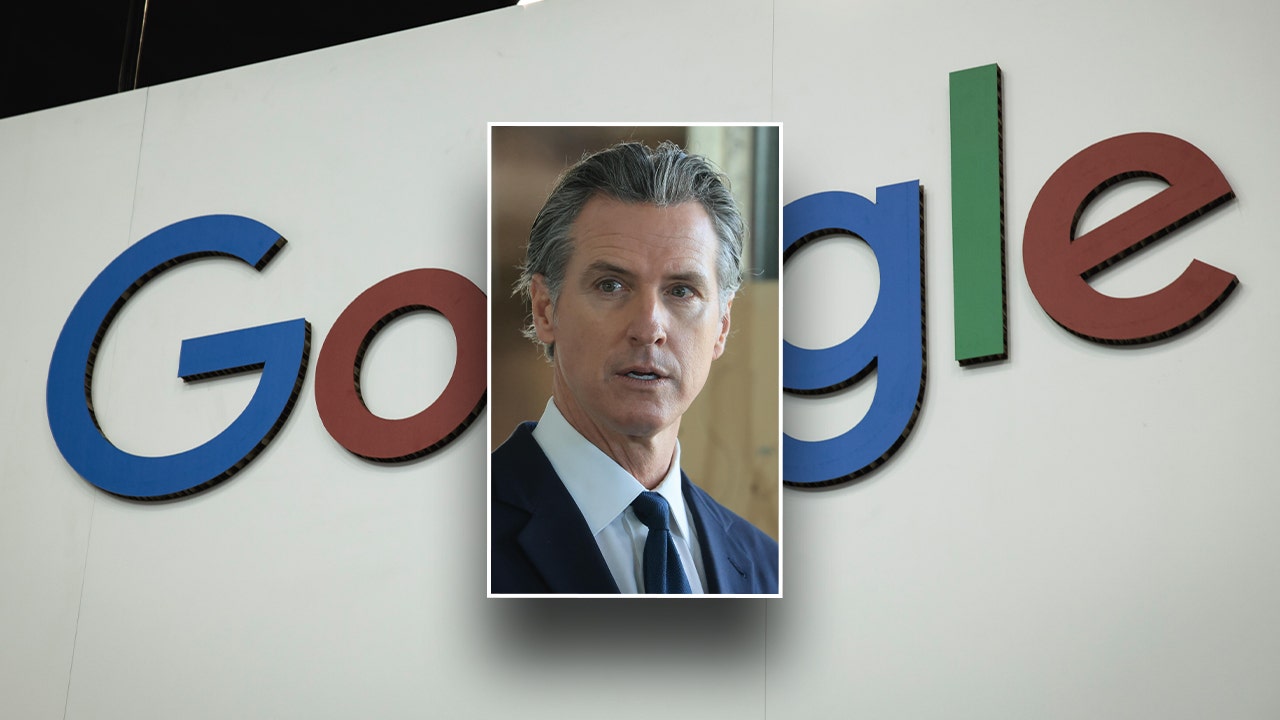
Gov. Gavin Newsom is staying silent on a Democrat-led bill moving through the legislature that would create a “link tax” requiring big tech companies, like Google, to pay media companies for linking to their pages.
Last week, Google began removing news links to news pages while the legislation, dubbed the California Journalism Preservation Act (CJPA), is under consideration. The bill, authored by Democrat Assemblymember Buffy Wicks, would effectively charge Google, Microsoft, Facebook and other big tech companies for linking to state news websites. The collected “link tax,” as Google calls it, would go toward supporting struggling newsrooms, according to the text.
While Newsom’s office declined to “comment on pending legislation” pioneered by his Democrat counterparts to Fox News Digital, the governor previously partnered with Google on initiatives during the COVID-19 pandemic in 2020, such as incorporating the state’s “earthquake early warning technology into all Android phones.”
At the time, Newsom gushed over the partnership, saying, “It’s not every day that Silicon Valley looks to state government for state-of-the-art innovation, but that’s exactly what is happening today.”
PRESSED BY GOP SENATOR, ZUCKERBERG APOLOGIZES MID-HEARING TO FAMILIES OF VICTIMS OF BIG TECH HARMS IN AUDIENCE
Gov. Gavin Newsom is remaining quiet regarding a new bill that would create a “link tax” requiring big tech companies to pay media companies for linking to their sites. (Screenshot/NBC)
Also in 2020, Newsom partnered with Google to give away 4,000 Chromebooks and free Wi-Fi hot spots for mobile users up to 90 days with unlimited broadband internet access to 100,000 households in rural regions of the state. In 2021, Newsom signed SB 7 into law, which changed real estate zoning laws to allow denser housing construction. Alongside him was Google’s president of global affairs, Kent Walker.
“To be here with Google and the incredible private sector investment and the faith and devotion to the future of this city and this region and this state is exactly where we want to be and it’s why we are here,” Newsom said to reporters at the time.
However, Google said in a statement last week the proposed CJPA, in its current form, would “up-end” its model of helping publishing sites grow their audiences without financial penalties.
“As we’ve shared when other countries have considered similar proposals, the uncapped financial exposure created by CJPA would be unworkable,” Google said in a statement. “If enacted, CJPA in its current form would create a level of business uncertainty that no company could accept.”
CA REPUBLICAN CRITICIZES GAVIN NEWSOM’S HOMELESS STRATEGY: ‘YOU CAN’T KEEP THROWING MONEY AT THE SYMPTOMS’
The Media Research Center says that from 2008 through February 2024, “Google has utilized its power to help push to electoral victory the most liberal candidates, regardless of party, while targeting their opponents for censorship.” (Photographer: Marlena Sloss/Bloomberg via Getty Images)
The big tech company said that to “prepare” for possible CJPA consequences, they have begun a soft roll-out of removing links to California news websites to test the impact it would have on the company’s “product experience.”
How much the companies would have to pay would be decided by a panel of three judges through an arbitration process under the bill.
The bill aims to stop the loss of journalism jobs, which have been disappearing rapidly as legacy media companies have struggled to profit in the digital age. More than 2,500 newspapers have closed in the U.S. since 2005, according to Northwestern University’s Medill School of Journalism. California has lost more than 100 news organizations in the past decade, according to Wicks.
BIDEN AGENCY ‘LIKELY’ VIOLATED FREE SPEECH BY WORKING WITH BIG TECH TO CENSOR ELECTION CONTENT: COURT
The Real Facebook Oversight Board embarked on the Facebook Receipts project to expose how big tech lobbyists used power and influence to kill would-be-landmark antitrust bills. (iStock)
“This is a bill about basic fairness — it’s about ensuring that platforms pay for the content they repurpose,” Wicks said. “We are committed to continuing negotiations with Google and all other stakeholders to secure a brighter future for California journalists and ensure that the lights of democracy stay on.”
However, Google argues the bill “undermines news” in the Golden State.
“To avoid an outcome where all parties lose and the California news industry is left worse off, we urge lawmakers to take a different approach,” the company said.
Big tech companies have also been targeted in recent years by state officials and Republican lawmakers, who claim the Biden administration’s alleged coordination with the search engine giants could unfairly impact the discourse around the 2024 election.
The Associated Press contributed to this report.
Read the full article from Here

San Francisco, CA
San Francisco rolls out heightened security measures ahead of World Cup knockout match, 4th of July

The city of San Francisco is taking heightened police and security measures in advance of two major events in the Bay Area this week – the 4th of July and the first knockout round of the FIFA World Cup.
Mayor Daniel Lurie hosted a press conference Monday to address the public on how the city plans to manage the overlapping swarms of soccer fans and 4th of July revelers.
“No matter the occasion, our top priority, and my top priority, remains the same: keeping San Francisco residents and visitors alike safe,” said Lurie.
The two events would be major draws for crowds independently, but combined, and with special occasions marking both, the city wants to ensure that security is a top priority.
The World Cup has already brought hundreds of thousands of people from across the country and the world to the Bay Area, but this week’s game at Levi’s Stadium in Santa Clara is especially notable for the San Francisco as the host city and the United States as a host nation. The stadium, renamed San Francisco Bay Area Stadium for the duration of the World Cup, will host the knockout round match between the U.S. and Bosnia and Herzegovina on Wednesday.
Official fan zones and watch parties for the U.S. match, as well as for Mexico’s match against Ecuador on Tuesday, will be held at multiple locations in San Francisco, including at Thrive City at the Chase Center and at the Pier 39 Fan Zone.
This year’s 4th of July in San Francisco, which already boasts large crowds across the city each year, will have another draw as the city prepares to celebrate the nation’s 250th birthday. The city will be hosting a fireworks show on the Golden Gate Bridge on Saturday night – only the third time that pyrotechnics have ever been set off from the iconic San Francisco landmark. Fireworks will be launched off the two towers of the bridge and from barges in the water.
The Golden Gate Bridge show will be the only official one in the city – fireworks are illegal in San Francisco.
Authorities advised attendees to use public transportation and to leave plenty of time on both ends of their travel for traffic and delays. Caltrans has announced road closures and detours on U.S. Highway 101 and the entire Golden Gate Bridge for the fireworks show.
San Francisco Police Chief Derrick Lew said the department is collaborating with multiple state and local agencies to keep people safe, and that police officers have had their days off cancelled to meet the staffing needs that July 4 will require.
“This week will be safe because that’s what we’ve been doing every day,” Lurie said. “It is a glorious time to be here in San Francisco.”
Lurie cited past heavily attended events like Sunday’s San Francisco Pride Parade and Super Bowl 60 in February as examples of the city’s successful management of major crowds.

The Nuggets are declining Jalen Pickett’s fourth-year team option for the 2026-27 season, releasing him from his contract, league sources told The Denver Post.
Former Nuggets general manager Calvin Booth drafted Pickett with the 32nd overall pick in 2023. The 6-foot-2 reserve combo guard has struggled to break into Denver’s everyday rotation throughout his first three years in the league.
His $2.41 million salary next season would’ve offered the Nuggets a sliver of cap relief, but they chose instead to move on from the former Penn State star. Monday was the deadline to make a decision on his option.
Pickett, 26, averaged 5.2 points, 2.3 rebounds and 2.3 assists in 16.1 minutes per game last season. He appeared in 50 games, highlighted by a career-high 29-point, seven-assist performance in January to lead the Nuggets in an upset over Philadelphia without their entire starting lineup.
Pickett is shooting 38.7% from the 3-point line on two attempts per game in his first three years. He also boasts a sturdy 3.63 career assist-to-turnover ratio.
But he’s remained a deep bench option under two different head coaches in Denver, from Michael Malone to David Adelman. Booth was fired in April 2025. Then, new co-general managers Jon Wallace and Ben Tenzer signed veteran point guard Tyus Jones off the buyout market late last season when the Nuggets wanted ball-handling depth. Jones received playoff minutes over Pickett during their first-round series against the Timberwolves.
Want more Nuggets news? Sign up for the Nuggets Insider to get all our NBA analysis.

Skip to content
-

 New York34 minutes ago
Read the Indictment of Malik Beasley
-

 Los Angeles, Ca39 minutes ago
Stolen Sea Scouts boat found in Marina del Rey, suspect arrested
-

 Detroit, MI1 hour ago
Michigan House passes bill to restrict big investors from amassing single-family homes
-

 San Francisco, CA1 hour ago
San Francisco rolls out heightened security measures ahead of World Cup knockout match, 4th of July
-

 Dallas, TX1 hour ago
Klyde Warren Park reveals expansion plans, construction timeline
-

 Miami, FL1 hour ago
Person hospitalized after fire breaks out at North Miami Beach apartment building
-

 Boston, MA1 hour ago
Scottish soccer fan who died in Boston was ‘Tartan Army to his core,’ fundraising page says – The Boston Globe
-

 Denver, CO2 hours ago
Nuggets decline Jalen Pickett’s team option for 2026-27 season, sources say

