Connect with us

West

Portland considers banning gas-powered leaf blowers to assuage climate concerns

Published

on

Portland considers banning gas-powered leaf blowers to assuage climate concerns
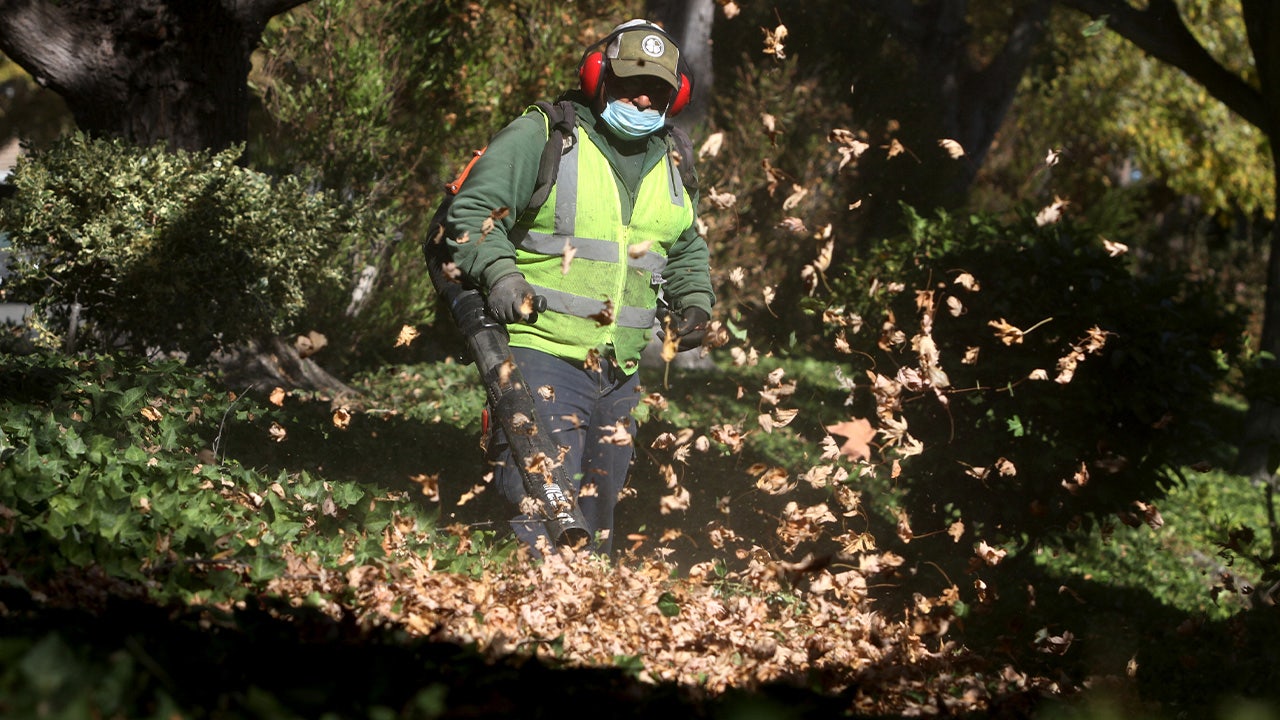
The city of Portland, Oregon, is considering a ban on gas-powered leaf blowers starting in 2026, citing health and climate concerns, air and noise pollution, as well as a disproportionate impact they have on minority and low-income communities.

The proposed ordinance out of Portland’s City Council would phase out the use of gas-powered leaf blowers starting in 2026 for all private and commercial use. If approved, Portland would join the ranks of 100 other cities in the U.S. that have limited or banned the use of gasoline leaf blowers. 

“The use of gasoline leaf blowers can cause direct harm to people within the vicinity by contributing to localized air pollution, creating excessive noise, and causing other negative health impacts to their operators who disproportionately identify as Latinx or Hispanic,” the ordinance states. 

Gas-powered leaf blowers cause other “negative health impacts to their operators who disproportionately identify as Latinx or Hispanic,” according to the Portland City Council.  (Sarah Dussault/MediaNews Group/The Mercury News via Getty Images)

Gas-powered blowers would still be permitted through 2028 from October 1 to December 31, because the city recognizes “electric leaf blowers are not yet powerful enough to practically move wet leaves during the winter season.” Effective January 1, 2028, gasoline leaf blowers would be prohibited all year.

Advertisement

MEET THE DEEP-POCKETED CLIMATE NONPROFIT PUSHING GAS STOVE BAN WITH DIRECT LINE TO BIDEN ADMIN, CHINA LINKS

The city’s Leaf Blower Policy Work Group recommended the ban because of the health impacts resulting from dangerous emissions, which “fall disproportionately on hired landscape maintenance workers from communities of color, low-income communities, and other historically marginalized populations.”

Downtown Portland, Oregon on Wednesday, April 22, 2020.  (Moriah Ratner/Bloomberg via Getty Images)

The city also noted that gasoline leaf blowers commonly have “two-stroke engines that incompletely combust their fuel” which results in the emission of benzene and additional carcinogenic substances.

“In 2017, the city council established a goal of meeting 100 percent of community-wide energy needs using renewable energy by 2050 to help reduce the public health impacts of climate change, which disproportionately affect vulnerable communities already facing existing socioeconomic and health inequities,” the ordinance explained. 

Advertisement

BLUE STATE’S BAG BAN MEANT TO PROTECT ENVIRONMENT BACKFIRED AT STAGGERING RATE: STUDY

The first violation would be a warning, but for repeated violations, citizens could receive penalties of up to $1,000, according to KGW8. 

Nearly 90% of people are in support of the ban, while most of the opposition has been over potential cost increases and the short time frame to transition to electric equipment, KGW8 reported. Eligible businesses would be able to receive a rebate through Multnomah County, which would enforce the ban, to replace gasoline equipment with electric blowers. 

Over 100 other cities in the U.S. have limited or banned the use of gasoline leaf blowers.  (MediaNews Group/The Mercury News via Getty Images / Contributor)

“The phase out of gasoline powered leaf blowers will hopefully mark the beginning of a new chapter in our work on climate,” Multnomah County’s Sustainability Director John Wasiutynski told KGW8. 

Advertisement

WHITE HOUSE CLIMATE CZAR MET PRIVATELY WITH ECO GROUP PUSHING GAS STOVE BANS

Local landscaper Malik Hopkins, who owns and operates his own business, said he isn’t opposed to making changes to help curb climate concerns, but explained he still relies on gas-powered blowers, the local outlet reported. He called the move a “pro-con” thing, because electric batteries don’t last as long as a tank of gas and that the electric blowers are not as powerful as gas-powered.

“It’s going to affect a lot of people, especially people who cannot afford it (like) guys that are starting out,” he said. “Those batteries will go for about two or 300 bucks.”

Advertisement

Read the full article from Here

Continue Reading
Click to comment

Leave a Reply

Your email address will not be published. Required fields are marked *

This site uses Akismet to reduce spam. Learn how your comment data is processed.

Arizona

This prominent attorney collects art to celebrate his Mexican heritage

Published

on

This prominent attorney collects art to celebrate his Mexican heritage


play

  • Prominent Arizona attorney Jose Cardenas possesses a large private collection of Mexican and Mexican American art.
  • Cardenas, who rose from humble immigrant roots, amassed the collection with his late wife, Virginia, as an embrace of their shared Mexican heritage.
  • He frequently opens his home to visitors for tours and events, sharing stories about the artwork and his life.

Prominent Arizona attorney Jose Cardenas loves to show off his vast collection of Mexican and Mexican American art.

But he once made a fool of himself arguing with the legendary Mexican journalist Elena Poniatowska over a piece of artwork on display in his spacious 4,000-square-foot Chandler home.

Advertisement

Cardenas was giving Poniatowska a tour of his art collection during a reception he hosted for the writer. She was in town giving a lecture at Arizona State University.

“This is a self-portrait of Siqueiros,” Cardenas remembers telling Poniatwoska, referring to David Alfaro Siqueiros, one of Mexico’s three most famous muralists.

Poniatowska took a look at the sketch and shook her head, “No it’s not.”

The two got into a back and forth, with Cardenas continuing to insist the man depicted in the painting was Siqueiros.

“That’s what they told me when I bought it at the gallery in San Francisco,” Cardenas remembers telling the Mexican author.

Advertisement

Finally Cardenas backed down, thinking, “She’s getting up in years. I’m not going to embarrass her and argue with her.”

A few days later, Cardenas was flipping through TV channels. He came across a PBS documentary about the 1970 Chicano riots in East Los Angeles. The documentary highlighted a portrait Siqueiros had painted in homage to Ruben Salazar, the Los Angeles Times journalist killed by a tear gas canister fired by a Los Angeles County sheriff’s deputy during the protests.

Poniatowska was right. The figure in the painting was not Siqueiros, the Mexican muralist. It was indeed Ruben Salazar, the Los Angeles Times journalist, as painted by Siqueiros.

Advertisement

Cardenas tells this story when he gives tours of his art collection to visitors. They break out in laughter.

“You were mansplaining” one visitor told him. “No, I was being an idiot,” Cardenas said, “because why would you argue with her, of all people. She knew (Siqueiros). She wrote about him. She interviewed him. Not the person to say, ‘No, you are wrong.’”

Cardenas built prestigious career from humble roots

The personal art tours Cardenas hosts weekly at his home are peppered with similar stories that showcase his self-deprecating humor and highlight his enormous pride in his humble upbringing and Mexican heritage.

Cardenas comes from modest working-class Mexican immigrant roots. But he rose to become one of the most prominent and successful attorneys in Arizona. He has used his considerable wealth to amass what artists say is the largest collection of Mexican and Mexican-American artwork in the state, which he shares often with visitors during various events at his home, from personal tours to his annual post-Christmas bash.

Born in 1952, Cardenas is the son of an immigrant dad from the Mexican state of Sinaloa, and a Mexican-American mom. Cardenas grew up in Vegas Heights, a working-class Hispanic neighborhood west of Las Vegas that was still segregated. His father, Fortunato Cárdenas Sánchez, had a sixth-grade education. He worked as a foreman for construction company that laid pipelines. He was killed in a work accident when Cardenas was 15.

Advertisement

His mother, Gloria Frances Gómez Vigil, was born in a small town in northern Nevada to Mexican immigrant parents who eventually moved to Las Vegas. She only attended school through eighth grade.

After his father died, Cardenas, the second-oldest of four children, wanted to quit school and work to help his family with finances. But Cardenas was a good student, and his mother insisted he stay in school and encouraged him to attend college.

Cardenas became the first person in his family to graduate from high school and then college. He earned a bachelor’s degree in political science from the University of Nevada, Las Vegas and then a law degree from Stanford.

After law school, Cardenas clerked for a federal judge in San Francisco and then moved to Arizona in 1978 to work for the powerhouse law firm Lewis and Roca. Cardenas mostly handled commercial litigation but also did pro bono work on death penalty cases. In 1999, he was named managing partner, becoming one of the few Hispanic managing partners of a major law firm in the nation.

Advertisement

In 2009, Cardenas left Lewis and Roca to serve as chief legal adviser and senior vice president at Arizona State University, a position he held until 2022.

For nearly 20 years, Cardenas also hosted Horizonte, a public affairs show focusing on Arizona issues through a Hispanic perspective on Arizona PBS (KAET-TV Channel 8). He stepped down in 2023. Now semi-retired, the 73-year-old Cardenas continues to serve as special senior university adviser at ASU.

Cardenas and his Mexican-born wife, Virginia, were childhood sweethearts. When Virginia turned 15, Cardenas was one of the escorts in her quinceañera coming-of-age celebration. The two then began dating in ninth grade. They married when Cardenas was 19 and Virginia was 20 by one month. She worked as a counselor at Chandler High School. She died in July 2012 of kidney cancer.

Cardenas and Virginia bought their first artwork when he was still a financially struggling law student at Stanford. The two prints Cardenas purchased from a fellow student are now among the thousands of pieces of artwork that adorn his home.

Couple made frequent trips to purchase art

Cardenas said he and Virginia were introduced to the world of Mexican and Mexican American art when they moved to Arizona and met artists Zarco and Carmen Guerrero at a party. They are the founders of Xicanindio, the original name of Xico, a nonprofit organization that promotes Latino and Indigenous art and culture.

Advertisement

The couple became deeply involved in the organization. Virginia became the program director for several years and Cardenas served on the board of directors, including a stint as president.

Over the years, Cardenas and Virginia traveled frequently to Mexico City, Sante Fe and San Francisco to purchase paintings, crosses, ceramics, prints and pottery that cover practically every inch of Cardenas’ ranch home in Chandler.

Cardenas said he considers the collection an embrace of the Mexican heritage he and Virginia shared.

“It’s pride,” Cardenas said during an interview at his home.

“Virginia was born in Mexico. She came here when she was eight,” Cardenas said. “And I never considered myself Mexican American because when I was growing up, those terms weren’t used. So we were Mexicans.”

Advertisement

After Virginia died in 2012, Cardenas commissioned East L.A.-born artist George Yepes to paint a portrait of her. Yepes is best known as the artist who painted the cover of the 1988 Grammy Award-winning album by Los Lobos, “La Pistola y El Corazón.”

At first, Yepes turned down the commission after Cardenas showed her photo of Virginia, who was known for her dazzling smile.

“I can’t do it,” Cardenas recalled Yepes saying. “She’s always smiling. I don’t do smiles.”

A few weeks later, Yepes emailed Cardenas. “I think I can do it.”

Advertisement

The 7-foot-tall portrait Yepes painted of Virginia now hangs in Cardenas’ living room, where it dominates one of the walls. Cardenas considers it his most treasured piece, along with a portrait by a different artist of his three grown sons when they were young.

The funny thing about this is she was pretty short, she was barely five foot tall. This painting is seven feet. And she’s sitting down. So talk about bigger-than-life-size,” Cardenas told a group of visitors during one of his tours.

Home is an art gallery, with frequent visitors

Cardenas frequently opens his home to visitors, serving as docent as he escorts visitors from room to room, telling stories along the way about various pieces of artwork.

In addition to the personal tours, Cardenas hosts an annual open house to showcase the ofrendas he creates in honor of Dia de los Muertos. At his Day of the Dead open house in November 2025, during the Trump administration’s ongoing mass deportation effort, one of the ofrendas focused on immigration. The ofrenda included photos of Cardenas’ relatives from Mexico, along with numerous quotes by Pope Francis that Cardenas printed out and framed.

Advertisement

“Migrants and refugees are not pawns on the chessboard of humanity,” read one quote.

“It is necessary to respond to the globalization of migration with the globalization of charity and cooperation, in such a way as to make the conditions for migrants more humane,” read another.

Cardenas also hosts an annual Los Tres Reyes Magos party every January in honor of Three Kings Day, a Christian holiday that is popular in Mexico and Latino America and marks the biblical visit of the three kings to the baby Jesus. This year’s party, attended by some of the most influential people in Arizona, will be Jan. 10.

One of the most powerful pieces on display in his home is a painting Cardenas commissioned as a tribute to the victims of the 2022 mass school shooting in Uvalde, Texas. The shooting killed 19 students and two teachers, and injured 21 others. The artwork, which Cardenas displays in his dining room, also was painted by Yepes, the artist who painted the portrait of Virginia.

The painting depicts a woman draped in an American flag, her arms and hands outstretched in the shape of a crucifix, with swords piercing her exposed heart, while doves flutter around her head, wrapped in a crown of thorns.

Advertisement

‘Everything they have in the collection was for them’

One of the most striking pieces is a massive Talavera ceramic jar created by artist and restauranteur Gennaro Garcia, a native of San Luis Rio Colorado, Sonora, who now lives in Phoenix. Garcia created the piece in Puebla, Mexico, where he studied the hand-painted Mexican ceramic artform that blends Spanish and Indigenous influences.

Cardenas had the piece shipped to his home, where he had to remove the table from his kitchen to make room for the artwork, which towers over six feet in height.

Garcia said he strived for years to have his artwork included in the Cardenas’ collection.

As an artist, you want you want to be in in collection that you admire,” Garcia said. “His collection was already so good, and I wanted to have my name associated with those other artists” and with Virginia and Jose Cardenas as collectors.

Advertisement

Garcia describes the collection as a love story between the couple.

“Everything they have in the collection was for them,” Garcia said. “I always remember them standing in front of the art, talking about it, and then deciding to buy it” as a couple.

Garcia said he was not aware of a larger personal collection of Mexican and Mexican American artwork in Arizona.

“It’s the biggest one. Easy,” Garcia said.

Cristina Cardenas, a Mexican-born artist based in Tucson, agreed.

Advertisement

“In Arizona, to tell you the truth, I haven’t met anybody else with a bigger or more rich collection” especially of Mexican-American and Arizona artists, said Cardenas, who is not related to Jose.

She has sold numerous paintings to Cardenas. The collector also has commissioned her to paint several murals at his home, including a mural of a smiling Virginia that adorns an outdoor wall in the home’s sizable patio, and a mural of Mexican artist Frida Kahlo that greets visitors to his home.

The artist said Cardenas and Virginia have supported many artists through their collecting. They have played a role in opening the door for Latino artists to sell their work to other collectors, Cardenas said, noting that she once sold a print to former Arizona governor and U.S. Homeland Security Secretary Janet Napolitano through an introduction by Cardenas.

“It’s a commitment to represent our people, our communities, and to represent Mexico and the really highest rich cultural history that it has,” the artist said.

Advertisement

She noted that visitors will notice that Cardenas and Virginia have had a strong interest in collecting female figurative art. They were influential in shifting Xico artists away from depictions of low-riders and other traditional Chicano symbols toward prints and paintings that celebrate female figurative art.

Cardenas the artist, and others, often wonder what will happen to the massive collection after Cardenas is gone.

“It has to be preserved and it has to stay together. That’s my recommendation,” Cardenas the artist said.

Collection is a priceless legacy

Jose Cardenas said he isn’t sure what will become of his collection. He knows that some of the pieces will be passed down to his children and family, including the portrait of Virginia. The rest may go the Hispanic Research Center at Arizona State University, he said.

In the meantime, his collection continues to expand. He recently mounted two new pieces by renowned contemporary American artist Ayana Jackson, who reconstructs the portraiture of the 19th and early 20th centuries to, according to her bio, “assess the impact of the colonial gaze on the history of photography.”

Advertisement

The two pieces Cardenas acquired depict the artist suspended in midair in a battle stance while in character as Adelita, the Mexican female revolutionary soldier.


Source link

Continue Reading

California

How Trump’s tariffs ricochet through a Southern California business park 

Published

on

How Trump’s tariffs ricochet through a Southern California business park 


  • Tariffs impact businesses in Rye Canyon differently
  • Supreme Court may rule on Trump’s emergency tariffs soon
  • Some businesses adapt, others struggle with tariff costs

VALENCIA, California, Jan 9 (Reuters) – America’s trade wars forced Robert Luna to hike prices on the rustic wooden Mexican furniture he sells from a crowded warehouse here, while down the street, Eddie Cole scrambled to design new products to make up for lost sales on his Chinese-made motorcycle accessories.

Farther down the block, Luis Ruiz curbed plans to add two imported molding machines to his small plastics factory.

Sign up here.

“I voted for him,” said Ruiz, CEO of Valencia Plastics, referring to President Donald Trump. “But I didn’t vote for this.”

All three businesses are nestled in the epitome of a globalized American economy: A lushly landscaped California business park called Rye Canyon. Tariffs are a hot topic here – but experiences vary as much as the businesses that fill the 3.1 million square feet of offices, warehouses, and factories.

Advertisement

Tenants include a company that provides specially equipped cars to film crews for movies and commercials, a dance school, and a company that sells Chinese-made LED lights. There’s even a Walmart Supercenter. Some have lost business while others have flourished under the tariff regime.

Rye Canyon is roughly an hour-and-a-half drive from the sprawling Ports of Los Angeles and Long Beach. And until now, it was a prime locale for globally connected businesses like these. But these days, sitting on the frontlines of global trade is precarious.

The average effective tariff rate on imports to the U.S. now stands at almost 17%–up from 2.5% before Trump took office and the highest level since 1935. Few countries have been spared from the onslaught, such as Cuba, but mainly because existing barriers make meaningful trade with them unlikely.

White House spokesman Kush Desai said President Trump was leveling the playing field for large and small businesses by addressing unfair trading practices through tariffs and reducing cumbersome regulations.

‘WE HAD TO GET CREATIVE’ TO OFFSET TRUMP’S TARIFFS

Rye Canyon’s tenants may receive some clarity soon. The U.S. Supreme Court could rule as early as Friday on the constitutionality of President Trump’s emergency tariffs. The U.S. has so far taken in nearly $150 billion under the International Emergency Economic Powers Act. If struck down, the administration may be forced to refund all or part of that to importers.

Advertisement

For some, the impact of tariffs was painful – but mercifully short. Harlan Kirschner, who imports about 30% of the beauty products he distributes to salons and retailers from an office here, said prices spiked during the first months of the Trump administration’s push to levy the taxes.

“It’s now baked into the cake,” he said. “The price increases went through when the tariffs were being done.” No one talks about those price increases any more, he said.

For Ruiz, the plastics manufacturer, the impact of tariffs is more drawn out. Valencia makes large-mouth containers for protein powders sold at health food stores across the U.S. and Canada. Before Trump’s trade war, Ruiz planned to add two machines costing over half a million dollars to allow him to churn out more containers and new sizes.

But the machines are made in China and tariffs suddenly made them unaffordable. He’s spent the last few months negotiating with the Chinese machine maker—settling on a plan that offsets the added tariff cost by substituting smaller machines and a discount based on his willingness to let the Chinese producer use his factory as an occasional showcase for their products.

“We had to get creative,” he said. “We can’t wait for (Trump) to leave. I’m not going to let the guy decide how we’re going to grow.”

Advertisement

‘I’M MAD AT HIM NOW’

To be sure, there are winners in these trade battles. Ruiz’s former next-door neighbor, Greg Waugh, said tariffs are helping his small padlock factory. He was already planning to move before the trade war erupted, as Rye Canyon wanted his space for the expansion of another larger tenant, a backlot repair shop for Universal Studios. But he’s now glad he moved into a much larger space about two miles away outside the park, because as his competitors announced price increases on imported locks, he’s started getting more inquiries from U.S. buyers looking to buy domestic.

“I think tariffs give us a cushion we need to finally grow and compete,” said Waugh, president and CEO of Pacific Lock.

For Cole, a former pro motorcycle racer turned entrepreneur, there have only been downsides to the new taxes.

He started his motorcycle accessories company in his garage in 1976 and built a factory in the area in the early 1980s. He later sold that business and – as many industries shifted to cheaper production from Asia – reestablished himself later as an importer of motorcycle gear with Chinese business partners, with an office and warehouse in Rye Canyon.

“Ninety-five percent of our products come from China,” he said. Cole estimates he’s paid “hundreds of thousands” in tariffs so far. He declined to disclose his sales.

Advertisement

Cole said he voted for Trump three times in a row, “but I’m mad at him now.”

Cole even wrote to the White House, asking for more consideration of how tariffs disrupt small businesses. He included a photo of a motorcycle stand the company had made for Eric Trump’s family, which has an interest in motorcycles.

“I said, ‘Look Donald, I’m sure there’s a lot of reasons you think tariffs are good for America,” but as a small business owner he doesn’t have the ability to suddenly shift production around the world to contain costs like big corporations. He’s created new products, such as branded tents, to make up for some of the business he’s lost in his traditional lines as prices spiked.

He pulls out his phone to show the response he got back from the White House, via email. “It’s a form letter,” he said, noting that it talks about how the taxes make sense.

Meanwhile, Robert Luna isn’t waiting to see if tariffs will go away or be refunded. His company, DeMejico, started by his Mexican immigrant parents, makes traditional-style furniture including hefty dining tables that sell for up to $8,000. He’s paying 25% tariffs on wooden furniture and 50% on steel accents like hinges, made in his own plant in Mexico. He’s raised prices on some items by 20%.

Advertisement

Fearing further price hikes from tariffs and other rising costs will continue to curb demand, he’s working with a Vietnamese producer on a new line of inexpensive furniture he can sell under a different brand name. Vietnam has tariffs, he said, but also a much lower cost base.

“My thing is mere survival,” he said, “that’s the goal.”

Reporting by Timothy Aeppel; additional reporting by David Lawder
Editing by Anna Driver and Dan Burns

Our Standards: The Thomson Reuters Trust Principles., opens new tab


Source link

Continue Reading

Colorado

Boebert takes on Trump over Colorado water

Published

on

Boebert takes on Trump over Colorado water


Congress failed Thursday to override President Donald Trump’s veto of a Colorado water project that has been in the works for over 60 years. It’s one of two back-to-back vetoes, the first of his second term. But Colorado Republican 4th Congressional District U.S. Rep. Lauren Boebert — known for her fierce MAGA loyalties — still […]


Source link

Continue Reading

Trending

