Business
What does the future of driverless taxi service in Los Angeles look like? It's already here

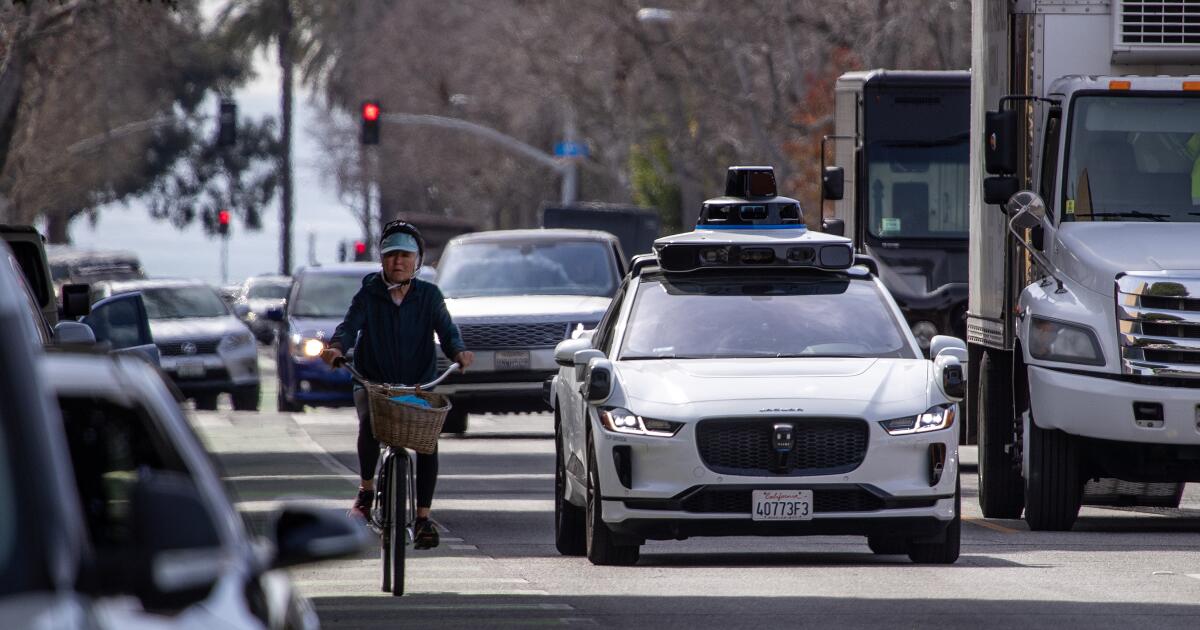
Los Angeles commuters: Don’t be alarmed, but driverless taxis may soon become a more common sight on local streets.
On March 1, state regulators gave Waymo, the self-driving taxi company owned by Google’s parent, Alphabet, the green light to expand its robotaxi service to Los Angeles County, clearing the way for the company’s expansion into one of the biggest markets in the country.
While local transportation agencies deal with day-to-day traffic operations in their respective jurisdictions, the California Public Utilities Commission oversees the regulation of driverless vehicles across the state, superseding local governments.
Waymo has not disclosed a timeline for when its service will become widely available, but a handful of Waymo vehicles are already roaming about the county, including around the USC campus, as part of its ongoing testing and promotion program.
Under its new approval agreement, Waymo’s driverless fleet can operate in Los Angeles, Santa Monica, Beverly Hills, Inglewood, East Los Angeles, Compton and many more locales.
Here’s what we know so far about the future of driverless taxis in L.A. County:
What is a Waymo One vehicle and how does it work?
Just like Lyft or Uber, Waymo One is a ride-hailing service, with prices based on the distance for each trip. But unlike those other services, there will be nobody to make small talk with while riding in a Waymo One vehicle because the vehicles are controlled by computer software.
Passengers input their destination via an app and can sit in the front or the backseat, but are not allowed in the driver’s seat, according to Waymo.
The company currently uses the all-electric SUV Jaguar I-Pace as part of its fleet in San Francisco and Phoenix, which are equipped with lidar, cameras, radar and an AI platform to safely maneuver through traffic.
For the record:
10:29 a.m. March 8, 2024A previous version of this article reported that Waymo worked with electric vehicle brand Zeekr and China Euro Vehicle Technology AB to develop its AI software. Those companies are the manufacturers of Waymo’s next-generation vehicle platform and are not responsible for the AI development.
Waymo, previously known as the Google self-driving car, developed its own AI software.
Driving automation can be broken down into six categories, according to the standards-setting organization Society of Automotive Engineers (SAE). On a scale of 0 to 5, with the lowest being a human being in complete control of the vehicle and 5 being fully automated, Waymo’s vehicles could be categorized as 4 or 5, according to the SAE.
Where will Waymo’s vehicles be deployed in Los Angeles County?
A Waymo spokesperson said the company will “take a careful and incremental approach to expansion” while working with city officials, local communities and other groups to make sure the service is safe and accessible to its customers.
The California Department of Motor Vehicles has given several companies permission to operate driverless vehicles across the state. Waymo is allowed to deploy its fleet at all times of day in its designated domains. The vehicles can operate in inclement weather, rain and fog, with speeds up to 65 mph.
In L.A. County, Waymo will be deployed to portions or all of the following cities:
- Bell
- Bell Gardens
- Beverly Hills
- Carson
- Commerce
- Compton
- Cudahy
- Culver City
- El Segundo
- Gardena
- Hawthorne
- Huntington Park
- Inglewood
- Lawndale
- Long Beach
- Los Angeles
- Lynwood
- Manhattan Beach
- Maywood
- Paramount
- Redondo Beach
- Santa Monica
- South Gate
- Torrance
- Vernon
- West Hollywood
What should a passenger do if their driverless vehicle gets into a fender bender?
Waymo provides customers with a list of frequently asked questions after they enroll with the service that provides basic information about their ride, but the company declined to answer specifics about what a passenger should do if they’re involved in a fender bender while riding in one of Waymo’s autonomous vehicles.
In a Nov. 2023 MarketWatch article, Waymo’s Tilia Gode, head of risk and insurance, compared the insurance carried on Waymo’s vehicles to the coverage a rental car company has for its vehicles.
“Just like any commercial entity, we have insurance coverage in place that covers the Waymo driver over the course of the driving task,” Gode explains. “Essentially, there’s a shift from human being drivers to the autonomous system being the driver — Waymo is the driver.”
So, where does that leave its passengers?
Well, that’s where the rubber meets the road.
Like any company that offers its service through an app, customers enter into an agreement when they sign up with Waymo. Passengers are supposed to report any damage to the exterior or interior of the vehicle during their ride and could be held responsible for that damage if it’s discovered at a later time, according to the terms of service.
That includes a collision, flat tire or any reason the vehicle is not able to reach its destination.
“I would strongly suggest that somebody immediately involve law enforcement, even if it’s not a category of crash where reporting is mandatory,” said Bryant Walker Smith, an associate law professor at the University of South Carolina.
Getting a police report that shows the narrative of events is a good idea and can allow for police to interact with Waymo if there is any type of investigation.
What if a Waymo vehicle strikes a pedestrian, bicyclist or someone’s property?
There are decades of legal cases when it comes to car collisions and drivers, but not so much for driverless vehicles.
Gregory Keating, professor of law and philosophy with the USC Gould School of Law, said there’s a lot of speculation about how those autonomous vehicles will fit into existing law.
The question becomes whether a case will turn on product liability, the vehicle, the software that trained the AI or all of the above in a lawsuit.
“We’re entering into new territory,” Keating said. “The operator of the vehicle, like Waymo or GM, should be liable, but it’s not clear if it will play out that way.”
Because Waymo’s vehicles are equipped with cameras, all of the events leading up to any type of collision will be recorded by the vehicle, Smith said, but that footage is also Waymo’s property.
Law enforcement could procure that footage as part of an investigation, and a lawyer could seek it as part of a lawsuit or a state agency overseeing the program could request the data.
Smith notes that the public is deeply concerned about every instance where an autonomous vehicle is involved in a car crash, but over 40,000 people are killed each year in motor vehicle crashes, according to federally available data.
Still, the burgeoning driverless car industry garners public attention because they’re now joining other commuters on the road — albeit sometimes a bit bumpy.
In February, a bicyclist in San Francisco was struck by a Waymo vehicle, causing minor injuries, according to Reuters.
Waymo reported that its autonomous vehicle was at a complete stop at a four-way intersection when a large truck crossed the intersection toward the Waymo vehicle. When it was the Waymo vehicle’s turn to proceed, the car moved forward, but did not detect the bicyclist that was following the truck, which was obscured. The Waymo vehicle braked heavily, but it was not able to avoid a collision, according to the company.
Police were called to the scene and the Department of Motor Vehicles was notified about the incident.
In another incident, an autonomous vehicle operated by GM struck a motorcyclist in San Francisco. The motorcyclist received some minor injuries as a result of the collision, according to court records in a lawsuit that followed.
In subsequent legal papers referencing the incident, legal experts spoke about the vehicle as if it were a person, using language like “the vehicle was driving unreasonably” and the “vehicle was negligent” as though it were the one that was being sued, Smith said.
How are autonomous vehicles being received by local jurisdictions?
There is a healthy dose of skepticism because state regulators have final say over where driverless vehicles can roam.
L.A. Mayor Karen Bass asked regulators in November to increase their scrutiny of autonomous vehicles and said the city should have a say in how they are regulated.
At the time, she pointed to one of the Waymo driverless cars operating in Los Angeles that had failed to initially stop for a traffic officer at Beaudry Avenue and Wilshire Boulevard on Aug. 3, 2023. The officer had been signaling east- and westbound traffic to come to a stop.
Before the California PUC’s approval, San Mateo County Atty. John D. Nibbelin protested, saying the county didn’t have enough information on the expansion plans or enough engagement with Waymo.
“The ‘quick and simplified’ advice letter review process … is insufficient to develop the evidence necessary to fully understand the potential impacts and issues Waymo’s expansion into San Mateo County will create, including accounting for the differing needs and hurdles Waymo will face operating in San Mateo County,” Nibbelin’s letter to the commission stated.
There is a lot of excitement surrounding the rollout of driverless vehicles, Keating with USC said, and it raises a lot of questions about how existing laws will hold a company responsible for a driverless vehicle. But so far Waymo’s track record is above par.
An autonomous vehicle can perform the same type of maneuvers a driver can without any hesitation.
“But there could be that one situation that makes people go, ‘Oh, that’s kind of spooky that the vehicle did that,’” Keating said. “All it takes is one incident to scare people.”

Business
Many indie festival films struggle to get distribution. Alamo Drafthouse is trying to change that
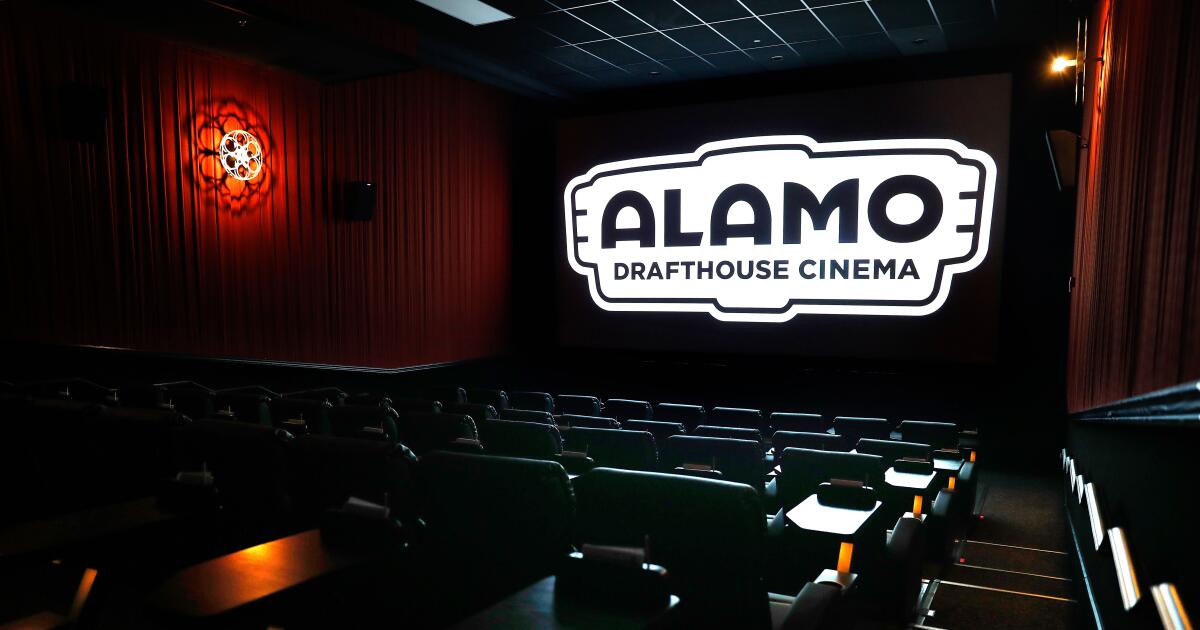
Dine-in movie theater chain Alamo Drafthouse Cinema is launching a new initiative to show unreleased independent films that had successful festival runs, a move that comes as specialty films have struggled to gain distribution.
The Alamo Exclusives program, announced Wednesday, will give limited theatrical runs to films that showed at festivals including Sundance, the Toronto International Film Festival, Tribeca Festival and South by Southwest festival, as well as Alamo’s own Fantastic Fest.
The idea is to help showcase films that received critical acclaim, but did not secure distribution or acquisition deals. The chain will not acquire these films, but instead will enter into agreements with filmmakers to exhibit their films on Alamo Drafthouse screens. By showing these films to audiences on the big screen, these films could get the momentum they need for further opportunities.
The program’s first film will be the documentary “Butthole Surfers: The Hole Truth and Nothing Butt,” which debuted last year at South by Southwest and chronicles the history of the punk rock band.
The film will be shown in Alamo Drafthouse theaters for a limited time later this summer.
The Austin-based chain, which is owned by Sony Pictures, has a long history of curating indie films for its audiences, giving Alamo Drafthouse confidence that its viewers want to see these kinds of movies, company chief executive Michael Kustermann said in a statement.
“Time and again, they’ve shown they’ll come out to support bold, original films when given the opportunity,” he said. The new Alamo Exclusives “gives us another way to champion filmmaker-driven films that deserve to be discovered and connect them with the wider Alamo Drafthouse audience.”
The initiative comes at a difficult time for indie films. Since the pandemic upended the movie business, traditional studios and distributors have had less appetite for risk, including betting on smaller indie films out of festivals.
And as the 2023 dual writers’ and actors’ strikes thinned out theatrical lineups, that aversion to uncertainty became a push for reliable and profitable hits.
“Too many incredible films premiere at festivals and then never receive the theatrical life they deserve,” Lisa Dreyer, director of Fantastic Fest and film innovation at Alamo, said in a statement. “We are actively searching for films across all genres, from horror to comedy, to everything in-between, to champion in this new, exciting way.”

The recall of a popular chip brand over salmonella concerns was recently upgraded to the U.S. Food and Drug Administration’s highest level, just ahead of the Fourth of July holiday and countless backyard barbecues.
On June 24, the FDA designated the recall of several varieties of Zapp’s and Dirty brand potato chips as Class I, meaning it’s “a situation in which there is a reasonable probability that the use of or exposure to a violative product will cause serious adverse health consequences or death.”
FDA has classified the following items as Class I:
Zapp’s
- 1.5-ounce Zapp’s Bayou Blackened Ranch Kettle Chips
- 2.5- and 8-ounce Zapp’s Bayou Blackened Ranch Potato Chips
- 1.5- and 8-ounce Zapp’s Big Cheezy Potato Chips
Dirty
- 1.5- and 2-ounce Dirty Brand Salt and Vinegar Potato Chips
- 2-ounce Dirty Maui Onion Chips
- 2-ounce Dirty Sour Cream and Onion Potato Chips
The chips are produced by Utz Quality Foods, LLC, which on April 28 issued a recall after learning “that a seasoning containing dry milk powder, sourced from California Dairies, Inc. and supplied by a third-party supplier, may contain the presence of Salmonella.”
Salmonella can lead to sometimes deadly infections in elderly people, young children and those with weakened immune systems, according to the FDA.
More than 680,000 bags are included in the recall.
Anyone who has these products should not eat them and should discard them immediately.
What to look for
Salmonella is a foodborne illness that can be fatal to young children, pregnant women, older adults and people with weakened immune systems, according to the National Institutes of Health.
Symptoms may develop 12 to 72 hours after infection, according to the FDA.
The FDA said that people with strong immune systems infected with salmonella may experience fever, diarrhea (which may be bloody), nausea, vomiting and abdominal pain. The illness can last four to seven days.
In rare cases, the infection may produce more severe illnesses such as arterial infections, endocarditis and arthritis, the agency added.
What to do if infected
If you contract salmonella, the Centers for Disease Control and Prevention recommends drinking plenty of fluids to prevent dehydration.
The CDC advises consulting a doctor before taking antidiarrheal medicine or antibiotics. If severe symptoms continue after two days, seek medical help, the agency says.
Because those with diarrhea can spread salmonella to others, it’s also recommended to avoid sharing food or preparing meals for others, sexual contact and swimming in public pools, and to stay home while sick.
Times staff writer Jasmine Mendez contributed to this report.
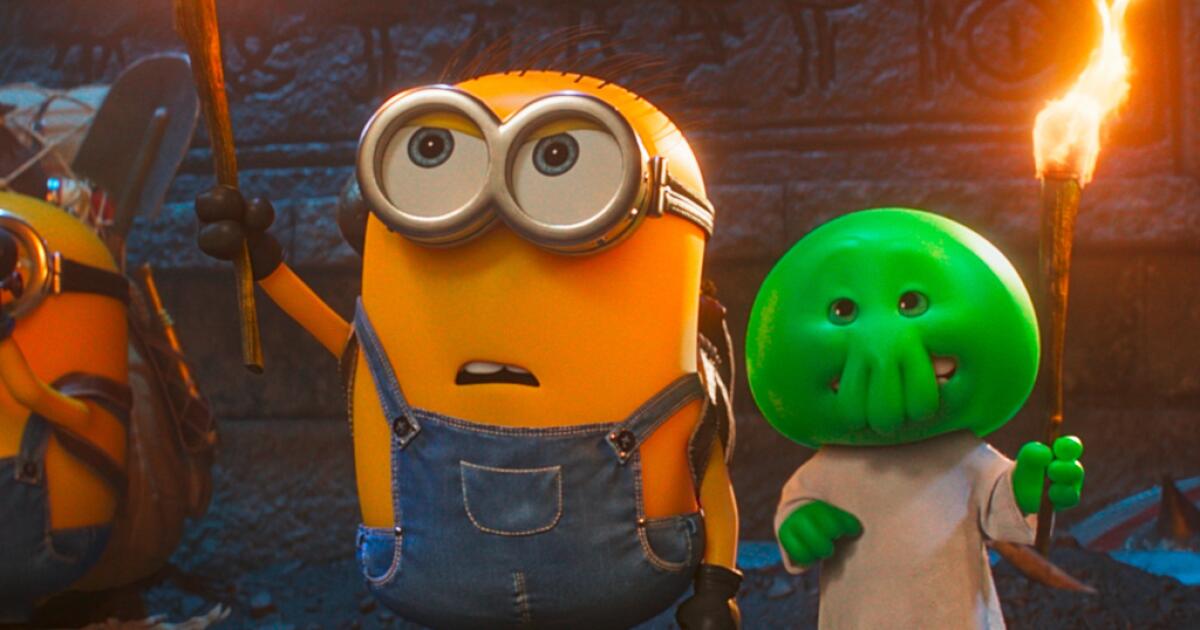
The Minions took over theaters this weekend as Universal Pictures and Illumination’s “Minions & Monsters” won the top spot at the box office, though with a lower-than-expected domestic haul.
The animated movie, which follows the Minions’ takeover of Hollywood, took in $61.4 million in the U.S. and Canada for the five-day Fourth of July holiday weekend, according to studio estimates. That haul was lower than analysts’ expectations for a domestic opening of about $68 million. The movie’s three-day total was $36.4 million.
But the Minions performed well internationally, bringing in about $85 million. In total, “Minions & Monsters” made $159.9 million worldwide on a production budget of about $85 million.
The film is the latest in the powerhouse franchise that began with “Despicable Me” in 2010. Across its previous six installments, the “Despicable Me” and “Minions” franchise has made more than $5.6 billion at the global box office. The last movie, 2022’s “Minions: The Rise of Gru,” made more than $940 million worldwide.
“Minions & Monsters” marks the lowest opening for the franchise. Part of the issue could be timing — the box office can be negatively affected when the Fourth of July lands on a Saturday, said Paul Dergarabedian, head of marketplace trends at Rentrak.
Walt Disney Co. and Pixar’s “Toy Story 5” came in second at the box office this weekend with a domestic three-day gross of $31 million. Angel Studios’ biopic “Young Washington” ($20.8 million), Warner Bros. and DC Studios’ “Supergirl” ($9.6 million) and Universal’s “Disclosure Day” ($6 million) rounded out the top five, according to Rentrak.
The haul for “Minions & Monsters,” coupled with the strong holdover performance of “Toy Story 5,” proved again that family films are making a dent in the summer box office.
“Toy Story 5” has now brought in a total of $764.3 million worldwide, and last month, Universal, Illumination and Nintendo’s “The Super Mario Galaxy Movie” crossed $1 billion at the global box office, becoming the first film of any kind to do so this year.
The rest of the summer theatrical lineup is also expected to bring in audiences and push domestic box office totals closer to pre-pandemic figures. Next week, Disney will release its live-action “Moana,” followed by Christopher Nolan’s “The Odyssey” and Sony Pictures’ “Spider-Man: Brand New Day.”
To date, the summer box office is now about $2.3 billion, a nearly 12% increase compared with the same period a year ago, according to Rentrak data. Compared with pre-pandemic 2019’s numbers, however, it is still down about 7%.
-

 Technology4 minutes ago
Fake Booking.com travel credit scam targets travelers
-
Business11 minutes ago
Many indie festival films struggle to get distribution. Alamo Drafthouse is trying to change that
-
 Entertainment14 minutes ago
AI actor Tilly Norwood to star in first movie
-
 Politics26 minutes ago
Trump says he disputed U.S. star player’s suspension, calling it ‘stain’ on World Cup
-
 Science29 minutes ago
14 propositions that could remake California taxes, housing, healthcare and elections
-
 Sports34 minutes ago
Lakers lose Rui Hachimura, who signs two-year deal with the Clippers
-

 World44 minutes ago
Hungary could vote to oust president as early as next week
-

 New York2 hours ago
How a Museum Security Guard and Artist Lives on $51,000 in Parkchester

