
Northeast
3 arrested in connection to fatal NYC shooting of man on Bronx subway
- Three people have been arrested by the police in connection with the killing of a man on a New York City subway car last Friday.
- William Alvarez, a 45-year-old Bronx resident, was fatally shot following an argument with one of the suspects in the Bronx.
- Police have confirmed that the incident was captured on surveillance videos from the trains, subway station and the street.
Three people have been arrested in the killing of a man on a New York City subway car last week, police said Tuesday.
William Alvarez, a 45-year-old Bronx resident, was fatally shot after getting into an argument with one of the suspects on a D Train in the Bronx around 5 a.m. Friday.
Police said what happened was captured on surveillance videos on the trains, subway station and on the street.
SEVERED HUMAN LEG FOUND ON NYC SUBWAY TRACKS IN BRONX: POLICE
The three have been charged with murder and criminal possession of a weapon. They were found by members of the U.S. Marshals Regional Fugitive Task Force at an apartment in the Bronx on Monday.
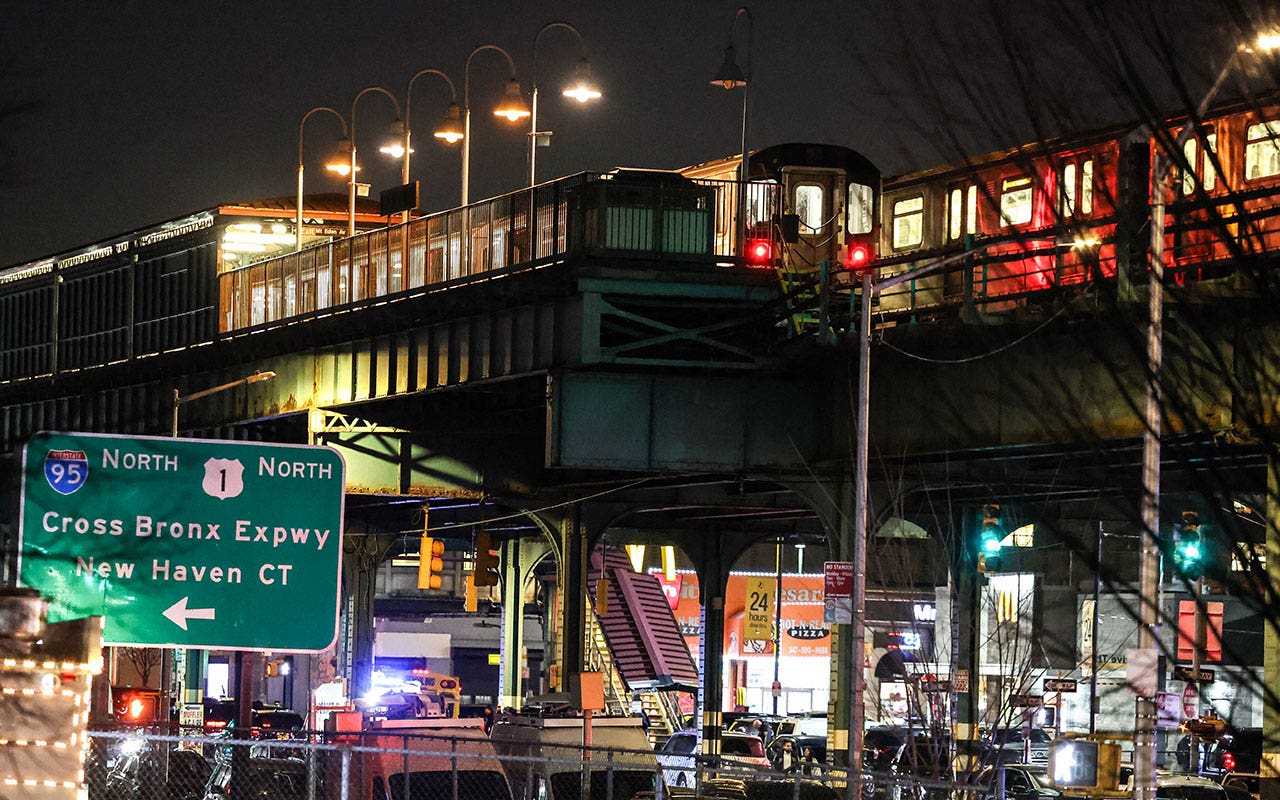
A train is seen at Mt. Eden Avenue subway station in the Bronx borough of New York. Three people have been arrested in the killing of a man on a New York City subway car last week, police said on Tuesday. (CHARLY TRIBALLEAU/AFP via Getty Images)
The fatal shooting is the third killing in the subway system this year. It came soon after a 35-year-old man was killed and five others were wounded during a shooting at a different subway station in the Bronx earlier this month.
MAN SHOT DEAD ON NYC SUBWAY AS DA BRAGG DEFENDS RECORD IN ARIZONA EXTRADITION BATTLE: ‘WE ARE SERIOUS’
Transit crimes are up 13% compared with this time last year, WABC-TV reports.
The NYPD has implemented longer, 12-hour shifts for police officers assigned to the subway system in response to the uptick in crime.
Read the full article from Here
Maine
NECEC conservation plan will not protect Maine’s mature forests | Opinion
Robert Bryan is a licensed forester from Harpswell and author or co-author of numerous publications on managing forests for wildlife. Paul Larrivee is a licensed forester from New Gloucester who manages both private and public lands, and a former Maine Forest Service forester.
In November 2025, the Department of Environmental Protection (DEP) approved a conservation plan and forest management plan as mitigation for impacts from the NECEC transmission corridor that runs from the Quebec border 53 miles to central Maine.
As professional foresters, we were astonished by the lack of scientific credibility in the definition of “mature forest habitat” that was approved by DEP, and the business-as-usual commercial forestry proposed for over 80% of the conservation area.
The DEP’s approval requires NECEC to establish and protect 50,000 acres to be managed for mature-forest wildlife species and wildlife travel corridors along riparian areas and between mature forest habitats. The conservation plan will establish an area adjacent to the new transmission corridor to be protected under a conservation easement held by the state. Under this plan, 50% of the area will be managed as mature forest habitat.
Under the forest management plan, a typical even-aged stand will qualify as “mature forest habitat” once 50 feet tall, which is only about 50 years old. These stands will lack large trees that provide wildlife denning and nesting sites, multiple vegetation layers that mature-forest birds use for nesting and feeding habitats and large decaying trees and downed logs that provide habitat for insects, fungi and small mammals, which in turn benefit larger predators.
Another major concern is that contrary to the earlier DEP order, the final approval allows standard sustainable forestry operations on the 84% of the forest located outside the stream buffers and special habitats. These stands may be harvested as soon as they achieve the “mature forest habitat” definition, as long as 50% of the conserved land is maintained as “mature.”
After the mature forest goal is reached, clearcutting or other heavy harvesting could occur on thousands of acres every 10 years. Because the landowner — Weyerhaeuser — owns several hundred thousand acres in the vicinity, any reductions in harvesting within the conservation area can simply be offset by cutting more heavily nearby. As a result, the net
mature-forest benefit of the conservation area will be close to zero.
Third, because some mature stands will be cut before the 50% mature forest goal is reached, it will take 40 years — longer than necessary — to reach the goal.
In the near future the Board of Environmental Protection (BEP) will consider an appeal from environmental organizations of the plan approval. To ensure that ecologically mature forest develops in a manner that meets the intent of the DEP/BEP orders, several things need to change.
First and most important, to ensure that characteristics of mature forest habitat have time to develop it is critical that the definition include clear requirements for the minimum number of large-diameter (hence more mature) trees, adjusted by forest type. At least half the stocking of an area of mature forest habitat should be in trees at least 10 inches in diameter, and at least 20% of stands beyond the riparian buffers should have half the stocking in trees greater than or equal to 16 inches in diameter.
Current research as well as guidelines for defining ecologically mature forests, such as those in Maine Audubon’s Forestry for Maine Birds, should be followed.
Second, limits should be placed on the size and distribution of clearcut or “shelterwood” harvest patches so that even-aged harvests are similar in size to those created by typical natural forest disturbance patterns. These changes will help ensure that the mature-forest block and connectivity requirements of the orders are met.
Third, because the forest impacts have already occurred, no cutting should be allowed in the few stands that meet or exceed the DEP-approved definition — which needs to be revised as described above — until the 50% or greater mature-forest goal is reached.
If allowed to stand, the definitions and management described in the forest management plan would set a terrible precedent for conserving mature forests in Maine. The BEP should uphold the appeal and establish standards for truly mature forest habitat.
Massachusetts
Foul play suspected after human remains found in water in Shirley
Human remains were discovered Wednesday in the water in Shirley, Massachusetts, and authorities suspect foul play.
Police in Shirley said in a social media post at 7:15 p.m. that they responded to “a suspicious object in the water near the Maritime Veterans Memorial Bridge on Shaker Road.” Massachusetts State Police later said the object was believed to be human remains.
The bridge crosses Catacoonamug Brook near Phoenix Pond.
The office of Middlesex County District Attorney Marian Ryan said a group of young people was walking in the area around 5:30 p.m. and “reported seeing what appeared to be something consistent with a body part in the water.”
Foul play is suspected, Ryan’s office said.
Authorities will continue investigating overnight into Thursday, and an increased police presence is expected in the area.
No further information was immediately available.
New Hampshire
Get outdoors: New Hampshire Outdoor Expo returns bigger and better
-
World1 week agoExclusive: DeepSeek withholds latest AI model from US chipmakers including Nvidia, sources say
-
Massachusetts1 week agoMother and daughter injured in Taunton house explosion
-
Wisconsin3 days agoSetting sail on iceboats across a frozen lake in Wisconsin
-
Maryland4 days agoAM showers Sunday in Maryland
-
Denver, CO1 week ago10 acres charred, 5 injured in Thornton grass fire, evacuation orders lifted
-
Florida4 days agoFlorida man rescued after being stuck in shoulder-deep mud for days
-
Oregon6 days ago2026 OSAA Oregon Wrestling State Championship Results And Brackets – FloWrestling
-
Massachusetts2 days agoMassachusetts man awaits word from family in Iran after attacks
