West
I was stranded in an EV at midnight. Progressives don't want you to know about my nightmare

NEWYou can now listen to Fox News articles!
It only takes a weekend trip to a wedding two hours outside of a big city to realize this country is nowhere near ready for the Democrats’ clean energy revolution. It’s too bad they’re unwilling to accept reality.
Democrats are pushing us toward an America powered by wind, solar, and other green alternatives to gas, oil, and coal. It makes us more reliant on electricity. But as I detail in my book “What’s Killing America: Inside the Radical Left’s Tragic Destruction of Our Cities”, the eco-reality favored by the Left is lightyears ahead of our reality.
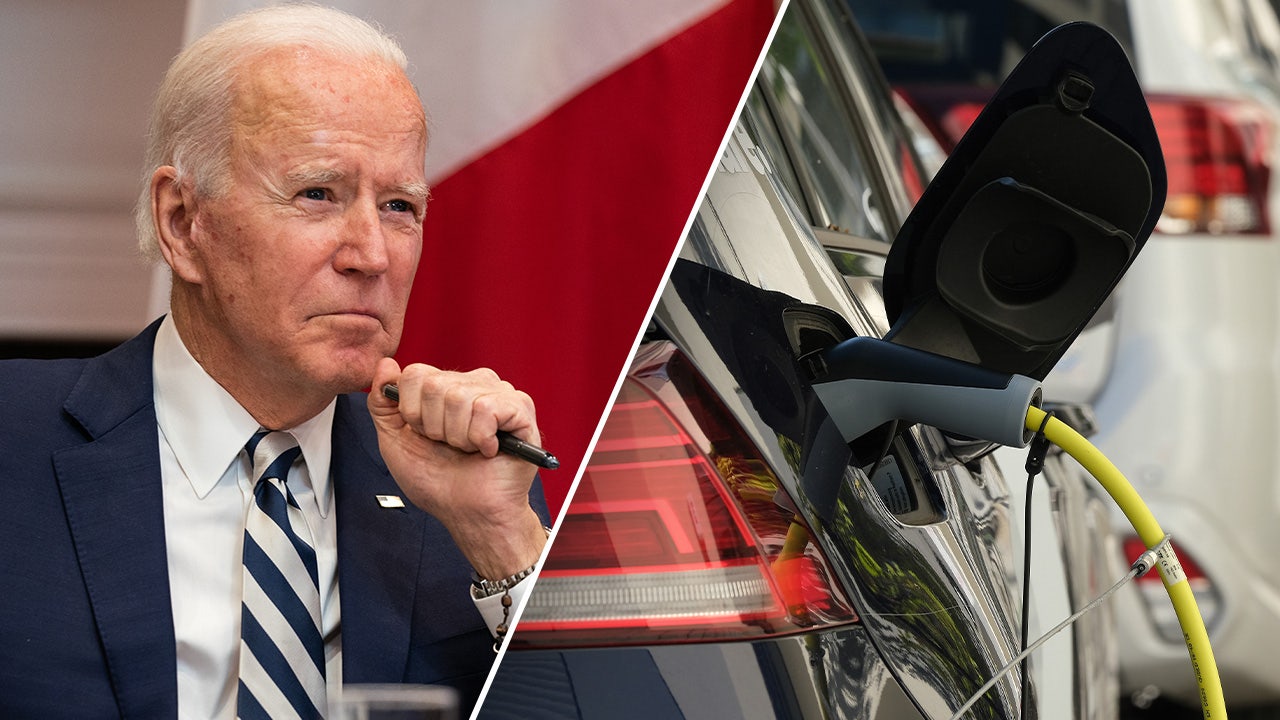
A major piece of the Democrats’ clean energy revolution is a mandate towards electric vehicles (EVs). At least 13 states, including Washington, California, New York, and Virginia, plus D.C., mandate new car sales to be EVs by 2035. The goal is to convert everyone to electric — by force. But to date, the country only has 168,426 charging stations, with a goal of 500,000 by 2025. A lot of good that will do. The International Council on Clean Transportation says the U.S. will require 2.4 million charging stations by 2030 (which includes at-home, public, and workplace) based on EV market trends.
BIDEN’S EV INSANITY JUST GOT EVEN WORSE
Last week, Hertz rental cars made headlines for ditching its EV fleet for more gas-powered vehicles. I lived their reason, learning a harsh lesson about our weak EV infrastructure while driving to a wedding in Cle Elum, 90 minutes east of Seattle.
I don’t own a car, so I rented one from Hertz. I was dubious of the EV they gave me, but I had no choice: they rented out the gas-powered car that I reserved and I was out of options.
As I drove to the wedding venue, I was nearly glued to the dashboard, watching a dwindling battery percentage. Just when I thought everything would be OK, I encountered hills. EV batteries do not like hills.
When I arrived at the venue, my dashboard said the battery would only last 43 more miles. I needed double that to make it back to Seattle. From the vows to the post-ceremony dinner, I was panicked, downloading apps that mapped out the nearest EV power stations, hoping I could make this work.
EVS SIGNIFICANTLY LESS RELIABLE THAN GAS-ENGINE CARS, CONSUMER REPORTS FINDS
There was a nearby EV plug-in location with a dozen open spaces — for Teslas. I wasn’t driving a Tesla. Without a standard EV plug, if you don’t have an adapter, you’re out of luck. The closest location compatible with my car was a diner in the middle of nowhere, 30 miles away.
I nervously headed out, watching the battery react to every hill, and every press of the gas pedal. The car misled me about how far I’d get. After 30 minutes, I had 9.5 miles to the charger and a battery that could handle 17 more miles.
WINTER WEATHER PRESENTING EV OWNERS WITH ‘FRUSTRATING’ CHALLENGES
Pro-tip: when driving an EV, do not make any mistakes — like missing a poorly lit off-ramp to your plug-in station on a highway where the next opportunity to get off and head back is two miles away (and two miles back), when your battery has only about one mile left to give. I was forced to pull over, cruising to a stop in the middle of nowhere. The battery had died as I was pulling off the freeway. Moments later, the lights and heat went out. It was pitch black and about 30 degrees.
I don’t know if you’ve ever tried getting a tow truck to pick you up in the middle of nowhere, but it turns out they will accept your business, quote you $300, and say they’ll pick you up in 20 minutes only to tell you 45 minutes later that they are canceling.
After two hours of mostly yelling at Hertz customer service and cursing the lack of EV infrastructure in the state, I got an Uber after two hours of waiting. A driver named Hussein took pity on me and agreed to pick me up. He couldn’t arrive soon enough. My cell phone battery hit 13%, and, as with my EV, I had nowhere to plug it in.
CLICK HERE FOR MORE FOX NEWS OPINION
When the Uber arrived, I abandoned the EV. It was now Hertz’s problem. I got home, $108.91 later (plus a generous tip). This is your future in the Democrats’ EV world.
In Washington state, relatively straightforward transit projects take years and are always over budget. Does anyone think any state can install the hundreds of thousands of charging stations needed for an hours-long ride? Even the large urban areas with Democrat-controlled government aren’t installing charging stations at large scale. And can we even afford it? Washington State is spending $41 million to install just over 180 charging stations. As of September 23, the state only had 1,820 charging stations. Is the technology advanced enough that the current charging stations, with clunky and heavy plugs, will not need a major upgrade within the next decade?
FILE – Man pushing stranded Tesla in Chicago in frigid winter temperatures (‘Fox & Friends’ screengrab)
We’d better start embracing staycations because road trips are out of the question. Forget long drives to see medical specialists. And you better not forget to plug in each night or you’ll find yourself without a battery juice when driving home from work.
The battery technology isn’t where it needs to be to make EVs worthwhile, and the prices aren’t low enough for most families to comfortably purchase (you can thank Bidenomics for that). Yet Democrats continue to force EVs on us.
Even if the infrastructure existed, our power grids couldn’t handle it.
Temperatures in Washington state hit historic lows this month and our power grid wasn’t prepared. As temperatures dropped to 17 in Seattle, Puget Sound Energy, the state’s largest supplier of electricity and natural gas, asked customers to lower their thermostats and limit the use of hot water to “reduce strain on the grid.”
Our grid couldn’t handle a weekend of below-normal temperatures. But we should expect it’ll handle a near future of EVs? Heaven forbid it get cold when our cars are plugged in.
CLICK HERE TO READ MORE FROM JASON RANTZ
Read the full article from Here


A Coast Guard search and rescue helicopter crashed Monday morning during a training flight in Alaska.
A Coast Guard MH-60 Jayhawk helicopter had four people onboard when it went down near Harbor Mountain in Sitka, a town in the Alexander Archipelago in southern Alaska several dozen miles south of Juneau. The Jayhawk and its aircrew are assigned to Coast Guard Air Station Sitka.
The crash happened Monday morning at around 10:07 a.m. local time, the Coast Guard said. It took nearly an hour for rescue crews to arrive on the scene. Rescue. However, no serious injuries were reported, a spokesperson for the Coast Guard Arctic District told Task & Purpose. All four crew members were taken by Sitka Fire and Rescue teams to Mt. Edgecumbe Medical Center in Sitka.
The cause of the crash isn’t known, and in a post on X, the Coast Guard Arctic District said that a “formal investigation will be conducted to determine the circumstances surrounding the event.”
Top Stories This Week
The Coast Guard Arctic District covers not only Alaska but the waters around it, including the Prince William Sound and waters in the Pacific.
Given Alaska’s remote conditions, local and military aircraft are often used to provide emergency search and rescue operations. Both the Coast Guard and National Guard regularly dispatch helicopters and fixed-wing aircraft to help people stranded or in crisis at sea.
In April, helicopters from Coast Guard Air Station Sitka and the National Guard conducted a mass casualty drill near the town, as part of what the Coast Guard called “a large joint exercise involving multiple government agencies and local organizations.”

CAMP VERDE, AZ (AZFamily) — An Arizona wildlife park is asking visitors to follow its rules after a visitor discarded a lit cigarette in the park, sparking a fire.
Park officials said Saturday a visitor ignored the no-smoking policy and threw a lit cigarette on the ground near the Tiger Splash Arena, causing the fire.
“If you are not willing to respect our policies, we understand that our park may not be the right destination for you,” Out of Africa Wildlife Park and Sanctuary said in a social media post.
Copper Canyon Fire and Medical District firefighters put out the fire before it could spread or threaten any animals, park officials said.
“Every policy we have in place exists for a reason, even if it may seem inconvenient to some visitors,” park officials said. “The outcome could have been devastating for the animals. We respectfully ask all visitors to follow the rules that are in place for everyone’s safety.”
Park officials said the safety of the animals, guests and staff is the highest priority.
See a spelling or grammatical error in our story? Please click here to report it.
Do you have a photo or video of a breaking news story? Send it to us here with a brief description.
Copyright 2026 KTVK/KPHO. All rights reserved.

CALIFORNIA CITY, Calif. (KERO) — A 12-year-old boy is dead and another child was hospitalized after two unleashed dogs attacked a group of children at Central Park in California City on Friday, June 18.
California City Mayor Edwin Hawkins said police responded to the scene after reports that four children had been mauled.
Fernando Torres Moreno, 12, jumped into a nearby lake to escape the charging dogs. Officers pulled Fernando from the water, and he was taken to the hospital, where he died the next day.
A second child suffered serious, though non-life-threatening, dog bite wounds and has since been released from the hospital. Two additional children were shaken but did not require medical treatment.
Authorities say the dogs, both mixed breed, were off-leash but in the presence of their owner when the attack unfolded.
The investigation remains active and ongoing. No arrests have been made.
This story was reported on-air by a journalist and has been converted to this platform with the assistance of AI. Our editorial team verifies all reporting on all platforms for fairness and accuracy.
Stay in Touch with Us Anytime, Anywhere:
-

 Austin, TX54 seconds ago
Barton Springs Pool to reopen June 23
-

 Alabama4 minutes ago
Petition calls on State of Alabama to fund fix for Prichard sewer system after spills
-

 Alaska9 minutes ago
Coast Guard helicopter crashes in southern Alaska
-

 Arizona16 minutes ago
Lit cigarette sparks fire at Arizona wildlife park
-

 Arkansas19 minutes ago
Latest Peppermint Hippo court filing alleges misconduct by Arkansas officials, asks for liquor license reinstatement
-
California24 minutes ago
One child dead, another hospitalized after dog attack at Central Park in California City
-

 Colorado31 minutes ago
Northwest Colorado state parks experiencing water shortages, reduced boating access
-

 Connecticut33 minutes ago
5 Connecticut towns to receive $2M each for infrastructure upgrades

