Connect with us

New Mexico

Eclipses, comets and meteor showers: Check out the celestial events viewable in 2024

Published

on

Eclipses, comets and meteor showers: Check out the celestial events viewable in 2024


Turn your attention to the sky this year, New Mexico, and you’ll see celestial events happening every month of 2024.

What can I expect to see in the sky in 2024?

From full moons, new moons and planets to meteor showers, eclipses and a comet, 2024 is full of astrological happenings visible to the naked eye. The new year started with a continuation of the Quadrantids meteor shower, which started on Dec. 26. 

Several super and micro moons are expected throughout the year. Micro moons are when the full or new moon is at apogee, or the farthest point on its orbit away from Earth. In contrast, the super moons are when the full or new moon is at perigee, or at the closest point on its orbit to Earth.

Advertisement

And along with the annual solar eclipse which will take place in October and is visible in New Mexico, there will also be two lunar eclipses and a total solar eclipse. The Penumbral Lunar Eclipse in March will show a lighter shadow around the main eclipse shadow. A partial lunar eclipse will be visible in September. 

A total solar eclipse will pass through in April. According to the Time and Date website, North America will be the only continent to view the full eclipse. The site notes that the last time a total solar eclipse was visible from the entire lower 48 states in the U.S. was in August 2017 and in February 1979 prior to that. 

The next time a total solar eclipse will be visible from the mainland U.S. will be in August 2044. 

Another significant astronomical occurrence this year will be the Comet Tsuchinshan-ATLAS passing at its closest point to Earth in October. The comet was first detected in early 2023. 

Advertisement

According to Starwalk, the comet is expected to develop a significant tail and be particularly visible from the northern hemisphere. This favoring of the north was last seen with Comet Hale-Bopp in 1997.

The comet will pass closest to Earth on Oct. 12 and will be visible to the naked eye through mid-November. 

Calendar of New Mexico celestial events in 2024

Here is a list of dates for events you can expect to see in the sky this year.

January

  • Dec. 26 to Jan. 16 – Quadrantids Meteor Shower (peak viewing is between 1 and 5 a.m. with an average of 25 meteors per hour)
  • Jan. 1 to Feb. 11 – Venus at its brightest in the morning sky
  • Jan. 5 to Jan. 26 – Mercury at its brightest in the morning sky
  • Jan. 11 – New Moon
  • Jan. 25 – Full Wolf Moon

February

  • Feb. 9 – Super New Moon
  • Feb. 24 – Micro Full Snow Moon

March 

  • March 10 – Super New Moon
  • March 10 to March 31 – Mercury at its brightest in the evening sky
  • March 24 to March 25 – Penumbral Lunar Eclipse
  • March 25 – Micro Full Worm Moon 

April

  • April 8 – Total Solar Eclipse
  • April 8 – Super New Moon
  • April 15 to April 29 – Lyrids meteor shower
  • April 15 to May 27 – Eta Aquariids Meteor Shower
  • April 23 – Full Pink Moon

May

  • May 7 – New Moon
  • May 23 – Full Flower Moon

June

  • June 6 – New Moon
  • June 21 – Full Strawberry Moon

July

  • July 5 – New Moon
  • July 7 to Aug. 15 – alpha Capricornids Meteor Shower
  • July 14 to Sept. 1 – Perseids Meteor Shower
  • July 18 to Aug. 21 – Southern delta Aquariids Meteor Shower
  • July 21 – Full Sturgeon Moon
  • July 23 to Nov. 19 – Neptune at its brightest 

August

  • Aug. 4 – New Moon
  • Aug. 19 – Full Blue Moon
  • Aug. 25 to Oct. 1 – Saturn at its brightest in the evening sky

September

  • Sept. 2 – New Moon
  • Sept. 17 to Sept. 18 – Partial Lunar Eclipse
  • Sept. 17 – Full Corn Moon
  • Sept. 23 to Dec. 8 – Southern Taurids Meteor Shower
  • Sept. 26 to Nov. 22 – Orionids Meteor Shower

October

  • Oct. 2 – Annual Solar Eclipse
  • Oct. 2 – Micro New Moon
  • Oct. 5 to Dec. 31 – Venus at its brightest in the evening sky
  • Oct. 12 – Comet Tsuchinshan-ATLAS makes closest pass to Earth
  • Oct. 13 to Dec. 2 – Northern Taurids Meteor Shower
  • Oct. 15 to Dec. 21 – Uranus at its brightest in the evening sky
  • Oct. 17 – Super Full Hunter’s Moon

November

  • Nov. 1 – New Moon
  • Nov. 3 to Dec. 2 – Leonids Meteor Shower
  • Nov. 14 to Dec. 28 – Jupiter at its brightest
  • Nov. 15 – Full Beaver Moon
  • Nov. 19 to Dec. 24 – Geminids Meteor Shower
  • Nov. 30 – Black Moon (second full moon in one calendar month)

December

  • Dec. 13 to Dec. 24 – Ursids Meteor Shower
  • Dec. 15 – Full Cold Moon
  • Dec. 18 to Dec. 31 – Mercury at its brightest in the morning sky
  • Dec. 30 – New Moon
  • Dec. 31 – Mars at its brightest in the night sky

Where is the best place to view celestial events?

According to NASA, the best places to skywatch are found away from urban areas where light pollution hinders viewers’ ability to see fainter stars, planets and other objects. Open areas such as large fields, valleys, hiking trails and camping sites. However, be sure to ensure your safety before stargazing in a secluded area.

Leah Romero is the trending reporter at the Las Cruces Sun-News and can be reached at 575-418-3442, LRomero@lcsun-news.com or @rromero_leah on X, formerly Twitter.

Advertisement


Source link

New Mexico

New Mexico leaders push funding to fight screwworm after 1 local case

Published

on

New Mexico leaders push funding to fight screwworm after 1 local case


New Mexico leaders are backing a bipartisan bill after 12 confirmed U.S. screwworm cases, including one case in a Lea County dog.

SANTA FE, N.M. – New Mexico leaders are backing a bipartisan bill after 12 confirmed U.S. screwworm cases, including one case in a Lea County dog.

New Mexico State Veterinarian Dr. Samantha Holeck said the parasite has spread to New Mexico, though officials say they have not found any human cases.

“This is also not a political issue this is a nationwide issue that we all need to address because it affects all warm blooded animals including humans,” Holeck said.

Advertisement

U.S. Reps. Gabe Vasquez and Teresa Leger Fernandez support the Protect America’s Herds Act.

The bill would create a grant program to train people to identify, treat, prevent and report screwworm. It would also support more livestock inspections and education for ranchers.

Rep. Teresa Leger Fernandez said she heard concerns from tribal leaders about the cost of protecting cattle herds.

“I spoke with one of our tribal leaders today and they have cattle operation and they’re worried, and they’re talking about how much more money they’re having to pay to go make sure they check on their herds and there are extra costs,” Leger Fernandez said.

Funding would prioritize states and tribal communities most at risk for screwworm outbreaks.

Advertisement

State health officials said screwworm is not a food safety issue. They also said ranchers should stay alert but not alarmed.


Source link

Continue Reading

New Mexico

New Mexico Wants Almost $1B From ‘Public Nuisance’ Meta

Published

on

New Mexico Wants Almost B From ‘Public Nuisance’ Meta


New Mexico isn’t done with Meta yet. After the second phase of a landmark trial, the state is asking a judge to make the company pay almost $1 billion to address harm done to young people in New Mexico, SourceNM reports. In a court filing, attorneys with the New Mexico Department of Justice argue that Meta’s addictive design features and recommendation algorithms “substantially contributed to the increase and severity” of problems including depression and eating disorders. The state wants a judge to order Meta to pay $953 million into a fund for public education and behavioral health programs, reports Fox News.

  • After the first phase of the trial in March, a jury found the company endangered children and misled the public about its platforms’ safety. Meta was ordered to pay $375 million in damages, $5,000 for each violation.


New Mexico Attorney General Raúl Torrez has argued Meta executives prioritized profit over minors’ safety, ignored internal warnings, and misrepresented what they knew about harms to young users. In the second phase, First Judicial District Court Chief Judge Bryan Biedscheid heard arguments on whether the company’s actions created a public nuisance, the Santa Fe New Mexican reports. Final filings in that phase of the trial were submitted Friday. Beyond potential financial penalties, Biedscheid will also rule on the state’s request for Meta to make changes including stricter age controls and “safer algorithms” that “do not prioritize engagement over well being.”


Meta says New Mexico is overreaching, warning that the proposed mandates are “impractical and ill-considered” and “would risk leaving teens less safe, infringe on parental rights, and stifle free expression.” Meta argues that New Mexico hasn’t proven that its platforms affect mental health outcomes. In court filings, Meta has claimed that the state is seeking $3.7 billion, not $953 million, but Chief Deputy Attorney General James Grayson says the higher figure is an expert’s estimate of the cost to fund all child mental health interventions in the state. “We’re not trying to hold Meta responsible for mental health harms in general in New Mexico, only for what social media has cost,” Grayson tells the New Mexican.

Advertisement


Source link

Continue Reading

New Mexico

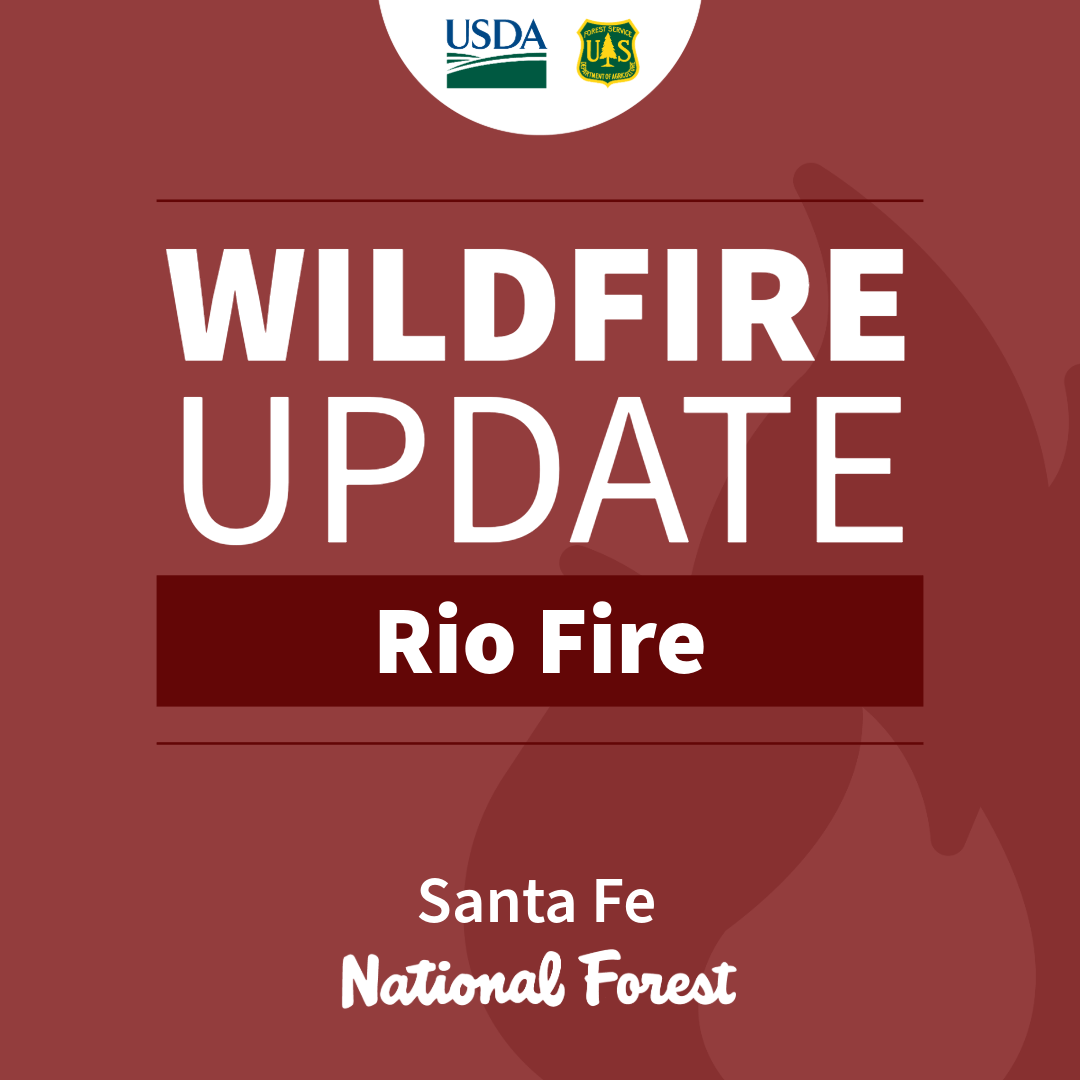
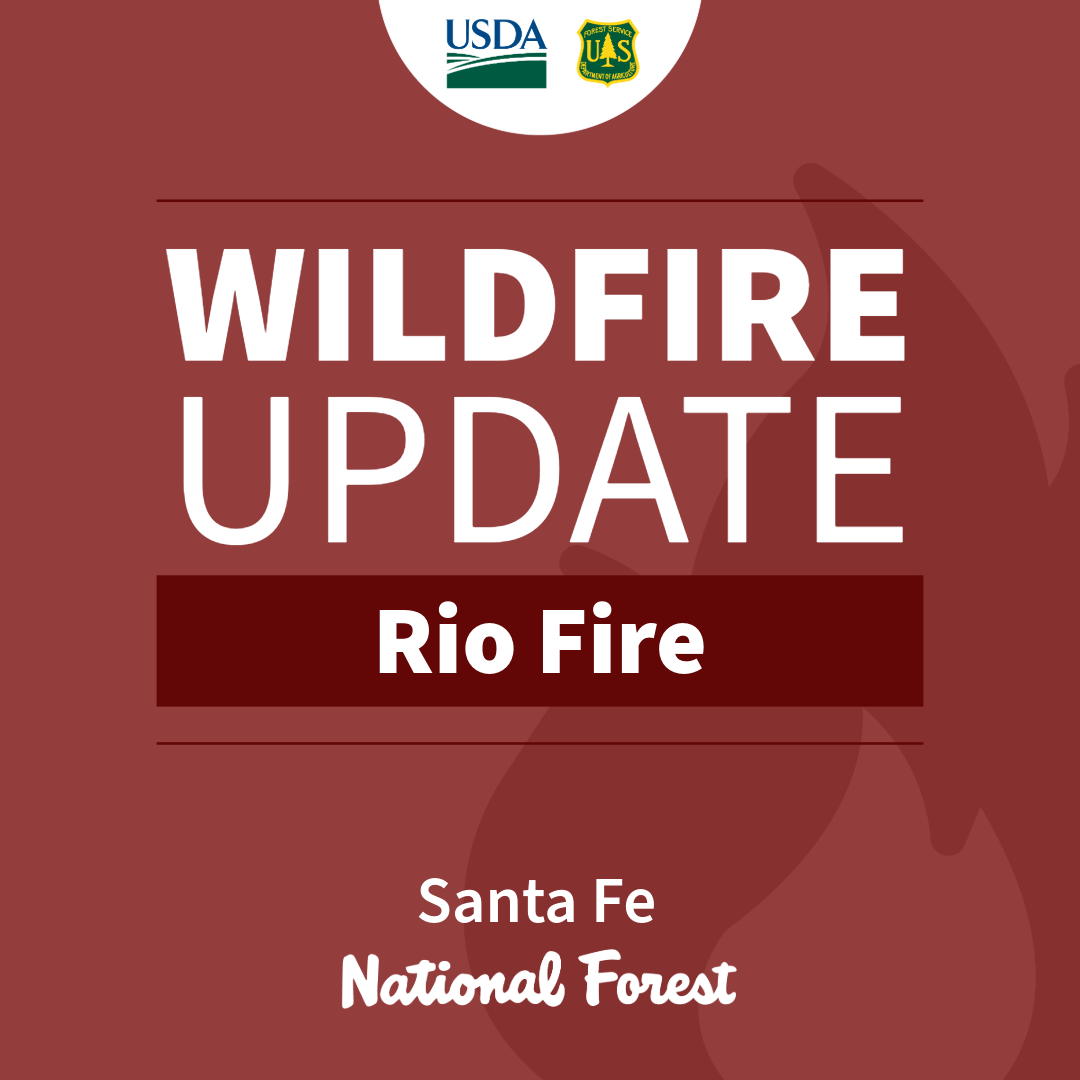
Rio Fire grows to 128 acres

Published

on

Rio Fire grows to 128 acres


Northern New Mexico Type 3 Team ordered


Santa Fe, NM, June 17, 2026
—The Rio Fire located in the Espanola Ranger District on Mesa De La Gallina three miles northeast of Chicoma Mountain has grown to 128 acres. Red flag conditions, heavy dead-and-down fuels and limited safe access to the fire contributed to the fire’s growth. Today, crews focused on building safe access to suppress the fire. Additional personnel have been ordered including a Type 1 Interagency Handcrew (hotshot crew), Rapid Extraction Module, and a short haul capable helicopter. Aerial resources such as the Type 1 helicopter and air tankers have been working all day on the fire dropping water and retardant to reduce fire growth. Two large air tankers have been ordered to the fire in addition to scooper planes. Values at risk include private property inholdings north of the fire. Smoke from the Rio Fire may be visible from Santa Fe, Los Alamos, Espanola and the surrounding communities.

Due to the complexity of the fire the Northern New Mexico Type 3 Incident Management Team has been ordered to take command of the fire. The team will in brief with the Santa Fe National Forest at 10:00 am tomorrow.

Fire information is available on the Santa Fe National Forest website, Inciweb, NM Fire Information, and social media pages (Facebook and X).

Advertisement

About the Forest Service: The Forest Service has brought people and communities together to answer the call of conservation for more than 100 years. Grounded in world-class science and technology — and rooted in communities — the Forest Service connects people to nature and recreation opportunities. The agency manages 193 million acres of public land, supports the nation’s forest industry and energy needs, and operates the largest and most respected wildland fire and forestry research organizations in the world. By providing assistance to state and private landowners and working with tribes and other partners, the Forest Service also helps steward an additional 900 million forested acres within the U.S.


Source link

Continue Reading
Advertisement

Trending