Midwest
Gypsy Rose Blanchard takes to social media after prison release: 'Finally free'

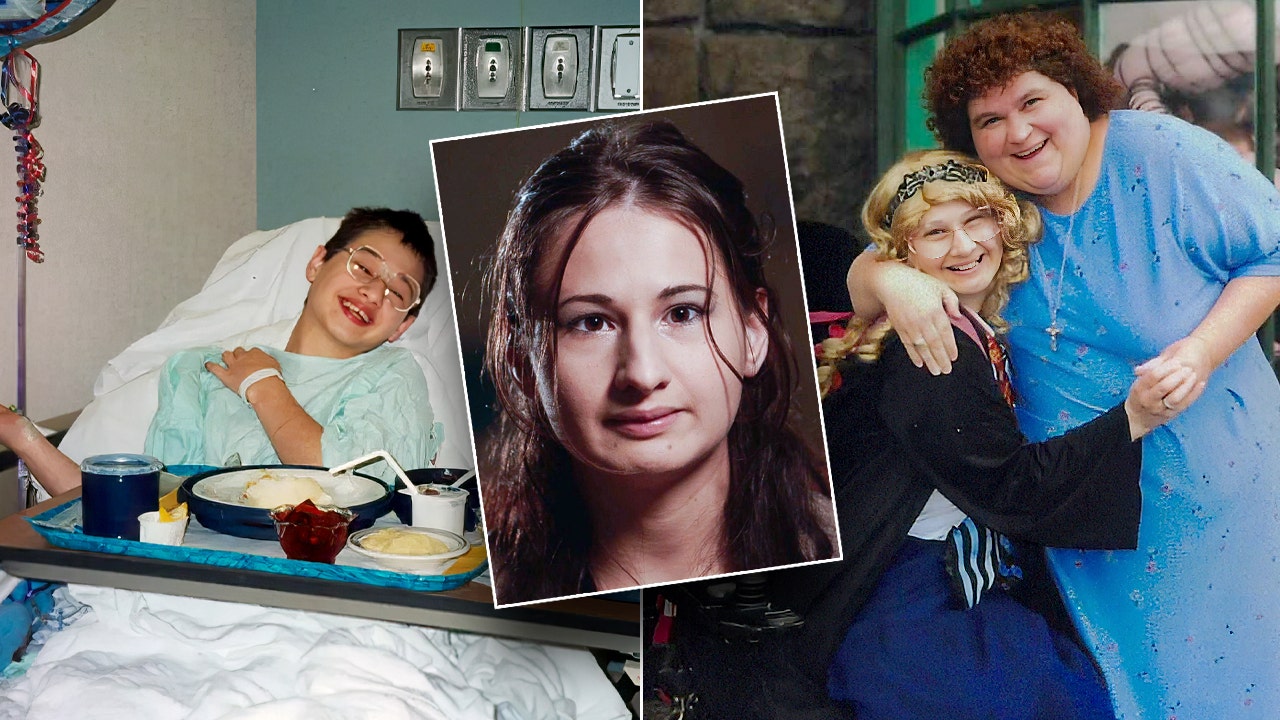
Gypsy Rose Blanchard established herself on social media following her release from a Missouri prison.
On Sunday, the 32-year-old posted a selfie to her Instagram account, which has nearly five million followers, showing off her New Orleans Saints jersey, writing in the caption, “Louisiana love. NFL game day!”
In addition to her selfie, Blanchard also posted a video thanking her supporters and promoting her new documentary series “Prison Confessions of Gypsy Rose Blanchard” as well as her e-book “Released: Conversations on the Eve of Freedom.”
“Hey everyone this is Gypsy. I’m finally free!” she said with a smile. “I just want to send a quick video to thank everyone for the massive amount of support that I’ve been getting on social media. Everyone has been really really nice and supportive. I really appreciate that.”
GYPSY ROSE BLANCHARD, WHO PLOTTED THE MURDER OF HER ABUSIVE MOTHER, RELEASED FROM PRISON
Gypsy Blanchard, now 32, was sentenced to 10 years in prison for second-degree murder in 2016, when she was 24, but under Missouri law, she became eligible for parole after serving 85% of her sentence. (Investigation Discovery)
Previously, Blanchard shared a selfie on the day of her release, writing, “First selfie of freedom!” The snap now has over six million likes.
Blanchard also shared a picture of her kissing her husband, Ryan Scott Anderson. The couple was married in 2022 while Blanchard was still in prison.
Blanchard was released Thursday from the Chillicothe Correctional Center after serving eight years of a 10-year sentence for her role in plotting her mother’s murder.
She was convicted of second-degree murder in 2016. She convinced an online boyfriend to kill her mother, Clauddine “Dee Dee” Blanchard, after she had allegedly forced her to pretend that she was suffering from leukemia, muscular dystrophy and other serious illnesses for years.
Her mother was found stabbed to death in their Springfield, Missouri home in June 2015.
According to experts, years of psychological and physical abuse, as well as being subjected to numerous unnecessary surgeries and medical tests, are said to be what drove Gypsy to want to kill her mother.
Dee Dee Blanchard, a single mother, likely suffered from a mental illness called Munchausen syndrome by proxy (MSBP), which occurs when a person attempts to produce psychological or physical symptoms in another person, according to health experts.
IDAHO STUDENT MURDERS HOUSE DEMOLISHED YEAR AFTER QUADRUPLE STABBING
Experts believe Blanchard’s mother, Claudine “Dee Dee” Blanchard, had Munchausen Syndrome by proxy, a psychological illness in which a person — in this case, Dee Dee — pretends another person — Gypsy — is ill in an effort to receive attention or material items out of sympathy for the victim. (Investigation Discovery)
“The prison that I was living in before, with my mom, it’s, like, I couldn’t walk. I couldn’t eat. I couldn’t have friends. I couldn’t go outside, you know, and play with friends or anything,” Gypsy said during an ABC “20/20” interview in 2018. “Over here, I feel like I’m freer in prison, than with living with my mom. Because now, I’m allowed to … just live like a normal woman.”
KAITLIN ARMSTRONG COULD HAVE RECEIVED A LIGHTER SENTENCE IF THE JURY HAD KNOWN SHE WAS PREGNANT: REPORT
Dee Dee convinced Gypsy that she had a litany of illnesses, including leukemia, and was years younger than her actual age. (Investigation Discovery)
Blanchard’s life story and the killing of her mother has captivated many across the world and was made famous in a documentary film titled “Mommy Dead and Dearest” which debuted on HBO in 2017 followed by “The Act,” a Hulu mini-series that was released in 2019.
Read the full article from Here


GRAND CHUTE, Wis. (WBAY) — Severe thunderstorms moved through northeast Wisconsin on Wednesday afternoon, leaving thousands without power and causing widespread wind damage.
According to poweroutage.us, as of 4 p.m. Fond du Lac County has 2,900 customers without power and Dodge County is at 3,600.
A tornado warning for Fond du Lac County expired last hour, but severe thunderstorms continued across the region with large hail, high winds and heavy rainfall. Trees and branches were reported down across the area.
Rain began in Grand Chute as winds picked up just after 2 p.m. A severe thunderstorm warning issued for the area warned of 80 mph winds and asked residents to take shelter and move away from windows to an interior room.
The storms produced widespread wind damage across Oshkosh, where 1,400 customers were without power. WPS reported more than 3,000 customers without power in Winnebago County.
Copyright 2026 WBAY. All rights reserved.

The Detroit-set detective series from creator and star Diarra Kilpatrick debuted in 2024.
Diarra is coming back to Detroit.
“Diarra From Detroit” will return for its second season on July 29 on Paramount+, the streaming network announced Wednesday.
The eight-episode season will debut with two episodes and will follow with new episodes every Wednesday through Sept. 9.
Diarra Kilpatrick, half-sister of former Detroit mayor Kwame Kilpatrick, is the creator, writer, executive producer, and star of the series, which follows her adventures as Detroit detective Diarra Brickland.
From the official show description:
“Season two finds Diarra Brickland trying — unsuccessfully — to have a hot girl summer without getting wrapped up in yet another deeply unserious and extremely dangerous Detroit mystery. This time around, what starts as a seemingly harmless furniture recovery mission quickly spirals into a triple homicide investigation, a citywide treasure hunt and another trip deep into Detroit’s criminal underbelly. As Diarra attempts to sort out her messy relationship status, she instead finds herself going undercover with a secret society, starring in a Tubi movie, chasing urban legends, dodging gang warfare, and uncovering secrets buried beneath the city itself. Because of course she does.”
Alongside returning stars Kilpatrick, DomiNque Perry, Bryan Terrell Clark, Jon Chaffin, Shannon Wallace, Phylicia Rashad and Harry Lennix, the new season will feature guest stars Cliff “Method Man” Smith, Morris Chestnut, Glynn Turman, Bokeem Woodbine, Amber Riley, Lil Rel Howery, Skilla Baby, Icewear Vezzo, Chris “CP” Powell and more.
The show originally debuted on BET+ in March 2024. The show was filmed in New Jersey, which stood in for the Motor City.
At the time, Kilpatrick told The Detroit News she was inspired by the detective shows she watched growing up with her grandmother.
“I watched ‘Perry Mason’ and ‘Columbo’ with my granny, and I think that structure is in my bones,” she said. “Even though they’re White shows, because of my grandmother’s commentary on them, she made them Black shows.”
She said the show follows in the lineage of those shows she grew up loving.
“I have nostalgia for these highly entertaining procedural shows,” she said. “This one is edgier, it’s sexier, it’s raunchier — it’s definitely an adult show — but I want people to talk to their friends at brunch or call their friends and say, ‘I think she should go back with the husband!’ I love when people get involved in storytelling that way, and if I can reveal the humanity of Detroiters in the process? I feel like I’ve won.”
“Diarra From Detroit’s” first season is currently available to stream on Paramount+.
agraham@detroitnews.com


Mayor and Superintendent Celebrate New Green & Healthy Schoolyard
Milwaukee Mayor and MPS Superintendent Celebrate New Green & Healthy Schoolyard at Riverwest Elementary
Beginning this fall, thousands of students will catch rides to and from Milwaukee Public Schools by electric bus.
At an event June 8, MPS unveiled the arrival of the new electric buses, 50 of which will transport about 6,000 students starting this September. MPS officials said its transportation partners will add another 100 electric buses to service by the 2028-29 school year.
Once all 150 electric buses are on the road, about 22% of buses used to transport MPS students will be electric, according to figures provided by David Fifarek, MPS senior director of transportation services.
The initiative is fully funded through federal pandemic relief aid and about $40 million in grants from the U.S. Environmental Protection Agency, a district spokesperson said. The district’s transportation providers are constructing charging infrastructure and will cover the cost of electricity, which district leaders said will help MPS save money.
MPS officials said the initiative is meant to cut costs amid rising fuel prices and to help reduce the city’s childhood asthma rates. The electric buses will additionally push MPS closer toward achieving its goal of reducing the district’s carbon emissions by 45% over the next four years, said Superintendent Brenda Cassellius.
According to the EPA, diesel exhaust is a significant contributor to climate change, as well as childhood asthma and other respiratory illnesses.
In 2024, Milwaukee had the nation’s highest rate of asthma-related emergency department visits, the Asthma and Allergy Foundation of America reported. Across the U.S., public school children are about twice as likely to have asthma as their school-aged peers.
Researchers at the University of Wisconsin-Madison are particularly studying the link between air pollution and asthma-related visits to school nurses in MPS.
Cassellius said each electric bus will replace a diesel bus, resulting in “fewer emissions at bus stops, near our schools and in the communities our families call home.”
Ben Schutzman, CEO of Highland Electric Fleets, which provides the vehicles, said “replacing just five diesel school buses with electric buses can reduce the risk of pediatric asthma for approximately 1,500 students.”
“In a city where asthma remains a huge concern, that is a very meaningful step forward,” Cassellius said.
There are also financial benefits as MPS seeks to tighten its budget amid broader fiscal challenges, Cassellius added. With fuel prices soaring nationwide, school districts have incurred extra transportation costs.
From March to June, the district said in a statement, MPS spent about $800,000 in diesel surcharges, which are additional fees that bus contractors charge districts to offset higher gas prices.
“That kind of volatility makes it harder to budget and harder to invest where it matters most,” Cassellius said. “This initiative is helping us change that and will allow us to bring more stability to our transportation costs.”
At a School Board meeting in May, MPS interim Chief Operating Officer Michael Turza said the district expects to save money by making the switch, with daily operating costs decreasing because electric buses do not rely on fuel.
The district does not own the buses. MPS Chief Financial Officer Aycha Sawa told board members that the district’s bus vendors instead purchase the buses, and MPS reimburses them under the federal grant.
Contractors who receive the funding must operate in the district for five years, Fifarek said. The companies are also installing charging infrastructure at local bus terminals, which he said creates a long-term investment that could support further expansion of electric buses.
MPS now joins a growing number of school districts in Wisconsin and across the country that are transitioning to electric transportation.
Fifarek said MPS may seek additional EPA grants to increase the number of electric buses in the future.
Kayla Huynh covers K-12 education, teachers and solutions for the Journal Sentinel. Contact: khuynh@gannett.com. Follow her on X: @_kaylahuynh.
Kayla Huynh‘s reporting is supported by Herb Kohl Philanthropies and reader contributions to the Journal Sentinel Community-Funded Journalism Project. Journal Sentinel editors maintain full editorial control over all content. To support this work, visit jsonline.com/support. Checks can be addressed to Local Media Foundation (memo: “JS Community Journalism”) and mailed to P.O. Box 85015, Chicago, IL 60689.
The JS Community-Funded Journalism Project is administered by Local Media Foundation, tax ID #36-4427750, a Section 501(c)(3) charitable trust affiliated with Local Media Association.
-

 Tennessee5 minutes ago
Wanted murder suspect sought by US Marshals, TBI says
-

 Texas8 minutes ago
Texas landowners fight massive transmission line project at Austin hearing
-
 Utah13 minutes ago
Utah conservation organization pledges $5.1M for wildlife recovery
-

 Vermont20 minutes ago
‘Like Christmas’: For Vermont’s Congolese community, a historic World Cup bid is cause for celebration – VTDigger
-

 Virginia23 minutes ago
Vehicle hits building in Sterling, injuring 6 people
-

 Washington28 minutes ago
Washington governor announces proposal to ban cellphones in public schools
-

 Wisconsin35 minutes ago
Severe thunderstorms bring power outages, wind damage to northeast Wisconsin
-

 West Virginia38 minutes ago
WVU announces end of FallFest as part of Welcome Week festivities – WV MetroNews

