Nevada
Burning Man survived a muddy quagmire — Will the experiment last 30 more years?


RENO, Nev. — The blank canvas of desert wilderness in northern Nevada seemed the perfect place in 1992 for artistic anarchists to relocate their annual burning of a towering, anonymous effigy. It was goodbye to San Francisco’s Baker Beach, hello to the Nevada playa, the long-ago floor of an inland sea.
The tiny gathering became Burning Man’s surrealistic circus, fueled by acts of kindness and avant-garde theatrics, sometimes with a dose of hallucinogens or nudity. The spectacle flourished as the festival ballooned over the next three decades.
Some say it grew too much, too fast.
Things came to a head in 2011 when tickets sold out for the first time.
Organizers responded with a short-lived lottery system that left people out of what was supposed to be a radically inclusive event.
As Burning Man matured, luxurious accommodations proliferated, as did the population of billionaires and celebrities.
Katherine Chen, a sociology professor in New York City who wrote a 2009 book about the event’s “creative chaos,” was among those who wondered whether Burning Man “would be a victim of its own success.”
Exponential growth led to increasing questions about whether organizers had veered too far from the core principles of radical inclusion, expression, participation and the pledge to “leave no trace.”
That last hurdle was never harder to clear than this year as “Burners” tried to leave over Labor Day weekend after torching the 80-foot (24-meter) wooden sculpture that is “the Man.”
A rare rainstorm turned the Black Rock Desert into a muddy quagmire 110 miles (175 kilometers) north of Reno, delaying the departure of 80,000 revelers. Once out, organizers had six weeks to clean up under terms of a federal permit.
By the smallest of margins, they passed the test last month, with a few adjustments recommended for the future. The verdict from the U.S. Bureau of Land Management means Burning Man is in line to use federal land again next year.
Debate over the event’s future, however, is sure to continue as divisions grow between the aging hippie types and wealthier, more technologically inclined newcomers. Veteran participants fear the newer set is losing touch with Burning Man’s roots.
The event has made a quantum leap from a gathering of hundreds to one that temporarily becomes Nevada’s third largest city after metropolitan Las Vegas and Reno. The festival drew 4,000 in 1995 and topped 50,000 in 2010.
It’s no wonder seasoned Burners sound a bit like griping cribbage players on a rural town square when they mutter: “It ain’t like it used to be.”
“Back then, it was much more raw,” said Mike “Festie” Malecki, 63, a retired Chicago mortician turned California sculptor who made his 13th trip this year to the land of colorful theme camps, towering sculptures, drum circles and art cars.
“There are more (people) who come out to party and don’t participate. We call them spectators,” he said.
Senior organizers long have wrestled with whether to become more civilized or remain what co-founder Larry Harvey described as a “repudiation of order and authority.”
Ron Halbert, a 71-year-old from San Francisco, has worked support for Burning Man’s 90-piece orchestra for 20 years and remains optimistic.
“It’s still the gathering of the tribe,” he said.
The event is permitted tentatively for the same 80,000 attendance cap next year.
Organizers are considering some minor changes, though generally resist making new rules, said Marian Goodell, Burning Man Project’s chief executive officer.
Critics on social media howled at the mayhem left behind this year, posting photos of garbage piles, abandoned vehicles and overflowing portable toilets while ridiculing the “hippies” and their leave-no-trace mantra.
But that mayhem may have actually helped bring Burning Man back to its roots.
Katrina Cook of Toronto said it forced people to be true to the founding principles of participation and radical self-reliance.
“The rain weeded out the people who didn’t want to be there for the right reason,” Cook said.
Mark Fromson, 54, was staying in an RV, but the rains forced him to find shelter at another camp where fellow burners provided food and cover.
Another principle of Burning Man, he said, centers on unconditional gift giving with no expectation of something in return.
After sunset, Fromson set off barefoot through the muck for a long trek back to his vehicle, slogging through thick clay that clung to his feet and legs. The challenge, he said, was the mark of a “good burn.”
Nevertheless, Jeffery Longoria of San Francisco, who marked his fifth consecutive voyage to Burning Man last summer, said its core principles are going to evolve no matter what as a new generation takes over.
“The people that created this community, a lot of them are getting older and retiring and there’s a lot of new young people coming in, the kind that have, you know, a couple $100,000 RVs and are kind of just careless about the environment.”
Soren Michael, a Los Angeles technology worker who made his 11th trip this year, said the biggest change has been the ability to communicate with the outside world from the desert.
“It was almost part of the appeal to be disconnected,” he said.
Twenty years ago, the psychedelic celebration like none other already was attracting academic scholars — anthropologists, sociologists, political scientists, economists and communications professors — curious about how the makeshift civilization functioned without real-world rules.
Burning Man references started popping up in TV episodes and talk show punchlines.
The rich and famous began venturing to Black Rock City, as the festival’s temporary metropolis is called.
A full-blown exhibit about the phenomenon debuted in 2018 at the Smithsonian American Art Museum in Washington. Even then, veteran Burners complained about the event becoming as much a curiosity to see as to do.
That’s in part the problem veterans have with the advent of glamor camping, or glamping, in which private companies provide packaged trips to concierge camps with luxury RVs and lavish meals under chandeliers. Some believe the camps violate Burning Man principles.
The growing number of billionaires and celebrities who fly in on private jets to Black Rock City’s temporary airstrip “seems to be everyone’s favorite thing to hate,” Goodell said. But wealth shouldn’t be a cause for shame, she said.
“The question is not about glamping,” she said. “Comfort doesn’t assume lack of engagement. It’s whether you have a glamping camp and you’re not really engaging.”
Burning Man’s purpose remains the same: building a creative, stimulating environment, the essence of which people can take back to their own communities.
“We thought that from the beginning,” Goodell said. “We just didn’t know it would be 80,000 people.”



LAS VEGAS (KSNV) — The state of Nevada has won a preliminary injunction against the company Polymarket, the latest blow to prediction markets in the Silver State.
A Carson City judge granted the injunction last week, forbidding Polymarket from offering any contracts for sports, elections or entertainment-related events within Nevada.
Attorney General Aaron Ford called the decision a win for Nevada’s consumers.
“Unlicensed prediction markets may not disregard the law and avoid the systems we have in place to be sure Nevadans and visitors alike are protected while gambling,” Ford said in a statement.
The Nevada Gaming Control Board won a temporary restraining order against Polymarket back in January after initiating legal action against the company.
Polymarket’s website states that people “buy and sell shares representing future event outcomes,” but unlike sportsbooks, users bet against one another rather than the “house.”
The Gaming Control Board says it considers “sports event contracts, or certain other events contracts, to constitute wagering activity” under state law, and Polymarket must be licensed.
Kalshi and Coinbase, two other popular prediction markets, are already enjoined from operating while Nevada pursues legal action against them.
Ford’s office says Crypto.com and Robinhood have voluntarily ceased offering event contracts in the state.

Serving as a home away from home, Hillel of Northern Nevada is a space that allows students at the University of Nevada, Reno to be together, rooted in their culture.
When students start college, they not only leave their homes and families, they also leave behind their communities, routines and direct support systems.
“Hillel of Northern Nevada allows students to be together, rooted in a familiar culture and religion. Whether it’s for a holiday celebration or simply to laugh and enjoy each other’s company,” Hannah Alterwitz, director of Hillel of Northern Nevada, said.
The organization, which is the Northern Nevada chapter of Hillel International, the largest Jewish campus organization in the world, hosts a variety of events throughout the year, including social outings like ice skating, mini golf and craft nights, alongside cultural and religious celebrations for Shabbat and the High Holidays.
“Hillel serves as a place for Jewish students to belong. We are a social organization. We are a pluralistic group, meaning no matter how someone practices Judaism, they will always be welcome at Hillel,” Alterwitz said.
One event that stood out to Alterwitz this semester was a campus visit from U.S. Senator Jacky Rosen, where students had the opportunity to ask questions and participate in deeper discussions about issues affecting students and the broader Nevada community.
“It was so impactful on the students to be able to talk openly with the Senator about the problems communities are facing every day. Students asked about ICE, AI data centers, and the rise of antisemitism across the country. To watch them have a real dialogue and come away from that conversation curious and motivated to help tackle the issues facing our country was really special,” Alterwitz said.
As Jewish American Heritage Month came to an end in May, Hillel of Northern Nevada continues building community around campus throughout the year. Alterwitz invites anyone who is interested in Jewish heritage to check the organization out.
“I hope that if a student takes anything away from this, it’s that Hillel is a place where Jewish students and those interested in Jewish culture can come and meet some great people and have some fun! Jews are not a monolith; we have lots of different opinions and backgrounds. It is such a diverse religion, but if you like good food, good friends, and Jewish culture, Hillel has a place for you,” Alterwitz said.
To learn about upcoming events and opportunities to get involved, go to @hillelofnorthernnevada on Instagram or reach out to Hannah directly at hannah.alterwitz@jewishnevada.org.

RENO, Nev. (KOLO) – Country music artist Caleb Montgomery will be performing at the State Fair of Nevada.
Montogomery will be headlining the Opening Night Concert on June 11 at the Nevada State Fairgrounds in Reno.
“We are excited to welcome families and communities from across Nevada back to the official State Fair of Nevada,” said Nevada Department of Agriculture Director J.J. Goicoechea. “After 16 years, a Nevada tradition is finally returning, something many families have waited years to experience again.”
The fair will run from June 11 to June 13, and opening day tickets will be $15 for adults and $12 for kids aged 12 and younger.
Other featured programming includes:
- Nevada Junior Livestock Show and Sale
- University of Nevada, Reno Extension’s 4-H State Expo
- Next Generation Junior Bull Riding
- Made in Nevada Farmers’ Market
- Drone show
- Local vendors, food and art
- Carnival rides and more
Copyright 2026 KOLO. All rights reserved.
-

 Detroit, MI12 minutes ago
Detroit Lions add UDFA rookie WR during OTAs
-

 San Francisco, CA20 minutes ago
How to watch San Francisco Giants vs. Milwaukee Brewers
-

 Dallas, TX27 minutes ago
3 different Cowboys 53-man roster projections pinpoint contested roster spots
-

 Miami, FL30 minutes ago
Jeff Hafley suggests Miami Dolphins entertain Malik Willis Tush Push
-

 Boston, MA35 minutes ago
Karen Read sues the police agencies that investigated her Boston police boyfriend’s death
-
 Denver, CO42 minutes ago
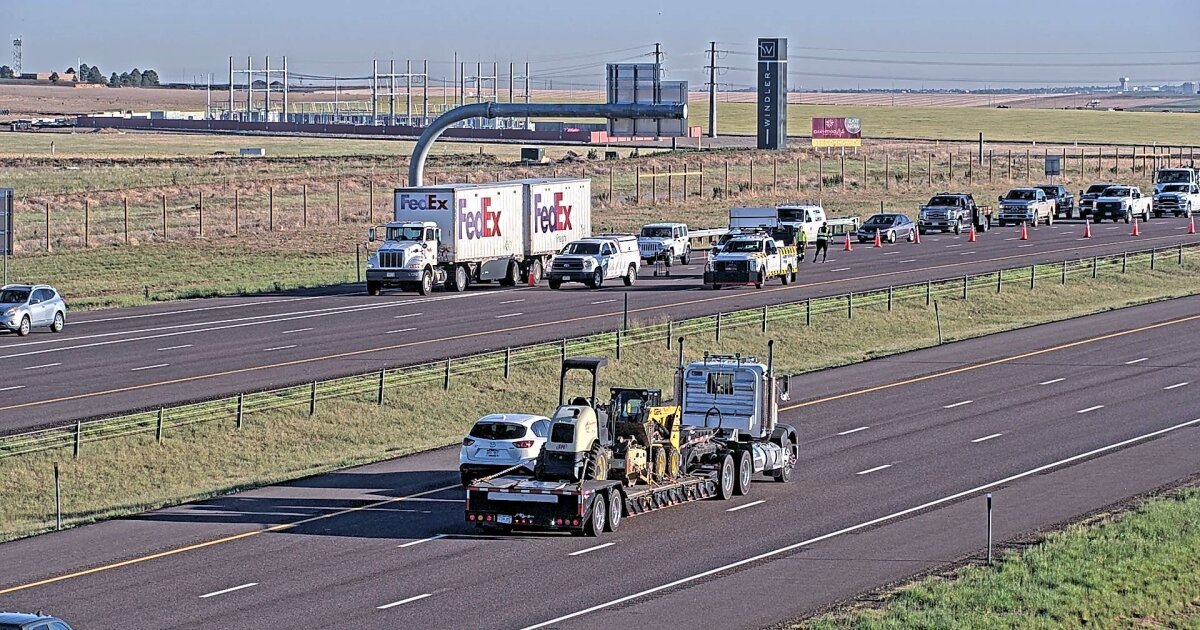
Pedestrian dies after hit by car on southbound E-470, Aurora police say
-

 Seattle, WA45 minutes ago
Seattle paying $2.6M to settle sexual harassment lawsuit filed by four female SPD officers – MyNorthwest.com
-

 San Diego, CA50 minutes ago
Publisher’s Note: Restaurants Are People, June 2026 | San Diego Magazine

