Wyoming
Highest Elevation Winter Ultra-Marathon Race In the US Is Wyoming's Grueling “Drift 100”


Beginning at the north end of Kendall Valley in Sublette County, Wyoming, the Drift 100 is a winter endurance race where competitors have 48 hours to run, bike or ski through a loop in the Wind River Mountains.
Held on the second weekend in March, the course follows a groomed snowmobile trail and traverses the Continental Divide. The course gains 9,000 feet in elevation and is the highest winter ultramarathon in the United States.
Among the hundreds of grueling endurance events held around the world, this one is no picnic.
Competitors told Cowboy State Daily that it’s a race they never forget and that real-world preparation and mental focus are critical.
Being fearless doesn’t hurt either.
Ginny Robbins, an endurance athlete from Victor, Idaho, said the way to complete the Drift 100 without turning into a popsicle is to keep your head in the race and don’t stop.
Robbins is the current women’s record holder in the runner category. She set that record in 2021 at 30 hours and 43 minutes. She has also done the race on skis and plans to compete on a fat bike next March to become the first racer to complete the Drift 100 by all three means of transportation.
Justin Kinner, an endurance athlete from Casper, said he wouldn’t go to the starting line of any race without being prepared to “put myself in the pain cave and dig out a new room.”
He remembers long hours of solitude without seeing another living thing and fighting through soft snow on Union Pass, making less than 2 miles an hour.
Kinner won the race in 2020 and established the men’s record, covering the course on foot in 29 hours, 36 minutes. That’s under 18 minutes per mile average over the 100 miles.
The Drift 100 gets its name from the Green River Drift, a 58-mile-long cattle drive that has followed the same path since the 1890s. The endurance race travels some of the same trails used by the cattle that move from private ranches onto the public land grazing pastures of the Wind River Range every spring and fall.
Signs along the trail encourage racers to “Keep Moooving.”
What’s The Allure?
It takes a special sort of fortitude to face the prospects of a 100-mile-long sub-zero slog down a snowmobile trail with a pocket full of gummy bears, a water bottle that’ll probably be frozen before its consumed, a sleeping bag, tent and few other safety related sundries.
Being comfortable isn’t part of the Drift 100.
Robbins said when she trains, which is generally at least a 5-mile run in the morning and something equally as challenging in the afternoon, her mind wanders. But during a race like the Drift 100, the focus has to be on taking care of herself.
“The crazy thing that happens when I set out on a 100-mile race is my body naturally regulates itself,” she said. “When I go out for a 10-mile run, I’m a sweaty mess when I get home. But when I start out on a race like the Drift, I know how to do all of the things like avoiding overheating to avoid having a bad race. It’s more about self-care than fitness level.”
She said part of what makes this race an endearing winter adventure is that it allows racers to be vulnerable in a wild place.
“The beauty of the Drift is there are people there keeping an eye on you, and that’s why I choose that event,” she said. “It’s a structured environment where you can push yourself.”
Practice How You Play
Kinner spent time training on Casper Mountain snowmobile trails in preparation for his record-setting run in the Drift 100. He went out alone during winter storms and at all different times of the day.
“I prepared by going out and putting myself in situations where I was alone for a long time, and I used all of my gear so that I was prepared for anything,” he said. “Putting myself in those training situations was pivotal for me.”
He didn’t know he was in the lead until he reached the halfway point and a volunteer told him. He’s not sure if he will run the race again. If someone beats his time it might trigger his interest.
Kinner has completed about a dozen ultramarathons. When he starts a race, he has no intention of stopping until he reaches the finish line.
“It’s always in the back of my mind that I can stop, pull out my sleeping bag and rest, but when you stop, the clock keeps going,” he said.
Drift 100 Racers Faced The Wrath Of Winter 2023
Racers were greeted with blizzard conditions at the start of this year’s race. The high winds, snow and subzero temperatures lasted throughout the first day of the race and exacted a heavy toll on the field. Many of them made it to the Strawberry Aid Station at the 25-mile mark, dropped out of the race and hunkered down for the night.
Others camped along the course and continued the race when conditions improved. They recorded times that were well off the pace established in previous races.
The conditions were so horrible race organizers decided to wave the 48-hour time limit that racers are given to complete the 100-mile course.
Robbins said when the snow quit falling, the wind picked up. She heard numerous trees falling as she ran through the forest. In the open meadows, if she wouldn’t have had trekking poles the wind would have flattened her.
“It was probably the most challenging conditions that I can imagine,” she said.
Of the 46 competitors who started the race, 11 finished. Among the finishers were six bikers, two skiers and three runners. The inaugural Drift 100 race was held in 2020. In the first two years, more than 70% of those who started finished. In 2022, 44% finished the race.
Finish times this year were well off the pace established during previous races. The 2023 overall winner, Seth Harney of Colorado, finished on a fat bike with a time of 31 hours and 24 minutes. The four previous overall winners completed the course in under 19 hours.
Mitch Helling of Laramie, who won the 2022 race on skis with a time of 21 hours and 36 minutes, needed more than 14 hours longer than that previous winning time to complete the course in 2023.
Among the runners, Ryan Bridger of West Palm Beach, Florida, recorded the best time in 2023 at 51 hours and 48 minutes. The female winner on foot was Pam Reed of Jackson with a time of 52 hours and 55 minutes, 13 hours slower than her personal best.
Racers who drop out and can’t return to the start line under their own power are charged a $200 fee for a snowmobile ride out. All racers are required to carry a beacon that records their position, a sleeping bag, tent, goggles and other safety gear. Some competitors wear backpacks while others tow sleds that are useful on the downhill sections of the trail.
A Feat of Organization
Both of the racers interviewed for this story heaped compliments on the race organizers and the dozens of volunteers for the time spent in keeping the course open and racers safe. Kinner said it’s unique that a winter race like this is supported by volunteers in such a remote place.
Keri Hull, her husband Darren and their friends Josh and Laura Hattan are the founders of the the Drift 100. The Hulls competed in several similar events when they lived in Alaska before moving to Pinedale.
“When we learned about the network of groomed snowmobile trails that are here, we thought why not have a race?” Keri said.
They limit the number of racers to 70 each year and they also mark out courses for a 28-mile race and a 13-mile race for competitors who don’t want to tackle a 100-miler.
Some people fly in from Europe and other countries to compete, but most of the competitors come from Wyoming and its neighboring states. For the 2024 event, there are racers from 16 states and Canada registered so far.
Hull said about 40 volunteers put in a collective 800 hours setting up the course, maintaining the course and taking care of racers who run into problems. The factors the knock most racers out are altitude sickness and dehydration.
John Thompson can be reached at: John@CowboyStateDaily.com



Wyoming State Historic Sites Superintendent Sharie Mooney Shada made an appearance on Sheridan Media’s Public Pulse to speak on the upcoming Immersion in Crow Culture program at Fort Phil Kearny on July 16.
The event begins at 6 p.m. Thursday, July 16 at the Fort Phil Kearny Interpretive Center.
S. Mooney Shada
The rangers host free, family-friendly evening talks and presentations throughout the summer. Shada said the Native American Student Interpretive Ranger Program has enriched the visitor experience at Fort Phil Kearny. In its fourth year at the fort, the program allows a perspective from the indigenous side of history.
Keep up with events at Fort Phil Kearny by clicking here.
Wyoming
‘Not just coloring tipis,’ experts debate quality of Indian education in Wyoming schools – WyoFile

RIVERTON—Nine years after the Wyoming Legislature passed the Indian Education for All Act, education experts say there is still more work to be done.
“I think it is a key priority across the state. Having grown up in Wyoming as a Native student in an off-reservation school, there was never a priority about learning about either tribe; and I still see that today,” Fremont County School District 21 Superintendent Deb Smith told the Wyoming Legislature’s Select Committee on Tribal Relations. “And I’m well into my 50s. So I think we need to push more.”
When the Legislature passed the Indian Education for All Act in 2017, lawmakers did not create an office of Indian education similar to the ones already in place in states such as Montana. Now, some experts and tribal members say they hope Wyoming will move in that direction in the future. But regardless of the particulars of future steps, reservation school leaders told lawmakers that the Indian Education for All Act needs more support and better integration into Wyoming schools.
“As a Native person, we shouldn’t always have to be the one advocating on behalf of our tribes,” Smith said. “People that are Wyomingites should know. They should be sharing that great history.”
Fremont County School District 14 Superintendent Blakke Bertram agreed.
“When there are questions on our state assessment that are geared towards Indian Ed. for All, then I’ll know that we’ve taken it serious,” Bertram told the tribal relations committee during its June meeting in Riverton. “I feel like I have yet to see that.”
The Legislature, he pointed out, recently passed new requirements for literacy education — and backed it up with grant funds and rulemaking. “So when we say something’s important, when we put support and money behind it, we’re saying it’s important. Have we really done that for Indian Ed. for All?”
Revisions underway
When she takes Lander fourth graders on their annual tour of the Wind River Reservation, Fremont County School District Native American Liaison Lisa McCart said one of the highlights is often the visit to Sacajawea’s grave. Having read “Naya Nuki,” the kids usually know who Sacajawea is — but seeing her grave, and hearing Fort Washakie Schools Librarian Robin Levin explain the history of disputes over her burial place, is special.
Fremont County School District 1 is not among the schools regularly invited to testify at tribal relations meetings. However, district representatives sat down with the Lander Journal in the days following the meeting.
As the Lander schools’ Native American liaison, McCart explained, her job involves keeping track of all of the district’s Native students and working with the district’s curriculum coordinator to coordinate learning and cultural experiences. McCart invites in tribal experts, organizes field trips, and works with extracurricular clubs in addition to helping Native students get to, stay in and feel supported at school.
Not every Wyoming school district has a significant population of Native American students, or a Native American liaison. Schools like those in Lander, which are close to the Wind River Reservation, have a bit of an advantage when it comes to integrating Indian education into their classrooms, the Lander district’s Curriculum Coordinator Deidre Meyer explained.

Scotty Ratliff, a member of the Wyoming Department of Education’s relatively new Native American Education Cabinet and a former legislator, said the Wyoming Department of Education could do more to provide districts with resources, teaching materials and curriculum to support the implementation of Indian Education for All statewide. Not every school in Wyoming, he pointed out, is close enough to the Wind River Reservation to have easy access to tribal experts.
The Indian Education for All Act requires that the state take another look at its social studies standards related to the act every nine years. Last updated in 2018, the state is currently in the process of putting together those new standards, the department’s Native American Liaison Rob Black told legislators.
Meyer worked in the Montana Office of Indian Education for years before moving to Lander and was at one point the principal of Fort Washakie Elementary School. She is among several Fremont County educators represented on the committee revising those standards.
Beyond her role as her district’s Native American liaison, McCart is also a member of the Wyoming Department of Education’s Native American Cabinet. In particular, she’s involved in an Essential Understandings subgroup that will be reviewing the updates to social studies standards currently underway to ensure they adequately incorporate tribal perspectives and Native American culture and history.
Learning language
Accessing Shoshone and Arapaho language classes also can be difficult for students, especially for those seeking successive years of Shoshone or Arapaho to qualify for the highest tier of Wyoming’s Hathaway Scholarship, Native American Education Director Roy Brown said. Brown works for Fremont County School District 25, which oversees Riverton schools. Part of the problem is a lack of qualified teachers, Brown and Fremont County School District 38 Superintendent David Holbert noted. Riverton has only ever offered one year of Arapaho language, Brown explained, which means that the district’s students wanting to take Arapaho can’t meet the high-tier Hathaway requirement of two successive years of a foreign language unless they actually take three years of foreign languages.
There are very few available and certified teachers of the Arapaho language, the group of superintendents explained — and even fewer for Shoshone.

McCart recalled that several years ago, Lander pursued its own attempts to bring Northern Arapaho and Shoshone language classes into the district. But, she said, her district found that there are very few people with the appropriate certifications to teach either language as part of a public school class. One of the ideas that she and Meyer have discussed is bringing in tribal elders or others who are fluent in Arapaho and Shoshone outside of a formal class setting, where they might not need to meet the same certification requirements as a teacher but can still help interested students start to learn.
‘[Not just] coloring tipis’
Bertram also challenged the implementation of the current standards for Indian Education for All, even in schools close to the reservation.
“My kids, they go to a neighboring school district, an off-reservation school district. I’ve seen the work that’s going toward Indian Ed. for All in that school district,” Bertram said. “It is not teaching my daughter, my son, about what Indian Ed. for All stands for and what it means to be a Northern Arapaho or Eastern Shoshone tribal member on our reservation.”
He continued: “We’re talking coloring tipis. That’s the kind of stuff we’re seeing on our off-reservation schools when it comes to Indian Ed. for All. And that’s a border school.”
If the district in question had called, Bertram’s district would likely be willing to work with them to share resources, he said.
“I appreciate his passion,” Lisa McCart said of Bertram’s remarks. However, she added, the superintendents at Fremont County school districts meet monthly, and she isn’t aware of any concerns along those lines having been raised at any of those meetings.
McCart and Meyer explained some of the ways Lander schools work to incorporate Indian Education for All into Lander’s curriculum, including reservation tours, cultural events, and the incorporation of Native American literature, history, and legal texts into classes from kindergarten through 12th grade.
For example, a few years ago McCart worked to bring musician and artist Gabriel Ayala, a member of the Yaqui tribe of Arizona, to Lander schools. Ayala worked with a variety of grade levels, McCart said, including teaching kids at Gannett Peak Elementary about the meanings of different symbols in Yaqui culture through an activity that involved the elementary students selecting symbols that would be meaningful to their family and drawing them on a tipi.
“If we weren’t confident in what we’re doing and trying to do in this district, we wouldn’t be vocal at the state level,” Meyer pointed out. “It’s not just coloring tipis.”
To characterize the district’s approach as such, McCart added, “is disrespectful for the [Native] families that choose to be in this district.”
McCart and Meyer noted that communication is key, and they hope Fremont County and Wyoming school districts can work together to ensure all Wyoming students receive an adequate education concerning tribal peoples and issues. If someone has concerns, they said, they both hope they will bring them to them directly so Lander can work to address those concerns.
-
 Florida3 minutes ago
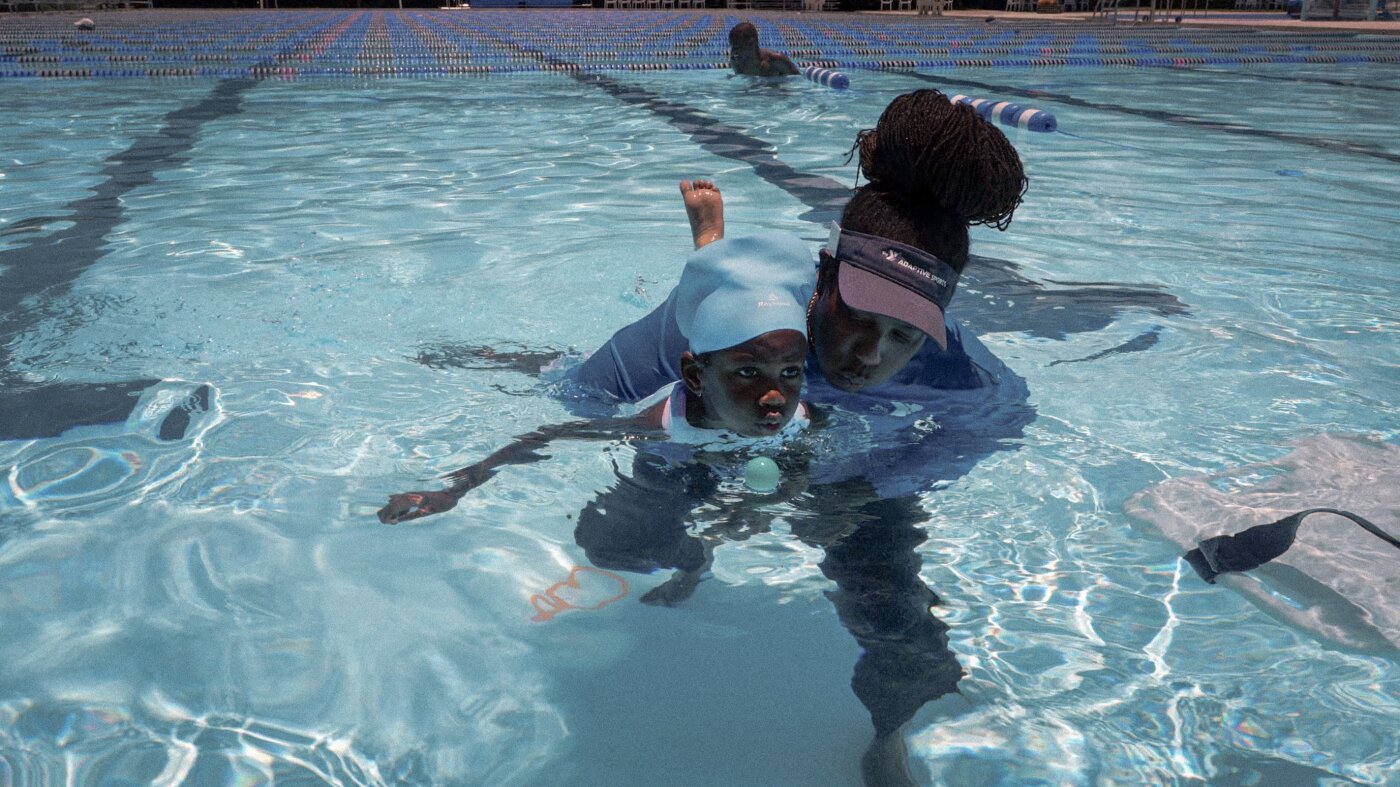
Kids with autism are prone to drowning. Florida is trying to prevent that
-

 Georgia6 minutes ago
Bradenton man wanted for murder is found hiding in Georgia
-

 Hawaii11 minutes ago
Few state bills this year face potential veto – West Hawaii Today
-

 Illinois21 minutes ago
West Suburban hospital sends permanent layoff notices to about 500 furloughed employees
-

 Indiana26 minutes ago
Extreme heat peaks before holiday weekend storms | July 1, 2026
-

 Iowa33 minutes ago
New York Times/Siena Polls in Alaska, Iowa, North Carolina, and Ohio – Siena Research Institute
-

 Kansas36 minutes ago
Kansas State Fair announces Rock Fest with three-band lineup
-

 Kentucky36 minutes ago
Looking for the best hot dog in Louisville? Try these 15 spots

