World
Zelenskyy says Putin ‘hates’ Biden and Trump, time for 'strong decisions'


Ukrainian President Volodymyr Zelenskyy argued that no matter whether the Democrats or Republicans come out on top in the November presidential election, Russian President Vladimir Putin will “hate” them either way.
“[President] Biden and [Donald] Trump are very different. But they are supportive [of] democracy, and that’s why I think Putin will hate both of them,” he said Tuesday night, speaking from the Ronald Reagan Presidential Foundation and Institute, just one block from the White House.
“He doesn’t love America. And he hates Ukraine,” he said. “Because he hates democracy.”
“I hope that the United States will never go out from NATO,” Zelenskyy said. (AP/Evan Vucci)
LITHUANIAN FOREIGN MINISTER WARNS PUTIN WATCHING NATO FOR WEAKNESS FOLLOWING CHILDREN’S HOSPITAL BOMBING
Zelenskyy’s comments were made in response to questions posed by FOX News chief political anchor and executive editor of “Special Report” Bret Baier, after a speech he gave urging the U.S. and its NATO allies to act strongly in the face of Russia’s continued aggression against Ukraine.
Questions about the U.S. election and Washington’s role in NATO have mounted since Biden and Trump took to the stage last month for their first debate this election cycle. Biden’s weak performance and Trump’s refusal to answer questions on what U.S. involvement in the alliance would look like, have sparked international concern, particularly as it relates to the war in Ukraine.
Putin, in the wake of Biden’s comments, says Russia knows “how to defend our own interests.” (Reuters)
The U.S. is the largest supporter of military aid to Kyiv, but Trump has threatened to cut aid to Ukraine should he win, and he has repeatedly championed his relationship with the Russian authoritarian leader.
“The whole world is looking to November. And truly speaking – Putin awaits November too,” Zelenskyy said. “It’s time to step out of the shadows, to make strong decisions work, to act and not to wait for November or any other month.”
“I hope that if the people of America will elect President Trump, I hope that his policy with Ukraine will not change,” he added.
“Biden and Trump are very different. But they are supportive [of] democracy, and that’s why I think Putin will hate both of them,” Zelenskyy said. (Getty Images)
NATO APPEARS DIVIDED ON PUSHING BIDEN TO LIFT STRIKE BANS FOR UKRAINIAN OFFENSE
Conservative sources have told Fox News Digital that they believe it is unlikely that Trump would pull out of NATO, though concerns remain high that even a diminished presence in the alliance could have devastating effects on European security.
“I hope that the United States will never go out from NATO,” Zelenskyy said. “Otherwise, the world will lose a lot of countries.”
Security officials have warned that even removing U.S. troops from posts in Europe will have serious consequences – a threat Zelenskyy also reiterated Tuesday night, noting that failing to help Kyiv stop Russia in Ukraine will have costly effects on the U.S. in the future.
Ukrainian President Volodymyr Zelensky delivers remarks at the Ronald Reagan Presidential Foundation and Institute on July 9, 2024, in Washington, D.C. (Bonnie Cash/Getty Images)
“Putin will never stop [in] Ukraine, and you will see it. If we will not stop him… he will go further, and he will go to the NATO countries,” Zelenskyy said, referencing countries such as Poland and other former Soviet bloc nations.
“And after that, the people and the soldiers of the United States will go and will defend these countries,” he said in reference to commitments the U.S. is held to under Article 5 of the NATO charter, which says an attack on one NATO nation will prompt a response from all NATO nations.
“It’s a tragedy for everybody to lose people, sons and daughters,” Zelenskyy said. “That’s why I think until the moment Ukraine is strong, all the world pays a low price.”




Social media posts have showed French border guards stationed in airport arrivals with signs that appear to read, “to all the influencers and other people in tax havens such as Dubai, the tax authorities wish you a smooth return to France”. But is this real?

World
Iran continues firing missiles, drones at neighboring states, with multiple interceptions reported

NEWYou can now listen to Fox News articles!
Iran launched a new wave of attacks on Thursday, with explosions reported in the region and Tehran threatening that the U.S. would “bitterly regret” sinking an Iranian warship.
Iran’s strikes on Thursday targeted Israel, American bases and countries in the region. Israel announced multiple incoming missile attacks as air raid sirens blared in Tel Aviv and Jerusalem.
Azerbaijan’s Ministry of Defense on Thursday said Iran used unmanned aerial vehicles (UAVs) in an attack on Nakhchivan International Airport and other civilian infrastructure. The ministry said the details of the attack and the capabilities of the UAVs were being investigated.
“The Ministry of Defense of the Republic of Azerbaijan strongly condemns the attacks carried out by the armed forces of the Islamic Republic of Iran against civilian infrastructure on the territory of Azerbaijan in the absence of any military necessity. The Islamic Republic of Iran bears the entire responsibility for the incident,” the ministry’s statement read.
Explosions seen and heard in Azerbaijan as Iran launches retaliatory attacks across the Middle East. (East2West)
Iran has not acknowledged targeting Azerbaijan, despite the country’s ministry of defense pointing the finger at Tehran.
Qatar evacuated residents near the U.S. Embassy in Doha on Thursday, with its Ministry of Defense confirming that the country was “subjected to a missile attack” and that its air defense systems were able to intercept it. The ministry urged the public to remain calm and avoid unofficial information.
Abu Dhabi announced that its authorities were responding to an incident involving falling debris in ICAD 2, which is part of the Industrial City of Abu Dhabi. Six people, identified by Abu Dhabi as Pakistani and Nepali nationals, suffered minor to moderate injuries.
A plume of smoke rises over buildings in Doha, Qatar, on March 5, 2026. (Mahmud Hams/AFP via Getty Images)
FORMER TOPGUN PILOT DECLARES IRAN MILITARY ‘OVER WITH’ AMID US AIR SUPERIORITY, BUT WARNS OF ANOTHER DANGER
Iran has carried out retaliatory strikes since the launch of Operation Epic Fury, with the latest wave coming one day after the U.S. sunk an Iranian warship, killing at least 87 Iranian sailors. Sri Lankan navy spokesman Cmdr. Buddhika Sampath said 32 people were rescued from the wreck and were admitted to a hospital.
Secretary of War Pete Hegseth defended the move during a news briefing at the Pentagon.
“An American submarine sunk an Iranian warship that thought it was safe in international waters. Instead, it was sunk by a torpedo — Quiet Death. The first sinking of an enemy ship by a torpedo since World War II. Like in that war, back when we were still the War Department, we are fighting to win,” Hegseth said.
Missile interceptions are seen in the sky on March 5, 2026, in Central Israel. (Alexi J. Rosenfeld/Getty Images)
ISRAEL’S MILITARY RELEASES VIDEO SHOWING OBLITERATION OF IRAN’S MISSILE LAUNCHERS, DEFENSE SYSTEMS
Iranian leaders condemned the attack, with Foreign Minister Abbas Araghchi accusing the U.S. Navy of committing “an atrocity at sea.” Meanwhile, Ayatollah Abdollah Javadi Amoli appeared on state television and called for the shedding of Israeli and “Trump’s blood.”
“Fight the oppressive America, his blood is on my shoulders,” he said in a rare call for violence from an ayatollah, one of the highest ranks within the clergy of Shiite Islam.
CLICK HERE TO DOWNLOAD THE FOX NEWS APP
The U.S. and Israel launched the war on Saturday with strikes targeting Iran’s leadership, including the supreme leader, Ayatollah Ali Khamenei, who was killed. Iran’s missile arsenal and nuclear facilities were also hit.
The Associated Press contributed to this report.
Related Article

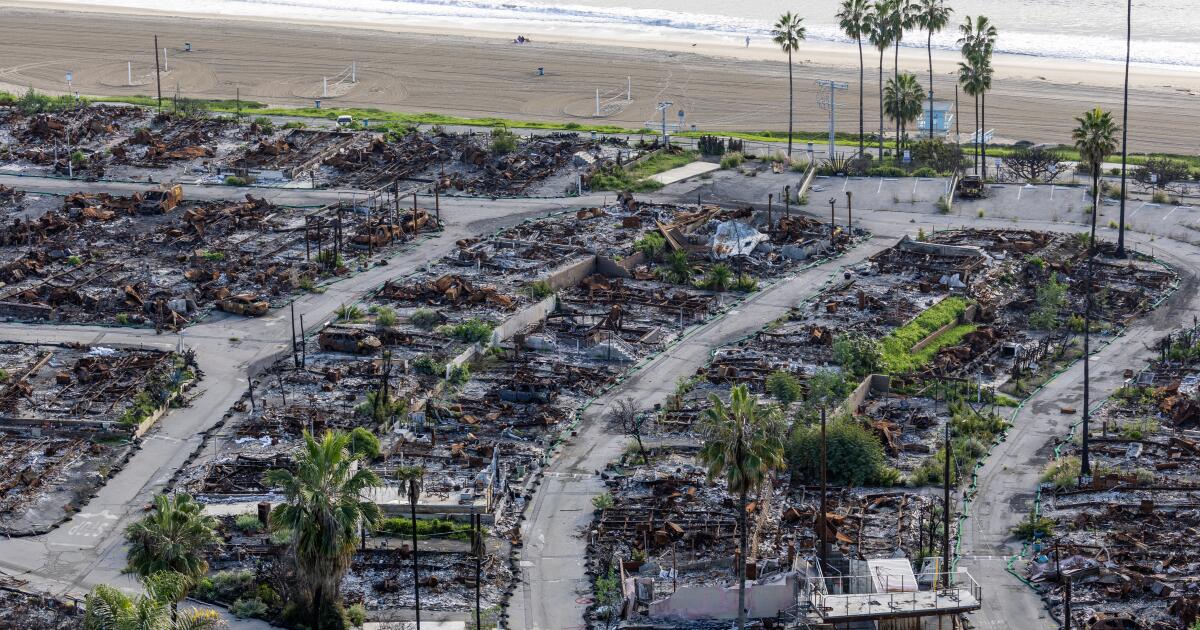
Owners of fire-destroyed Palisades mobile home park seek to displace residents for development deal

Fatigue a factor as early matches begin at Indian Wells
Fact check: Did French border guards mock influencers returning from Dubai amid Iran war?

Iran’s fight for survival / The widening war / Trump’s nebulous goals : Sources & Methods

Tarot influencer’s claims in Idaho college murders case spark courtroom reckoning

Florida High School Football Rankings: Top 25 teams – Oct. 21

Cleary's 21 help Le Moyne down Central Connecticut State 69-64 in OT

How old is Bo Nix? What to know about Oregon quarterback ahead of 2024 NFL Draft

99th annual Pony Swim held in Virginia

Indiana Members Credit Union announced as new anchor tenant at Bottleworks District
Fact check: Did French border guards mock influencers returning from Dubai amid Iran war?
Iran’s fight for survival / The widening war / Trump’s nebulous goals : Sources & Methods

Map: 4.9-Magnitude Earthquake Shakes Louisiana

Paxton vows he’s ‘staying in this race’ even if Trump backs Cornyn in Texas GOP clash

Which Kurdish groups is the US rallying to fight Iran?
-

 World1 week ago
Exclusive: DeepSeek withholds latest AI model from US chipmakers including Nvidia, sources say
-

 Wisconsin4 days ago
Setting sail on iceboats across a frozen lake in Wisconsin
-

 Massachusetts1 week ago
Mother and daughter injured in Taunton house explosion
-

 Maryland5 days ago
AM showers Sunday in Maryland
-

 Massachusetts3 days ago
Massachusetts man awaits word from family in Iran after attacks
-

 Florida5 days ago
Florida man rescued after being stuck in shoulder-deep mud for days
-

 Denver, CO1 week ago
10 acres charred, 5 injured in Thornton grass fire, evacuation orders lifted
-

 Oregon6 days ago
2026 OSAA Oregon Wrestling State Championship Results And Brackets – FloWrestling