World
Who’s in the running to be Japan’s next prime minister?


Japan’s governing party will choose a new leader on Friday to replace Fumio Kishida who announced his resignation in August.
The winner of the contest for leadership of the Liberal Democratic Party (LDP), the largest in parliament, will become the country’s next prime minister. Most analysts expect the new leader to call a snap election to secure a mandate from voters.
A record nine candidates have been campaigning and the break-up of the LDP’s usual power structures as a result of a series of corruption scandals have made it harder to predict the outcome.
Many candidates “have claimed that ‘I’m the one who can handle Trump’ or ‘I’m the one who can stand up to China’”, Jeffrey J Hall, a lecturer at Kanda University of International Studies, told the AFP news agency.
But there are significant differences in their approach to such issues, and although some of the nine have “no hope whatsoever”, the race remains “a toss-up”.
“This is the most unpredictable that an LDP election has been in many years,” Hall said.
The first round of voting starts at 1pm (04:00 GMT) with the eventual winner expected to hold a news conference at about 6pm (09:00 GMT). The contest might also produce Japan’s first woman or youngest-ever prime minister.
Here are some of the more prominent contenders:
Shigeru Ishiba, 67
A former defence minister, Shigeru Ishiba is popular with the public but has failed four times to secure the post of party leader.
Ishiba’s campaign has focused heavily on security issues, and he has indicated he will push for more oversight over Washington’s use of its bases in Japan, and also for Japan to have a say in how the US might use its nuclear weapons in Asia. Other suggestions have included the creation of an ‘Asian NATO’.
On the economy, the 67-year-old has questioned the Bank of Japan’s maverick interest rate policy. A former agriculture minister, he has also called for more efforts to address rural depopulation.
Takeshi Iwaya, one of the LDP legislators supporting Ishiba’s candidacy, describes the veteran politician as a man with a “sincere and honest attitude towards politics”.
Ishiba graduated from Keio University with a law degree. He enjoys making military models, including one of a Soviet aircraft carrier for the visit of a Russian defence minister, as well as trains and 1970s pop idols.
Shinjiro Koizumi, 43
The 43-year-old son of popular former Prime Minister Junichiro Koizumi has positioned himself as the change candidate, with the vision and charisma to help the party rebuild after its recent scandals.
Koizumi was first elected to parliament in 2009 and established his credentials by working on reconstruction in eastern Japan following the devastating 2011 earthquake. He was environment minister under the administration of Shinzo Abe who was assassinated in July 2022, as well as that of his successor Yoshihide Suga.
Koizumi has supported the development of renewables. Unusually, he also took paternity leave for the birth of his children.
He has promised to hold a snap election if he wins the party leadership.
“With the rapidly declining birthrate and ageing population, we need leaders who have the antennae and sensibility to pick up on diverse voices, including those of young people and women,” said Ayuko Kato, an LDP legislator backing Koizumi’s candidacy.

Koizumi has an economics degree from Kanto Gakuin University, and a master’s from Columbia University, He also spent time working at the US think tank Center for Strategic and International Studies (CSIS).
He enjoys surfing and in July spent a day at the beach with US ambassador to Japan, Rahm Emanuel.
Sanae Takaichi, 63
Sanae Takaichi, whose hero is former British Prime Minister Margaret Thatcher, could follow in her idol’s footsteps to become her country’s first woman prime minister.
A vocal nationalist popular with the LDP’s conservative faction, Takaichi was close to Abe, whose supporters within the party remain powerful.
She has aroused controversy with her promise to visit the Yasukuni Shrine, which honours Japan’s war dead including a number of convicted war criminals.
Japanese leaders stopped going to the shrine in 2013 amid criticism from the US and condemnation from South Korea, China and other nations that see it as a symbol of Japan’s wartime aggression.
The 63-year-old, who is currently the minister of state for economic security, also supports a strong military and nuclear power and is against social change on issues such as same-sex marriage.
She previously ran for leadership in 2021 when she had Abe’s support.
Takaichi is a graduate of the Matsushita Institute of Government and Management.
Taro Kono, 61
Taro Kono, currently minister for digital transformation, is an experienced and outspoken reformist who also ran for leadership in 2021.
Kono has held multiple jobs at ministerial level, including foreign affairs and defence, and is seen as one of the more liberal candidates. The 61-year-old has amassed 2.5 million followers on social media platform X.
Opposed to nuclear power after the 2011 quake and nuclear disaster, he has since softened his stance amid growing demands for energy from AI data centres.
Kono was first elected to parliament in 1996. He graduated from Georgetown University in the US.
Yoko Kamikawa, 71
Currently foreign minister, Yoko Kamikawa was the last to join the race for the presidency, announcing her candidacy on September 11.
She is serving her seventh term in the House of Representatives and was appointed to her first cabinet post in 2006 under Abe.
The 71-year-old has won plaudits for her work on the international stage, including a visit to Kyiv, but reportedly struggled to secure the support she needed to run as a candidate.
Kamikawa graduated from the University of Tokyo and later took a master’s in public policy from Harvard University. This is her first bid for LDP leadership.
Hayashi Yoshimasa, 63
Currently Kishida’s chief cabinet secretary, Yoshimasa is a veteran politican who is in his second campaign for party leader.
He has served in six cabinets with portfolios from defence to economic policy, culture and foreign affairs.
A law graduate from the University of Tokyo, he also has a master’s in public policy from Harvard.



Published on •Updated
Belgium’s three regions announced on Friday that they would introduce a road tax next year that foreign drivers transiting the country would also have to pay.
ADVERTISEMENT
ADVERTISEMENT
The country does not currently charge drivers to use its highways and the issue of introducing some form of payment has been debated for years.
“Everyone who uses our roads must contribute fairly to their maintenance,” said the transport minister for the southern Wallonia region, François Desquesnes.
Starting on 1 May 2027 drivers will need to register their vehicle and pay the road tax, with day passes available for drivers driving across the country.
An annual pass for a zero-emission car will cost €90 and up to €125 for higher polluting vehicles.
Road cameras that catch cars that haven’t paid for a pass will incur a fine of €70.
In Belgium, the individual regions are responsible for maintaining roads and motorways.
Currently, drivers can use almost all highways toll-free but the possibility of an introducing a charge has been under discussion for several years.
The revenue would be used for the operation and maintenance of the road network.
The proposed toll still needs final approval from the regions and European authorities.
According to the chairman of the liberal-conservative MR party, the government intends to offset the new toll by lowering other taxes for Belgians.
Additional sources • AFP

World
With US unleashing attacks, Iranian official threatens that the Islamic Republic will deliver a ‘hard slap’

NEWYou can now listen to Fox News articles!
An Iranian official warned that the Islamic Republic will deliver a “hard slap” while another blatantly threatened the U.S. that “if you strike, you’ll get hit,” according to automatic translations from the two men’s Persian-language posts on X.
Ebrahim Rezaei, whose profile on the social media platform indicates that he is a representative in Iran’s Parliament and the spokesperson for the National Security and Foreign Policy Commission, wrote in a post on X, “The martyred Khamenei taught us not to fear America and showed that ‘falsehood will perish.’ Await the hard slap from the Iranians.”
The speaker of Iran’s Parliament, Mohammad Bagher Ghalibaf, warned, “America still hasn’t learned that bullying and breaking promises are no longer cost-free. Let me put it plainly: if you strike, you’ll get hit. Don’t flail around pointlessly, or you’ll sink even deeper: the Strait of Hormuz will only open with ‘Iranian arrangements,’ not American threats.”
Both of the men issued their posts on Wednesday after U.S. Central Command (CENTCOM) announced more strikes against Iran.
“At the direction of the Commander in Chief, U.S. Central Command forces have started conducting additional strikes against Iran to further degrade their ability to threaten freedom of navigation in the Strait of Hormuz. The United States is holding Iran accountable for recent unjustified aggression against commercial shipping and civilian crews freely navigating a vital international waterway,” CENTCOM had noted in a post on X.
TRUMP SAYS IRAN CEASEFIRE DEAL IS ‘OVER’ AFTER NEW ROUND OF STRIKES
People gather at the Imam Khomeini Grand Mosalla for a farewell ceremony for Iran’s late Ayatollah Ali Khamenei on July 4, 2026, in Tehran, Iran. (Majid Saeedi/Getty Images)
The U.S. military later provided more information about the attacks.
“U.S. Central Command (CENTCOM) forces completed an additional round of strikes against Iran, July 8, to further degrade Iran’s ability to attack commercial shipping and innocent civilian mariners in the Strait of Hormuz,” CENTCOM noted on Wednesday night.
“U.S. forces struck approximately 90 Iranian military targets including air defense systems, coastal surveillance assets, missile and drone storage sites, naval capabilities, and military logistics infrastructure along Iran’s coastline. The latest strikes follow successful execution of offensive strikes in Iran the night before,” the announcement noted. “CENTCOM forces hit approximately 80 Iranian military targets July 7, including more than 60 Islamic Revolutionary Guard Corps small boats, to impose heavy costs for Iran violating the ceasefire by attacking three commercial vessels navigating the Strait of Hormuz.”
TRUMP DEMANDS END TO TRADE WITH KEY US ALLY, CALLS IT A ‘WASTED CAUSE’
President Donald Trump indicated on Wednesday that, as far as he was concerned, the U.S.-Iran Memorandum of Understanding ceasefire was “over.”
Kuwait and Bahrain have both reported coming under attack.
The Kuwait Army noted in a Thursday post on X, which was written in Arabic, “The Official Spokesman for the Ministry of Defense, Major General Saud Abdulaziz Al-Otaibi, stated that the armed forces detected, at dawn today, (3) ballistic missiles, (1) cruise missile, and (10) hostile drones within Kuwaiti airspace, which were successfully intercepted and dealt with.”
TRUMP SAYS ‘IRAN LIES AND CHEATS’ AS IRGC EMERGES AS DOMINANT FORCE IN NEGOTIATIONS WITH US
President Donald Trump speaks as he meets with NATO Secretary General Mark Rutte on the sidelines of the NATO summit in Ankara, on July 8, 2026. (SAUL LOEB / AFP via Getty Images)
CLICK HERE TO DOWNLOAD THE FOX NEWS APP
The Bahrain Defense Force noted in a post that was in Arabic, “The General Command clarifies that, with firm resolve and high combat readiness, the Bahrain Defense Force’s air defense systems confronted, intercepted, and destroyed several treacherous Iranian aerial attacks this morning, Thursday, July 9, 2026 CE.”
-

 World3 minutes ago
Belgium to introduce new road tax in 2027, even for transiting drivers
-
 News28 minutes ago
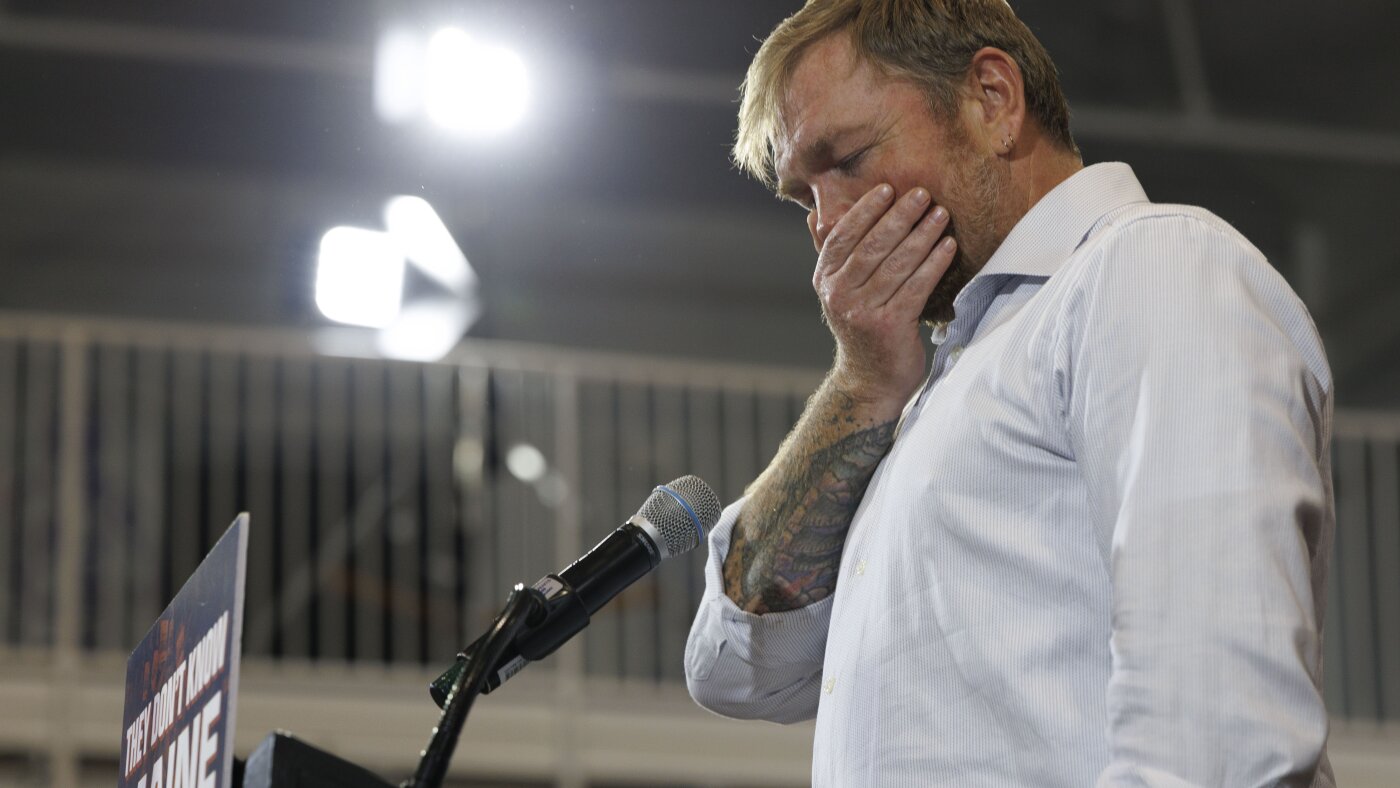
Graham Platner makes it official in Maine, submitting paperwork to leave Senate race
-

 Los Angeles, Ca2 hours ago
Knee irritation forces Shohei Ohtani out of Friday start, All‑Star game
-

 Detroit, MI2 hours ago
Detroit Evening Report: Waymo cars blocking first responders – WDET 101.9 FM
-

 San Francisco, CA2 hours ago
San Francisco Mayor Daniel Lurie Blocks Vacant Grocery Store Tax Proposal | KQED
-

 Miami, FL2 hours ago
Oregon Battling Miami, Mario Cristobal for Four-Star EDGE Recruit
-

 Dallas, TX2 hours ago
FC Dallas Forward Logan Farrington Inks Contract Extension
-

 Boston, MA3 hours ago
Red Sox face lengthy travel issues ahead of series vs. Mets

