World
What has caused the cholera outbreak in Sudan?


More than 350 cases of cholera have been recorded in a new outbreak in Sudan in just a few weeks.
The difficulties in reaching and registering victims amid the continuing humanitarian crisis caused by the country’s civil war have led experts to speculate that many more people than this may have been infected, however.
Health Minister Haitham Mohamed Ibrahim said at least 22 people have died from the disease and declared a cholera epidemic after several weeks of heavy rain, which has contaminated drinking water.
The cholera epidemic is just the latest crisis for Sudan, where fighting between the army and the Rapid Support Forces (RSF), a paramilitary group, has been spreading around the country since April 2023.
Cholera is not new to Sudan. In 2017, a previous outbreak killed at least 700 people and infected about 22,000 in less than two months.
Outside of this latest outbreak, the World Health Organization (WHO) has recorded 78 deaths from cholera between the start of this year and July 28 in Sudan, while some 2,400 people have been infected across the country as a whole.
But what is behind this latest outbreak, and how far has it spread? Here’s what we know so far:
Where has cholera broken out?
The Sudanese health ministry first reported this latest outbreak two weeks ago, when 17 people had died from the disease and 268 cases had been reported in Kassala, El Gezira and Khartoum. This has now risen to 22 deaths and 354 cases.
Sudan has been experiencing particularly heavy seasonal rains since June, with floods killing dozens of people. According to the UN International Organization for Migration (IOM), more than 20,000 people have been displaced by the flooding across 11 of Sudan’s 18 states since June.
Water supplies have also become contaminated with cholera due to the floodwaters mixing with sewage.
WHO spokesperson Tarik Jasarevic told the Associated Press that data showed that most of the detected cases were in people who had not been vaccinated against cholera.
He added the WHO was working with the Sudanese health authorities and partners to implement a vaccination campaign across the nine localities in five provinces where the disease has been recorded.
What is cholera?
Cholera is a bacterial disease usually spread through contaminated water. It is spread when people drink infected water, when people with open wounds have direct contact with the contaminated water, and, in some cases, when they eat raw shellfish.
It cannot be transmitted from person to person, so casual contact with a person who has the disease is not a risk.
The disease causes severe diarrhoea and dehydration. If the disease is left untreated, cholera can kill within hours – even people who were previously healthy.
While the disease might not cause illness to everyone exposed to it, infected people can still pass the bacteria in their stool, contaminating food and water supplies. This is a particular problem where there are no working sanitation facilities.
How is cholera treated?
Treatment for cholera includes rehydration to replace the lost fluids.
According to the Mayo Clinic, a US academic medical centre, without rehydration, “half the people with cholera die. With treatment, fatalities drop to less than 1 percent”.
Other treatments include intravenous fluids, antibiotics and zinc supplements.
Children under the age of five have the highest rates of infection, but all age groups are at risk, especially those suffering from malnutrition, those who are immunocompromised or who lack prior vaccination.
Why is cholera spreading in Sudan?
The war in Sudan has damaged and destroyed much of the country’s civilian infrastructure, including sewage and water treatment works, and turned many places, including the capital, Khartoum, into battlefields.
Many hospitals and medical facilities have been forced to close their doors as they have minimal or no supplies.
While the overall death toll resulting from the conflict remains unclear, some estimates, according to US envoy to Sudan Tom Perriello, are as high as 150,000 people so far.
In June, the IOM reported that more than 10 million people had been displaced within Sudan due to the conflict. Cholera spreads more quickly when populations are displaced and sanitation and hygiene become poor, making war zones the perfect climate for the disease to spread.
On top of this, according to the World Food Programme (WFP), the heavy rainy season has heavily exacerbated the already dire situation, making it harder for aid convoys to pass through the muddy, flooded roads.
The WFP reported on Monday that the organisation originally aimed to reach half a million people, but convoys are “currently stranded on the Chad side, with heavy rainfall making it largely impassable – some trucks have been stuck for up to two weeks”.
“Preventable diseases [are spreading] quickly in areas where critical infrastructure, like clean water and sanitation systems, has been damaged by conflict and in overcrowded displacement camps,” the WFP said.
Will the cholera epidemic in Sudan get worse?
According to the WFP, the heavy rainfall is forecast to last until September.
Some forecasts warn that “flooding could surpass the historic 2020 floods that hit Khartoum,” the organisation said.
Despite the WFP’s warning of the dire humanitarian situation in the country, the war is continuing.
On Sunday, the army said it would send a delegation to meet with US officials in Cairo following US pressure to join the ongoing peace talks in Switzerland, which aim to end the conflict and the subsequent humanitarian crisis.
Director of John Hopkins Center for Humanitarian Health, Paul Spiegel, also told Al Jazeera that cholera “thrives during conflict and forced displacement”.
“These conditions make it incredibly challenging to control cholera outbreaks, leading to rapid transmission and devastating consequences for affected communities,” he said.
Spiegel added while an active conflict makes traditional methods of controlling an outbreak difficult, health officials “must be flexible and innovative, and take advantage of the different contexts” within Sudan to mitigate the spread of disease.
Are other diseases on the rise in Sudan?
On Friday, WHO official Margaret Harris said that dengue fever and meningitis infections were also on the rise in Sudan due to dire living conditions as a result of the 16-month-long war.



CLEVELAND, Ohio (AP) — A suspected meteor that fell over the Cleveland area on Tuesday shook homes and startled residents who heard a boom that some compared to an explosion.
People hundreds of miles (kilometers) away reported seeing the bright fireball even though it was 9 a.m. The American Meteor Society said it received reports from Wisconsin to Maryland.
“This one really does look like it’s a fireball, which means it’s a meteorite — a small asteroid,” said astronomer Carl Hergenrother, the group’s executive director.
“So much stuff is being launched that a lot of times what you see burning up is just reentering satellites. But usually those don’t get especially bright,” he said.
He estimated that Tuesday’s fireball might have been the size of a softball or basketball, or perhaps even larger, and that it would have hit the atmosphere at “many tens of miles per second.”
Staff at the National Weather Service in Cleveland also heard the boom and felt the vibrations, and suspected it was a meteor. They had no early reports of any debris being found.
“There could be some small fragments, but a lot of it would have burned up in the atmosphere,” NWS meteorologist Brian Mitchell said.
Meteors typically fall somewhere in the U.S. about once a day, while smaller pieces of space dust might fall 10 times an hour, Hergenrother said. Scientists track meteors through a network of special cameras that help capture the night sky, but more members of the public are catching them on cellphones and security cameras of their own.
“Now we’re seeing them, and there’s dozens of videos popping up all the time,” Hergenrother said.

NEWYou can now listen to Fox News articles!
The European Union’s foreign policy chief said Tuesday that the bloc is consulting with Gulf countries to potentially “bring forward proposals for Iran, Israel and the U.S.” to get out of their war in a situation where “everybody saves face.”
Kaja Kallas, the EU High Representative for Foreign Affairs and Security Policy, made the remark to Reuters, adding that “it would be in the interest of everybody if this war stops.”
“We have been consulting with regional countries like the Gulf countries, Jordan, Egypt, [about] whether we could also bring forward proposals for Iran, Israel and the U.S. to get out of this situation so that everybody saves face,” Kallas was quoted as saying.
“The problem with wars is that it’s easier to start than to stop them, and it always gets out of hand,” she also reportedly said, noting that the EU is willing to assist “diplomatically to bring the parties together to really stop this war.”
TRUMP SEEKS WARSHIPS FROM OTHER COUNTRIES TO HELP SECURE STRAIT OF HORMUZ
EU High Representative for Foreign Affairs and Security Policy, Kaja Kallas, left, and President Donald Trump. (Omar Havana/Reuters; Nathan Howard/Reuters)
Kallas also pushed back after President Donald Trump said over the weekend that, “Many Countries, especially those who are affected by Iran’s attempted closure of the Hormuz Strait, will be sending War Ships, in conjunction with the United States of America, to keep the Strait open and safe.”
“Nobody is ready to put their people in harm’s way in the Strait of Hormuz,” Kallas told Reuters on Tuesday. “We have to find diplomatic ways to keep this open so that we don’t have a food crisis, fertilizers crisis, energy crisis as well.”
TOP COUNTERTERRORISM OFFICIAL RESIGNS IN PROTEST OF US WAR AGAINST IRAN
Mojtaba Khamenei, son of Iran’s late Supreme Leader Ayatollah Ali Khamenei and the new leader of Iran. (Morteza Nikoubazl/NurPhoto via Getty Images)
Trump said on Truth Social on Saturday that, “We have already destroyed 100% of Iran’s Military capability, but it’s easy for them to send a drone or two, drop a mine, or deliver a close range missile somewhere along, or in, this Waterway, no matter how badly defeated they are.”
U.S. Central Command footage showing strikes on Iranian mobile missile launchers. (@CENTCOM via X)
CLICK HERE TO DOWNLOAD THE FOX NEWS APP
“Hopefully China, France, Japan, South Korea, the UK, and others, that are affected by this artificial constraint, will send Ships to the area so that the Hormuz Strait will no longer be a threat by a Nation that has been totally decapitated,” Trump wrote. “In the meantime, the United States will be bombing the hell out of the shoreline, and continually shooting Iranian Boats and Ships out of the water. One way or the other, we will soon get the Hormuz Strait OPEN, SAFE, and FREE!”

Etienne Davignon, 93, is the only one alive among 10 Belgians accused by the Congolese leader’s family of complicity.
Published On 17 Mar 2026
A 93-year-old former Belgian diplomat has been ordered by a Brussels court to stand trial over the assassination of Congo’s first prime minister and anti-colonial icon, Patrice Lumumba, in 1961.
Lumumba, who became the prime minister of the country – now known as the Democratic Republic of Congo – upon its independence from Belgium on June 24, 1960, was ousted in September of the same year and later killed by a Belgian-backed secessionist rebel group just months later on January 16, 1961.
list of 3 itemsend of listRecommended Stories
But in 2002, a parliamentary investigation found that Belgium was “morally responsible” for Lumumba’s death.
On Tuesday, Etienne Davignon, 93, a former European commissioner who was a junior diplomat at the time, stands trial over his death, marking the first trial related to the murder of Lumumba.
He is also accused of being involved in the murder of Lumumba’s political allies, Maurice Mpolo and Joseph Okito.
According to prosecutors, Davignon, who is accused of war crimes, had participated in the unlawful detention or transfer of Lumumba and deprived him of his right to an impartial trial.
Prosecutors added that Davignon had subjected Lumumba to “humiliating and degrading treatment”.

If the trial goes ahead, Davignon would be the first Belgian official to face the courts in 65 years since the prime minister was killed and his body was dissolved in acid.
While 10 people were accused of being complicit in the murder of Lumumba, Davignon is the only suspect alive.
Lumumba’s family members brought the case, which Belgian federal prosecutors have since taken up.
His granddaughter Yema Lumumba told the Reuters news agency after the ruling that it was a “step in the right direction”.
“What we want is to search for truth and establish different responsibilities,” she added.
The family’s lawyer, Christophe Marchand, also told the AFP news agency that “It’s a gigantic victory”.
“No one believed when we first brought the case in 2011 that Belgium would prove capable of seriously investigating this,” he said, adding: “It’s very hard for a country to judge its own colonial crimes.”
Gold-capped tooth
As African countries pushed for independence from their European rulers in the 1960s, Lumumba rose as an anti-colonial hero, though his government lasted only three months.
At just aged 35, Lumumba was executed in the southern region of Katanga, with the support of Belgian-backed mercenaries.
The only known remains of the killed leader, a single gold-capped tooth, were taken from the daughter of a deceased Belgian officer who was involved in the disappearance of his remains.
During a ceremony in 2022, his remains were returned in a coffin to DRC’s authorities.
During the handover, then Belgian Prime Minister Alexander De Croo reiterated the government’s “apologies” for its “moral responsibility” in Lumumba’s disappearance.

EF-1 tornado touched down on Maryland’s Eastern Shore during severe storms

Oakland County Sheriff’s Office providing training to houses of worship following Temple Israel attack

Massachusetts man admits to possessing 10,000 counterfeit Percocet pills believed to contain fentanyl

Joe Pillsbury

Ace Reese injury update, Mississippi State star 3B exits Jackson State game

Florida High School Football Rankings: Top 25 teams – Oct. 21

How old is Bo Nix? What to know about Oregon quarterback ahead of 2024 NFL Draft

Cleary's 21 help Le Moyne down Central Connecticut State 69-64 in OT

99th annual Pony Swim held in Virginia

Indiana Members Credit Union announced as new anchor tenant at Bottleworks District

Map: Small Earthquake Shakes Northern California

Mamdani references Palestinian ‘genocide’ during St Patrick’s Day event

Ex-Belgian diplomat ordered to stand trial over murder of Congo’s Lumumba
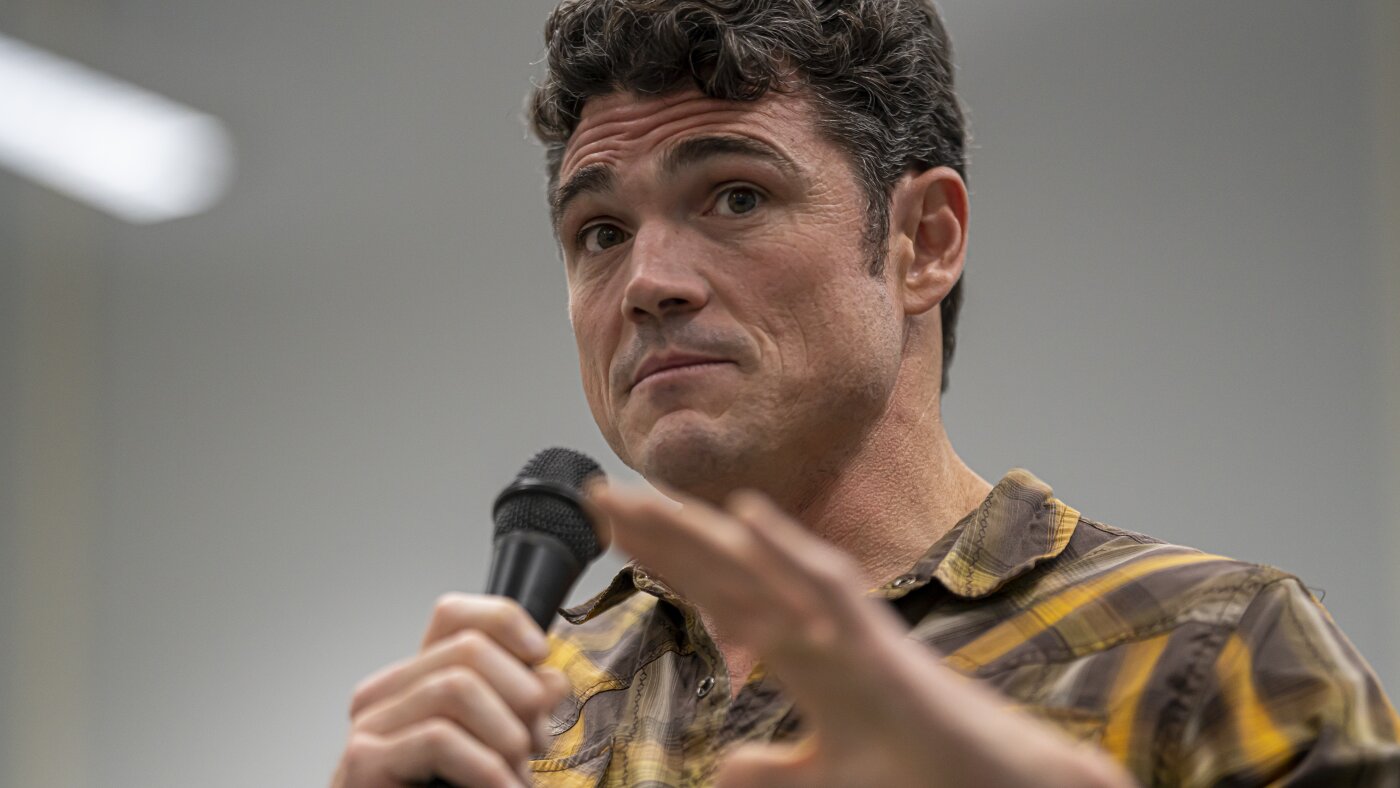
Joe Kent, a top counterterrorism official, resigns citing Iran war

Minnesota bill would ban warrants allowing police to collect data from devices near a crime scene
-

 Oklahoma1 week ago
OSSAA unveils Class 6A-2A basketball state tournament brackets, schedule
-

 Oklahoma3 days ago
Family rallies around Oklahoma father after head-on crash
-

 Michigan1 week ago
Operation BBQ Relief helping with Southwest Michigan tornado recovery
-

 Nebraska5 days ago
Wildfire forces immediate evacuation order for Farnam residents
-

 Southeast1 week ago
‘90 Day Fiancé’ alum’s boyfriend on trial for attempted murder over wild ‘Boca Bash’ accusations
-

 Health1 week ago
Ancient herb known as ‘nature’s Valium’ touted for improving sleep and anxiety
-

 Connecticut1 week ago
Exclusive | Ex-CBS anchor Josh Elliott back on Connecticut dating scene after ugly Liz Cho split
-

 Technology1 week ago
Sony appears to be testing dynamic pricing on PlayStation games