World
What a judge's gag order on Trump means in his hush money case


NEW YORK (AP) — Virtually every day of his hush money criminal trial, former President Donald Trump talks about how he can’t talk about the case.
A gag order bars Trump from commenting publicly on witnesses, jurors and some others connected to the matter. The New York judge already has found that Trump, the presumptive Republican nominee for president, repeatedly violated the order, fined him $9,000 and warning that jail could follow if he doesn’t comply.
But the order doesn’t stop Trump from talking about the allegations against him or commenting on the judge or the elected top prosecutor. And despite a recent Trump remark, it doesn’t stop him from testifying in court if he chooses.
As he fights the felony charges against him while running for president, Trump has at times stirred confusion about what he can and can’t do in the case. He has pleaded not guilty.
So what does the order do, what doesn’t it and where did it come from?
WHAT IS A GAG ORDER?
Generally speaking, a gag order is a judge’s directive prohibiting someone or people involved in a court case from publicly commenting about some or all aspects of it. In Trump’s case, it’s titled an “Order Restricting Extrajudicial Statements,” with “extrajudicial” meaning outside of court.
Gag orders, particularly in high-profile cases, are intended to prevent information presented outside a courtroom from affecting what happens inside.
Trump also is subject to a gag order in his federal criminal election interference case in Washington. That order limits what he can say about witnesses, lawyers in the case and court staff, though an appeals court freed him to speak about special counsel Jack Smith, who brought the case.
In his recent New York civil fraud trial, Trump was fined a total of $15,000 for comments he made about that judge’s law clerk after a gag order barred participants in the trial from “posting, emailing or speaking publicly” about the court’s staff.
The U.S. Supreme Court has acknowledged that gag orders can pit fair trial rights against free speech rights. The court has struck down some orders that barred the press from reporting on certain cases or court proceedings and rejected as too vague a Nevada court rule that limited what all lawyers could say out of court.
IS TRUMP FIGHTING THE GAG ORDER?
Yes. Before the trial, he asked a state appeals court to postpone the trial while he appeals the gag order, but the court refused. His appeal of the order itself is ongoing.
WHO IS COVERED BY THE GAG ORDER ON TRUMP?
Initially imposed March 26, the gag order bars Trump from making or directing others to make public statements about any juror and about any “reasonably foreseeable” witness’ participation in the investigation or the trial.
It also bars any statements about lawyers in the case, court staffers, prosecution aides and relatives of all of the above, to the extent that the statements are intended to “materially interfere with, or to cause others to materially interfere with” their work on the case “or with the knowledge that such interference is likely to result.”
The order doesn’t apply to Judge Juan M. Merchan or to Manhattan District Attorney Alvin Bragg, whose office is bringing the case. It does apply to comments about their family members, however. Merchan added that provision on April 1 after Trump lashed out on social media at the judge’s daughter, a Democratic political consultant, and made a claim about her that was later repudiated by court officials.
Trump is also allowed to talk about his political opponents, as Merchan made clear on Thursday.
The order also doesn’t bar witnesses from commenting on Trump. Michael Cohen, Trump’s ex-lawyer and an expected witness, has routinely attacked his former boss, leading Trump to complain about not being able to respond in kind.
CAN TRUMP TESTIFY?
Yes. The U.S. Supreme Court has held that criminal defendants have a constitutional right to take the stand in their own defense — or not to.
There was some confusion after Trump said Thursday that because of the gag order, he was “not allowed to testify.” In context, it appeared he was actually referring to his ability to respond to a reporter’s court-hallway question about a witness’ testimony that afternoon.
Trump clarified to reporters Friday that he understood the order wasn’t a bar on testifying. Merchan emphasized the same in court.
“I want to stress, Mr. Trump, you have an absolute right to testify at trial, if that’s what you decide to do after consultation with your attorneys,” Merchan said.
WHY DID TRUMP GET FINED? WHAT CAN’T HE SAY?
Merchan found that Trump violated the gag order with social media posts that laid into Cohen. Among the offending posts: one that asked whether “disgraced attorney and felon Michael Cohen been prosecuted for LYING,” a repost of a New York Post article that described Cohen as a “serial perjurer,” and a Trump post referring to Fox News host Jesse Watters’ claim that liberal activists were lying to infiltrate the jury.
Merchan noted that Trump’s comment on the Watters segment misstated what the host had actually said, making the comment “the words of Defendant himself.”
On the other hand, Merchan declined to sanction Trump for an April 10 post that referred to Cohen and Stormy Daniels, the porn performer who got a $130,000 hush money payment that’s at the heart of the case, as “sleaze bags.”
Trump contended that he was responding to previous comments by Cohen, and the judge said the back-and-forth gave him pause as to whether that post met the bar for a violation.
COULD TRUMP REALLY GO TO TO JAIL OVER THE GAG ORDER?
When Merchan fined Trump $1,000 apiece for nine violations — the maximum fine allowed by law — he wrote that “jail may be a necessary punishment” for some wealthy defendants who won’t be deterred by such a sum.
Merchan added that he “will not tolerate continued willful violations” of the gag order and that, if “necessary and appropriate,” he “will impose an incarceratory punishment,” meaning jail.
It’s unclear what would rise to the level of “necessary and appropriate.”
Defense lawyer Todd Blanche indicated in court Friday that he plans to appeal the judge’s finding this past week that Trump violated the gag order.
Prosecutors have asked Merchan to hold Trump in contempt again and fine him $1,000 for each of four alleged violations from April 22-25. But the prosecution isn’t asking for the former president to be locked up over those comments because they happened before Merchan’s jail warning and because “we’d prefer to minimize disruption to this proceeding,” prosecutor Christopher Conroy said.



SIOUX FALLS, S.D. (AP) — The 14-year-old was riding an electric bicycle at an estimated 25 mph when he slammed into Janet Stotko during her evening walk, leaving her unconscious and bleeding on a sidewalk in her Minnesota neighborhood.
The 2024 crash nearly killed Stotko, who was raced to a hospital with severe brain injuries, a facial fracture and broken eardrum. But after being on a ventilator for two days, spending three weeks in the hospital and enduring brain surgery, she survived, surprising even her doctors.
At a checkup, she said, her doctors told her, “Wow, we can’t believe you’re here.”
Now, she’s pushing for stricter laws regulating e-bikes in hopes that others won’t be hurt.
E-bikes offer a convenient, eco-friendly and cost-effective alternative to cars, but their increasing use is drawing safety concerns. A study by the University of California, San Francisco found that rider injuries from e-bikes nearly doubled each year from 2017 to 2022, and a University of California, San Diego study showed injuries in San Diego among e-bike riders under 18 soared 300% from 2019 to 2023.
Under federal law, most e-bikes are considered nonmotorized vehicles just like traditional bicycles, so riders don’t need a driver’s license or insurance and they don’t have to wear a helmet. But many states have more stringent rules, and regulations vary widely.
Health experts have called for new laws and better enforcement of existing regulations, and officials in many places are taking action.
Here’s what e-bikers should know to keep themselves and people around them safe.
This article is part of AP’s Be Well coverage, focusing on wellness, fitness, diet and mental health. Read more Be Well.
Not all e-bikes are the same
Many states have adopted a three-tier classification of e-bikes: Class 1 have motors that kick in while riders pedal with maximum speeds of 20 mph; Class 2 have throttles that reach the 20 mph maximum without pedaling; and Class 3 provide pedal-assist up to 28 mph.
There are faster versions available, sometimes called e-motos, that can reach 40 mph even without pedaling. Many states treat these bikes like motorcycles, so they’re not allowed on sidewalks or paths, but in some states there are no specific rules for the ultra-fast bikes.
As John Maa, a general surgeon at MarinHealth Medical Center in Northern California, notes, it’s basic math that increased speeds lead to increased injuries.
“It’s Newton’s principles, right? Force equals mass times acceleration, and also kinetic energy is mass times velocity squared,” Maa said.
Learn where you can and can’t ride
Speed limits, helmet requirements and other rules for e-bikes are changing rapidly, and what’s legal in one city or state might be illegal in the next.
New York City imposed a speed limit of 15 mph on all electric bikes in October, and Florida lawmakers recently sent the governor a bill limiting e-bike speeds to 10 mph within 50 feet of pedestrians. In Connecticut, an October law requires all e-bike riders to wear a helmet, and bikes without pedals equipped with batteries over 750 watts will require a driver’s license.
“We were not only hearing from manufacturers and riders, but we were hearing from concerned citizens trying to share the road with these new electric bikes and e-scooters, and also law enforcement who really needed some clear policies set into place,” said Christine Cohen, the Connecticut state senator behind the legislation.
Know your bike
The market is full of vehicles that blur the line between a traditional e-bike and something closer to a motorcycle, and manufacturers don’t always make the distinction easy to spot.
To understand a bike’s capabilities and where it can be legally ridden, check its top speed, motor wattage, and whether it requires pedaling or operates on throttle alone. Anything outside the three-class classification could be subject to motor vehicle regulations, making it illegal to ride on some shared-use paths where slower e-bikes are allowed.
“The first thing we always tell people is familiarize yourself, read the manual, look at some videos, look at your specific model,” said Charles DiMaggio, an injury public health researcher and professor at New York University’s medical school.
Going to a local bike shop instead of buying online can help, enabling riders to ask questions, take a test ride and learn what’s legal and what isn’t.
Follow traditional bike safety measures
Hospitals and medical groups like the American College of Surgeons and American Association of Neurological Surgeons have called for stricter policies and offered safety tips.
Above all, they stress wearing a helmet. Other tips include riding defensively around cars, using front and rear lights, wearing reflective vests in the dark, and avoiding biking under the influence of drugs or alcohol. Experts also recommend against altering an e-bike to make it faster.
Maa added that e-bike riders should consider wearing a motorcycle helmet that covers the neck to protect against spinal injuries. He also advises parents to make sure their children can comfortably ride a pedal bike before they graduate to e-bikes.
“Make sure they’re comfortable, they understand the rules of the road, they’re able to navigate turns, understand the flow of traffic, the use of bicycle lanes,” Maa said.
Minnesota victim wants accountability
After she was injured, Stotko told the city council in her community of Hastings, Minnesota, about her crash to push for a stricter ordinance. The city agreed, reducing maximum e-bike speeds to 15 mph on city trails, prohibiting e-bikes on sidewalks and imposing penalties.
City police issued a citation to the 14-year-old rider for operating an e-bike underage, but no one was charged for the injury to Stotko.
“It’s really about taking accountability and ownership of owning an e-bike and operating one,” she said.

NEWYou can now listen to Fox News articles!
Ukrainian President Volodymyr Zelenskyy is turning battlefield innovation into bargaining power, offering Ukraine’s anti-drone systems to Middle Eastern allies, while seeking more air-defense support as the war with Russia drags into its fourth year.
Zelenskyy met Friday in Abu Dhabi with United Arab Emirates (UAE) President Mohammed bin Zayed Al Nahyan, and the two discussed an agreement by which Ukraine would provide its cutting-edge counter-drone technology in exchange for ballistic missile support and financial aid.
In a wide-ranging interview with Fox News after the meeting, Zelenskyy detailed how Ukraine’s battlefield innovations, namely its anti-Russian drone systems, are influencing defense partnerships worldwide.
ZELENSKYY ANNOUNCES NEXT ROUND OF TALKS WITH US, RUSSIA AS UKRAINE AIMS FOR ‘REAL AND DIGNIFIED END TO THE WAR
In a wide-ranging interview with Fox News, Ukrainian President Volodymyr Zelenskyy detailed how Ukraine’s battlefield innovations are influencing defense partnerships worldwide. (Fox News)
“We have, for example, drone interceptors. We have [a] system of electronic warfare and a lot of things. All these jointly work in one system. This is what we have [that] nobody has,” Zelenskyy told Fox News correspondent Matt Finn in Abu Dhabi.
Ukraine is now sharing elements of that system with at least four Persian Gulf nations — the UAE, Qatar, Jordan and Saudi Arabia — as they confront growing threats from Iran’s drone capabilities.
But Zelenskyy emphasized the partnership must be reciprocal. Ukraine continues to face a “big deficit” of critical air defense weapons, particularly PAC-3 Patriot missiles used to intercept ballistic threats.
“We are ready to help Middle East countries with our expertise and with our knowledge, and we hope … that they can help with anti-ballistic missiles,” Zelenskyy said.
Ukraine has already signed 10-year defense agreements with Saudi Arabia and Qatar, with a similar deal with the UAE expected soon, according to the AP.
TRUMP MEETS WITH ZELENSKYY; TALKS COULD UNLOCK FIRST ZELENSKYY-PUTIN CALL IN FIVE YEARS: SOURCE
A plume of smoke rises from the site of a strike in Tehran early on March 28, 2026. (Atta Kenare/AFP via Getty Images)
Zelenskyy also warned that increasing U.S. military focus on the Middle East amid escalating tensions with Iran and the ongoing “Operation Epic Fury” could slow the flow of weapons to Ukraine.
He claimed Russia is already strengthening Iran’s military by sharing drone technology, including Shahed “kamikaze” drones, as well as battlefield tactics developed during the war.
“Russia will share all they know about this war. … They’re already sharing with Iranians,” Zelenskyy said.
While he stopped short of confirming missile transfers, Zelenskyy suggested Moscow has a strategic interest in prolonging instability in the Middle East to divert U.S. attention away from Ukraine.
“This is what they do,” Zelenskyy said.
On the battlefield, Zelenskyy reiterated that Ukraine will not cede territory in the contested Donbas region, arguing it would weaken defenses, damage troop morale and displace tens of thousands of civilians.
“I think their morale will decrease,” Zelenskyy said.
He also urged the Trump administration not to lose sight of Ukraine while addressing Middle East tensions.
AS UKRAINE WAR DRAGS ON, TRUMP HITS PUTIN BY SQUEEZING RUSSIA’S PROXIES
Destroyed homes after a Russian drone attack March 28 in Odesa, Ukraine. (Viacheslav Onyshchenko/Global Images Ukraine via Getty Images)
More than 270 Russian drones struck Ukraine overnight Friday, leaving at least five people dead, Ukrainian officials said Saturday, according to AP.
CLICK HERE TO DOWNLOAD THE FOX NEWS APP
“I hope that President Trump … will find a way to end this war with pressure on the Iranian regime, and I hope that also they will not forget about … the war of Russia against Ukraine,” Zelenskyy said.
The Associated Press contributed to this report.
Within weeks, the European Commission has wrapped up deals with Mercosur, India and Australia. Yet despite the backlash over the Latin America agreement, Brussels is sticking to a familiar playbook: offensive on wine and cars, defensive on beef.

Thousands without power in Henderson neighborhood after mylar balloon causes outage

Pakistan hosts diplomatic discussions on ending war

Who is running for U.S. House, Senate in New Jersey? Here’s the list
![~!@[WATCHLIVE!TV]>> NOW New Mexico United vs Colorado Springs Switchbacks FC Match 𝐋𝐈𝐕𝐄 Free Streams ON Tv Channel](https://i2.wp.com/unicornriot.ninja/wp-content/uploads/2018/09/LiveChannel334x212v2.png?w=80&resize=80,80&ssl=1 "~!@[WATCHLIVE!TV]>> NOW New Mexico United vs Colorado Springs Switchbacks FC Match 𝐋𝐈𝐕𝐄 Free Streams ON Tv Channel")
~!@[WATCHLIVE!TV]>> NOW New Mexico United vs Colorado Springs Switchbacks FC Match 𝐋𝐈𝐕𝐄 Free Streams ON Tv Channel

Disputes grow between NC Bar, legislative committee tasked with reforming it

Florida High School Football Rankings: Top 25 teams – Oct. 21

How old is Bo Nix? What to know about Oregon quarterback ahead of 2024 NFL Draft

Cleary's 21 help Le Moyne down Central Connecticut State 69-64 in OT

99th annual Pony Swim held in Virginia

Indiana Members Credit Union announced as new anchor tenant at Bottleworks District

JD Vance says he was ‘obsessed’ with UFOs, believes aliens are actually ‘demons’
The EU's recipe for trade deals : easy on beef, tough on wine
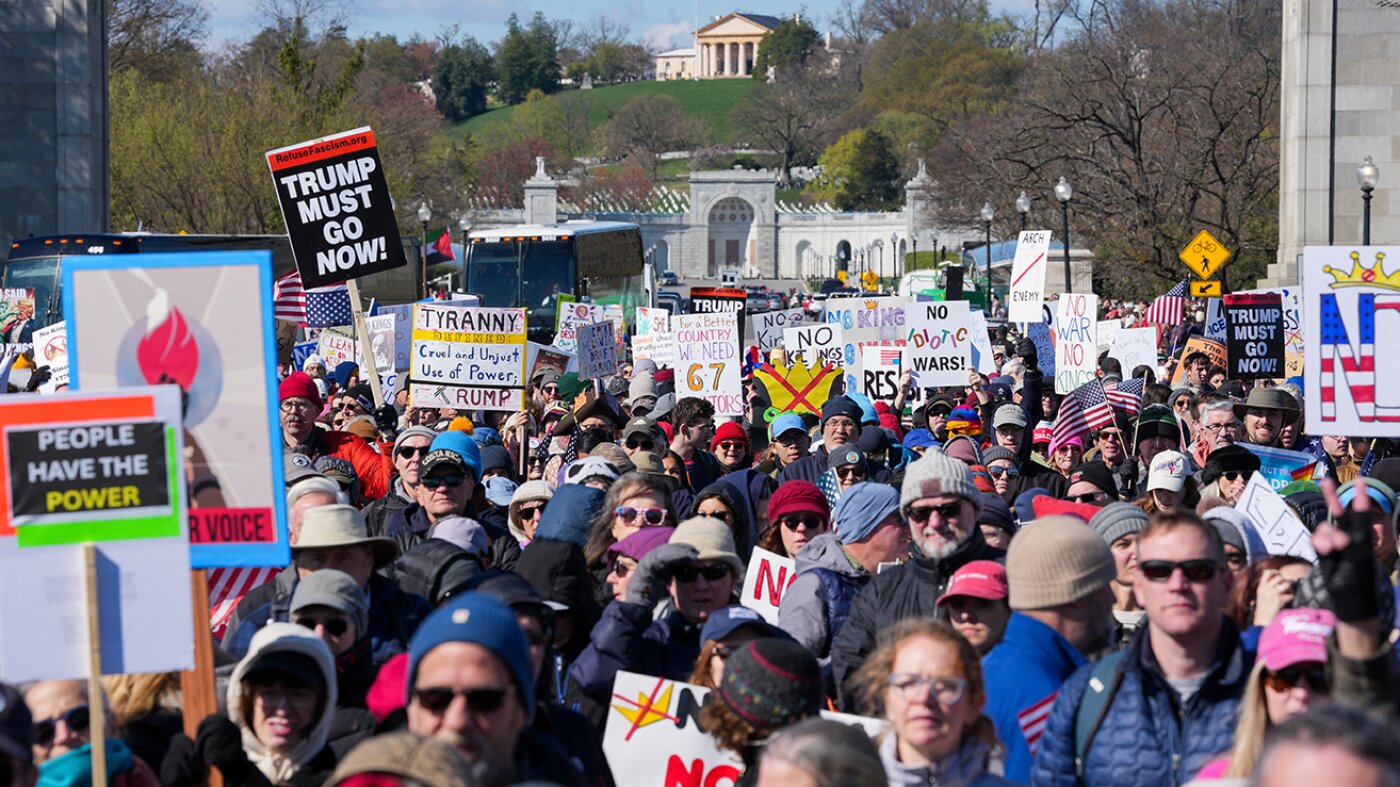
Photos: ‘No Kings’ protests across the country

Jeffries declines to break with indicted Democrat after ethics panel’s guilty verdict

Hundreds of thousands march through London in stand against the far right
-

 Sports1 week ago
IOC addresses execution of 19-year-old Iranian wrestler Saleh Mohammadi
-

 New Mexico7 days ago
Clovis shooting leaves one dead, four injured
-

 Tennessee6 days ago
Tennessee Police Investigating Alleged Assault Involving ‘Reacher’ Star Alan Ritchson
-

 Technology7 days ago
YouTube job scam text: How to spot it fast
-

 Minneapolis, MN3 days ago
Boy who shielded classmate during school shooting receives Medal of Honor
-

 Science1 week ago
Record Heat Meets a Major Snow Drought Across the West
-

 Politics1 week ago
Schumer gambit fails as DHS shutdown hits 36 days and airport lines grow
-

 Texas1 week ago
How to buy Houston vs. Texas A&M 2026 March Madness tickets