World
US Navy confirms Iran's involvement in Yemen Houthi rebel ship attacks


- The U.S. Navy’s top Mideast commander, Vice Adm. Brad Cooper, has confirmed that Iran is “very directly involved” in ship attacks carried out by Yemen’s Houthi rebels.
- Cooper said attacks associated with Iran have expanded beyond the Persian Gulf and the Strait of Hormuz.
- The Houthi attacks on merchant shipping are described as the most significant seen in two generations, posing an international threat.
Iran is “very directly involved” in ship attacks that Yemen’s Houthi rebels have carried out during Israel’s war against Hamas, the U.S. Navy’s top Mideast commander told The Associated Press on Monday.
Vice Adm. Brad Cooper, the head of the Navy’s 5th Fleet, stopped short of saying Tehran directed individual attacks by the Houthis in the Red Sea and the Gulf of Aden.
However, Cooper acknowledged that attacks associated with Iran have expanded from previously threatening just the Persian Gulf and its Strait of Hormuz into waters across the wider Middle East.
US STRIKES HOUTHI MISSILE CACHE IN YEMEN, OFFICIALS CONFIRM
“Clearly, the Houthi actions, probably in terms of their attacks on merchant shipping, are the most significant that we’ve seen in two generations,” he told the AP in a telephone interview. “The facts simply are that they’re attacking the international community; thus, the international response I think you’ve seen.”
U.S. Navy Vice Adm. Brad Cooper, who heads the Navy’s Bahrain-based 5th Fleet, speaks in Abu Dhabi, United Arab Emirates, on Feb. 21, 2023. Iran is “very directly involved” in attacks by Yemen’s Houthi rebels on shipping over Israel’s war on Hamas in the Gaza Strip, Cooper said on Monday. (AP Photo/Jon Gambrell, File)
Iran’s mission to the United Nations and the Houthi leadership in Yemen’s capital, Sanaa, did not respond to a request for comment. However, the Houthis later claimed to have attacked a U.S.-flagged vessel, without offering many details.
Since November, the Iranian-backed Houthis have launched at least 34 attacks on shipping through the waterways leading up to Egypt’s Suez Canal, a vital route for energy and cargo coming from Asia and the Middle East onward to Europe.
The Houthis, a Shiite rebel group that’s held Sanaa since 2014 and been at war with a Saudi-led coalition backing Yemen’s exiled government since 2015, link their attacks to the Israel-Hamas war. However, the ships they’ve targeted increasingly have tenuous links to Israel — or none at all.
In recent days, the U.S. has launched seven rounds of airstrikes on Houthi military sites, targeting air bases under the rebels’ control and suspected missile launch sites.
However, risks for the global economy remain as many ships continue to bypass that route for a longer trip around Africa’s southern tip. That’s meant lower revenue for Egypt through the Suez Canal, a vital source of hard currency for the country’s troubled economy, as well as higher costs for shipping that could push up global inflation.
As Cooper took command of the 5th Fleet in 2021, the threat to shipping focused primarily around the Persian Gulf and its narrow mouth, the Strait of Hormuz, through which a fifth of all oil traded passes. A series of attacks blamed on Iran and ship seizures by Tehran followed the collapse of Iran’s nuclear deal with world powers.
In his interview with the AP, the Navy commander acknowledged the threat from Iran’s proxies and that its distribution of weapons extended from the Red Sea out to the far reaches of the Indian Ocean. The U.S. has blamed Iran for recent drone attacks on shipping, and a U.S.-owned cargo vessel came under attack from the Houthis in the Gulf of Aden last week.
So far, Iran has not directly gotten involved in fighting either Israel or the U.S. since the war in Gaza began on Oct. 7. However, Cooper maintained Iran had been directly fueling the Houthi attacks on shipping.
“What I’ll say is Iran is clearly funding, they’re resourcing, they are supplying and they’re providing training,” Cooper said. “They’re obviously very directly involved. There’s no secret there.”
Cooper described the ship attacks striking the Mideast as the worst since the so-called Tanker War of the 1980s. It culminated in a one-day naval battle between Washington and Tehran, and also saw America accidentally shoot down an Iranian passenger jet, killing 290 people.
Back then, American naval ships escorted reflagged Kuwaiti oil tankers through the Persian Gulf and the strait after Iranian mines damaged vessels in the region. Cooper said authorities had no current plans to reflag ships and escort them past Yemen.
Instead, the U.S. and its allies employ a “zone defense, and every once and a while we shift to a one-on-one,” he said.
Cooper’s reference to the tensions from more than three decades ago underlines just how precarious the situation in the wider Mideast has become as worries of a regional conflict over the Israel-Hamas war grow.
Monday night, Houthi military spokesman Brig. Gen. Yahya Saree in a recorded address claimed an attack on the Ocean Jazz, a U.S.-flagged ship managed by Seabulk, a company in Fort Lauderdale, Florida. The firm declined to comment when reached by the AP. The Ocean Jazz had been in the Red Sea heading south.
Cooper spoke to the AP from the sidelines of a drone conference in Abu Dhabi, the capital of the United Arab Emirates. Under his command of the 5th Fleet, the naval force has created Task Force 59, a drone fleet to bolster its patrol of waterways in the region.
YEMENI LEADER CLAIMS US IGNORED WARNINGS ABOUT RISING HOUTHI THREAT
Today, a variety of drones provide the 5th Fleet coverage across some 10,000 square miles of Mideast waters the Navy otherwise wouldn’t have eyes on, Cooper said. That helps its efforts to interdict suspected drug and weapons shipments.
U.S. forces this month seized Iranian-made missile parts and other weaponry from a ship bound for the Houthis in a raid that saw two Navy SEALs go missing. The U.S. military’s Central Command said Sunday it now believes the SEALs are dead.
While not directly saying his fleet’s drones played a part in the seizure, Cooper hinted at it.
“They are specifically designed to conduct interdiction operations,” he said. He added: “There’s no squeaking anything by it.”
Cooper’s command is set to end in February with the upcoming arrival of Rear Adm. George Wikoff in Bahrain. He noted the Navy and merchant shippers still face a serious threat from the Houthis as he prepares to leave.
“What we need is a Houthi decision to stop attacking international merchant ships. Period,” Cooper said.


Shops and schools shut in northern Israel as residents protested a 10-day ceasefire with Lebanon that took effect on April 16, saying “nothing was achieved”. Israeli officials say operations may continue, with forces still deployed inside southern Lebanon.
Published On 19 Apr 2026
World
Pope Leo says remarks about world being ‘ravaged by a handful of tyrants’ were not aimed at Trump: report

NEWYou can now listen to Fox News articles!
Pope Leo XIV said Saturday that remarks he made this week in which he said the “world is being ravaged by a handful of tyrants” were not directed at President Donald Trump, a report said.
The pope, speaking onboard a flight to Angola during his 10-day tour of Africa, said reporting about his comments “has not been accurate in all its aspects” and his speech “was prepared two weeks ago, well before the president ever commented on myself and on the message of peace that I am promoting,” according to Reuters.
The news outlet cited the pope as saying his comments were not aimed at Trump.
“As it happens, it was looked at as if I was trying to debate the president, which is not in my interest at all,” the pope reportedly said.
’60 MINUTES’ ACCUSED OF USING LEFT-LEANING CARDINALS TO BAIT TRUMP INTO FEUD WITH VATICAN
Pope Leo XIV answers journalists’ questions during his flight from Yaoundé, Cameroon, to Luanda, Angola, Saturday, April 18, 2026. (Luca Zennaro/Pool Photo via AP)
Vice President JD Vance later took to X to thank the pope for clearing the record.
“While the media narrative constantly gins up conflict — and yes, real disagreements have happened and will happen — the reality is often much more complicated,” Vance wrote. “Pope Leo preaches the gospel, as he should, and that will inevitably mean he offers his opinions on the moral issues of the day.
“The President — and the entire administration — work to apply those moral principles in a messy world,” he continued. “He will be in our prayers, and I hope that we’ll be in his.”
The vice president’s comments came days after he told Fox News’ Bret Baier on “Special Report” that it would be best for the Vatican to “stick to matters of morality.”
“Let the President of the United States stick to dictating American public policy,” Vance said Tuesday.
Trump last Sunday accused Pope Leo XIV of being “terrible” on foreign policy after the pontiff criticized the U.S.-Israeli war on Iran.
“He talks about ‘fear’ of the Trump Administration, but doesn’t mention the FEAR that the Catholic Church, and all other Christian Organizations, had during COVID when they were arresting priests, ministers, and everybody else, for holding Church Services, even when going outside, and being ten and even twenty feet apart,” Trump wrote in a Truth Social post.
“I don’t want a Pope who thinks it’s OK for Iran to have a Nuclear Weapon.”
POPE LEO SLAMS THOSE WHO ‘MANIPULATE RELIGION’ FOR MILITARY OR POLITICAL GAIN, TRUMP RESPONDS
Pope Leo XIV and President Donald Trump (Simone Risoluti/Vatican Media via Vatican Pool/Getty Images; Salwan Georges/Bloomberg via Getty Images)
During a speech in Cameroon on Thursday, the pope said, “We must make a decisive change of course — a true conversion — that will lead us in the opposite direction, onto a sustainable path rich in human fraternity.
“The world is being ravaged by a handful of tyrants, yet it is held together by a multitude of supportive brothers and sisters.
Pope Leo XIV speaks as he meets with the community of Bamenda at Saint Joseph’s Cathedral in Bamenda on the fourth day of an 11-day apostolic journey to Africa April 16, 2026. (Alberto Pizzoli/AFP via Getty Images)
CLICK HERE TO DOWNLOAD THE FOX NEWS APP
“Woe to those who manipulate religion and the very name of God for their own military, economic or political gain, dragging that which is sacred into darkness and filth.”
Fox News Digital has reached out to the White House for comment.
Fox News Digital’s Landon Mion contributed to this report.

Bulgarians headed to the polls Sunday for the eighth time in five years, with anti-corruption candidate and former president Rumen Radev’s bloc tipped to win.
ADVERTISEMENT

ADVERTISEMENT
The European Union’s poorest member has been through a spate of governments since 2021, when large anti-graft rallies brought an end to the conservative government of long-time leader Boyko Borissov.
Eurostat data shows Bulgaria consistently ranks last in the EU by GDP per capita. In 2025, Bulgaria (along with Greece) was at 68% of the EU average.
Radev, who has advocated for renewing ties with Russia and opposes military aid to Ukraine, was president for nine years in the Balkan nation of 6.5 million people.
He stepped down in January to lead newly formed centre-left grouping Progressive Bulgaria, with opinion polls before Sunday’s vote suggesting the bloc could gain 35% of the vote.
The former air force general has said he wants to rid the country of its “oligarchic governance model”, and backed anti-corruption protests in late 2025 that brought down the latest conservative-backed government.
“I’m voting for change,” Decho Kostadinov, 57, told reporters after casting his ballot at a polling station in the capital, Sofia, adding corrupt politicians “should leave — they should take whatever they’ve stolen and get out of Bulgaria”.
Polls are forecasting a surge in voter participation, with more than 3.3 million Bulgarians expected to cast ballots according to the Bulgarian News Agency.
Voting will close at 1700 GMT, with exit polls expected immediately afterwards. Preliminary results are expected on Monday.
‘Preserve what we have’
Borissov’s pro-European GERB party is likely to come second, according to opinion polls, with around 20%, ahead of the liberal PP-DB.
“I’m voting to preserve what we have. We are a democratic country, we live well,” said Elena, an accountant of about 60, who did not give her full name, after casting her vote in Sofia.
Front-runner Radev has slammed the EU’s green energy policy, which he considers naive “in a world without rules”.
He also opposes any Bulgarian efforts to send arms to help Ukraine fight back Russia’s 2022 invasion, though he has said he would not use his country’s veto to block Brussels’ decisions.
Pushing for renewed ties with Russia, Radev denounced a 10-year defence agreement between Bulgaria and Ukraine signed last month – drawing fresh accusations from opponents of being too soft on Moscow.
The ex-president also stoked outrage online for screening images at his final campaign rally of his meetings with world leaders including Russia’s Vladimir Putin.
“We need to close ranks,” he told around 10,000 cheering supporters at the rally, presenting his party as a non-corrupt “alternative to the perverse cartel of old-style parties”.
Borissov, who headed the country virtually uninterrupted for close to a decade, has dismissed suggestions that Radev brings something “new”.
At a rally of his party earlier this week, he insisted GERB had “fulfilled the dreams of the 1990s” with such achievements as the country joining the eurozone this year.
‘No one to vote for’
Radev is aiming for an absolute majority in the 240-seat parliament.
A lack of trust in politics has affected voter turnout, which slumped to 39% in the last election in 2024.
But with Radev rallying voters, high turnout is expected this time, according to analyst Boryana Dimitrova from the Alpha Research polling institute.
Miglena Boyadjieva, a taxi driver of about 55, said she always votes, but the “problem is that there is no one to vote for”.
“You vote for one person and get others. The system has to change,” she told reporters.
Political parties have called on Bulgarians to show up for the polls, also to curb the impact of vote buying.
In recent weeks, police have seized more than one million euros in raids against vote buying in stepped-up operations.
They have also detained hundreds of people, including local councillors and mayors.
-
 Sports2 minutes ago
Ryan Ward has a solid debut, but bullpen blows it again as Dodgers lose to Rockies
-

 World14 minutes ago
Schools, shops shut in northern Israel to protest the Lebanon ceasefire
-
 News44 minutes ago
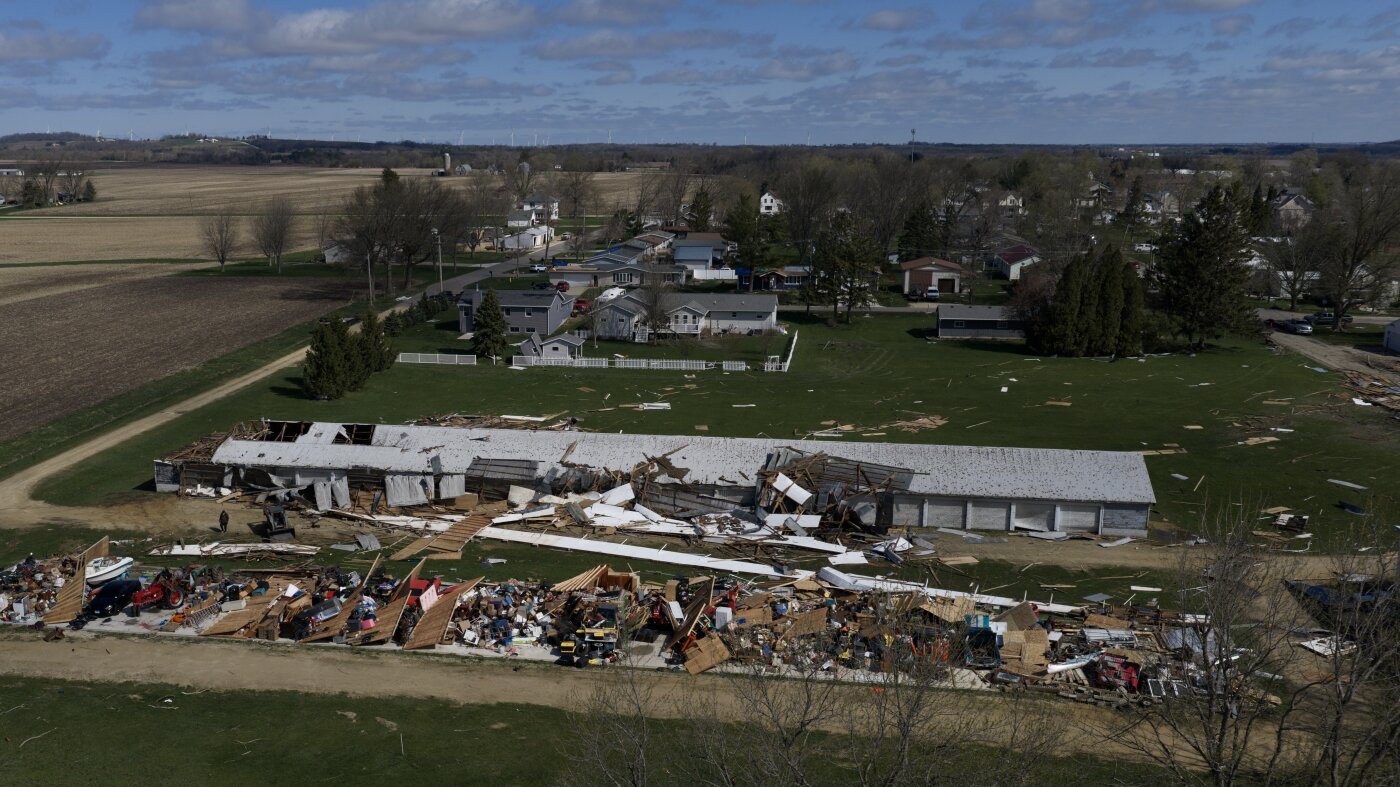
Communities launch cleanup after severe weather and tornadoes churn across Midwest
-

 Detroit, MI3 hours ago
Game 21: Tigers at Red Sox, Garrett Crochet battles both Detroit and the weather
-

 San Francisco, CA3 hours ago
Why do gray whales keep dying in San Francisco’s waters?
-

 Dallas, TX3 hours ago
Dallas Mavericks Owners Might Be Making Big Mistake in Search for New GM
-

 Miami, FL3 hours ago
Defense dominates, Mensah flashes in Miami’s spring game – The Miami Hurricane
-
Boston, MA3 hours ago
A crowd scientist is helping the Boston Marathon manage a growing field of 30,000-plus runners

