World
UN secretary-general won’t condemn official accused of antisemitism; US said to grant visa for visit


U.N. Secretary-General António Guterres is once again under fire for not speaking out against Francesca Albanese, the controversial U.N. special rapporteur on the occupied Palestinian territories, who has been condemned for being antisemitic.
Albanese is traveling to the U.S. to present her latest report, “Genocide as colonial erasure,” before the Third Committee of the U.N. General Assembly, which oversees social, humanitarian and cultural issues.
Albanese’s report, now widely circulated among member state representatives, shows “the masks are off,” according to Anne Bayefsky, president of Human Rights Voices and director of the Touro University Institute on Human Rights and the Holocaust.
“Albanese’s target is the destruction of the Jewish state, period,” Bayefsky said, claiming Albanese’s report is “a new, unhinged rant — translated, reproduced and spread across the world by the United Nations — utterly ignorant of regional and religious history.
BIDEN-HARRIS ENVOY ACCUSED OF PRESSURING ISRAELI LAWMAKERS TO DROP BILL BANNING TERROR-LINKED UN AGENCY
Francesca Albanese, United Nations special rapporteur on the rights situation in the Palestinian territories, at a press conference during a session of the U.N. Human Rights Council in Geneva March 27, 2024. (Fabrice Coffrini/AFP via Getty Images)
“[Albanese] claims the Jewish people are colonists in Israel and have been engaged in a genocidal killing spree as part of ‘a century-long project.’ It would be laughable, if her hate-mongering and incitement to violence were not so deadly.”
Danny Danon, Israel’s ambassador to the U.N., told Fox News Digital Albanese “failed in her role as special rapporteur for the U.N. She has no interest in the welfare of Israelis or ordinary Gazans but has instead shown to favor spreading hate. Time and again, she has succeeded in continuing to peddle dangerous antisemitic tropes and openly supporting the Hamas terrorists occupying Gaza.”
He also had a warning to U.S. colleges, saying Albanese’s “latest reports show how deep her antisemitism runs,” adding she “should not be allowed near any educational institutions where she can spread her vicious antisemitism under the flag of the U.N.”
On Oct. 17, Albanese retweeted a diatribe that accused the Jewish state of “blood lust,” calling it a “must-read for the ages.”
Accompanying the article was a cartoon featuring a cyborg in a respirator and hazmat suit bearing the Israeli flag and an American flag lapel pin with bloodied hands giving two thumbs up. Bayefsky said the image is “classic antisemitism.”
In this image made from UNTV video, United Nations Secretary-General António Guterres speaks during a U.N. Security Council meeting on COVID-19 recovery Feb. 17, 2021, at U.N. headquarters in New York. (AP)
Fox News Digital asked Farhan Haq, deputy spokesman for U.N. Secretary-General António Guterres, whether the secretary-general could censure Albanese for her antisemitic commentary and whether Guterres believes Albanese is acting in accordance with the U.N. Code of Conduct.
Haq said “on principle” Guterres does not “comment on rapporteurs” and has no authority to terminate Albanese or reduce her salary.
Asked about her antisemitic remarks, Haq said the U.N. Chief “is firmly opposed to antisemitism, from anyone.”
Albanese’s critics say she is not abiding by the U.N. Code of Conduct for special procedures mandate holders of the Human Rights Councils, which states that “all human rights must be treated in a fair and equal manner,” and that mandate holders must “uphold the highest standards of … probity, impartiality, equity, honesty and good faith.”
ISRAEL BANS UN SECRETARY-GENERAL OVER ANTI-ISRAEL ACTIONS: ‘DOESN’T DESERVE TO SET FOOT ON ISRAELI SOIL’
Anti-Israel protesters rally at Moore Square in Raleigh, N.C., Oct. 5, 2024. (The Image Direct for Fox News Digital)
Pascal Sim, U.N. Human Rights Council spokesperson, was asked by Fox News Digital whether the council might censure Albanese for her conduct and antisemitism or relieve her of her position.
Sim said “the positions of the Human Rights Council are expressed in the decisions, resolutions and presidential statements its 47 member states adopt at the end of each of its sessions.” He further explained that “as of now, I have no information about what the council may or may not do regarding any special procedures mandate holders beyond what was recently decided at the just concluded 57th session.”
Bayefsky said the failure to address Albanese’s conduct is infuriating.
“In one more scandal, U.N. Secretary-General Guterres is bending over backwards to protect Albanese rather than her victims,” Bayefsky said.
Bayefsky said “absolutely nothing would prevent him from denouncing her antisemitic behavior, calling for her dismissal and submitting the case of her flagrant violation of U.N. codes of conduct to his own U.N. office of legal affairs for next steps.”
An anti-Israel sign at a protest near Tulane University in New Orleans. (Ryan Zamos)
Albanese did not respond to Fox News Digital’s requests for comment about allegations of antisemitism.
Albanese tweeted Oct. 24 that she was “disappointed” by “spurious, recycled allegations against me,” and she claimed to be “profoundly committed to human rights for all people.”
UKRAINE, OTHERS FURIOUS AT UN CHIEF FOR MEETING PUTIN AT BRICS SUMMIT
Destroyed cars and personal effects are still scattered around the Supernova Music Festival site, where hundreds were killed and dozens taken by Hamas terrorists near the border with Gaza Oct. 13, 2023, in Kibbutz Re’im, Israel. (Alexi J. Rosenfeld/Getty Images)
Hillel Neuer, executive director of United Nations Watch, replied to her on X, claiming, “When we brought to the U.N. victims from Iran, China, Russia, Syria, & North Korea, you never said a word for them.”
ISRAELI WOMAN BRAVELY DESCRIBES HORROR AS HAMAS HOSTAGE: ‘THEY WERE TAKING PLEASURE IN HURTING ME’
Asked whether Albanese’s antisemitic statements are a concern as she prepares to tour U.S. colleges, a State Department spokesperson told Fox News Digital “the U.S. firmly concludes that [Albanese] is unfit for her role or any role in the United Nations. Our commitment to upholding human rights for all is unwavering, and we will continue to stand against antisemitism.”
The spokesperson also described how U.S. Ambassador to the U.N. Linda Thomas-Greenfield, U.S. Ambassador to the U.N. Human Rights Council Michèle Taylor and U.S. Special Envoy on Antisemitism Deborah Lipstadt have recently expressed “strong disapproval” of Albanese.
Statements posted on X by both U.S. ambassadors condemned Albanese’s antisemitism. Thomas-Greenfield wrote in part on X that, “There is no place for antisemitism from U.N. affiliated officials tasked with human rights,” while the U.S. Ambassador to the U.N. Human Rights Council, Michèle Taylor, called the U.N. official’s words when comparing Israel’s prime minister to Hitler as, “Reprehensible and antisemitic.”
Fox News Digital also asked whether the State Department intended to block Albanese’s travel or restrict her movements to the immediate vicinity around the U.N., an action it has previously taken with unfriendly foreign diplomats traveling on United Nations business.
A State Department spokesperson said the department could not comment given that “visa records are confidential under U.S. law.”
Francesca Albanese, the U.N.’s special rapporteur on the Palestinian territories, attends a forum in Tunis, Tunisia, May 11, 2024. (Mohamed Mdalla/Anadolu via Getty Images)
Bayefsky condemned the State Department’s refusal to limit Albanese’s travel, given that she “is in the business of promoting, spreading and inciting violent antisemitism. The State Department is supposed to be in the business of protecting Jewish Americans from the inflammatory hatred of an international visitor.
“The United States is certainly under no obligation, as the U.N. host country, to facilitate her travel outside the U.N. as part of her treacherous effort to reach American campuses. If the State Department refuses to do its job and limit her visa accordingly, then they are aiding and abetting the spread of antisemitism across America.”
The Anti-Defamation League reported that Albanese’s college tour would include visits to Georgetown University, Barnard College and Princeton. She is also reportedly due to speak at John Jay College in New York City during her U.S. visit.

World
Mexican authorities discover body in trunk near Iranian soccer team’s World Cup training grounds: report

NEWYou can now listen to Fox News articles!
Mexican authorities discovered a decomposing corpse with “signs of violence” near Tijuana’s Caliente Stadium, where the Iranian national soccer team is training during the World Cup, according to a New York Post report.
Authorities responded to complaints about a bad smell wafting from a gray Toyota SUV with California plates parked in a grocery store parking lot near the stadium, the Post reported.
“Upon inspecting the vehicle, they found a person wrapped in a black bag in the trunk, showing signs of violence,” a spokesperson for the Tijuana prosecutor’s office told the Post.
According to the report, the car had a damaged back end and was equipped with a license plate holder from a Tijuana car dealership.
HIDDEN TUNNEL DISCOVERED IN TIJUANA MAY HAVE SUPPORTED CROSS-BORDER TRAFFICKING OPERATIONS
Forensic workers inspect a car where a body was allegedly found at a parking lot close to Caliente stadium, where Iran’s national football team trains, in Tijuana, Baja California, Mexico on June 12, 2026. (Guillermo Arias / AFP via Getty Images)
Mexican officials could be seen wearing white jumpsuits while collecting evidence from the car in photos taken from the scene.
Forensic workers inspect a car where a body was allegedly found at a parking lot close to Caliente stadium, where Iran’s national football team trains, in Tijuana, Baja California, Mexico on June 12, 2026. (Guillermo Arias / AFP via Getty Images)
TSUNAMI OF SEWAGE FROM MEXICO BARRELS TOWARD US COASTLINE, OFFICIALS WARN
Tijuana, located just across the U.S.-Mexico border from San Diego, California, is frequently rated as one of the most violent cities in the world.
Iran soccer players pose for a team photo before a friendly match against Costa Rica in Antalya, Turkey, on March 31, 2026. (Riza Ozel/AP)
CLICK HERE TO DOWNLOAD THE FOX NEWS APP
Iran’s national team is training at Caliente Stadium in preparation for their upcoming World Cup game against New Zealand in Los Angeles’ SoFi Stadium on Monday.

Ahead of attending the long-awaited G7 summit in Évian, US President Donald Trump has announced a peace deal with Iran could be finalised on Sunday, paving the way for the opening of the Strait of Hormuz.
ADVERTISEMENT

ADVERTISEMENT
“The Deal is scheduled to get signed tomorrow, and immediately after it is signed, the Hormuz Strait is OPEN TO ALL,” Trump said in a post on his Truth Social platform on Saturday.
Donald Trump also says the US will take Iran’s enriched uranium ‘dust’ when ‘all is calm’.
Trump’s statement, however, ran counter to Iran’s foreign ministry which indicated earlier in the day that the deal would not be signed on Sunday, according to state media reports.
Earlier, Pakistan’s prime minister said on Saturday that a peace deal between the United States and Iran is likely to be finalised within the next 24 hours.
Writing on X, Shehbaz Sharif said: “We are closer to a peace deal than ever before”.
But Trump’s post also contained a warning to the Islamic Republic to fully implement the plan or face serious consequences.
“Hopefully, this process will all work out quickly, easily, and smoothly,” the US president wrote. “If it doesn’t, we have the ultimate alternative, hopefully never to be used again!”
Throughout the negotiations Iran has insisted on its right to enrich uranium.
Trump’s post does not mention Israel and the war in Lebanon, nor the US blockade of Iranian ports in the Strait of Hormuz which so far have been the Iranian leadership’s two key demands for any peace agreement.
Trump appears to offer an olive branch to the Iranian leadership by saying that the “relationship with Iran is a much different and better one than previous administrations had,” and that “we look forward to working with Iran, and the entire Middle East, long into the future,” signalling a significant change in the US messaging after the prior threatening statements.
Trump mentions “hopefully” when he expresses his wish for the process to “work out quickly, easily and smoothly,” given how complicated the peace negotiations have been, and he states that military options remain on the table, calling it “the ultimate alternative,” which he hopes “never to be used again.” Another key Iranian demand has been the assurance that the US and Israel will never attack Iran again.
The status of US-Iran talks aimed at ending the Middle East war will be a dominant concern at the G7 summit, as will the be the war in Ukraine.
Trump to work with Zelenskyy, says official
Trump will take part in a G7 working session with Ukraine’s Volodymyr Zelensky in France on Tuesday, but no bilateral meeting between the two is scheduled, a senior administration official said.
“On Tuesday morning, President Trump will participate in a working session with G7 leaders and President Zelensky of Ukraine,” the official told reporters Saturday on condition of anonymity.
The G7 summit will take place in Evian on June 15-17, and Trump is scheduled to hold bilateral meetings on its sidelines with French President Emmanuel Macron, as well as the leaders of Qatar, the United Arab Emirates, Egypt and India, the official said.
Trump is also scheduled to dine at the Versailles palace west of Paris with Macron on Wednesday evening, after the summit wraps up.
The dinner is a way to celebrate the 250th anniversary of American independence in a “landmark of Franco-American friendship where the treaty establishing the independence of the United States was signed in 1783,” according to Macron’s office.
Trump has shifted his attention away from efforts to end the Russia-Ukraine war since the United States and Israel launched attacks on Iran in late February.
World
Kristin Scott Thomas Receives Crystal Nymph From Prince Albert II at Monte-Carlo Television Festival Opening

Prince Albert II of Monaco opened the 65th edition of the Monte-Carlo Television Festival on Friday and presented the Crystal Nymph Award to Kristin Scott Thomas, in recognition of her “outstanding contribution to television and screen storytelling.”
The evening culminated in the international premiere of the first two episodes of Season 3 of AMC Studios’ “The Walking Dead: Dead City,” in the presence of actors Jeffrey Dean Morgan and Lauren Cohan, together with showrunner Seth Hoffman.
The International Golden Nymph for Most Promising Talent was awarded to Spanish actress Ester Expósito, who broke through with the hit series “Elite.” The festival also paid tribute to French TV journalist and host Michel Drucker, who received the Honorary Nymph Award in recognition of “an extraordinary career and his exceptional contribution to television history.”
The opening ceremony was joined by the jury members.
The fiction jury is chaired by British actress Lesley Manville, who serves alongside British actor Kevin McKidd, U.S. showrunner Greg Daniels, French actress Frédérique Bel, South Korean producer Hojin Kwon and British actress Yasmin Finney.
The feature reports and news jury is chaired by American filmmaker Joshua Seftel and includes Mouhssine Ennaimi, Emmy-winning French documentary filmmaker and investigative journalist, French TV producer and journalist Hélène Mannarino and Dutch investigative journalist Margo Smit.
The digital jury is chaired by American media executive Susanne Daniels, former global head of original content at YouTube, alongside British writer, producer and director Luke Hyams, and French actor and content creator Morgan Niquet. It is the first time that the award for an innovative original digital format has been included.
Prince Albert II of Monaco stated: “Sixty-five years later, the ambition of the festival remains more relevant than ever. It continues to promote an industry in perpetual transformation, while remaining faithful to its essence: celebrating stories and outstanding individuals capable of moving, questioning, enlightening and informing.”
Laurent Puons, general manager of the Monte-Carlo Television Festival, commented: “As we celebrate the 65th anniversary of the festival, we are proud to continue bringing together the very best of international television in Monaco. This milestone edition reflects both the heritage of the festival and the extraordinary dynamism of today’s audiovisual industry.”
Cécile Menoni, executive director of the festival, added: “This opening sets the tone for an exceptional anniversary edition celebrating both the festival’s remarkable legacy and the future of audiovisual creation. The presence of Dame Kristin Scott Thomas, Michel Drucker, Ester Expósito and the team behind ‘The Walking Dead: Dead City’ perfectly reflects the diversity, international reach and creative excellence that define the festival.”
-

 Technology6 minutes ago
Sealed Super Mario Bros. sells for a record $3 million
-

 World8 minutes ago
Mexican authorities discover body in trunk near Iranian soccer team’s World Cup training grounds: report
-

 Politics14 minutes ago
Workers rip Trump name from Kennedy center facade months after it goes on, hours after failed appeal
-

 Health21 minutes ago
Former wrestler, actor reveals breast cancer diagnosis: ‘One in 750 men’
-

 Sports24 minutes ago
James Harden arrested in Houston on misdemeanor weapons charge after NBA playoff exit: report
-

 Technology29 minutes ago
Beware of hackers showing up pretending to be IT
-
 Business36 minutes ago
Los Angeles has one of the deadest downtowns in the world, according to a new survey
-
 Entertainment39 minutes ago
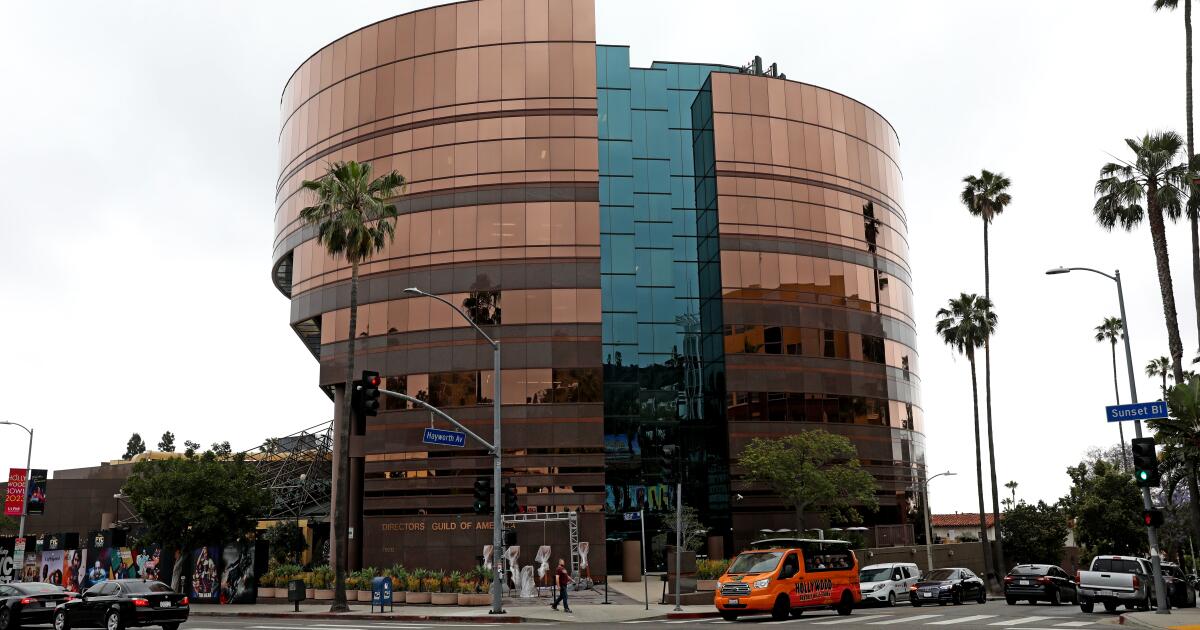
DGA’s board backs tentative contract with major studios

