World
Trump’s abduction of Maduro escalates concerns over potential war with Iran


Washington, DC – Hours after the United States announced the abduction of Venezuelan President Nicolas Maduro, Israeli politician Yair Lapid issued a warning to Tehran: “The regime in Iran should pay close attention to what is happening in Venezuela.”
The forcible removal of Maduro from power came less than a week after US President Donald Trump met with Israeli Prime Minister Benjamin Netanyahu and threatened to launch new strikes against Iran.
list of 3 itemsend of listRecommended Stories
Although Washington’s tensions with Caracas and Tehran have different roots and dynamics, analysts say Trump’s move against Maduro raises the prospects of war with Iran.
“A new lawlessness makes everything less stable and war more likely,” said Jamal Abdi, president of the National Iranian American Council (NIAC).
“Whether Trump becomes enamoured with ‘surgical’ regime change, or gives Netanyahu a US imprimatur for similar actions, it’s hard not to see how this gives momentum for the many actors pushing for renewed war with Iran.”
He added that Maduro’s abduction could prompt Iran “to do something that triggers military action”, including developing its own military deterrence or preempting US or Israeli strikes.
Negar Mortazavi, a senior fellow at the Center for International Policy, also said the US actions in Venezuela show Trump’s maximalist aims, further dimming the chances of diplomacy.
“What I see and hear from Tehran is that they are not interested in negotiating with the Trump administration the way this administration signals that they want total surrender,” Mortazavi told Al Jazeera.
“So, not much chance for diplomacy at the moment, which then opens the path to the opposite road, that is conflict. Right now, Israel, Iran and the US are on a path to potential conflict.”
Abdi echoed that assessment. “This action reinforces every doubt and suspicion about US intentions, and gives more credence to those in Iran who say engaging the US is useless and [that] developing a nuclear deterrent is vital,” he told Al Jazeera.
Iran-Venezuela alliance
The US raid that abducted Maduro and brought him to the US came after months of intensifying rhetoric from Trump against the Venezuelan government.
US officials have accused Maduro of leading a drug organisation, and Trump and his aides have been increasingly arguing that Washington is entitled to Venezuela’s vast oil reserves.
Secretary of State Marco Rubio has also been emphasising Maduro’s ties to Iran, accusing Caracas, without evidence, of providing the Lebanese armed group Hezbollah a foothold in the Western Hemisphere.
Maduro is a close ally of Iran, and the two heavily sanctioned countries have been pushing to deepen their trade ties, which are estimated to be in the billions of dollars.
So, with Maduro gone, Iran’s small network of allies may shrink further, after the fall of leader Bashar al-Assad in Syria and the weakening of Hezbollah in Lebanon.
The Iranian government was quick to condemn the US attack on Venezuela, calling on the United Nations to intervene and halt the “unlawful aggression”.
“The US military aggression against an independent state that is a member of the UN represents a grave breach of regional and international peace and security,” the Iranian Ministry of Foreign Affairs said in a statement.
“Its consequences affect the entire international system and will further expose the UN Charter-based order to erosion and destruction.”
On Saturday, Rubio suggested that Maduro’s abduction carried a message to all of Washington’s rivals in the Trump era.
“When he tells you that he’s going to do something, when he tells you he’s going to address a problem, he means it,” the top US diplomat told reporters.
But Iranian Supreme Leader Ali Khamenei doubled down on his defiant rhetoric after the US raid in Caracas.
“We will not give in to the enemy,” Khamenei wrote in a social media post. “We will bring the enemy to its knees.”
Trump’s threats
Last week, Trump hosted Netanyahu in Florida and threatened to bomb Iran again if the country rebuilds its missile or nuclear programmes.
“Now I hear that Iran is trying to build up again, and if they are, we’re going to have to knock them down,” Trump said. “We’ll knock them down. We’ll knock the hell out of them.”
Israel launched a war against Iran in June, killing the country’s top military commanders, several nuclear scientists and hundreds of civilians.
The US joined in the attack, bombing Iran’s three main nuclear sites.
While Trump has often reiterated that the US strikes “obliterated” Iran’s nuclear programme and celebrated the war as a success, the Iranian governing system survived the assault.
Tehran responded with barrages of hundreds of rockets against Israel, dozens of which penetrated the country’s multi-layered air defences, and Iranian forces were able to keep firing until the final moments of the war, before the ceasefire came into effect.
Some critics argue that regime change was and remains Israel’s goal in Iran, and Trump appears to be increasingly buying into that objective.
On Friday, Trump warned that the US is “locked and loaded” and ready to attack Iran if the Iranian government kills protesters amid the ongoing but sporadic antigovernment demonstrations across the country.
He renewed the same threat late on Sunday. “If they start killing people like they have in the past, I think they’re going to get hit very hard by the United States,” the US president said.
So, could the US carry out a Venezuela-style government decapitation in Iran?
NIAC’s Abdi noted that Israel has already tried to kill the country’s top leaders, including President Masoud Pezeshkian, in June.
Trump also repeatedly threatened Khamenei with assassination, and Israeli officials confirmed that they sought to “eliminate” the supreme leader during the war.
“Iranian officials have said they accordingly have plans in place so that killing or removing senior leaders does not paralyse or topple the regime,” Abdi said.
“It would be far messier to run a ‘snatch and grab’ operation on Iran, given their ability to retaliate against US interests and personnel.”
Venezuela without Maduro
Even in Venezuela, removing Maduro has not translated into a regime collapse, at least for now.
On Sunday, Vice President Delcy Rodriguez, now Venezuela’s acting president, stressed that Maduro remains the country’s only leader and condemned the US attack.
She also suggested that Israel was involved in the abduction of Maduro, a vocal critic of the US ally.
“Governments around the world are shocked that the Bolivarian Republic of Venezuela has become the victim and target of an attack of this nature, which undoubtedly has Zionist undertones,” Rodriguez said.
Trump responded by threatening the acting Venezuelan president, telling The Atlantic magazine that she would pay a “very big price, probably bigger than Maduro” if she did not acquiesce to US demands.
So, the US president’s plans for “running” Venezuela and taking its oil are not complete yet, and will likely require more military action.
“I doubt Venezuela can be a ‘one and done’ or a quick ‘in and out’ situation, which is Trump’s favourite model. His brand is that he engages in quick shows of force, not forever wars,” Mortazavi said.
She cited swift operations that Trump has ordered, including the killing of ISIL (ISIS) leader Abu Bakr al-Baghdadi in 2019, the assassination of top Iranian General Qassem Soleimani in 2020, and the attack on Iran’s nuclear sites in June.
“Most Americans are tired of forever wars, especially in the Middle East, so the Trump administration knows they can’t sell more forever wars to Americans,” Mortazavi said.
But Trump has already floated the prospect of a ground invasion of Venezuela.
“We’re not afraid of boots on the ground,” he said. “We don’t mind saying it, but we’re going to make sure that that country is run properly. We’re not doing this in vain.”
Abdi said that a long-term US involvement in Venezuela could indirectly stave off war with Iran.
“There is also the possibility that the US gets bogged down in ‘running’ Venezuela and doesn’t have the bandwidth to wage, or to support Israel launching, the next Iran war,” he told Al Jazeera.
“Iran was next on the menu after the US invaded Iraq in 2003, and we know what happened there, and Trump may not want to pronounce ‘mission accomplished’ just yet.”
The oil question
Still, some critics – including Republican US Congresswoman Marjorie Taylor Greene – have argued that if the US succeeds in controlling Venezuela’s oil resources, it will be able to offset energy market disruptions from a possible war with Iran.
“The next obvious observation is that, by removing Maduro, this is a clear move for control over Venezuelan oil supplies that will ensure stability for the next obvious regime change war in Iran,” Greene wrote on X on Saturday.
About 20 percent of the world’s oil flows through the Strait of Hormuz, which Iran may push to shut down in the case of an all-out war.
Abdi said that Venezuelan oil “could theoretically provide some cushion” to the loss of exports from the Gulf region.
“But this would mean a lot of things going right for the US in Venezuela, and it is probably far too soon to make that judgement,” he said.



NEWYou can now listen to Fox News articles!
Andy Burnham, the former Greater Manchester mayor who has frequently criticized President Donald Trump, is poised to become the United Kingdom’s next prime minister after emerging as the only candidate to replace outgoing Labour leader Keir Starmer.
Burnham, 56, was formally confirmed as the ruling Labour Party’s leader on Friday and will be appointed prime minister by King Charles III next week.
Britain’s parliamentary system allows the governing party to replace its leader — and therefore the prime minister — without holding a national election. The next nationwide election does not have to be held until 2029.
KEIR STARMER REPORTEDLY CONSIDERING STEPPING DOWN AS PM AND COULD ANNOUNCE TIMETABLE FOR DEPARTURE
Greater Manchester Mayor Andy Burnham of the Labour Party reacts after being declared the winner in the by-election at The Edge where votes were being counted on June 19, 2026, in Wigan, England. (Ryan Jenkinson/Getty Images)
Burnham’s rapid path to Downing Street is drawing criticism from political opponents and foreign policy analysts who say he has not faced the scrutiny that would normally accompany either a competitive party leadership race or a general election campaign.
“Andy Burnham is the least scrutinized incoming U.K. Prime Minister of recent times,” Alan Mendoza, executive director of the London-based Henry Jackson Society, told Fox News Digital.
“He has faced neither a general election nor an internal party leadership debate in order to establish his positions for wider consumption,” Mendoza said. “He wasn’t even a candidate at the last general election.”
Burnham did, however, win 54.8% of the vote in June’s Makerfield parliamentary by-election, defeating Reform UK’s candidate and returning to the House of Commons after nearly a decade away. Before returning to Parliament, he had been directly elected mayor of Greater Manchester three times.
Reform UK leader Nigel Farage argued in a previous interview with Fox News Digital that Burnham should seek a new national mandate.
“The public are tired of the game of musical chairs that’s been taking place in 10 Downing Street over the last decade,” Farage said.
NIGEL FARAGE RESIGNING FROM UK PARLIAMENT
Reform UK leader Nigel Farage speaks during a news conference in Westminster, United Kingdom, June 10, 2025. (Thomas Krych/Anadolu via Getty Images)
“Mr. Burnham will come in, he will have no mandate,” he added. “I don’t even know what his policies are. Literally, I don’t. So, I think for all of those reasons, there ought to be a general election and a fresh mandate.”
Farage made the comments before resigning his parliamentary seat this month to trigger an Aug. 13 by-election in Clacton, where he plans to run again. Farage said he wanted voters to judge him amid parliamentary scrutiny over allegations involving gifts from wealthy supporters. He has denied wrongdoing. Police are separately investigating donations made to Reform UK, but no arrests have been announced.
Who is Andy Burnham?
Burnham grew up in north-west England between Liverpool and Manchester. The son of a British Telecom engineer and a receptionist, he joined the Labour Party as a teenager, studied at Cambridge University and was first elected to Parliament in 2001, according to The Associated Press.
He rose through Labour’s ranks during the governments of Tony Blair and Gordon Brown and served in several senior positions, including as culture secretary and health secretary.
Burnham ran unsuccessfully for the Labour leadership in 2010 and again in 2015. He left Parliament in 2017 after winning election as mayor of Greater Manchester, a regional position he used to build a national political profile.
A British Union flag flies from a souvenir stall near the Houses of Parliament in London, U.K., Oct. 27, 2025. (Jason Alden/Bloomberg via Getty Images)
As mayor, Burnham promoted greater regional control over transportation and public services. His administration brought Greater Manchester’s fragmented bus system under public control as part of the Bee Network, a regional transportation project that became one of his signature achievements.
He also became closely associated with the campaign for accountability over the 1989 Hillsborough stadium disaster, in which 97 Liverpool soccer fans were killed. Burnham supported victims’ families in their long-running effort to expose police failures and rebut false accusations originally directed at supporters.
MEET ‘COUNT BINFACE,’ THE TRASH CAN-CLAD COMEDIAN CHALLENGING NIGEL FARAGE
British Prime Minister Keir Starmer announces the timeline for his resignation after Andy Burnham’s decisive victory last week in the Makerfield by-election outside 10 Downing Street, in London, Britain, June 22, 2026. (Reuters/Jack Taylor )
What has Andy Burnham said about President Trump?
Burnham has repeatedly criticized President Donald Trump, accusing him of contributing to global instability while warning that Britain risks importing the polarization of American politics. In a 2025 interview with The London Economic, Burnham compared Trump’s return to office to the turmoil caused in Britain by former Prime Minister Liz Truss.
“The instability that Liz Truss brought to Britain, I think Trump is bringing to the U.S. and the world,” Burnham said in the interview. He also described several of Trump’s decisions, including his approach to the Russia-Ukraine war, as “out of order.”
President Trump and King Charles shared a laugh outside the White House ahead of a state dinner. (Henry Nicholls/AFP via Getty Images)
Burnham’s criticism of Trump dates back to the president’s first election in 2016. After Trump’s victory, Burnham described some of his rhetoric as “deeply troubling” but argued that politicians on the left should examine why working-class voters had turned to him rather than simply blaming the electorate.
“We have to look closer to home,” Burnham said, according to The Guardian.
His language became sharper following the Jan. 6, 2021, riot at the U.S. Capitol. As the attack unfolded, Burnham wrote on X that “any UK politician who gave Trump the time of day should be ashamed right now.”
More recently, during his Makerfield parliamentary campaign, Burnham warned that Britain was moving toward “the politics of the United States of America,” which he described as “a polarized, poisonous politics where people in communities don’t work together anymore.”
KING CHARLES FOLLOWS QUEEN ELIZABETH’S PLAYBOOK WITH A TWIST DURING TRUMP STATE VISIT: EXPERT
Despite those attacks, Burnham has stopped short of advocating a rupture with Washington. According to Time, he supported Starmer’s effort to maintain a working relationship with Trump, while arguing that Britain must be prepared to disagree with the United States.
“Obviously, the relationship is important to the U.K., but not to the point where we just go along with anything they say,” Burnham said.
Trump has already responded dismissively to the likely incoming British leader. Asked in June what he knew about Burnham, Trump said, “I don’t know, I think I see that he was, I guess, the mayor of a town.” Trump added that he had heard Burnham was “extremely liberal” and suggested that he would oppose expanded North Sea oil drilling, before declaring that “the U.K. is dying,” according ton Reuters.
What are Andy Burnham’s political views?
Andy Burnham is officially confirmed as the new leader of the Labour Party at a special conference held at the Trades Union Congress, in central London on July 17, 2026 (PA via Reuters)
Burnham is generally regarded as being to the left of Starmer. He has said he wants to take what he calls “Manchesterism” nationwide, describing an approach that places “people and place before party” and transfers greater attention and authority from London to regions that have historically received less investment.
He has emphasized infrastructure, housing, transportation and regional economic development, while arguing against what he calls “trickle-down economics.” The Associated Press reported that his priorities have also included vocational education, youth employment, lower energy bills and cheaper rail travel.
Mendoza said that Burnham’s past positions and recent statements suggest he would move the British government further to the left.
“What we can be certain of is that he will be looking to impose a fairly radical left-wing agenda for the country based on his past beliefs and recent pronouncements,” Mendoza said.
“In no particular order, these include introduction of wealth taxes, changes to the electoral system, a vast expansion of social housing and attacks on hitherto allies of the U.K. like Israel.”
FROM LONDON SYNAGOGUES TO NEW YORK PRESCHOOLS — ANTISEMITIC ATTACKS ESCALATING ON BOTH SIDES OF THE ATLANTIC
Pro-Palestinian protesters hold a banner and chant at at anti-Israel protest in London Dec. 9 2023., (Andy Soloman/UCG/Universal Images Group via Getty Images)
Burnham has sought to counter concerns about his limited recent national security experience.
He has pledged continuity in Britain’s commitments to NATO, its nuclear deterrent, the United States and Ukraine, according to The Associated Press.
He has also called for Britain to rebuild its military capabilities and domestic defense industry in response to what he described as an increasingly dangerous international environment.
On the war in Gaza, Burnham has criticized Labour’s earlier response and argued that the party was too slow to call for a ceasefire. The Associated Press reported that he has raised the possibility of additional sanctions and trade restrictions involving goods linked to Israeli settlements. Burnham has also condemned Hamas’ Oct. 7, 2023, terrorist attack against Israel.
Burnham has not served in Britain’s national government since 2010 and spent almost a decade outside Parliament, meaning his record is far more developed on domestic and regional policy than on current foreign policy and national security questions.
When could Britain hold a general election?
Burnham would not be required to call an immediate general election. Labour won a large parliamentary majority under Starmer in July 2024, allowing the party to remain in power until 2029 unless Burnham decides to seek an earlier mandate.
Mendoza predicted that Burnham could attempt to capitalize on the momentum surrounding his arrival at Downing Street.
“As he is never likelier to be more popular than on day one of his premiership, we should also be on the watch for his calling of an early general election in order to capitalize on this unique moment,” Mendoza said.
CLICK HERE TO DOWNLOAD THE FOX NEWS APP
Britain’s Labour Party candidate Andy Burnham speaks to supporters after the Makerfield by-election in Ashton in Makerfield, England, June 19, 2026. (Jon Super/AP)
Burnham would inherit an economy facing weak growth, pressure on public finances, strained health and welfare services and continuing concern over the cost of living.
He would also become Britain’s seventh prime minister in just over a decade, reflecting the rapid political turnover at Downing Street since the country’s 2016 vote to leave the European Union.

Johannesburg, South Africa – Nelson Mandela Day has become the backdrop for a wider debate in South Africa over the values the former president represented, as the country grapples with inequality, economic frustration and growing divisions over how to address social problems.
That debate has been sharpened this year by the decision of March and March, a coalition of anti-immigration activists that has organised protests across South Africa in recent months, to use Mandela Day activities to inspect businesses in towns across the Eastern Cape, Mandela’s home province, and identify undocumented workers and businesses they allege are operating illegally.
The move has drawn condemnation from the Nelson Mandela Foundation, which says using Mandela Day to target migrants undermines the principles of dialogue, constitutionalism and human dignity that shaped Mandela’s public life.
Instead of dedicating Mandela Day’s traditional 67 minutes to community service, March and March says it will use the occasion to physically remove undocumented immigrants from towns and workplaces.
The group argues that the government has failed to secure the country’s borders, enforce immigration laws and prioritise job opportunities for South Africans.
Nelson Mandela International Day, marked July 18, was established by the United Nations in 2009. The 67 minutes of service are a tribute to the 67 years Mandela devoted to public life and the struggle for justice.
Mbongiseni Buthelezi, chief executive of the Nelson Mandela Foundation, told Al Jazeera that groups using the occasion to target immigrants were turning a day of service into one of division.
“What we do see now is something that is quite divisive and quite unhelpful, and it is something that we absolutely condemn,” he said. “We have seen some groups saying they are going to use Mandela Day to rid cities of immigrants. We condemn that unequivocally. That is unacceptable.”
A country under pressure
The dispute comes as South Africa faces intense economic pressure, including high unemployment, inequality and frustration over public services.
March and March argues that undocumented migrants contribute to job competition and place pressure on communities already struggling with limited opportunities. The movement has called for tighter border controls and stronger enforcement of immigration laws.
Critics say migrants have become a focus for anger over wider government failures.
Buthelezi said South Africa’s economic and social challenges should not be blamed on migrants.
“We are living through a very difficult moment where many opportunistic actors are seizing upon the very real grievances that many people have about the failings of the state,” he said. “But we need to separate those two things. The failings of the state are not the responsibility of immigrants in South Africa.”
The government has condemned xenophobia while increasing immigration enforcement. Officials say more than 53,000 foreign nationals have been deported or repatriated since a nationwide migration operation began, mainly to neighbouring countries including Zimbabwe, Malawi and Mozambique.
Authorities have also warned communities not to take the law into their own hands, but anti-migrant groups have continued organising their own campaigns.
The African National Congress (ANC) Veterans’ League president, Snuki Zikalala, who served alongside Mandela, said the former president would never have condoned the targeting of African migrants.
“Not in Mandela’s name. People must not use Mandela’s name. We cannot chase people out of South Africa as if they are animals. They are human beings,” he said.
Zikalala said the ANC, the party Mandela led until 1997, bore some responsibility for failing to remain active in communities and allowing poor leadership to take hold. The party has seen a huge decline in support and is currently governing the country through a multi-party coalition.
“It’s disappointing that we didn’t do our work as the ANC to sensitise citizens but also government for allowing porous borders.”
He said the ANC believed March and March was a group being used to destabilise the country.
The organisation’s leaders have repeatedly rejected those allegations, saying their campaign is solely focused on putting South Africans first.
Who owns Mandela’s legacy?
The controversy has revived a broader debate over how Mandela is remembered and used in today’s South Africa.
Neeshan Bolton, executive director of the Ahmed Kathrada Foundation, told Al Jazeera that Mandela’s identity as a liberation leader has increasingly been overshadowed by a simpler image focused on community service.
“What we’ve seen over the years is the distortion of what Mandela meant for this country,” Bolton said. “His identity as a liberation fighter has gradually been stripped away and replaced by something that can be used for any and all acts of service.”
Bolton said Mandela’s name is often invoked by groups with competing political positions.
This year’s Mandela Day theme, “It is still in our hands to combat poverty and inequity,” comes as South Africa continues to wrestle with questions about inequality, belonging and responsibility.
For the Nelson Mandela Foundation, using Mandela’s name to justify targeting migrants contradicts the principles he fought for. For March and March, the campaign reflects frustration with a government they believe has failed to act.
As Bolton warned: “Everybody has been able to claim him and interpret him in a way that suited them.”
World
Sitges Film Festival’s Monica Garcia at the Costa Rica Media Market: ‘We’re Waiting for the Next Issa Lopez’

At the Costa Rica Media Market (CRMM) to announce the launch of the Latin American offshoot of genre initiative WomanInFan, Sitges Film Festival director general Monica Garcia sat with Morbido CEO Pablo Guisa and Mexican director Luis Javier Henaine (“Disappear Completely”) to discuss the state of genre filmmaking in Latin America and the surge of women directors in the field, despite the obstacles.
Speaking to Variety before the panel, Garcia revealed that the number of female genre directors participating at Sitges since WomanInFan launched six years ago, has jumped from 6% to some 30%., encouraging news for the new WomanInFan LatAm program.
But the field of genre filmmaking remains tough for women. Showing the audience a trailer for a documentary she directed, which offered a snapshot of some women who had ventured into the field, the consensus was not altogether rosy.
“The common denominator in all of their statements is the difficulties, the desire – sometimes fulfilled, sometimes not – to be directors because they weren’t allowed to, or the obstacles they faced. Even Katharina Kubrick, Stanley Kubrick’s daughter, talks about the marginalization she suffered for being Kubrick’s daughter and a woman.”
“And for me, this is the most significant part: seeing that it’s not a generational thing, it’s something that has transcended decades, generations and unfortunately, is still present today, even though things have improved tremendously,” she said.
So, the challenge is twofold for women. They not only face chauvinistic bias against female directors but against women delving into the field of genre filmmaking.
Speaking about the ties between Spain and Latin America, Guisa said: “There’s definitely a connection—we share not just a language, but a Judeo-Christian imagination: the Virgins, the saints, the Holy Trinity, demons, hell. It’s all perfect fuel for genre cinema. You can see that legacy in Latin American fantasy, from Guillermo del Toro to the short filmmakers who keep the tradition alive.”
“Isn’t fantasy the freest space we have to express ourselves? And isn’t Latin America, by its very nature, a fantastic place? That gives us a powerful space to explore and communicate all kinds of ideas,” Guisa pointed out.
“I’ve long said that Latin America – led by Argentina – has set the standard for genre cinema. When the Blood Window program at Ventana Sur launched, it gave international genre co-productions a major financial boost across the region, sparking exponential growth,” Garcia observed.
She pointed out the example of “When Evil Lurks” (“Cuando acecha la maldad”), by Argentine filmmaker Demián Rugna, which made history at the 2023 Sitges Film Festival when it became the very first Latin American movie to snag the festival’s prestigious best feature film award.
For Henaine, whose third feature “Disappear Completely” Guisa declares the best horror film to come out of Mexico in the past 20 years, his past two comedy films have somewhat informed his venture into genre filmmaking.
“Comedy and horror have a lot in common – they’re also the hardest genres to pull off. One has to make people laugh; the other has to make them afraid. Both depend on creating a real emotional response.”
“As a director, though, I don’t start by asking, ‘How do I make this scary?’ or ‘How do I make this funny?’ I start with the human emotion. If the situation feels real, the fear or the humor follows naturally. Experience helps, of course, but more than genre, what really matters is being an avid viewer of both horror and comedy.”
Speaking about the growing ranks of women in the genre space, Garcia said: “We’re waiting for the next Issa López [“Tigers are Not Afraid,” “True Detective”]. We’re waiting for Laura Casabé [“The Virgin of the Quarry Lake”] to return with another film. Continuity is difficult for any filmmaker – and even more so for women. But we’ve followed these talents from their very first films, and they know this festival will always be waiting for them.”
The Costa Rica Media Market ran over July 14-15.
-
 Lifestyle7 minutes ago
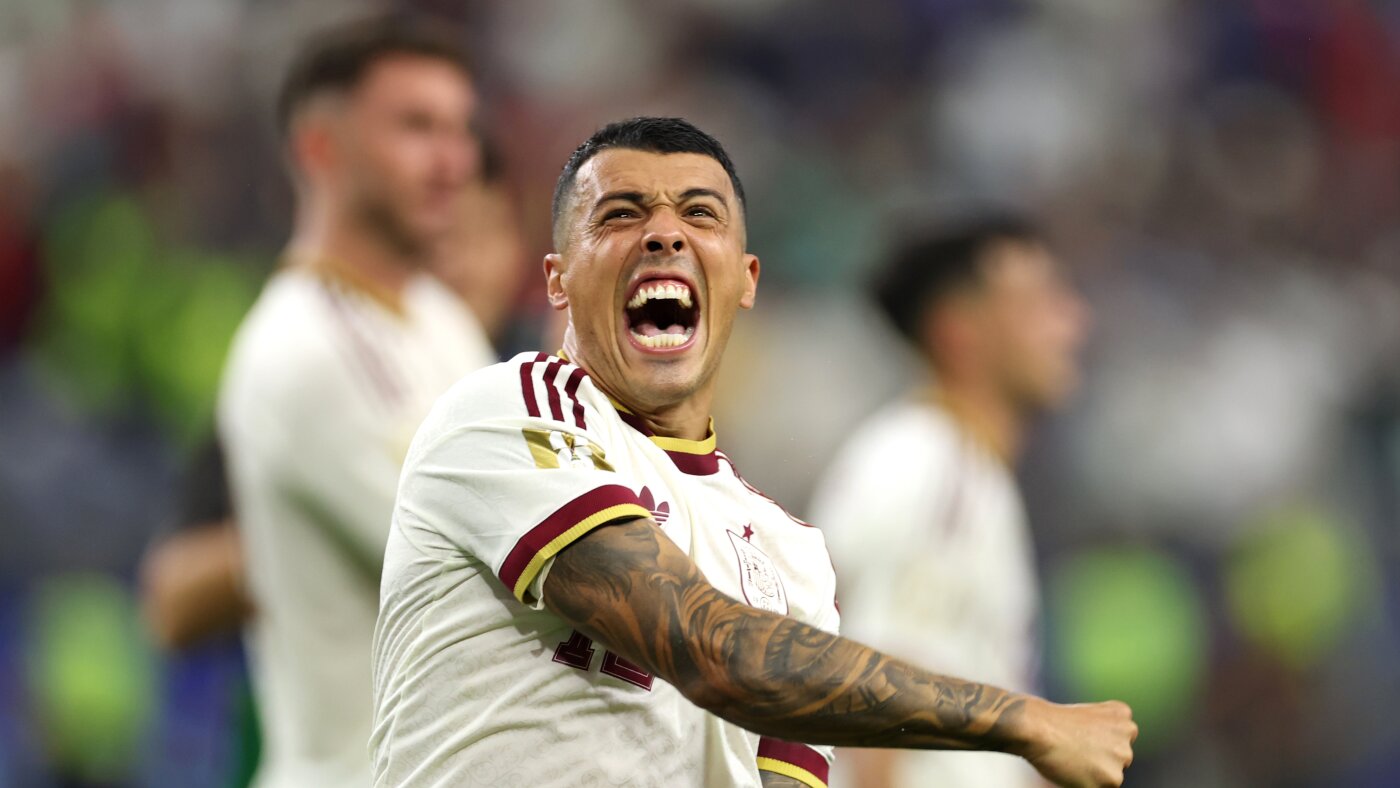
Spain could make World Cup history: The first to win men’s and women’s trophies back-to-back
-

 Technology19 minutes ago
Taylor Farms pulls iceberg lettuce from the US market after cyclosporiasis outbreak
-

 World25 minutes ago
Who is Andy Burnham? The Trump critic set to become the UK’s next prime minister
-

 Politics31 minutes ago
Major appeals court declares New Jersey AR-15 ban unconstitutional in landmark Second Amendment ruling
-

 Health37 minutes ago
First death reported in Upper East Side Legionnaires’ disease outbreak as cases rise to 67
-

 Sports43 minutes ago
Raising Cane’s owner Todd Graves on how viral Tom Brady-Rob Gronkowski dunk tank came to be at Fanatics Fest
-

 Technology49 minutes ago
Fox News AI Newsletter: IBM’s AI warning sends ‘shockwave’
-
 Business55 minutes ago
Netflix is the king of streaming. So why is its stock down this year?

