World
Things to know about the fatal shooting of a Minneapolis officer that police describe as an 'ambush'


MINNEAPOLIS (AP) — Minnesota law enforcement on Saturday identified the man who they believe fatally shot a Minneapolis officer in what police are calling an ambush.
Minnesota Public Safety Department spokesperson Bonney Bowman named 35-year-old Mustafa Mohamed as the suspected shooter. He was later shot and killed by another responding officer.
Minneapolis officer Jamal Mitchell was responding to a call about a double shooting Thursday when he stopped to help Mohamed, whom he believed was injured, police have said.
Mohamed then shot Mitchell multiple times, killing him, police said. A local coroner identified Osman Said Jimale, 32, as the third man who died in the shooting. Four others were injured.
Aside from the identities of the slain men, few details have emerged since the shooting. Many questions remain, but here are some things to know.
WHAT HAPPENED?
Officers responded to a call of a double shooting at an apartment complex in the south Minneapolis neighborhood of Whittier.
As Mitchell was about two blocks from the complex, he noticed individuals who were injured. He got out of his car to provide aid to Mohamed, who then shot the officer, according to police.
“I’ve seen the video, and he was ambushed,” Minnesota Bureau of Criminal Apprehension Superintendent Drew Evans said at a Thursday news conference. “I’m using the term for a reason.”
Another officer arrived and exchanged gunfire with Mohamed, who died despite life-saving efforts on the part of officers, Minneapolis Assistant Police Chief Katie Blackwell said.
That officer had non-life-threatening wounds. Another person, believed to be an innocent bystander, was shot and taken to a hospital in critical condition, Evans said.
When other officers went to the apartment, they found two people inside who had been shot. One was dead and the other was hospitalized in critical condition, Evans said.
WHO WAS KILLED?
Police so far have provided little information about the suspected shooter, Mohamed, and the other man who died, Jimale.
Mitchell was a father who was engaged to be married. He had been with the department for only about 18 months.
The Minneapolis Police Department posted on Facebook last year that Mitchell and another officer had rescued an elderly couple from a house fire.
On Feb. 7, 2023, Mitchell’s third day on the job, he and officer Zachery Randall responded to a call and found a house on fire, the post said. The officers ran inside and got the couple out before the home was fully engulfed in flames and destroyed.
“I told him, ‘You’re one of the good guys, Jamal,’” close friend Allison Seed told the Minnesota Star Tribune. “They really needed him.”
UNANSWERED QUESTIONS
Exactly what led up to the shooting and the shooter’s motivations are still unknown.
Evans said he believed the shooting was isolated to the two locations and that the people in the apartment “had some level of acquaintance with each other.”
The connection between the two shooting scenes wasn’t immediately clear. Police had said the public was not in any danger.
Minneapolis Mayor Jacob Frey has said authorities are still investigating and asked people to “be patient with us as we do not know all of the facts yet. We want to make sure that the investigation is completed and we’re doing it the right way.”



As much as cable’s dwindling reach presents an obvious challenge to pay-TV advertisers, Michigan’s tendency to blow out its opponents may prove to be the biggest drain on the audience deliveries for Monday night’s national championship game.
The Wolverines have buzzsawed through the 2025-26 hoops campaign on rampage mode, racking up the fourth-biggest scoring average for a Power Four team (87.8 points per game), or nearly 11 points higher than UConn’s output (76.9). And if Michigan seemed averse to taking its foot off the gas during the regular season, Dusty May’s squad has all but tear-assed its way through March Madness, becoming the first-ever team to score 90 points or better in each of its five tournament games.
Michigan’s offense has been particularly relentless down the stretch—so much so that its last two games were effectively decided before the half. The Wolverines were up 48-26 against Tennessee after the first 20-minute stretch of their Elite Eight matchup, which did CBS no favors. Per Nielsen, the Sunday afternoon broadcast averaged 7.49 million viewers, a far cry from the 13.4 million viewers who took in UConn-Duke in the lead-out window. (And let this be a lesson to fair-weather fans who bail at the midway mark: While the Huskies were down 44-29 at the half, they would go on to Laettner their way to a delirious 73-72 victory, courtesy of Braylon Mullins’ 35-foot buzzer beater.)
After Michigan dispatched the Vols by a 33-point margin, the Big Ten outfit did a similar number on fellow No. 1 seed Arizona in the Final Four. At the half, the Wolverines had established a 48-32 lead over the Wildcats, and, thanks in part to a 26-12 advantage in points off turnovers, Michigan would propel itself to the title game with a suspense-free 91-73 win.
All told, Michigan has posted a relentless 21.6-point average margin of victory in the tourney since it breezed past Howard 101-80 in the opening round. That game averaged 4.52 million viewers on CBS.
Through the Final Four, Michigan in this year’s tourney has averaged 94.4 points per game while allowing its opponents to put up 72.8. UConn’s offense hasn’t been nearly as prolific, averaging 73.2 points per game, although its D has been downright miserly. Over the last five games, the Huskies have ceded a stingy 65.0 points per outing. That said, Michigan is a 6.5-point favorite—which, as it just so happens, are the same odds UConn boasted ahead of the opening tip of the 2023 and 2024 championship games.
Speaking of which, those two games were the least-watched title tilts on record, as UConn’s 76-59 defeat of San Diego State in 2023 averaged 14.7 million viewers on CBS, while the following year’s 75-60 win over Purdue eked out 133,000 more impressions.
UConn has never been a huge TV draw, as its 2004 win over Georgia Tech averaged a relatively meager 17.1 million viewers, down from 18.6 million for the previous year’s Syracuse-Kansas game and off 28% compared to Maryland-Indiana in 2002 (23.7 million). That said, the Huskies’ first national title appearance averaged 26.3 million viewers in 1999, although its opponent—Mike Krzyzewski’s Duke Blue Devils—have long been the college game’s star attraction. Duke’s 1992 victory over Michigan averaged a staggering 34.3 million viewers, making it the second most-watched college basketball game in history. (Top honors go to the Bird vs. Magic/Indiana State-Michigan State slugfest in 1979, which averaged 35.1 million viewers on NBC.)
Of course, UConn has a whole lot of history on its side, having never lost a title in six trips. While the North Carolina Tar Heels have matched the Huskies in the W column, UNC has also lost a half-dozen championship bouts. Kentucky is 8-4, with its last victory coming against Kansas in 2012, while even mighty UCLA tasted defeat twice in the course of amassing a record 11 crowns. John Wooden’s program ran up a perfect 10-0 mark from 1964 to 1975.
If UConn manages to preserve its unblemished streak, TNT Sports may have a shot at coming within shooting distance of last year’s Florida-Houston turnout (18.1 million viewers). As much as cable’s reach puts TBS et al at something of a disadvantage, it’s worth noting that CBS has the dubious distinction of drawing the all-time low in 2023. Still, the gap separating the broadcast networks from their cable counterparts is not inconsiderable; including those fans who access their favorite cable channels via a virtual MVPD, the reach of the TNT Sports portfolio now lags the old school over-the-air nets by more than 20 million households.
Michigan appeared in three of the 10 most-watched games of the regular season, so a close contest could go a long way toward boosting Monday night’s TV numbers. And clearly there’s been interest throughout this year’s tourney, which through the Elite Eight is averaging a 33-year high of 10.3 million viewers per window. Deliveries are up 9% versus the year-ago stretch, and while Nielsen’s upgraded ratings methodology is responsible for some of those gains, the fact that CBS and the TNT sports nets have met their March Madness guarantees is the only thing that really matters to their advertisers.
In the absence of any significant makegoods, the media partners are on pace to split more than $1 billion in total advertising revenue. If UConn and Michigan can keep things close on Monday night, the broadcast network and its cable colleagues will have a real shot at making a profit, as the combined rights fee for this year’s tourney was $1.02 billion. A nailbiter will also go a long way toward justifying the inevitable hike in next year’s pricing, which will be necessitated by yet another bump in the NCAA payout.
In 2027, the fee will reach $1.05 billion. By the time the 2030 rolls around, escalators will push the buy-in to $1.17 billion—up 14.2% compared to this year’s rate.
World
Mauro compares Iran rescue of missing colonel to Maduro capture, credits intelligence preparation

CIA deception operation rescues missing US airman in Iran
Paul Mauro, Fox News contributor, explains the intricate Central Intelligence Agency (CIA) deception operation that rescued a U.S. airman missing for over 36 hours in Iran. The CIA used fabricated information to mislead Iranian searchers while precisely locating and extracting the airman. Mauro emphasizes the crucial role of human intelligence (HUMINT) and synchronized efforts, underscoring that intelligence, despite technological advances, fundamentally relies on people.
NEWYou can now listen to Fox News articles!
U.S. intelligence agencies had already done the groundwork needed to locate a missing colonel inside Iran, Paul Mauro said Monday, arguing the operation relied on intelligence gathered well before the mission began.
“You’ve got to collect, you collect, you collect and a lot of it sometimes you’re never going to use,” Mauro told “Fox & Friends.”
“The key is when you need it, it has to be there.”
Mauro pointed to the Maduro case, which unfolded at the behest of the Trump administration in January, noting U.S. forces’ ability to pinpoint where the Venezuelan dictator and his wife were going to be at the time in order to make an effective capture.
RESCUE EXPERT SAYS MOST DANGEROUS MOMENT COMES AFTER ‘JACKPOT’ CALL IN RECOVERY BEHIND ENEMY LINES
War Secretary Pete Hegseth shakes the hand of an American airman on a covert CENTCOM visit with troops in theater. (War Secretary/X)
“They got him as they were running to a safe room without a scratch. Everybody comes out without a scratch,” he said.
“They got them as they were fleeing. That’s how detailed the messaging was, and that’s how synchronized the operation was.”
Mauro said that same level of preparation and coordination was on display in the Iran mission, where U.S. forces rescued a missing U.S. weapons systems officer from a downed F-15E following a multi-day search inside enemy territory.
TRUMP CALLS RESCUE OF DOWNED AIR FORCE PILOT AN ‘EASTER MIRACLE’
Artificial intelligence is a big factor in the Iran war and Iran realizes it. (iStock)
U.S. intelligence was able to act quickly to retrieve the missing colonel once his location was confirmed.
“[This] was one of those situations where the bell rang. ‘Guys, what [have] you got?’ President turns around, [War Secretary] Hegseth turns around, [and] they all talk to [CIA Director John] Ratcliffe and they say, ‘What [have] you got, director?’ and fortunately it was there.”
Mauro said the operation highlights a broader fact about intelligence work that is apparent to those working within its community: its success comes down to the people running the sources.
CLICK HERE TO DOWNLOAD THE FOX NEWS APP
“At the end of the day… it comes down to people,” he said.
“If you think that you can sit in a cubicle someplace and get everything you need to be done, that’s not how it’s going to go. You need people in country, in dangerous areas, Americans working on our behalf that you’ll never hear about… they’re running the sources so that, again, when you need it, they say, ‘My source is good.’“

Bannon, an ally of US President Donald Trump, served a four-month prison sentence after his 2022 conviction for contempt of Congress.
Published On 6 Apr 2026
The United States Supreme Court has cleared the way for the Justice Department to move forward with dismissing a criminal case against Steve Bannon, a key ally of President Donald Trump, who was convicted after refusing to testify or provide documents to Congress despite being issued a subpoena.
The department’s request to drop Bannon’s case was one of multiple actions it has taken that have benefited allies and supporters of the Republican president since Trump returned to office last year.
Bannon served a four-month prison sentence after being convicted in 2022 on two counts of contempt of Congress for refusing to provide documents or testify to the House committee investigating the January 6, 2021, attack on the US Capitol by Trump supporters.
Trump’s Justice Department, in urging the Supreme Court to toss the lower court’s decision, told the justices in court papers that it has determined that dismissing Bannon’s case “is in the interests of justice”. The department had already filed a motion to dismiss the case at the trial court level.
Evan Corcoran, a lawyer for Bannon, welcomed the Supreme Court’s action on Monday.
“It has been one battle after another for five years, but today the Supreme Court vacated an unjust conviction, and in doing so validated a fundamental rule – like oil and water, politics and prosecution don’t mix,” Corcoran said.
A dismissal would remove Bannon’s conviction from the record, but would have little practical impact because he has already served his sentence.
Who is Steve Bannon?
Bannon, 72, served as a key adviser to Trump’s 2016 presidential campaign and his chief White House strategist in 2017 during Trump’s first term in office before a falling out between them that was later patched up.
Bannon was released from prison a week before Trump’s victory over Democrat Kamala Harris in the 2024 US presidential election.
Bannon cast himself as a political prisoner and told reporters upon his release, “I am far from broken. I have been empowered by my four months at Danbury federal prison.”
Bannon resumed hosting his “War Room” podcast.
A firebrand, Bannon helped articulate the “America First” right-wing populism and stout opposition to immigration that has helped define Trump’s presidency.
Bannon has played an instrumental role in right-wing media, promoting right-wing causes and candidates in the US and abroad.
Lawyers for Bannon raised various legal arguments to contest the subpoena, including issues related to executive privilege, a legal principle that lets a president keep certain communications private, and the congressional committee’s authority to issue the subpoena.
Trump also pardoned many people convicted in connection with the January 6 US Capitol riot, as well as several political allies facing other criminal cases related to efforts to overturn the 2020 election, which Trump lost to former US President Joe Biden.

DPI report highlights difficulties retaining teachers in Wisconsin

West Virginia Treasurer Allocates Medical Marijuana Revenue Despite Governor’s Veto – Marijuana Moment

Wyoming’s data center boom prompts lawmakers to address electricity consumption and resource management.

Solana Foundation Launches STRIDE Security Program for DeFi Protocols Following Drift Incident

Sezzle Financial Literacy Tools Help Consumers Develop Better Habits | PYMNTS.com

Florida High School Football Rankings: Top 25 teams – Oct. 21

How old is Bo Nix? What to know about Oregon quarterback ahead of 2024 NFL Draft

Cleary's 21 help Le Moyne down Central Connecticut State 69-64 in OT

99th annual Pony Swim held in Virginia

Indiana Members Credit Union announced as new anchor tenant at Bottleworks District

Map: Minor Earthquake Strikes Near San Diego

Trump claims he’d win as the president of Venezuela — just needs to ‘quickly’ learn Spanish

US Supreme Court clears path for Steve Bannon criminal case dismissal
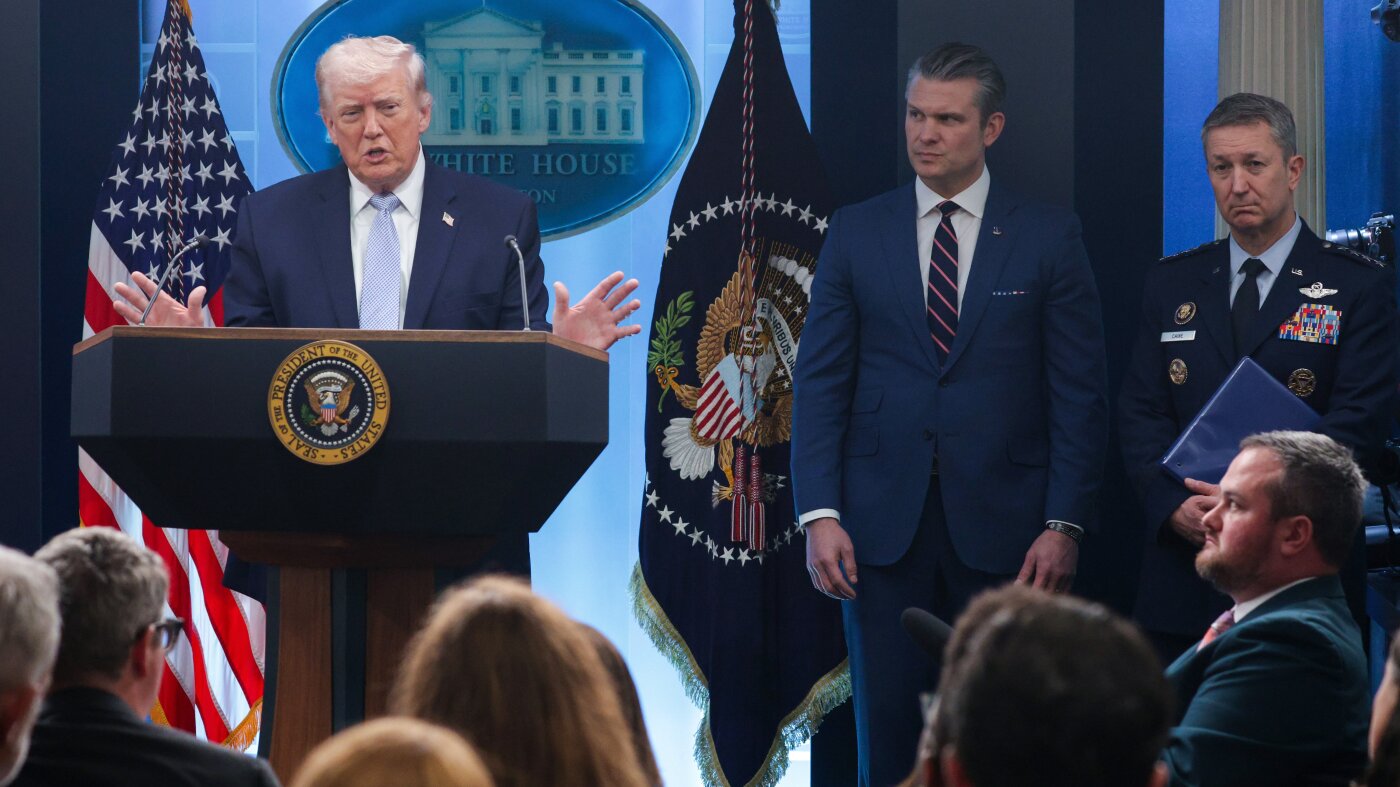
Trump reiterates threats to bomb Iran’s power plants and bridges

Trump threatens Iranian infrastructure over Strait of Hormuz | BBC News
-

 Atlanta, GA2 days ago
1 teenage girl killed, another injured in shooting at Piedmont Park, police say
-

 South-Carolina1 week ago
South Carolina vs TCU predictions for Elite Eight game in March Madness
-

 Vermont1 week ago
Skier dies after fall at Sugarbush Resort
-

 Movie Reviews5 days ago
Vaazha 2 first half review: Hashir anchors a lively, chaos-filled teen tale
-

 Politics1 week ago
Trump’s Ballroom Design Has Barely Been Scrutinized
-

 Atlanta, GA1 week ago
Fetishist ‘No Kings’ protester in mask drags ‘Trump’ and ‘JD Vance’ behind her wheelchair
-
 Entertainment5 days ago
Inside Ye’s first comeback show at SoFi Stadium
-

 Politics1 week ago
JD Vance says he was ‘obsessed’ with UFOs, believes aliens are actually ‘demons’