World
Spain searches for bodies after unprecedented flooding claims at least 158 lives


Crews searched for bodies in stranded cars and sodden buildings Thursday as residents salvaged what they could from their ruined homes following monstrous flash floods in Spain that claimed at least 158 lives, with 155 deaths confirmed in the eastern Valencia region alone.
More horrors emerged Thursday from the debris and ubiquitous layers of mud left by the walls of water that produced Spain’s deadliest natural disaster in living memory. The damage recalled the aftermath of a tsunami, with survivors left to pick up the pieces as they mourn their loved ones.
AT LEAST 63 DEAD IN DEVASTATING FLASH FLOODS ACROSS EASTERN SPAIN, OFFICIALS SAY
Cars were piled on one another like fallen dominoes, uprooted trees, downed power lines and household items all mired in mud that covered streets in dozens of communities in Valencia, a region south of Barcelona on the Mediterranean coast.
An unknown number of people are still missing and more victims could be found.
“Unfortunately, there are dead people inside some vehicles,” Spain’s Transport Minister Óscar Puente said early Thursday before the death toll spiked from 95 on Wednesday night.
Rushing water turned narrow streets into death traps and spawned rivers that tore through homes and businesses, sweeping away cars, people and everything else in its path. The floods demolished bridges and left roads unrecognizable.
Luís Sánchez, a welder, said he saved several people who were trapped in their cars on the flooded V-31 highway south of Valencia city. The road rapidly became a floating graveyard strewn with hundreds of vehicles.
“I saw bodies floating past. I called out, but nothing,” Sánchez said. “The firefighters took the elderly first, when they could get in. I am from nearby so I tried to help and rescue people. People were crying all over, they were trapped.”
Regional authorities said late Wednesday that rescuers in helicopters saved some 70 people stranded on rooftops and in cars, but ground crews were far from done.
Vehicles are seen piled up after being swept away by floods in Valencia, Spain, Thursday, Oct. 31, 2024. (AP Photo/Alberto Saiz)
“Our priority is to find the victims and the missing so we can help end the suffering of their families,” Spanish Prime Minister Pedro Sánchez said after meeting with officials and emergency services in Valencia on Thursday, the first of three official days of mourning.
An ‘extraordinary’ deluge
Spain’s Mediterranean coast is used to autumn storms that can cause flooding, but this was the most powerful flash flood event in recent memory. Scientists link it to climate change, which is also behind increasingly high temperatures and droughts in Spain and the heating up of the Mediterranean Sea.
Human-caused climate change has doubled the likelihood of a storm like this week’s deluge in Valencia, according to a rapid but partial analysis Thursday by World Weather Attribution, comprising dozens of international scientists who study global warming’s role in extreme weather.
Spain has been suffering from an almost two-year drought, meaning that when the deluge happened late Tuesday and early Wednesday, the ground was so hard that it could not absorb the rain, leading to flash floods.
The violent weather event surprised regional government officials. Spain’s national weather service said it rained more in eight hours in the Valencian town of Chiva than it had in the preceding 20 months, calling the deluge “extraordinary.”
In Paiporta, a community of 25,000 next to Valencia city where mayor Maribel Albalat said Thursday that not fewer than 62 people had perished.
“(Paiporta) never has floods, we never have this kind of problem. And we found a lot of elderly people in the town center,” Albalat told national broadcaster RTVE. “There were also a lot of people who came to get their cars out of their garages … it was a real trap.’
Farms damaged
While the most suffering was inflicted on municipalities near the city of Valencia, the storms unleashed their fury over huge swaths of the south and eastern coast of the Iberian peninsula. Two fatalities were confirmed in the neighboring Castilla La Mancha region and one in southern Andalusia.
Greenhouses and farms across southern Spain, known as Europe’s garden for its exported produce, were also ruined by heavy rains and flooding. The storms spawned a freak tornado in Valencia and a hail storm that punched holes in cars in Andalusia. Homes were left without water as far southwest as Malaga in Andalusia.
Heavy rains continued Thursday farther north as the Spanish weather agency issued alerts for several counties in Castellón, in the eastern Valencia region, and for Tarragona in Catalonia, as well as southwest Cadiz.
“This storm front is still with us,” the prime minister said. “Stay home and heed the official recommendation and you will help save lives.”
The search goes on amid the destruction
Over 1,000 soldiers from Spain’s emergency rescue units joined regional and local emergency workers in the search for bodies and survivors.
“We are searching house by house,” Ángel Martínez, with a military emergency unit, told Spain’s national radio RNE from the town of Utiel, where at least six people died.
An Associated Press journalist saw rescuers remove seven body bags from an underground garage in Barrio de la Torre on Thursday.
Many residents in both towns had to walk long distances in sticky mud to find food and water. Many of their cars had been destroyed and the mud, destruction and debris left by the storm made some roads unpassable. Some pushed shopping carts along sodden streets while others carried their children to keep them out of the muck.
Valencia regional President Carlos Mazón on Thursday asked if Spain’s army could assist with distributing basic goods to the population.
The National Police arrest 39 people for looting on Wednesday. The Civil Guard deployed officers to stop further thefts from homes, cars and shopping malls.
Some 150,000 people in Valencia were without electricity on Wednesday, but roughly half had power by Thursday, Spanish news agency EFE reported. An unknown number did not have running water and were relying on whatever bottled water they could find.
The region remained partly isolated with several roads cut off and train lines interrupted, including the high-speed service to Madrid. Officials said it will take two to three weeks to repair that damaged line.
A man wept as he showed a reporter from national broadcaster RTVE the shell of what was once the ground floor of his home in Catarroja, south of Valencia. It looked as though a bomb had detonated inside, obliterating furniture and belongings, and stripping the paint off some walls.



NEWYou can now listen to Fox News articles!
The United Nations Human Rights Council (UNHRC) abruptly cut off a video statement after the speaker began criticizing several United Nations officials, including one who has been sanctioned by the Trump administration. The video message was being played during a U.N. session in Geneva, Switzerland, Friday morning.
Anne Bayefsky, director of the Touro Institute on Human Rights and the and president of Human Rights, called out several U.N. officials in her message, including U.N. High Commissioner for Human Rights Volker Türk and special rapporteur Francesca Albanese, who is the subject of U.S. sanctions.
Secretary of State Marco Rubio announced sanctions against Albanese July 9, 2025, saying that she “has spewed unabashed antisemitism, expressed support for terrorism and open contempt for the United States, Israel and the West.”
“That bias has been apparent across the span of her career, including recommending that the ICC, without a legitimate basis, issue arrest warrants targeting Israeli Prime Minister Benjamin Netanyahu and former Defense Minister Yoav Gallant,” Rubio added.
Secretary of State Marco Rubio and Francesca Albanese (Getty Images)
“I was the only American U.N.-accredited NGO with a speaking slot, and I wasn’t allowed even to conclude my 90 seconds of allotted time. Free speech is non-existent at the U.N. so-called ‘Human Rights Council,’” Bayefsky told Fox News Digital.
Bayefsky noted the irony of the council cutting off her video in a proceeding that was said to be an “interactive dialogue,” an event during which experts are allowed to speak to the council about human rights issues.
“I was cut off after naming Francesca Albanese, Navi Pillay and Chris Sidoti for covering up Palestinian use of rape as a weapon of war and trafficking in blatant antisemitism. I named the prosecutor of the International Criminal Court, Karim Khan, who is facing disturbing sexual assault allegations but still unaccountable almost two years later. Those are the people and the facts that the United Nations wants to protect and hide,” Bayefsky told Fox News Digital.
“It is an outrage that I am silenced and singled out for criticism on the basis of naming names.”
Bayefsky’s statement was cut off as she accused Albanese and Navi Pillay, the former chair of the U.N. Independent International Commission of Inquiry on the Occupied Palestinian Territory; and Chris Sidoti, a commissioner of the U.N. Independent International Commission of Inquiry on the Occupied Palestinian Territory. She also slammed Khan, who has faced rape allegations. Khan has denied the sexual misconduct allegations against him.
Had her video message been played in full, Bayefsky would have gone on to criticize Türk’s recent report for not demanding accountability for the “Palestinian policy to pay to kill Jews, including Hamas terror boss Yahya Sinwar who got half a million dollars in blood money.”
When the video was cut short, Human Rights Council President Ambassador Sidharto Reza Suryodipuro characterized Bayefsky’s remarks as “derogatory, insulting and inflammatory” and said that they were “not acceptable.”
“The language used by the speaker cannot be allowed as it has exceeded the limits of tolerance and respect within the framework of the council which we all in this room hold to,” Suryodipuro said.
The Human Rights Council at the United Nations in Geneva, Switzerland, Feb. 26, 2025. (Denis Balibouse/Reuters)
MELANIA TRUMP TO TAKE THE GAVEL AT UN SECURITY COUNCIL IN HISTORIC FIRST
In response to Fox News Digital’s request for comment, Human Rights Council Media Officer Pascal Sim said the council has had long-established rules on what it considers to be acceptable language.
“Rulings regarding the form and language of interventions in the Human Rights Council are established practices that have been in place throughout the existence of the council and used by all council presidents when it comes to ensuring respect, tolerance and dignity inherent to the discussion of human rights issues,” Sim told Fox News Digital.
When asked if the video had been reviewed ahead of time, Sim said it was assessed for length and audio quality to allow for interpretation, but that the speakers are ultimately “responsible for the content of their statement.”
“The video statement by the NGO ‘Touro Law Center, The Institute on Human Rights and The Holocaust’ was interrupted when it was deemed that the language exceeded the limits of tolerance and respect within the framework of the council and could not be tolerated,” Sim said.
“As the presiding officer explained at the time, all speakers are to remain within the appropriate framework and terminology used in the council’s work, which is well known by speakers who routinely participate in council proceedings. Following that ruling, none of the member states of the council have objected to it.”
Flag alley at the United Nations’ European headquarters during the Human Rights Council in Geneva, Switzerland, Sept. 11, 2023. (Denis Balibouse/File Photo/Reuters)
UNRWA OFFICIALS LOBBY CONGRESSIONAL STAFFERS AGAINST TRUMP TERRORIST DESIGNATION THREAT
While Bayefsky’s statement was cut off, other statements accusing Israel of genocide and ethnic cleansing were allowed to be played and read in full.
This is not the first time that Bayefsky was interrupted. Exactly one year ago, on Feb. 27, 2025, her video was cut off when she mentioned the fate of Ariel and Kfir Bibas. Jürg Lauber, president of the U.N. Human Rights Council at the time, stopped the video and declared that Bayefsky had used inappropriate language.
Bayefsky began the speech by saying, “The world now knows Palestinian savages murdered 9-month-old baby Kfir,” and she ws almost immediately cut off by Lauber.
CLICK HERE TO DOWNLOAD THE FOX NEWS APP
“Sorry, I have to interrupt,” Lauber abruptly said as the video of Bayefsky was paused. Lauber briefly objected to the “language” used in the video, but then allowed it to continue. After a few more seconds, the video was shut off entirely.
Lauber reiterated that “the language that’s used by the speaker cannot be tolerated,” adding that it “exceeds clearly the limits of tolerance and respect.”
Last year, when the previous incident occurred, Bayefsky said she believed the whole thing was “stage-managed,” as the council had advanced access to her video and a transcript and knew what she would say.
Related Article


A post on X by European Parliament President Roberta Metsola has triggered a wave of misinformation linked to the EU’s €90 billion support loan to Ukraine, which is designed to help Kyiv meet its general budget and defence needs amid Russia’s ongoing invasion.
ADVERTISEMENT
ADVERTISEMENT
Hungary said earlier this week that it would block both the loan — agreed by EU leaders in December — and a new EU sanctions package against Moscow amid a dispute over oil supplies.
Shortly afterwards, Metsola posted on X that she had signed the Ukraine support loan on behalf of the parliament.
She said the funds would be used to maintain essential public services, support Ukraine’s defence, protect shared European security, and anchor Ukraine’s future within Europe.
The announcement triggered a wave of reactions online, with some claiming Hungary’s veto had been ignored, but this is incorrect.
Metsola did sign the loan on behalf of the European Parliament, but that’s only one step in the EU’s legislative process. Her signature does not mean the loan has been definitively implemented.
How the process works
In December, after failing to reach an agreement on using frozen Russian assets to fund Ukraine’s war effort, the European Council agreed in principle to provide €90 billion to help Kyiv meet its budgetary and military needs over the next two years.
On 14 January, the European Commission put forward a package of legislative proposals to ensure continued financial support for Ukraine in 2026 and 2027.
These included a proposal to establish a €90 billion Ukraine support loan, amendments to the Ukraine Facility — the EU instrument used to deliver budgetary assistance — and changes to the EU’s multiannual financial framework so the loan could be backed by any unused budgetary “headroom”.
Under EU law, these proposals must be adopted by both the European Parliament and the European Council. Because the loan requires amendments to EU budgetary rules, it ultimately needs unanimous approval from all member states.
Metsola’s signature therefore does not amount to a final decision, nor does it override Hungary’s veto.
The oil dispute behind Hungary’s opposition
Budapest says its objections are linked to a dispute over the Druzhba pipeline, a Soviet-era route that carries Russian oil via Ukraine to Hungary and Slovakia.
According to the Centre for Research on Energy and Clean Air (CREA), Hungary and Slovakia imported an estimated €137 million worth of Russian crude through the pipeline in January alone, under a temporary EU exemption.
Oil flows reportedly stopped in late January after a Russian air strike that Kyiv says damaged the pipeline’s southern branch in western Ukraine. Hungary disputes this, with Prime Minister Viktor Orbán accusing Ukraine of blocking it from being used.
Speaking in Kyiv alongside European Commission President Ursula von der Leyen and European Council President António Costa, Ukraine’s President Volodymyr Zelenskyy said the pipeline had been damaged by Russia, not Kyiv.
He added that repairs were dangerous and could not be carried out quickly without putting Ukrainian servicemen in danger.
Tensions escalated further after reports that Ukraine struck a Russian pumping station serving the pipeline. Orbán responded by ordering increased security at critical infrastructure sites, claiming Kyiv was attempting to disrupt Hungary’s energy system.

‘We’re honoring Black excellence’: Mass. celebrates leaders of color

Tempers flare during another tightly contested matchup between Denver Nuggets, Oklahoma City Thunder

Seattle Torrent put Olympic captain Hilary Knight on long-term IR – Seattle Sports

Joan Endres – San Diego Union-Tribune

Landmark Credit Union Live officially opens in Milwaukee

Florida High School Football Rankings: Top 25 teams – Oct. 21

Cleary's 21 help Le Moyne down Central Connecticut State 69-64 in OT

How old is Bo Nix? What to know about Oregon quarterback ahead of 2024 NFL Draft

99th annual Pony Swim held in Virginia

Indiana Members Credit Union announced as new anchor tenant at Bottleworks District

ICE blasts Washington mayor over directive restricting immigration enforcement

Did the EU bypass Hungary’s veto on Ukraine’s €90 billion loan?
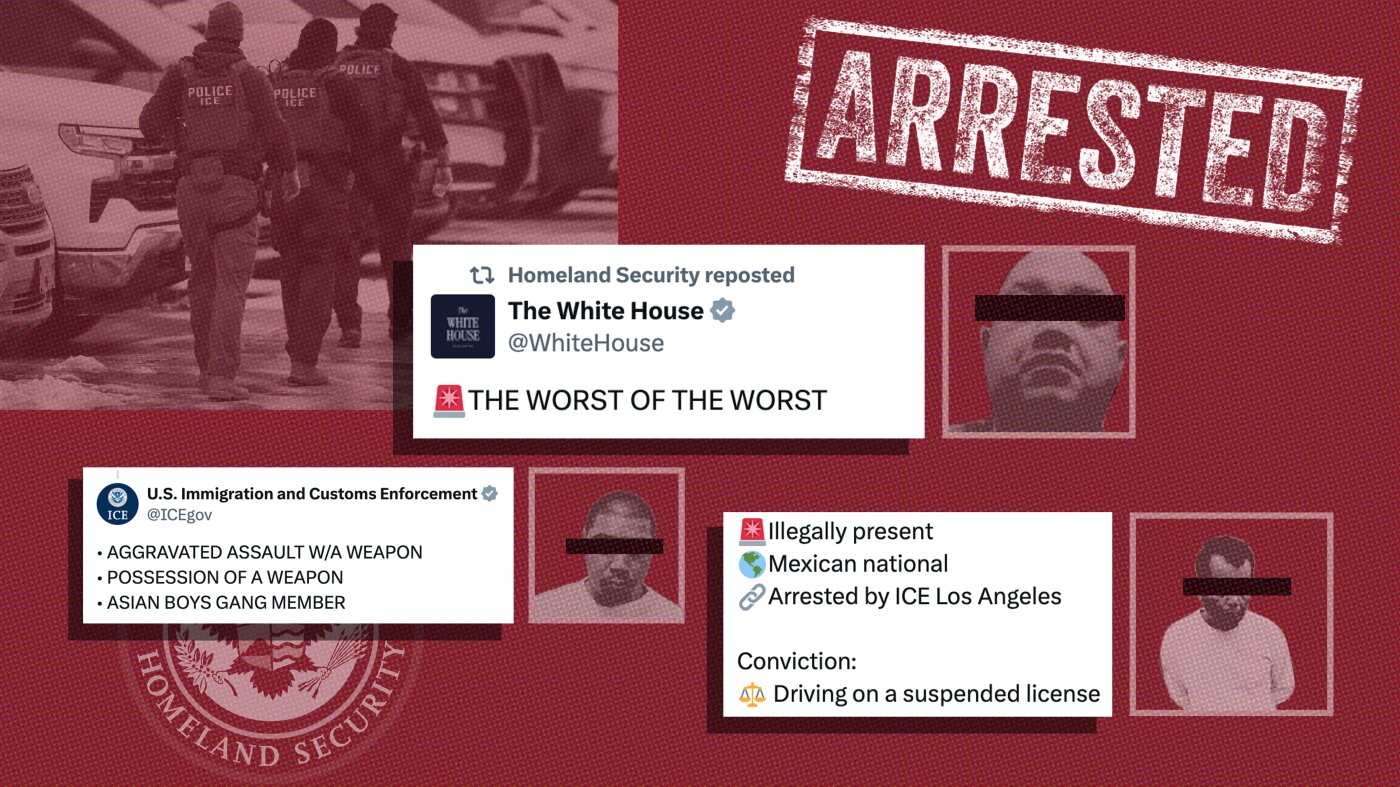
How the federal government is painting immigrants as criminals on social media

Where Iran’s ballistic missiles can reach — and how close they are to the US

Has India’s influence in Afghanistan grown under the Taliban?
-

 World2 days ago
Exclusive: DeepSeek withholds latest AI model from US chipmakers including Nvidia, sources say
-

 Massachusetts3 days ago
Mother and daughter injured in Taunton house explosion
-

 Montana1 week ago
2026 MHSA Montana Wrestling State Championship Brackets And Results – FloWrestling
-

 Louisiana5 days ago
Wildfire near Gum Swamp Road in Livingston Parish now under control; more than 200 acres burned
-

 Denver, CO3 days ago
10 acres charred, 5 injured in Thornton grass fire, evacuation orders lifted
-

 Technology7 days ago
YouTube TV billing scam emails are hitting inboxes
-

 Technology7 days ago
Stellantis is in a crisis of its own making
-

 Politics7 days ago
OpenAI didn’t contact police despite employees flagging mass shooter’s concerning chatbot interactions: REPORT