World
Should we all stop eating salmon? Why it’s suddenly become endangered


Atlantic salmon populations in England and Wales have plummeted to unprecedented lows, according to the Atlantic Salmon Stock Assessment for 2024, a report published this month by the United Kingdom Environment Agency and Centre for Environment, Fisheries and Aquaculture Science.
According to the report by the two government agencies, a massive 90 percent of wild river salmon in England are classified as either “at risk” or “probably at risk”.
This latest classification is due to salmon stocks declining to levels that are insufficient for a self-sustaining salmon population.
“Forty years ago, an estimated 1.4 million salmon returned to UK rivers each year. We are now at barely a third of that – a new low and evidence of the wider, growing biodiversity crisis,” Alan Lovell, chairman of the Environment Agency, said when the report was released.
At the end of last year, the International Union for Conservation of Nature (IUCN), an international organisation dedicated to nature conservation, changed the status of Atlantic salmon from “least concern” to “endangered” in Great Britain on its Red List of Threatened Species.
“There are rivers that used to have in the UK maybe 20,000 to 30,000 Atlantic salmon running them, and they’re now down to 1,000 to 2,000, and there are some rivers with literally a few hundred left,” Dylan Roberts, head of fisheries at the Game & Wildlife Conservation Trust in the UK, told Al Jazeera.
“We’re looking at about an 80 percent decline over the last 40 years in wild Atlantic salmon.”
Why is Atlantic salmon endangered?
In December, Atlantic salmon was classified as endangered due to a 30 to 50 percent decline in British populations since 2006 and a 50 to 80 percent projected decline from 2010 to 2025, according to the IUCN.
The IUCN’s Red List of Threatened Species has nine categories based on risk of extinction. These classifications help the wider scientific community assess and monitor the conservation status of different species.
They are the following:
- Not evaluated: species that have not yet been assessed against the IUCN criteria
- Data deficient: species for which there is insufficient information to make a direct or indirect assessment of their risk of extinction
- Least concern: species that are widespread and abundant and do not qualify for any higher risk category
- Near threatened: species that do not currently qualify as threatened but are close to qualifying for a threatened category in the near future
- Vulnerable: species facing a high risk of extinction in the wild
- Endangered: species at very high risk of extinction in the wild
- Critically endangered: species that face an extremely high risk of extinction in the wild and meet criteria indicating an imminent threat to their survival
- Extinct in the wild: species that survive only in captivity or outside their natural range and are presumed extinct in their native habitat after exhaustive surveys
- Extinct: species for which there is no reasonable doubt that the last individual has died, confirmed by extensive surveys without sightings
The IUCN’s Red List includes more than 45,300 species that are threatened with extinction, which includes any species in the classifications from vulnerable to extinct in the wild.
According to Roberts, species do not automatically make the IUCN’s Red List just because of low numbers. What gets a species on the list is how sharp the slope of decline is.
“The slope on salmon is endangered. Hence they went on the red list. You’re looking at quite dramatic declines,” he said.
Why are salmon faring so badly in UK rivers?
Agricultural practices
Salmon habitats globally face multiple threats, including agricultural pollution, increased sedimentation on riverbeds, chemical run-off from industrial activities, wastewater discharge and even disruption of rivers due to new road infrastructure.
Additionally, structural barriers built in rivers that impede migration routes, water scarcity due to excessive use and rising ocean temperatures caused by climate change further endanger salmon ecosystems.
Bycatch
European and British salmon travel along a migration route through rivers and streams known as the “smolt superhighway” as they head north to feed into the North Atlantic.
Peak migration time when many of these young fish are heading through this superhighway is around May and June. At this time, young salmon often get caught by large trawlers entering in the same zone in the sea to catch other fish such as mackerel or herring.
This directly reduces the number of fish that can grow to adulthood and return to their natal rivers to spawn.
Bycatch refers to catching fish that are not the main target for trawlers. “Bycatch would be the accidental capture of things like seals, seabirds, dolphins, whales, sharks, rays, skates and [are] protected,” Roberts said. “All these species are recorded. The problem is that salmon just aren’t recorded. And other protected fish as well, such as sea trout, which go to sea.”
According to Roberts, a solution to this problem is to collect better data on how salmon are moving through the rivers and oceans to get a better sense of the impact on the population.

Maize production
The environmental impact of maize production in the UK has proven to be another factor that has adversely impacted rivers and streams vital to salmon. The growth in the use of maize in biofuels and cattle fodder has exacerbated the problem.
“The habitat has been destroyed by intensive agriculture and all the algae and the sediment run-off. So you get this filamentous algae growing on the riverbed, and the riverbed just gets smothered with it,” Roberts said.
The overproduction of algae is detrimental to insects and invertebrates that live in the river and on which salmon are dependent as a food source.
Can salmon farming make up for these losses?
Not really and, in some cases, it may be making the situation for salmon stocks worse.
According to some estimates, roughly 70 percent of the world’s salmon is produced through salmon farming and not caught in freshwater streams.
Salmon farming in the UK generates 1.5 billion pounds ($1.95bn) a year in revenues.
Some experts argue that vast numbers of salmon raised in cramped conditions in aquaculture facilities pose significant challenges and health risks. These practices not only impact the welfare of the salmon but also carry implications for human health and environmental sustainability.
Intensive salmon farming coupled with cramped conditions in farming sea cages can result in the salmon being more susceptible to catching diseases.
“You end up with disease problems – viruses, biological sea lice, sea lice problems – then all the waste that goes into these lochs because they’re in sheltered areas. They don’t get a full flushing from the tides, and over time, they build up,” Roberts explained.
“And what they’re finding now in these lochs is that they’re getting eutrophication [a build-up of algae]. So the locks are turning green, and that’s killing the fish in the cages,” he added.
Eutrophication is often caused by agricultural practices and can cause salmon to experience hypoxia, a depletion of oxygen levels. This can happen to both wild salmon and farmed salmon.
Salmon sometimes escape from the aquaculture farms through nets damaged by severe weather, just being worn down or via poorly secured drains.
Once these escapees from the “fish asylum” are in freshwater rivers and streams, they can interbreed with wild salmon, disrupting their natural development and passing on diseases.
“If you upset the genetic gene pool, that’s a big problem,” Roberts said.
According to a 2023 annual fish health report from the Norwegian Veterinary Institute, roughly 17 percent of the country’s farmed salmon died due to infectious diseases. Norway is the top producer of salmon, contributing roughly 50 percent of global production.
Diseases can range from winter sores to heart skeletal muscle inflammation. Although there are treatments for some of these diseases, the treatments themselves can weaken fish, making them even more susceptible to other infectious diseases.
“Infectious diseases are an extensive problem both for the fish’s welfare and survival in the sea,” said Edgar Brun, department director at the Veterinary Institute.
However, industry experts say finding the right preventive measures to reduce disease in fish remains challenging. Moreover, the overuse of vaccines can increase antibiotic resistance, making certain pathogens more entrenched in the salmon population.
Is salmon endangered in other parts of the world as well?
In Ireland and Iceland, overfishing and habitat destruction have led to significant declines in the salmon population.
According to Inland Fisheries Ireland, an organisation responsible for protecting inland fisheries and sea angling resources, wild salmon numbers returning to Ireland dropped from 1.76 million in 1975 to 171,700 in 2022.
In the US, specific species, including Chinook and Coho salmon, have endangered status due to overfishing, pollution from agricultural run-off and urban development.
In Canada, the fourth largest producer of salmon, production has fallen from a peak of 148,000 tonnes in 2016 to 90,000 tonnes in 2023, according to the Canadian Aquaculture Industry Alliance. Many experts attribute some of the decline to hundreds of thousands of salmon escaping from sea cages and spreading diseases to the wild stock.
Should we all stop eating salmon?
Until recently, salmon was considered a luxury food in many parts of the world. These days it is eaten much more frequently, and many experts say we eat too much of it.
Although salmon is often celebrated by health experts for its omega-3 fatty acids, which are beneficial for heart health, there is a risk of overconsumption, given the levels of freshwater contamination and diseases that can become pervasive in fish farms, causing populations to fall.
Some farmed salmon has more omega-3 fatty acids than wild salmon but can have high levels of polychlorinated biphenyl (PCB). PCBs are synthetic chemicals that have widespread industrial uses. PCBs can “live” in industrial waste that gets dumped into our seas, rivers and streams. PCBs tend to be more prevalent in closed-system environments than open environments, like freshwater rivers.
Many health experts recommend eating wild salmon because of their lower levels of PCBs. Freshwater salmon also tend to be less susceptible to those fish-related diseases that are more common in farm-raised salmon.
According to Roberts, encouraging people to eat less salmon would not be particularly practical.
However, he said, collaboration with organisations like the Missing Salmon Alliance, which brings together other NGOs that advocate for sensible production of salmon while preserving the salmon ecosystem, can help put pressure on governments to implement more stringent rules for fisheries to preserve current populations and increase salmon populations.
Are other fish species in danger as well?
According to Roberts, another endangered fish is the eel. The conditions that have endangered salmon are very similar to those that are threatening eels: overfishing, habitat destruction, pollution and climate change.
Eels are an important food source for mammals that live around rivers and streams, including minks and otters. Smaller eels are an important food source for birds too.
Due to low eel populations, the European Union implemented regulations on eel fishing in 2018.
According to a May report from the European Parliamentary Research Service: “The European eel (Anguilla anguilla) has suffered a 90 percent to 95 percent decline in its population since the 1980s. Within 50 years, the European eel has turned from one of the most abundant freshwater fish to an endangered species.”
How is climate change contributing to this?
Rising water temperatures as a result of climate change pose significant challenges for salmon. As the water warms, its oxygen content decreases, making breathing more difficult for these fish. Consequently, salmon must swim greater distances in pursuit of nourishment and cooler waters, further taxing their already strained systems.
According to Roberts, warmer waters destroy some nutrients in oceans and rivers, which affect food chains. Atlantic salmon typically eat zooplankton, blue whiting, sand eels, small insects, insect larvae and small crustaceans called amphipods or scuds. As food for the salmon becomes more scarce, this can have a negative impact on the size of the salmon.
Smaller salmon produce fewer eggs. Fewer eggs mean a decrease in the overall population.
“Now, as it grows, it gets faster, more powerful. It can evade predators, but if they grow more slowly, they’re more vulnerable to predation,” Roberts said. “And what we found is that the decrease in the growth rate of salmon is most marked during their first summer at sea.”



NEWYou can now listen to Fox News articles!
Iran’s hardline parliament speaker and key negotiator Mohammad Bagher Ghalibaf warned that Tehran would not honor its commitments under a newly signed memorandum with the U.S. if Washington fails to uphold its side of the deal, according to the media arm of Iran’s Islamic Revolutionary Guard Corps.
“If the United States does not honor its commitments, there is no way Iran will honor its own commitments,” Ghalibaf said.
Ghalibaf’s warning was echoed Thursday by Islamic Revolutionary Guard Corps Quds Force commander Esmail Qaani, who threatened the U.S. in remarks translated by MEMRI TV, saying, “Americans should know their place and avoid confronting the Muslims.”
Qaani added that “Trump is trembling” and warned that the U.S. “should fear not only Hormuz and Bab al-Mandeb, but many other locations as well.”
MEET IRAN’S HARDLINE SPEAKER WHO THREATENED TO BURN US FORCES — REPORTEDLY TEHRAN’S POINT MAN FOR TALKS
The warnings came after President Donald Trump and Iranian President Masoud Pezeshkian Wednesday digitally signed a copy of the memorandum aimed at ending the war and resuming the flow of traffic through the Strait of Hormuz.
Iran’s hardline parliament speaker and key negotiator Mohammad Bagher Ghalibaf warned that Tehran would not honor its commitments under a newly signed memorandum with the U.S. if Washington fails to uphold its side of the deal. (Majid Asgaripour/WANA)
The memorandum gives Iran major economic relief while leaving some of the most difficult nuclear questions for a final agreement to be negotiated throughout the next 60 days. Under the 14-point plan read by a senior U.S. official, Washington agreed to begin lifting its naval blockade, work with regional partners on a $300 billion reconstruction and development plan for Iran and terminate U.S., U.N. and other sanctions on an agreed schedule as part of a final deal.
The memorandum also says all licenses, waivers and permissions needed for related financial transactions would be granted by the United States.
In return, Iran reaffirmed that it “shall not procure or develop nuclear weapons,” and the sides agreed to resolve the fate of Iran’s stockpiled enriched material under a future mechanism, with the minimum method being on-site down-blending under International Atomic Energy Agency supervision.
The agreement defers many of the hardest questions — including how to wind down Iran’s nuclear program — until the 60-day negotiation period for a final deal.
But the Iranian figure at the center of the deal is not a diplomat known for moderation.
Ghalibaf, a former Islamic Revolutionary Guard Corps commander and longtime regime insider, has threatened American forces, vowed Trump would “pay the price” and built his career through loyalty to Iran’s security establishment.
The new warning underscored what experts say is the central risk of the agreement. Washington may be entering a deal with officials who can enforce Iran’s commitments but who have shown little sign of changing the regime’s long-term posture toward the U.S., Israel or the region.
Ghalibaf, 64, is a product of Iran’s security establishment. He rose through the ranks of the Islamic Revolutionary Guard Corps during the Iran-Iraq War, eventually becoming commander of the Islamic Revolutionary Guard Corps air force.
He later served as Iran’s national police chief, overseeing internal security forces responsible for suppressing protests, including the 1999 student uprising, alongside Qassem Soleimani.
After transitioning into politics, Ghalibaf attempted to run for president multiple times but failed. He instead built his career through loyalty to the system, serving as Tehran’s mayor for more than a decade before becoming speaker of parliament in 2020.
FAMILIES OF IRAN’S ELITE LIVE LAVISHLY ABROAD WHILE ORDINARY CITIZENS SUFFER AT HOME
Iranian Parliament Speaker Mohammad Bagher Ghalibaf looks on as parliament members wearing military uniforms chant in support of the IRGC in Tehran, Iran, on Feb. 1, 2026. (Hamed Malekpour/Islamic consultative assembly news agency/WANA/Handout via Reuters)
“Ghalibaf doesn’t have an independent line. His strength is that he is a ‘yes man,’” Beni Sabti, an Iran expert at the Institute for National Security Studies, previously told Fox News Digital. “If he is told to shake hands with special envoy Steve Witkoff, he will do it. If he is told to escalate, he will. It is not about moderation, it is about who gives the orders.”
“His name has also been linked to multiple corruption allegations, including misuse of oil revenues and sanctions evasion networks involving his family. His sons have reportedly been involved and are under sanctions,” Sabti said.
“There have also been public scandals involving family members traveling abroad and making luxury purchases, including widely circulated images of them arriving with numerous high-end Gucci suitcases.”
Behnam Ben Taleblu, a senior fellow at the Foundation for Defense of Democracies, said the image of Ghalibaf at a signing ceremony with a senior U.S. official would be a propaganda victory for the regime.
“There was a time when the Islamic Republic would have been terrified to be seen signing such a thing,” Ben Taleblu told Fox News Digital. “Postwar, this is a sign of the regime’s opportunism, and no one identifies that opportunism better than someone like Ghalibaf, who comes from the IRGC, who is a corrupt politician and is a wheeler and dealer.”
But Taleblu warned that Washington should not confuse Ghalibaf’s opportunism with moderation.
“The mirage is the myth of Iranian military moderation and the myth that, with time, this regime will integrate and put aside all the things that have kept it on the sidelines for so long,” he said. “Transforming Iran via a deal — that is a huge lift.”
Ghalibaf’s wartime statements reflect the hardline posture inside Iran’s leadership. In remarks aired on Iranian television Jan. 12 and translated by MEMRI, he warned that U.S. forces would face catastrophic consequences if they confronted Iran.
“Come, so you can see what catastrophe befalls American bases, ships and forces,” he said, adding that American troops would be “burned by the fire of Iran’s defenders.”
TRUMP ADMINISTRATION UNVEILS SWEEPING TERMS OF PROPOSED IRAN AGREEMENT
A man lights a cigarette with fire from a burning picture of Iranian Parliament Speaker Mohammad Bagher Ghalibaf as Israelis rally in support of nationwide protests in Iran in Holon, Israel, on Jan. 14, 2026. (Ammar Awad/Reuters)
More recently, he warned that “the blood of American soldiers is the personal responsibility of Trump” and vowed Iran would “settle accounts with the Americans and Israelis,” adding that “Trump and Netanyahu crossed our red lines and will pay the price.”
John Hannah, a senior fellow at the Jewish Institute for National Security of America and a former national security advisor to Vice President Dick Cheney, said Ghalibaf’s expected role reflects the reality of who holds power inside Iran.
“If you’re going to sign an agreement with Iran, those are the forces in charge and calling the shots, presumably with the approval of the new supreme leader,” Hannah told Fox News Digital. “If the U.S. harbors hope that Iran will ever implement any of their obligations under the MOU, these are the people — odious as they are — capable of making it happen.”
But Hannah said the central question is whether Iran’s leadership sees compliance as useful or whether the agreement is simply a tactical pause.
“The big question is whether they see it in their interest to do so, or are they only buying time, rebuilding their power and preparing for the next round of conflict,” he said.
Ben Taleblu was even more blunt, warning that even a seemingly favorable agreement would not change the nature of the regime.
“Even if you’ve got the perfect deal, with this kind of regime, with this kind of mentality, they will escalate,” he said. “I thought we would have learned by now what the regime did after the JCPOA. It built a vast missile arsenal. It literally built an empire of terror proxies that took Israel years of blood, effort and money to dismantle, backed by American support.
CLICK HERE TO DOWNLOAD THE FOX NEWS APP
Iranian Parliament Speaker Mohammad Bagher Ghalibaf speaks during a press conference in Tehran, Iran, Nov. 27, 2024. (Majid Asgaripour/WANA via Reuters)
“If we engage in pay-to-play with these guys,” he added, “I’m sorry to sound the alarm bell like this — but something tells me this is bad either way.”
Responding to questions about the threats from Ghalibaf and IRGC Quds Force commander Esmail Qaani, the White House defended Trump’s approach and warned Iran would face consequences if it failed to reach a final deal.
“President Trump has a great track record of good deals for the American people, and the President has been clear about the consequences if Iran fails to make a good, final deal,” White House spokeswoman Olivia Wales told Fox News Digital.
“What the president has achieved on the battlefield and at the negotiating table is nothing short of remarkable and will strengthen American security for many years to come.”

Tehran holds back from talks to cement ceasefire due to ongoing Israeli attacks on southern Lebanon.
Published On 19 Jun 2026
Planned talks in Switzerland between the United States and Iran to discuss the technical terms of their ceasefire deal have been postponed.
The Swiss Foreign Ministry confirmed early on Friday that the talks, which were scheduled to take place in Burgenstock, would now not go ahead.
list of 4 itemsend of listRecommended Stories
Reports suggest that Iran has delayed sending its delegation to discuss the technical issues linked to the ceasefire deal – digitally signed by the two countries on Wednesday – due to Israel’s ongoing military campaign in Lebanon.
Israeli strikes overnight and into Friday have reportedly killed at least 16 people in southern Lebanon, with Iran-linked Hezbollah reporting intense fighting.
Talks postponed
A ceremony followed by talks was expected to be held at the Burgenstock Resort in Stansstad, near Lucerne in central Switzerland.
It is owned by Katara Hospitality, part of Qatar’s sovereign wealth fund, which helped mediate peace in the conflict.
On Friday, in a message to media outlet AFP, the Swiss foreign ministry said: “The planned talks between the US, Iran, Qatar and Pakistan have been postponed”.
“Switzerland remains ready to facilitate these talks. The relevant preparatory work at Burgenstock is continuing,” it added, without providing a new date for the talks.
The announcement followed a report from media outlet Al-Mayadeen that Iran was delaying sending its delegation to Switzerland over Israel’s ongoing military campaign in Lebanon.
Israeli Prime Minister Benjamin Netanyahu said Thursday that Israel’s military will stay in a “security zone” of southern Lebanon as long as “Israel’s security needs require it.”
Israel and Hezbollah are not parties to the agreement, but Iran has insisted Israel must withdraw from the large swath of southern Lebanon it is occupying.
Logistics have never been ‘simple or predictable’
The US push to quickly begin high-stakes talks with Iran hit a snag just two days after the signing of a 14-point memorandum of understanding with the US that sets out a framework for talks during a 60-day negotiation period.
Vice President JD Vance had been prepared to make an overnight flight to meet with his Iranian counterparts at the mountainside resort in the tiny Swiss village of Obburgen.
His staff and a small pack of journalists had even gathered at Joint Base Andrews outside Washington in anticipation of the trip.
Meanwhile, dozens of White House officials, advance staffers and more media gathered in Switzerland to prepare for Vance’s anticipated arrival.
But then, abruptly on Thursday evening, the trip was called off.
The White House issued a statement explaining Vance – who has been tapped by President Donald Trump to lead the negotiations – and his delegation were prepared for talks, but they were unable to finalise plans and the vice president would remain in Washington.
“The logistics of these negotiations have never been simple or predictable,” the statement noted.
Also on Thursday, Pakistan’s Prime Minister Shehbaz Sharif cancelled his trip to Switzerland, his spokesperson told AFP.

new video loaded: A Small Election Could Change British Politics
transcript
transcript
A Small Election Could Change British Politics
Voters in the northern English district of Makerfield cast ballots on Thursday to choose their representative in Parliament, the outcome of which could lead to Prime Minister Keir Starmer’s ouster.
-
Well, I don’t think there should be a leadership election. I think that the last government proved that parties that spend their whole time in leadership elections don’t go on to win the next general election.

By Alisa Shodiyev Kaff
June 18, 2026
-

 Technology2 minutes ago
Barret Zoph is out at OpenAI again after just five months
-

 World8 minutes ago
Iran hardliner behind US deal warns Tehran won’t honor agreement if Trump fails to deliver
-

 Politics15 minutes ago
Top GOP lawmaker rallies around conservative school board member facing calls to resign
-

 Sports23 minutes ago
2026 World Cup Odds: How Far Can Mexico Go After Winning Group A?
-

 Technology30 minutes ago
6 in 10 identity crimes now begin with a new account
-
 Business33 minutes ago
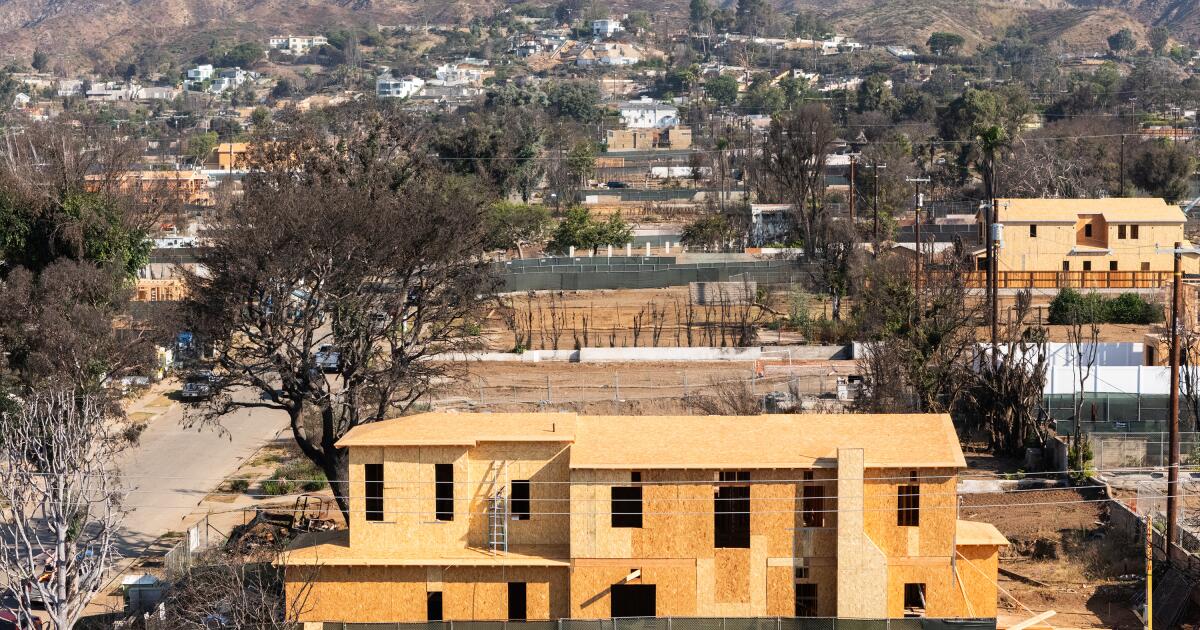
January 2025 wildfire victims seek tougher penalties against State Farm over claims handling
-
 Entertainment38 minutes ago
Review: ‘Sugar,’ with Colin Farrell as an alien private eye, gets a new and improved second season
-
 Politics48 minutes ago
Political watchdog fines Newsom for failing to report $5.5M in solicited donations on time

