World
Iran accused of killing 16,500 in sweeping ‘genocide’ crackdown: report


NEWYou can now listen to Fox News articles!
Iranian protesters are facing their deadliest days yet as security forces unleash mass killings and executions in a sweeping crackdown some have labeled “genocide,” new reports say.
According to The Sunday Times, a report compiled by doctors entrenched in the region and reviewed by the outlet, estimates that security forces have killed at least 16,500 protesters and injured more than 330,000 others.
The report also described the violence as an “utter slaughter,” warning that the true toll may be even higher due to restricted access to hospitals and the near-total shutdown of communications.
POMPEO SAYS IRANIAN REGIME HAS ARRIVED AT ‘NATURAL TERMINUS’: ‘LET’S NOT WASTE THIS HISTORIC OPPORTUNITY’
A report alleges that Iranian security forces have killed at least 16,500 protesters. (Ohad Zwigenberg/AP Photo)
Most of the victims, the report says, are believed to be under the age of 30, underscoring the heavy toll on Iran’s younger generation as the regime intensifies its efforts to crush dissent.
Iran’s Supreme Leader, Ayatollah Ali Khamenei acknowledged Sunday that “several thousands” have been killed since protests erupted Dec. 28.
In a televised address, he blamed demonstrators, calling them “foot-soldiers of the U.S.” and falsely claiming protesters were armed with imported live ammunition.
Meanwhile, Human Rights Activists News Agency (HRANA) reported that as of day 22 of the protests, verified figures show 3,919 people killed, with 8,949 additional deaths under investigation, 2,109 severely injured, and 24,669 detainees.
HRANA noted that the true toll is likely far higher due to the internet shutdown.
Professor Amir Parasta, an Iranian-German eye surgeon and medical director of Munich MED, said in The Sunday Times report that doctors across Iran are “shocked and crying,” despite having experience treating war injuries.
G7 THREATENS IRAN WITH NEW SANCTIONS OVER NATIONWIDE PROTEST CRACKDOWN KILLING THOUSANDS
Eye surgeon Amir Parasta called the crackdown “a whole new level of brutality.” (UGC via AP)
“This is a whole new level of brutality,” Parasta said. He added that Starlink terminals smuggled into Iran have been the only means of communication since authorities cut internet access on Jan. 8.
Eyewitnesses who fled Iran also described snipers targeting protesters’ heads, mass shootings and systematic blinding using pellet guns.
One former Iranian resident said in the report that doctors reported more than 800 eye removals in a single night in the capital alone, with possibly more than 8,000 people blinded nationwide.
“This is genocide under the cover of digital darkness,” Parasta said.
Alongside the street killings, executions have surged dramatically, according to Ali Safavi, a senior official with the National Council of Resistance of Iran (NCRI).
Safavi told Fox News Digital that 2,200 people were executed in 2025, while 153 have already been hanged in the first 18 days of January 2026, averaging more than eight executions per day.
IRAN REGIME OPENED FIRE WITH LIVE AMMUNITION ON PROTESTERS, DOCTOR SAYS: ‘SHOOT-TO-KILL’
President Trump castigated Ayatollah Ali Khamenei over the weekend, calling him a “sick man.” (Majid Saeedi/Getty Images)
“Ali Khamenei is continuing mass executions in parallel with the killing of young protesters,” Safavi said. “Three executions in the form of hanging are now happening every hour according to our data.”
Iranian Foreign Minister Abbas Araghchi previously disputed high death tolls reported in an interview with Fox News’ Bret Baier, claiming fatalities were only in the hundreds and dismissing higher figures as “misinformation.”
CLICK HERE TO DOWNLOAD THE FOX NEWS APP
President Donald Trump sharply condemned Khamenei over the weekend, calling him a “sick man” and urging new leadership in Iran.
In an interview with Politico, Trump accused Khamenei of overseeing “the complete destruction of the country” and using “violence at levels never seen before,” adding that Iran’s leadership should “stop killing people.”



The murder of an 11-year-old French schoolgirl has sparked outrage at the country’s judicial system after it emerged that authorities had failed to fully investigate the suspected killer about previous allegations of child sexual abuse.
ADVERTISEMENT

ADVERTISEMENT
The girl, named in the press only as Lyhanna, went missing on 29 May near the southwestern town of Fleurance after she was last seen getting into a man’s car.
After days of searching, investigators found the body of a child wearing the same clothes as Lyhanna in an abandoned silo in the nearby village of Puycasquier on 4 June.
A 41-year-old father of two, whose daughter was a school friend of Lyhanna, has been arrested as the main suspect. He had been named in four separate cases involving young girls in recent years, but they were never properly investigated, leading to public outcry and President Emmanuel Macron to blast the “unacceptable” lapses in the justice system.
The news has prompted criticism of under-investment and a lack of resources in the French judiciary.
According to the Council of Europe, France had around 11 professional judges per 100,000 people in 2022 — significantly less than the European average of 22.
How does the rest of Europe compare?
The EU has seen an almost 12% decrease in the number of professional judges between 2024 and 2019, with 2024 recording 70,348 professional judges, according to the latest Eurostat figures.
Eastern European countries traditionally have a high number of judges and non-judge staff per capita, which the Council of Europe attributes to their being largely influenced by Germanic law.
This type of law is highly inquisitorial, where judges actively direct proceedings, question witnesses and order evidence, meaning individual cases require more time and need a much larger bench.
Countries with Germanic law traditions also tend to have hyper-specialised courts, made up of different levels and comprised of panels of judges, rather than just a single person presiding.
In the EU, Croatia (42.4), Slovenia (40.7), and Greece (37.3) had the highest number of professional judges per 100,000 inhabitants in 2022.
When expanding to look at the whole of Europe, Monaco emerged as the country with the most professional judges, going by the same metric, at more than 102. Montenegro came next, tied with Croatia at 42.4.
In contrast, the countries of Western and Southern Europe, whose legal systems are based on Nordic law, common law, or Napoleonic law, have fewer professional judges per 100,000 inhabitants.
While Napoleonic law countries are also inquisitorial, they are not quite as divided into separate branches as Germanic courts traditionally have been, meaning less manpower is required.
Common law countries, meanwhile, use an adversarial system, where judges act more as passive umpires who rule on points of law and ensure fair play. As they do not direct the investigation themselves, fewer judges are needed.
Ireland (3.3), Denmark (6.5), and Malta (9) were the EU countries with the fewest judges per 100,000 inhabitants in 2022.
In wider Europe, this falls mostly to the countries of the UK: England and Wales have fewer than three judges, going by the same metric, followed by Scotland (3.6) and Northern Ireland (3.7).
The disparity in numbers can be explained to some extent by the diversity of European judicial organisations and legal systems. For instance, the low number of professional judges per inhabitant in the UK can be explained by the significant number of cases that fall under the jurisdiction of its Magistrates’ Courts, which are made up of non-professional judges, the Council of Europe said.
Furthermore, with judicial systems under severe strain across the continent, countries such as Austria, Germany, Lithuania, Portugal and Romania have adopted measures to address the decline in the number of applicants to the judiciary observed in recent years by increasing wages or improving working conditions.
As for France, in the wake of the tragedy of Lyhanna, Justice Minister Gérald Darmanin has instructed all state prosecutors to review 70,000 ongoing cases of violence against minors by 14 July and to treat them as an “absolute priority”.
World
‘Brunello: The Gracious Visionary’ Trailer: Giuseppe Tornatore’s Documentary Shows the Rise of the King of Cashmere

“Brunello: The Gracious Visionary,” a documentary on fashion mogul Brunello Cucinelli from Oscar winner Giuseppe Tornatore, has released an official trailer ahead of its U.S. release.
The film, which combines interviews and archival footage with reenacted stories from Cucinelli’s life, documents the rise of the King of Cashmere. Starting out as the son of a farmer in Umbria, Italy, Cucinelli worked his way up in the fashion and business world to start a billion-dollar luxury clothing brand built on high-quality cashmere sweaters. Now beloved by celebrities and tech CEOs, Brunello Cucinelli has also come to represent something bigger: the philosophy of humanistic capitalism, which Cucinelli has embodied by placing the company’s headquarters in Solomeo, Italy and employing many of the town’s inhabitants.
“Blending documentary and fiction, ‘Brunello: The Gracious Visionary’ retraces the places and key moments of Brunello Cucinelli’s existential journey: from his childhood in the countryside to the village of Solomeo, which he transformed into a symbol of humanistic capitalism,” the film’s official synopsis reads. “Testimonies, archival footage and personal memories reveal a man who, from humble beginnings, built a world-renowned company while staying true to the values of dignity, beauty and social justice. The story concludes with the realization that dreams, when pursued with courage, are the true force guiding one’s destiny.”
In the reenactment portions of the documentary, Cucinelli is portrayed by “Love & Gelato” breakout Saul Nanni, who is also joined by Francesco Cannevale, Francesco Ferroni, Emma Fatone and Beatrice Carlani. Cucinelli produced the doc alongside Massimiliano Di Lodovico, and Blue Fox Entertainment will release the film in the U.S. and Canada on July 24.
Earlier this year, Variety took a trip to Solomeo to meet with Cucinelli and visit his headquarters, where employees are treated like family and overtime is forbidden. Much of his outlook on work came from his father’s experience working in factories after moving their family to Perugia.
“He would never complain about his wages or the fact that it was cold in the factory; what he did complain about was that he was being belittled,” Cucinelli said. “That really killed me … You see, human beings need dignity even more than they need bread.”
Watch the trailer below.
World
Bystanders hailed as ‘heroic’ after intervening in brutal knife attack by Sudanese migrant in UK

Bus torched as protest erupts after stabbing
Disorder flared in east Belfast after a stabbing attack sparked an anti-immigration demonstration. Police said a 30-year-old suspect has been charged with attempted murder and is due in court Wednesday. (PA Media via Reuters.)
NEWYou can now listen to Fox News articles!
A man in his 40s was hospitalized with serious injuries after a brutal knife attack in Northern Ireland, as police arrested a Sudanese migrant on suspicion of attempted murder.
The attack happened shortly after 10:30 p.m. Monday in north Belfast, according to the Police Service of Northern Ireland. The victim suffered serious injuries to his face, neck, back and eyes, while police said they recovered what they believe was a kitchen knife at the scene.
WAVE OF ALLEGED MIGRANT MURDERS IGNITES FURY ACROSS US AS OFFICIALS WARN OF MORE CARNAGE, CRACKDOWN NEEDED
Video circulating online appeared to show members of the public confronting the attacker, including one person wielding a hurling stick. PSNI Assistant Chief Constable Ryan Henderson praised the bystanders as “heroic,” saying their intervention helped save the victim’s life, according to the BBC.
A Glider bus, set fire by protesters, on the Newtownards Road in east Belfast, as disorder flared during an anti-immigration demonstration organised in response to Monday night’s stabbing attack in the city. (PA via Reuters)
Police initially said the suspect was Somali but later corrected that he is believed to be Sudanese, describing the change as part of a “fast-time investigation.” Henderson said police understand the suspect came into Northern Ireland from Dublin, Ireland and had been granted leave to remain, though he said the Home Office would provide further clarity on his status.
On Monday evening, protesters burned down a bus as tensions rose in Belfast following the gruesome stabbing, despite earlier calls from authorities for calm.
BELFAST, NORTHERN IRELAND – JUNE 09: Police attend the scene following a stabbing attack in North Belfast on June 09, 2026 in Belfast, Northern Ireland. A knifeman has been arrested after a man was taken to hospital with serious injuries following a stabbing in north Belfast leaving the local community fearful. The incident has been condemned across the political parties offering praise to locals who intervened to stop the attack. (Charles McQuillan/Getty Images)
“At this stage, we have no information to suggest that this was a terrorist-related incident,” Henderson said, while stressing that the investigation remains in its early stages. “However, I must stress, we are still at the early stages of our investigation,” he said, according to The Sun.
Alan Mendoza, executive director of the Henry Jackson Society, told Fox News Digital that the attack exposed what he described as failures in Britain’s immigration system.
“Britain’s broken border and migration system has been put into stark relief once more with this tragic — and entirely avoidable — case,” Mendoza said. “This man should never ever have been in the U.K., let alone been granted ‘leave to remain.’ The Irish border is the soft underbelly for a process the British public has long since lost confidence in, as well as in those administering it politically. Nothing short of a revolution in who we allow into the U.K. and how will satisfy a people fed up with false promises about immigration change.”
ILLEGAL ALIEN MURDER SUSPECT AVOIDED SYSTEM AS ICE PUSHES DEM GOVERNOR TO KEEP HIM LOCKED UP
Police work at the scene of a stabbing on Kinnaird Avenue in north Belfast, Northern Ireland, on June 9, 2026. Northern Ireland police said Tuesday they had arrested a man following a “stabbing incident” in Belfast, with graphic online video prompting widespread condemnation and protest calls from UK far-right figures. The Police Service of Northern Ireland (PSNI) said the arrested man was in his 30s, believed to be Somali, and had been detained on suspicion of attempted murder following the “serious assault involving a knife”. (Photo by Paul Faith / AFP via Getty Images)
The swift response from Prime Minister Keir Starmer marked a notable contrast with the case of Henry Nowak, an 18-year-old who was stabbed and then handcuffed by police after his attacker accused him of making racist remarks. Starmer faced criticism from some conservatives over his response to that case.
Keir Starmer, UK prime minister, during a news conference providing an update on the situation in the Middle East, at Downing Street in London, UK, on Thursday, March 5, 2026. (Tolga Akmen/EPA/Bloomberg via Getty Images)
Starmer quickly posted on X that the attack was “sickening,” adding: “I have absolutely no tolerance for abhorrent scenes of violence like this on our streets.” He said his thoughts were with the victim and thanked first responders, including members of the public who intervened.
The attack prompted political reaction across the U.K. Reform UK leader Nigel Farage called on authorities to reveal the suspect’s identity and immigration status.
“What happened in Belfast last night is horrific. The authorities must reveal the identity and status of the attacker immediately. The public are entitled to the truth,” Farage wrote on X.
FARAGE SLAMS SECRET AFGHAN REFUGEE RESETTLEMENT TO UK, CLAIMS SEX OFFENDERS AMONG ARRIVALS
Reform UK leader Nigel Farage speaks during a press conference in Westminster, United Kingdom on June 10, 2025. ( Thomas Krych/Anadolu via Getty Images)
Robert Jenrick also wrote on X: “We’ve woken up to truly barbaric footage on a street in Belfast. Of a kind you’d think you’d never see in this country. For years now I’ve urged the police to spell out the basic, sober facts, as they have them, when there are horrors like this.”
Conservative Party leader Kemi Badenoch said people would ask whether there had been “failings around our borders,” according to GB News.
Northern Ireland’s main political parties issued a joint statement condemning the violence and urging the public not to share graphic footage of the attack.
CLICK HERE TO DOWNLOAD THE FOX NEWS APP
“There is no place in our society for this kind of brutality. Our immediate thoughts are with the victim and his family, and we hope he makes a full and complete recovery,” the parties said, according to GB News.
Police said they had declared a critical incident and would increase their presence across Northern Ireland amid calls for protests. Officials urged calm and asked the public to allow the investigation to proceed.
-

 Sports3 minutes ago
Jordan Staal’s two-goal night lifts Hurricanes past Golden Knights, evening Stanley Cup Final series
-

 Technology10 minutes ago
Android fake call detection warns you about scams
-
 Business13 minutes ago
Primm is a spooky shell of its former self. But the gambling oasis may have found a savior
-
 Entertainment18 minutes ago
Hiker who died in Runyon Canyon ID’d as Hollywood screenwriter, pal of Caitlyn Jenner
-
 Politics28 minutes ago
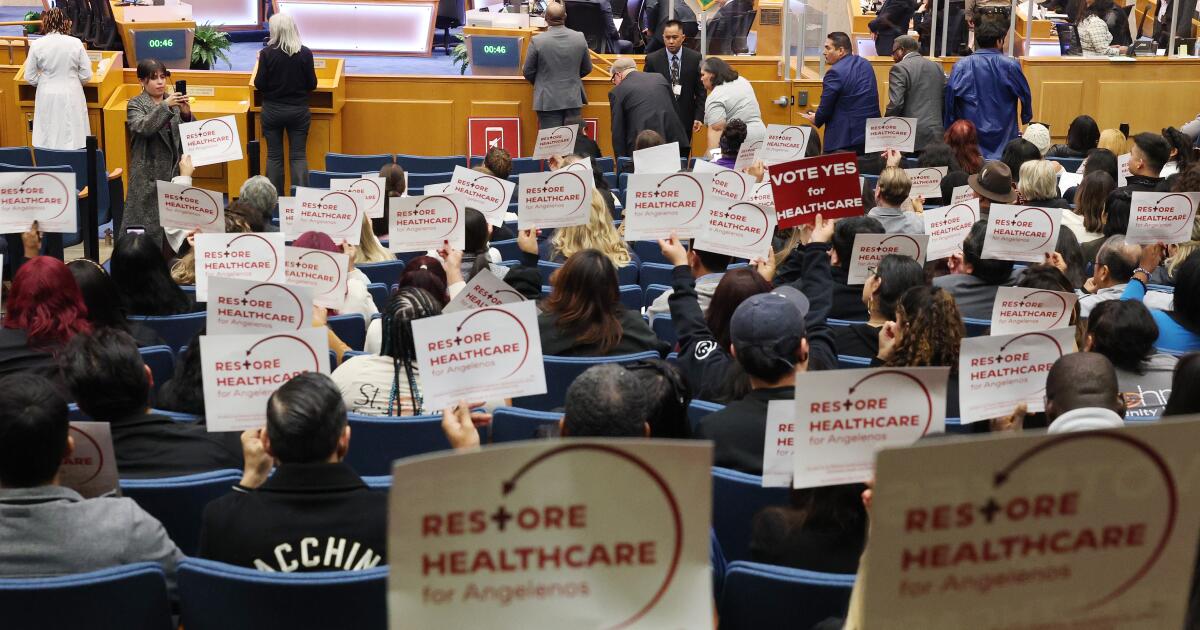
Supporters of L.A. County healthcare sales tax declare victory
-
 Sports40 minutes ago
USC freshman linebacker Talanoa Ili joins lawsuit seeking to upend new NIL system
-

 World48 minutes ago
Who has the most and fewest judges in the EU?
-
 News1 hour ago
In Nevada, Trump’s policies are making things tough for Republican Gov. Joe Lombardo

