World
IDF soldiers accuse UN peacekeepers of enabling Hezbollah terrorists amid increasing cease-fire violations


As Israel and Hezbollah implemented a fragile cease-fire deal, questions are resurfacing about United Nations (U.N.) peacekeepers’ failure to enforce U.N. Security Council Resolution 1701 and whether its continued presence will continue to favor the Iran-backed terror group.
The cease-fire, brokered by the U.S. and France, took effect on Nov. 27 and aims to halt over a year of conflict between Israel and Hezbollah. Under its terms, Hezbollah is required to withdraw north of the Litani River, and Israeli forces will pull back from southern Lebanon within 60 days. The agreement marks a significant step but faces immediate challenges, with both sides accusing the other of violations. Against this backdrop, the role of the United Nations Interim Force In Lebanon (UNIFIL) is facing renewed scrutiny.
On Monday, Hezbollah launched two projectiles at Mount Dov, alleging Israeli cease-fire violations. Responding to the launches, Prime Minister Benjamin Netanyahu stated in Hebrew on X: “Hezbollah’s fire toward Mount Dov constitutes a serious violation of the cease-fire, and Israel will respond forcefully. We are determined to continue enforcing the cease-fire and to respond to any violation by Hezbollah-whether minor or severe.”
The cease-fire agreement is being implemented under a five-nation monitoring committee led by the U.S. to oversee the de-escalation process – an arrangement that U.S. envoy Amos Hochstein has referred to as a “game-changer” in addressing longstanding limitations.
HEZBOLLAH’S NEIGHBORS: ISRAELI BORDER COMMUNITY UNDER CONSTANT ATTACK FROM TERROR GROUP
A Hezbollah weapons cache is located near a UNIFIL post by Israeli Defense Forces troops in southern Lebanon. (IDF Spokesman’s Unit.)
Javed Ali, a former U.S. counterterrorism official and an associate professor at the Gerald R. Ford School of Public Policy at the University of Michigan, highlighted UNIFIL’s challenges in enforcing U.N. Security Council resolution 1701. “The same issues are likely to manifest again under the revised UNSCR 1701, although in this current iteration, both the Lebanese Army and UNIFIL will be charged with overseeing the implementation of the resolution and ensuring that Hezbollah is unable to violate its terms or rebuild an operational infrastructure south of the Litani River that could once again threaten Israel.”
Ali also pointed to historical U.N. peacekeeping failures, such as those in Somalia, Rwanda and the Balkans, as cautionary examples. “In decades past, there are other examples of the limitations of U.N. peacekeeping elements to prevent either the outbreak or dramatic escalation of armed conflict between combatants in similarly small countries with complex ethnic, tribal, or religious divisions.”
A UNIFIL patrol drives past the wreckage of a car that was targeted in an Israeli strike early on March 2, 2024, near the southern Lebanese town of Naqoura. (AFP via Getty Images)
A documentary filmed in the southern Lebanon village of Houla a few weeks prior to the cease-fire captured Israeli reserve soldiers as they moved cautiously from house to house, clearing each room as they advanced through a Hezbollah stronghold. Gunfire erupted suddenly, forcing the troops to take cover as Hezbollah terrorists fired at them from nearby homes. The exchange intensified, with bullets cutting through the air, when an unexpected sight left the soldiers stunned: a UNIFIL convoy driving directly into the firefight.
The white U.N. vehicle crossed the road separating the Israeli soldiers from Hezbollah fighters, coming to a halt amid the smoke and chaos. A UNIFIL peacekeeper stepped out, seemingly oblivious to the life-threatening battle unfolding around him. “It was a total surprise. The IDF soldiers were shocked,” said Itai Anghel, an Israeli journalist embedded with the Israeli Defense Forces (IDF). “The timing of the convoy’s arrival, as well as its route, made the soldiers suspect coordination with Hezbollah.”
WHAT IS THE DIFFERENCE BETWEEN THE MIDDLE EAST’S HEZBOLLAH AND HAMAS GROUPS?
The Palestinian flag and the flag of Hezbollah wave in the wind on a pole as peacekeepers from the UNIFIL patrol the border area between Lebanon and Israel on Hamames Hill in the Khiyam area of southern Lebanon on Oct. 13, 2023. (Photo by JOSEPH EID/AFP via Getty Images)
Anghel, a veteran war reporter for the Israeli TV program “Uvda,” described the bizarre scene. “This was not my first time in Houla. I documented the battle here during the Second Lebanon War 18 years ago, but this time, it was worse,” he said. “Every second or third house in the village was packed with weapons – RPGs, rockets, tunnels – all aimed at storming Israeli villages just a few kilometers away.”
As the battle raged, Anghel witnessed the soldiers’ frustrations with UNIFIL’s presence. “They don’t trust them,” he told Fox News Digital. “One soldier even told me, ‘If we leave these villages for UNIFIL to manage, it will all revert to how it was before – nothing will change.’”
An IDF official told Fox News Digital that during the 14 months of fighting in South Lebanon, “We’ve seen Hezbollah use U.N. convoys to get close to the border – a Hezbollah car just entered the convoy and tagged along with them to safely gather intelligence. Cameras operated by Hezbollah have even been found on the fences of UNIFIL facilities. In one case, we discovered a massive tunnel just a few meters from a UNIFIL base. Think of the noise and effort required to dig a tunnel in stone – it’s impossible they didn’t know.”
A former special unit IDF fighter, who asked to stay anonymous, described what he witnessed during his service in southern Lebanon. “We’d see UNIFIL on one side and Hezbollah just meters away on the other,” he said. “Over time, Hezbollah became bolder, setting up tents right on the border. Everyone played the game – they knew Hezbollah was there, walking freely among them. And nothing was done.”
UNIFIL responded to the criticism by emphasizing its limited mandate. “The implementation of Resolution 1701 is the responsibility of the parties, Lebanon and Israel,” Andrea Teneti, a UNIFIL spokesperson, said. “UNIFIL supports the parties’ implementation, monitors, and reports on violations. We do not have the mandate to enforce the resolution, nor to disarm Hezbollah by force.”
The spokesperson pointed to the unprecedented period of stability from 2006 to 2023 as evidence of UNIFIL’s contributions, despite both parties failing to implement their obligations. UNIFIL acknowledged that the proliferation of weapons outside state control in southern Lebanon remains a violation of Resolution 1701, adding, “The removal of unauthorized weapons can only be achieved through the full implementation of Resolution 1701. There is no military solution.”
ISRAEL DEGRADES IRAN-BACKED HEZBOLLAH TERRORISTS IN SPECTACULAR PAGER EXPLOSION OPERATION: EXPERTS
Mourners raise their hands and chant slogans during the funeral procession of Hezbollah fighters who were killed in Friday’s Israeli strike, in the southern suburb of Beirut on Saturday, Sept. 21, 2024. (AP Photo/Bilal Hussein)
“Since UNSCR 1701’s implementation, Hezbollah has successfully circumvented nearly all its conditions,” Ali told Fox New Digital, adding “By doing so, the group was able to create fortified bunkers, weapons caches, command posts for mobile fighting squads, and firing positions for rockets, mortars, and other projectiles used to attack Israeli civilian and military targets – which increased exponentially in the aftermath of October 7, 2023. By all accounts, UNIFIL did little to prevent this operational buildup or prevent the escalation in Hezbollah attacks after October 7.”
Following Hamas’s Oct. 7 attack on Israel, Hezbollah opened another front in the war along the northern border, launching hundreds of rockets, anti-tank missiles and UAVs into Israeli territory. Alarmingly, many of these attacks originated near UNIFIL bases. “Over 430 Hezbollah projectiles have landed in and around UNIFIL outposts,” an IDF military official reported. “Yet the U.N. has only twice named Hezbollah explicitly as responsible for these attacks.”
“The actions of both the IDF and Hezbollah are putting peacekeepers in danger, whether through crossfire or deliberate acts”, said Teneti. “We name a party only when we are sure about the source of fire impacting the mission and Hezbollah has been mentioned several times as responsible for some of those attacks.”
The IDF has provided Fox News Digital with further evidence of Hezbollah’s violations, including fortified positions and training centers. In one instance, a Hezbollah facility packed with weapons and attack plans was discovered just 200 meters from a UNIFIL base. “You had to walk past the facility to even reach the U.N. base,” an IDF officer noted.
The IDF said its “soldiers are continuing to conduct limited, localized, targeted raids in southern Lebanon, eliminating Hezbollah terrorists and dismantling terror infrastructure and weapons stockpiles both above and below ground.” (IDF spokesman’s unit)
Michael, a former Danish soldier who served with the United Nations Truce Supervision Organization, reflected on his time in southern Lebanon. “Hezbollah controlled all the areas we were supposed to monitor,” he told the Danish newspaper BT. “We couldn’t operate at night out of fear, and taking photos was prohibited. Despite daily reports of violations, nothing happened.”
As more violations of the cease-fire are reported, Israeli officials are concerned that Hezbollah’s continued presence in southern Lebanon will lead to renewed violence, while UNIFIL insists its role is limited to monitoring and reporting.
Experts believe that for now, the ceasefire has provided a momentary reprieve, but whether it can hold remains uncertain. With Hezbollah entrenched and Israel skeptical of UNIFIL’s efficacy, the peacekeeping mission’s role is more critical – and contested – than ever.



NEWYou can now listen to Fox News articles!
The United Nations Human Rights Council (UNHRC) abruptly cut off a video statement after the speaker began criticizing several United Nations officials, including one who has been sanctioned by the Trump administration. The video message was being played during a U.N. session in Geneva, Switzerland, Friday morning.
Anne Bayefsky, director of the Touro Institute on Human Rights and the and president of Human Rights, called out several U.N. officials in her message, including U.N. High Commissioner for Human Rights Volker Türk and special rapporteur Francesca Albanese, who is the subject of U.S. sanctions.
Secretary of State Marco Rubio announced sanctions against Albanese July 9, 2025, saying that she “has spewed unabashed antisemitism, expressed support for terrorism and open contempt for the United States, Israel and the West.”
“That bias has been apparent across the span of her career, including recommending that the ICC, without a legitimate basis, issue arrest warrants targeting Israeli Prime Minister Benjamin Netanyahu and former Defense Minister Yoav Gallant,” Rubio added.
Secretary of State Marco Rubio and Francesca Albanese (Getty Images)
“I was the only American U.N.-accredited NGO with a speaking slot, and I wasn’t allowed even to conclude my 90 seconds of allotted time. Free speech is non-existent at the U.N. so-called ‘Human Rights Council,’” Bayefsky told Fox News Digital.
Bayefsky noted the irony of the council cutting off her video in a proceeding that was said to be an “interactive dialogue,” an event during which experts are allowed to speak to the council about human rights issues.
“I was cut off after naming Francesca Albanese, Navi Pillay and Chris Sidoti for covering up Palestinian use of rape as a weapon of war and trafficking in blatant antisemitism. I named the prosecutor of the International Criminal Court, Karim Khan, who is facing disturbing sexual assault allegations but still unaccountable almost two years later. Those are the people and the facts that the United Nations wants to protect and hide,” Bayefsky told Fox News Digital.
“It is an outrage that I am silenced and singled out for criticism on the basis of naming names.”
Bayefsky’s statement was cut off as she accused Albanese and Navi Pillay, the former chair of the U.N. Independent International Commission of Inquiry on the Occupied Palestinian Territory; and Chris Sidoti, a commissioner of the U.N. Independent International Commission of Inquiry on the Occupied Palestinian Territory. She also slammed Khan, who has faced rape allegations. Khan has denied the sexual misconduct allegations against him.
Had her video message been played in full, Bayefsky would have gone on to criticize Türk’s recent report for not demanding accountability for the “Palestinian policy to pay to kill Jews, including Hamas terror boss Yahya Sinwar who got half a million dollars in blood money.”
When the video was cut short, Human Rights Council President Ambassador Sidharto Reza Suryodipuro characterized Bayefsky’s remarks as “derogatory, insulting and inflammatory” and said that they were “not acceptable.”
“The language used by the speaker cannot be allowed as it has exceeded the limits of tolerance and respect within the framework of the council which we all in this room hold to,” Suryodipuro said.
The Human Rights Council at the United Nations in Geneva, Switzerland, Feb. 26, 2025. (Denis Balibouse/Reuters)
MELANIA TRUMP TO TAKE THE GAVEL AT UN SECURITY COUNCIL IN HISTORIC FIRST
In response to Fox News Digital’s request for comment, Human Rights Council Media Officer Pascal Sim said the council has had long-established rules on what it considers to be acceptable language.
“Rulings regarding the form and language of interventions in the Human Rights Council are established practices that have been in place throughout the existence of the council and used by all council presidents when it comes to ensuring respect, tolerance and dignity inherent to the discussion of human rights issues,” Sim told Fox News Digital.
When asked if the video had been reviewed ahead of time, Sim said it was assessed for length and audio quality to allow for interpretation, but that the speakers are ultimately “responsible for the content of their statement.”
“The video statement by the NGO ‘Touro Law Center, The Institute on Human Rights and The Holocaust’ was interrupted when it was deemed that the language exceeded the limits of tolerance and respect within the framework of the council and could not be tolerated,” Sim said.
“As the presiding officer explained at the time, all speakers are to remain within the appropriate framework and terminology used in the council’s work, which is well known by speakers who routinely participate in council proceedings. Following that ruling, none of the member states of the council have objected to it.”
Flag alley at the United Nations’ European headquarters during the Human Rights Council in Geneva, Switzerland, Sept. 11, 2023. (Denis Balibouse/File Photo/Reuters)
UNRWA OFFICIALS LOBBY CONGRESSIONAL STAFFERS AGAINST TRUMP TERRORIST DESIGNATION THREAT
While Bayefsky’s statement was cut off, other statements accusing Israel of genocide and ethnic cleansing were allowed to be played and read in full.
This is not the first time that Bayefsky was interrupted. Exactly one year ago, on Feb. 27, 2025, her video was cut off when she mentioned the fate of Ariel and Kfir Bibas. Jürg Lauber, president of the U.N. Human Rights Council at the time, stopped the video and declared that Bayefsky had used inappropriate language.
Bayefsky began the speech by saying, “The world now knows Palestinian savages murdered 9-month-old baby Kfir,” and she ws almost immediately cut off by Lauber.
CLICK HERE TO DOWNLOAD THE FOX NEWS APP
“Sorry, I have to interrupt,” Lauber abruptly said as the video of Bayefsky was paused. Lauber briefly objected to the “language” used in the video, but then allowed it to continue. After a few more seconds, the video was shut off entirely.
Lauber reiterated that “the language that’s used by the speaker cannot be tolerated,” adding that it “exceeds clearly the limits of tolerance and respect.”
Last year, when the previous incident occurred, Bayefsky said she believed the whole thing was “stage-managed,” as the council had advanced access to her video and a transcript and knew what she would say.
Related Article


A post on X by European Parliament President Roberta Metsola has triggered a wave of misinformation linked to the EU’s €90 billion support loan to Ukraine, which is designed to help Kyiv meet its general budget and defence needs amid Russia’s ongoing invasion.
ADVERTISEMENT
ADVERTISEMENT
Hungary said earlier this week that it would block both the loan — agreed by EU leaders in December — and a new EU sanctions package against Moscow amid a dispute over oil supplies.
Shortly afterwards, Metsola posted on X that she had signed the Ukraine support loan on behalf of the parliament.
She said the funds would be used to maintain essential public services, support Ukraine’s defence, protect shared European security, and anchor Ukraine’s future within Europe.
The announcement triggered a wave of reactions online, with some claiming Hungary’s veto had been ignored, but this is incorrect.
Metsola did sign the loan on behalf of the European Parliament, but that’s only one step in the EU’s legislative process. Her signature does not mean the loan has been definitively implemented.
How the process works
In December, after failing to reach an agreement on using frozen Russian assets to fund Ukraine’s war effort, the European Council agreed in principle to provide €90 billion to help Kyiv meet its budgetary and military needs over the next two years.
On 14 January, the European Commission put forward a package of legislative proposals to ensure continued financial support for Ukraine in 2026 and 2027.
These included a proposal to establish a €90 billion Ukraine support loan, amendments to the Ukraine Facility — the EU instrument used to deliver budgetary assistance — and changes to the EU’s multiannual financial framework so the loan could be backed by any unused budgetary “headroom”.
Under EU law, these proposals must be adopted by both the European Parliament and the European Council. Because the loan requires amendments to EU budgetary rules, it ultimately needs unanimous approval from all member states.
Metsola’s signature therefore does not amount to a final decision, nor does it override Hungary’s veto.
The oil dispute behind Hungary’s opposition
Budapest says its objections are linked to a dispute over the Druzhba pipeline, a Soviet-era route that carries Russian oil via Ukraine to Hungary and Slovakia.
According to the Centre for Research on Energy and Clean Air (CREA), Hungary and Slovakia imported an estimated €137 million worth of Russian crude through the pipeline in January alone, under a temporary EU exemption.
Oil flows reportedly stopped in late January after a Russian air strike that Kyiv says damaged the pipeline’s southern branch in western Ukraine. Hungary disputes this, with Prime Minister Viktor Orbán accusing Ukraine of blocking it from being used.
Speaking in Kyiv alongside European Commission President Ursula von der Leyen and European Council President António Costa, Ukraine’s President Volodymyr Zelenskyy said the pipeline had been damaged by Russia, not Kyiv.
He added that repairs were dangerous and could not be carried out quickly without putting Ukrainian servicemen in danger.
Tensions escalated further after reports that Ukraine struck a Russian pumping station serving the pipeline. Orbán responded by ordering increased security at critical infrastructure sites, claiming Kyiv was attempting to disrupt Hungary’s energy system.

new video loaded: Pakistan Launches Airstrikes on Afghanistan
By Monika Cvorak
February 27, 2026

Denmark’s Prime Minister Calls For a Snap Parliamentary Election
1:36

Marco Rubio Says U.S. Is Probing Deadly Cuban Shooting
0:45

Amid Chaos in Mexico, False Images Stoked Fears
2:45

Violence in Mexico After Cartel Boss Is Killed
1:40

Violence Erupts Across Mexico After Cartel Boss Killed
0:58

The Japanese Airport That Doesn’t Lose Bags
2:59
Today’s Videos
U.S.
Politics
Immigration
NY Region
Science
Business
Culture
Books
Wellness
World
Africa
Americas
Asia
South Asia
Donald Trump
Middle East Crisis
Russia-Ukraine Crisis
Visual Investigations
Opinion Video
Advertisement
SKIP ADVERTISEMENT

The Best Time To Drink Coffee for Weight Loss and a Faster Metabolism

Video: Prada Peels Back the Layers at Milan Fashion Week

Defense secretary Pete Hegseth designates Anthropic a supply chain risk

UN Human Rights Council chief cuts off speaker criticizing US-sanctioned official

ICE blasts Washington mayor over directive restricting immigration enforcement

Florida High School Football Rankings: Top 25 teams – Oct. 21

Cleary's 21 help Le Moyne down Central Connecticut State 69-64 in OT

How old is Bo Nix? What to know about Oregon quarterback ahead of 2024 NFL Draft

99th annual Pony Swim held in Virginia

Indiana Members Credit Union announced as new anchor tenant at Bottleworks District
ICE blasts Washington mayor over directive restricting immigration enforcement

Did the EU bypass Hungary’s veto on Ukraine’s €90 billion loan?
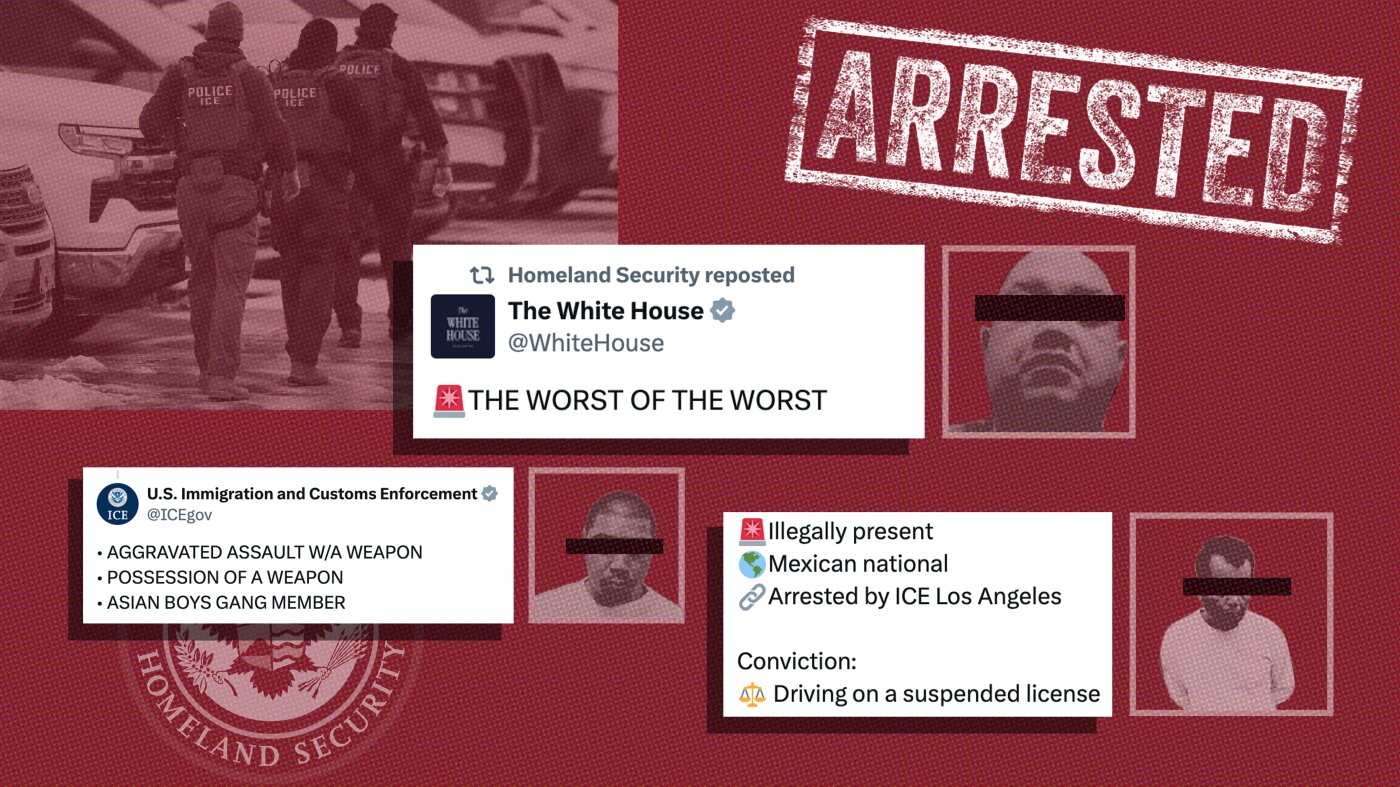
How the federal government is painting immigrants as criminals on social media

Where Iran’s ballistic missiles can reach — and how close they are to the US

Has India’s influence in Afghanistan grown under the Taliban?
-

 World2 days ago
Exclusive: DeepSeek withholds latest AI model from US chipmakers including Nvidia, sources say
-

 Massachusetts2 days ago
Mother and daughter injured in Taunton house explosion
-

 Montana1 week ago
2026 MHSA Montana Wrestling State Championship Brackets And Results – FloWrestling
-

 Louisiana5 days ago
Wildfire near Gum Swamp Road in Livingston Parish now under control; more than 200 acres burned
-

 Oklahoma1 week ago
Wildfires rage in Oklahoma as thousands urged to evacuate a small city
-

 Denver, CO2 days ago
10 acres charred, 5 injured in Thornton grass fire, evacuation orders lifted
-

 Technology7 days ago
YouTube TV billing scam emails are hitting inboxes
-

 Technology7 days ago
Stellantis is in a crisis of its own making