World
How Canada’s ‘off-the-record’ arms exports end up in Israel


Montreal, Canada – The United States has faced widespread condemnation this week for authorising the sale of more than $20bn in additional weapons to Israel as the top US ally wages war in the Gaza Strip.
But while the newly approved arms transfer has renewed global scrutiny of Washington’s unwavering support for Israel, in Canada, the announcement on Tuesday drew attention for a different reason.
That’s because more than $60m worth of munitions will be manufactured by a weapons company in Canada as part of that sale.
Canadian lawyers, rights advocates and other experts say this raises serious questions about the opaque nature of the country’s arms export regime.
They also say Canada’s participation in the arms deal makes clear that the country is failing to ensure that Canadian-made weapons are not used in suspected human rights violations abroad, as required by law.
“The news is appalling,” said Kelsey Gallagher, a researcher at the Canadian peace research group Project Ploughshares.
“Given Israel’s appalling track record of violating international humanitarian law through its operation in Gaza, including in some cases which may constitute war crimes, in no way is it appropriate for Canada to supply this ammunition,” Gallagher told Al Jazeera.
“Moreover, as per Canada’s obligations under the UN Arms Trade Treaty, it’s illegal.”
US-Canada defence partnership
How is it that Canadian-made munitions will be making their way to Israel? A special US-Canada trade relationship is at the heart of the issue, experts say.
Since the 1950s, the North American neighbours have enjoyed “mutually beneficial terms and conditions” on the trade of military weapons and related components via a bilateral deal called the Defence Production Sharing Agreement.
The US — Canada’s largest overall trading partner — today represents the largest market for Canadian-made defence goods, accounting for about 49.1 percent of all such exports.
When Canada joined the Arms Trade Treaty (ATT) in 2019, it sought to ensure that its accession to the United Nations pact wouldn’t affect its longstanding arms export regime with the US.
The ATT regulates and sets conditions for the global flow of arms, including a prohibition on signatories transferring weapons to another country if there is a plausible risk they could be used in violations of international humanitarian law, such as war crimes.
“Canada has benefited greatly from its privileged defence relationship with the United States, and it is important not to undermine this arrangement,” the Canadian government said in a statement when it joined the international treaty.
After joining the ATT, Canada put some limited reporting requirements in place when certain weapons systems are sold to the US. Still, it does not report on most transfers to its southern neighbour, nor does it require specific permits for them.
In effect, “Canada and the United States have reciprocal arrangements to ensure permit-free/licence-free movement of most military items between our two countries”, the Canadian government says on its website.
‘Flawed’ export controls
Canadian human rights advocates have denounced this lack of transparency for years, dubbing it a dangerous “loophole” to the Canadian arms export system.
The obscure nature of Canadian arms transfers to the US is also why this week’s news — that a company based in the province of Quebec would be the main contractor for the $61.1m in munitions to Israel — came as a surprise to many observers in Canada.
In its announcement, the US’s Defense Security Cooperation Agency (DSCA) said that General Dynamics Ordnance and Tactical Systems Inc would supply tens of thousands of “M933A1 120mm High Explosive Mortar Cartridges and related equipment”.
Gallagher, the researcher, said Canadians would likely have never known that the weapons were bound for Israel if the US government hadn’t revealed the information itself.
“Because these [weapons] are being sent through the US to Israel, these will almost certainly face no regulatory oversight by Canadian officials,” he said.
“And in addition to that, they will not be included in Canada’s official reporting of its arms exports to Israel,” Gallagher continued. “These will be off the record, except from this reporting from the DSCA.”
The announcement also came as Canada — along with other Western countries that provide military support for Israel, most notably the US — is facing growing calls to impose an arms embargo on Israel amid the Gaza war.
After Canada’s Parliament passed a non-binding motion in March urging a suspension of arms transfers to Israel, Canadian Foreign Minister Melanie Joly said the government would not authorise any new permits for weapons exports to the country.
But rights advocates quickly questioned why existing permits weren’t also being revoked, and some asked how the government’s pledge would affect transfers of weapons to the US that do not require permits, yet could end up in Israel.
Canada’s foreign affairs department, Global Affairs Canada, did not respond to Al Jazeera’s questions about the US government’s announcement in time for publication.
Henry Off, a Toronto-based lawyer and board member of the group Canadian Lawyers for International Human Rights (CLAIHR), said the news highlights “how flawed [Canada’s] arms export system is”.
It demonstrates “how easily [arms] can end up in Israel just because they can go through the United States”, he explained.
Off’s group is currently involved in an ongoing lawsuit against Joly, demanding an end to Canadian weapons shipments to Israel.
“Canada is legally obligated not to allow these transfers,” he told Al Jazeera.
“We know that these arms and weapons parts are used to commit serious violations of international humanitarian law and human rights law, and this is just another example of how Canada has failed to meet its international legal commitments and its domestic legal commitments.”
‘Hold both US, Israel accountable’
Canada’s involvement in the supply of weapons to Israel has also drawn concern from Palestinian rights advocates in the US who say they have tried for months to get the administration of President Joe Biden to stop sending arms — to no avail.
The US provides $3.8bn in military assistance to Israel annually, and Biden’s administration has approved additional weapons sales and other aid to the country several times since the Gaza war began in early October.
Raed Jarrar, advocacy director at Democracy for the Arab World Now, a Washington-based think tank, said the US is violating its own laws by refusing to stop the arms transfers despite evidence they are being used in Israeli rights abuses against Palestinians.
Israeli forces have dropped American-made bombs on Gaza over the course of the war, according to investigations by US media and rights groups, killing scores of Palestinian civilians.
“The United States has lost its moral capital. It has lost its political capital and its leadership when it comes to its blind support to Israel,” Jarrar told Al Jazeera. “And Canada cannot rely on US mechanisms for accountability.”
He said authorities in Canada should step in to ensure that no weapons and equipment manufactured by Canadian companies are contributing to abuses against Palestinians.
“All countries, including Canada, have a moral, ethical and legal obligation to disrupt the supply chain of genocide,” Jarrar said.
“As an organisation based in the United States, I can confirm we have done everything possible to convince our government to adhere by our law, by international law — and we have failed,” he concluded.
“The same way that Israel is unable to hold Israel accountable, the United States is unable to hold the United States accountable. It is time for other countries to hold both Israel and the United States accountable.”



DUBAI, United Arab Emirates (AP) — Iran has received an American 15-point plan for a ceasefire for the Iran war through intermediaries from Pakistan, officials in Islamabad said Wednesday. The proposal was sent even as Washington began to move paratroopers to the Middle East to back up a contingent of Marines already heading there.
Iran’s military scoffed at the diplomatic efforts and launched more attacks Wednesday on Israel and the Persian Gulf region, including an assault that sparked a huge fire at Kuwait International Airport, sending black smoke billowing into the sky.
The Pakistani officials, speaking on condition of anonymity because they weren’t authorized to release details, described the 15-point plan broadly as touching on sanctions relief, civilian nuclear cooperation, a rollback of Iran’s nuclear program, monitoring by the International Atomic Energy Agency, missile limits and access for shipping through the Strait of Hormuz.
Iran’s attacks on regional energy infrastructure and its chokehold on the Strait of Hormuz, a strategic waterway through which a fifth of the world’s oil is shipped, has sent oil prices skyrocketing and rocked world markets over fears of a global energy crisis.
More US troops on the way even as diplomacy continues
At least 1,000 troops from the 82nd Airborne Division will be sent top the Mideast in the coming days, three people with knowledge of the plans told The Associated Press.
The Pentagon is also in the process of deploying two Marine units that will add about 5,000 Marines and thousands of sailors to the region. The moves are being framed as U.S. President Donald Trump maneuvering to give himself “max flexibility” on what he will do next, the person added.
Trump has said that American officials are in negotiations with Iran, though he hasn’t said who they are in contact with. Iran’s Khatam Al-Anbiya Central Headquarters, which commands both the regular military and the paramilitary Revolutionary Guard, suggested there are no talks.
“Have your internal conflicts reached the point where you are negotiating with yourselves?” said Lt. Col. Ebrahim Zolfaghari, a spokesman for the headquarters.
“Our first and last word has been the same from day one, and it will stay that way: Someone like us will never come to terms with someone like you,” Zolfaghari said in the video statement aired on state television. “Not now, not ever.”
Israeli officials, who have been advocating for Trump to continue the war against Iran, were surprised by the submission of a ceasefire plan, the official said.
The White House did not respond to requests for comment.
Israel launches new wide-scale strikes on Iran
The Israeli military announced it had begun new wide-scale attacks early Wednesday on Iran targeting government infrastructure, and witnesses reported airstrikes in the northwestern city of Qazvin.
Missile alert sirens began early in the morning in Israel as Iran launched its own attacks, which have been a daily occurrence since Israel and the U.S. attacked Iran on Feb. 28 to start the war.
Iran also kept up the pressure on its Gulf Arab neighbors, with Saudi Arabia’s Defense Ministry saying it had destroyed at least eight drones in the kingdom’s oil-rich Eastern Province, and missile alert sirens sounding in Bahrain.
Kuwait said it shot down multiple drones but one hit a fuel tank at Kuwait International Airport, sparking a fire, the General Civil Aviation Authority said. Firefighters were working to contain the blaze.
Iran has allowed a small number of ships through the Strait of Hormuz, which leads from the Persian Gulf to the open ocean, but none from the U.S., Israel or countries seen as linked with them.
Asked in an interview with India Today on Tuesday whether Iran was charging ships for passage, Iranian Foreign Ministry spokesperson Esmail Baghaei said “absolutely,” but did not elaborate.
Brent crude oil, the international standard, has neared US$120 a barrel during the conflict but was trading at around $100 in morning trading as talks of a possible ceasefire helped calm prices. That’s still up nearly 40% from the start of the war.
Diplomatic efforts calm energy prices but face huge hurdles
The 15-point plan now in Iranian hands is, in essence, “a comprehensive deal” to reach a ceasefire in the war, according to an Egyptian official involved in the mediation efforts.
In addition to allowing traffic through the Strait of Hormuz, it also includes restrictions on Iran’s missile program and its arming of armed groups, and “is being treated” as the basis for further negotiations between the nations, according to the official who spoke on condition of anonymity to discuss the yet-publicized details of the proposal
Any talks between the U.S. and Iran would face monumental challenges. Many of Washington’s shifting objectives, particularly over Iran’s ballistic missile and nuclear programs, remain difficult to achieve.
Also, it’s not clear who in Iran’s government has the authority to negotiate — or would be willing to, as Israel has vowed to continue killing the country’s leaders.
Mediators are pushing for a possible in-person negotiation between the Iranians and the Americans, perhaps as soon as Friday in Pakistan, the Egyptian official and the two Pakistani officials said.
However, that would require the Americans to immediately start traveling from the U.S. to be there in time. Meanwhile, Iranian officials likely remain worried about the Israelis, whose airstrikes in the war have killed officials up to Supreme Leader Ayatollah Ali Khamenei.
Iran is also highly suspicious of the United States, which twice under the Trump administration has attacked during high-level diplomatic talks, including with the strikes that started the current war.
“We have a very catastrophic experience with U.S. diplomacy,” Baghaei told India Today, adding that Foreign Minister Abbas Araghchi had been in contact with Pakistani and other regional diplomats but that “there are no talks or negotiations between Iran and the United States.”
Zolfaghari said that the U.S. was in no position to negotiate.
“The strategic power you used to talk about has turned into a strategic failure,” he said. “The one claiming to be a global superpower would have already gotten out of this mess if it could.”
Speaking Tuesday at the White House, Trump said the U.S. is “in negotiations right now” and that the participants included special envoy Steve Witkoff, his son-in-law Jared Kushner, Secretary of State Marco Rubio and Vice President JD Vance.
“We have a number of people doing it,” Trump said. “And the other side, I can tell you, they’d like to make a deal.”
In an overnight call, Saudi Arabia’s powerful crown prince spoke to Pakistan’s prime minister about Islamabad’s efforts at supporting ceasefire talks.
The state-run Saudi Press Agency said Crown Prince Mohammed bin Salman, the day-to-day ruler of the kingdom, discussed the “the repercussions of the ongoing military escalation on the security and stability of the region and the world” with Pakistani Prime Minister Shehbaz Sharif.
When Trump was previously asked about reports that Saudi Arabia had been pushing him to continue the fight, the U.S. president called Prince Mohammed “a warrior.”
“He’s fighting with us, by the way,” Trump said, without elaborating. “Saudi Arabia has been excellent and UAE — excellent. And I will tell you, Qatar, incredible.”
Authorities say Israeli strikes have killed more than 1,000 people in Lebanon and displaced more than 1 million.
Iran’s death toll has surpassed 1,500, its Health Ministry has said. In Israel, 16 people have been killed. At least 13 U.S. military members have been killed, along with more than a dozen civilians in the occupied West Bank and Gulf Arab states.
___
Madhani reported from Washington, Rising from Bangkok and Ahmed from Islamabad. Associated Press writer Samy Magdy in Cairo contributed to this report.
World
US military sends drones, alongside 200 troops, to Nigeria amid fears of renewed Boko Haram insurgency

NEWYou can now listen to Fox News articles!
The U.S. military has sent MQ-9 Reaper drones to Nigeria, a U.S. defense official reportedly told The Associated Press, as fears are growing of a renewed insurgency by the terrorist group Boko Haram.
The drones were deployed after 200 U.S. troops arrived in Nigeria last month to provide training and intelligence. Nigeria, Africa’s most populous country, is battling a complex security crisis, especially in the north of the country.
A spokesperson for AFRICOM, the U.S. Africa Command, told the AP that U.S. troops “are working alongside their Nigerian counterparts to provide intelligence support, advisory assistance, and targeted training in support of the Nigerian Armed Forces.”
Among the most prominent Islamic militant groups active in Nigeria are Boko Haram and its breakaway faction, which is affiliated with the Islamic State and is known as Islamic State West Africa Province, or ISWAP.
NIGERIA SUICIDE BOMBINGS KILL AT LEAST 23 PEOPLE, WOUND MORE THAN 100
A U.S. military MQ-9 Reaper drone approaches for landing at Rafael Hernandez Airport in Aguadilla, Puerto Rico, on Dec. 29, 2025. (Miguel J. Rodriguez Carrillo/AFP via Getty Images)
There is also the ISIS-linked Lakurawa, as well as other “bandit” groups that specialize in kidnapping for ransom and illegal mining.
The U.S. troops and the MQ-9 drones are based at Bauchi Airfield, a newly built airport in the northeast of the country, the spokesperson said to the AP. The number of drones deployed remains unclear.
The deployment is part of a new security partnership agreed on after President Donald Trump sounded the alarm about Christians being slaughtered in Nigeria’s security crisis.
The U.S. launched strikes against IS forces on Dec. 26 — the day after Christmas.
Earlier this month, three suspected suicide bombings killed at least 23 people and wounded 108 others in Maiduguri, the capital of Borno state in northeastern Nigeria. No group claimed responsibility, but suspicion quickly fell on Boko Haram, which in 2009 launched an insurgency in northeastern Nigeria to enforce Sharia law.
100 US TROOPS LAND IN NIGERIA AS ISLAMIC MILITANTS THREATEN WEST AFRICA REGIONAL SECURITY
Residents and a motorcyclist move between destroyed structures in Offa on Dec. 27, 2025, caused by debris from expended munitions that fell from U.S. strikes on unspecified militants linked to the Islamic State group in Nigeria. (Abiodun Jamiu/AFP via Getty Images)
MQ-9 drones cost around $30 million apiece and have separate models for land and sea. They can also be used to carry out airstrikes, but AFRICOM says they will only be used in Nigeria for intelligence-gathering and training.
The Office of the Director of National Intelligence says Boko Haram aims to “overthrow the current Nigerian Government and replace it with a regime based on Islamic law.”
A policeman walks among protesters as civil society groups and the Nigeria Labour Congress hold a peaceful protest over insecurity in Ikeja, Lagos, Nigeria, on Dec. 17, 2025. (Adekunle Ajayi/NurPhoto via Getty Images)
“The U.S. State Department designated Boko Haram a Foreign Terrorist Organization in November 2013,” it added.
The Associated Press contributed to this report.

A fake Euronews-style article and website claiming that Hungary’s opposition leader Péter Magyar insulted Donald Trump is circulating online as part of a wider campaign researchers have linked to Storm-1516, a Russian disinformation operation.
ADVERTISEMENT

ADVERTISEMENT
The article, which utilises a real byline and appeared on a fake Euronews website that has since been taken down, claims that Magyar delivered a blistering critique of Trump at a campaign rally.
Among other false claims, the article says Magyar called Trump a “senile grandpa” and promised to undo “key agreements” made with the US, should Magyar win parliamentary elections in Hungary scheduled on 12 April.
The article’s contents are fabricated and the website it appeared on have no connection to Euronews.
A video report that repeats the claim using Euronews’ branding is also circulating on social media. The Cube, Euronews’ fact-checking team, found examples of this clip circulating since Monday evening, some with thousands of views.
The videos were posted by accounts with similar captions in quick succession, implying they are part of a coordinated campaign. The accounts that posted the clip were largely anonymised, with X’s location tool showing they are based in the US and Africa.
Researchers at Antibot for Navalny, a collective that tracks Russian bot networks online, told The Cube that the post was part of Storm-1516, a prolific Russian disinformation campaign that spreads claims online that further the interests of the Russian government.
The group are typically active during election campaigns, having spread false claims about Democratic Party candidates in the 2024 US presidential election and during Germany’s February 2025 elections.
In December, Germany’s Foreign Minister summoned the country’s Russian ambassador over allegations of repeated Russian hybrid attempts in Germany including allegations that Storm 1516 actively spread disinformation during the country’s general elections.
At the time, the campaign focused on Chancellor candidate for the Greens, Robert Habeck, and current German Chancellor Friedrich Merz.
Hungary’s upcoming parliamentary elections will see Magyar’s Tisza Party pitted against current Hungarian Prime Minister Viktor Orbán.
Magyar has accused Hungary’s secret service of targeting his party’s campaign systems just weeks before the election date in a hostile election campaign in which polls suggest his party is ahead.
Orbán, meanwhile, has become embroiled in scandal in Brussels after a Washington Post investigation revealed Foreign Minister Péter Szijjártó regularly leaked sensitive information from high-level European Union meetings to Moscow.
Orbán has maintained close ties to the Kremlin despite the resistance of other European leaders and has utilised Hungary’s veto power to block key decisions on European aid to Ukraine.

Risk of severe storms across SE Michigan on Thursday — here’s what to know

1 dead in house fire in San Francisco’s Portola neighborhood

Convicted SMU Stalker Sues Dallas County For 183-Day Jail Overstay

TSA wait times hit

More record breaking temperatures across the Denver metro area

Florida High School Football Rankings: Top 25 teams – Oct. 21

How old is Bo Nix? What to know about Oregon quarterback ahead of 2024 NFL Draft

Cleary's 21 help Le Moyne down Central Connecticut State 69-64 in OT

99th annual Pony Swim held in Virginia

Indiana Members Credit Union announced as new anchor tenant at Bottleworks District

LaGuardia Crash Timeline: Moments Before Air Canada Plane Collided With Fire Truck

Chicago alderwoman apologizes for ‘wrong place at the wrong time’ comment on slain student

Fake Euronews website targets Hungary election with false claims
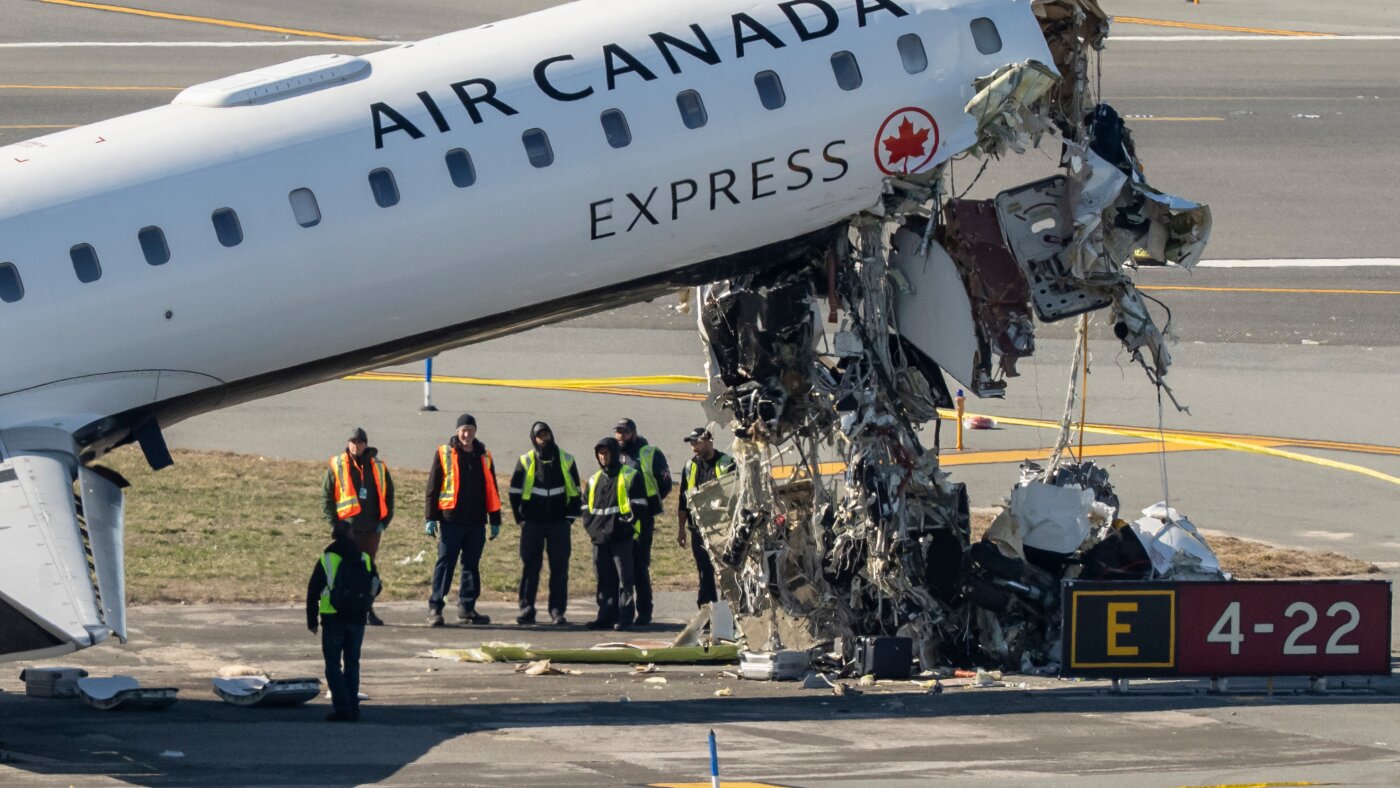
An air traffic controller was juggling extra roles during the LaGuardia plane crash

Iran War: Pentagon set to send thousands of elite 82nd Airborne troops to region | BBC News
-

 Detroit, MI7 days ago
Drummer Brian Pastoria, longtime Detroit music advocate, dies at 68
-

 Georgia1 week ago
How ICE plans for a detention warehouse pushed a Georgia town to fight back | CNN Politics
-

 Movie Reviews6 days ago
‘Youth’ Twitter review: Ken Karunaas impresses audiences; Suraj Venjaramoodu adds charm; music wins praise | – The Times of India
-

 Education1 week ago
Video: Turning Point USA Clubs Expand to High Schools Across America
-

 Sports4 days ago
IOC addresses execution of 19-year-old Iranian wrestler Saleh Mohammadi
-
 Science1 week ago
Industrial chemicals have reached the middle of the oceans, new study shows
-

 Science1 week ago
How a Melting Glacier in Antarctica Could Affect Tens of Millions Around the Globe
-

 Culture1 week ago
Test Your Memory of Great Lines From Classic Irish Poems