World
Former FBI Director Robert Mueller, who investigated Russia-Trump campaign ties, dies


WASHINGTON (AP) — Robert S. Mueller III, the FBI director who transformed the nation’s premier law enforcement agency into a terrorism-fighting force after the Sept. 11, 2001, attacks and who later became special counsel in charge of investigating ties between Russia and Donald Trump’s presidential campaign, has died. He was 81.
“With deep sadness, we are sharing the news that Bob passed away” on Friday night, his family said in a statement Saturday. “His family asks that their privacy be respected.”
At the FBI, Mueller set about almost immediately overhauling the bureau’s mission to meet the law enforcement needs of the 21st century, beginning his 12-year tenure just one week before the Sept. 11 attacks and serving across presidents of both political parties. He was nominated by Republican President George W. Bush.
The cataclysmic event instantaneously switched the bureau’s top priority from solving domestic crime to preventing terrorism, a shift that imposed an almost impossibly difficult standard on Mueller and the rest of the federal government: preventing 99 out of 100 terrorist plots wasn’t good enough.
Later, he was special counsel in the Justice Department’s investigation into whether the Trump campaign illegally coordinated with Russia to sway the outcome of the 2016 presidential race. Mueller was a patrician Princeton graduate and Vietnam veteran who walked away from a lucrative midcareer job to stay in public service, and his old-school, buttoned-down style made him an anachronism during a social media-saturated era.
Trump posted on social media after the announcement of Mueller’s death: “Robert Mueller just died. Good, I’m glad he’s dead.” The Republican president added, “He can no longer hurt innocent people!”
The FBI did not immediately respond to a request seeking comment. The FBI Agents Association cited Mueller’s “commitment to public service and to the FBI’s mission.“
A second act as an investigator of a sitting president
The second-longest-serving director in FBI history, behind only J. Edgar Hoover, Mueller held the job until 2013 after agreeing to Democratic President Barack Obama’s request to stay on even after his 10-year term was up.
After several years in private practice, Mueller was asked by Deputy Attorney General Rod Rosenstein to return to public service as special counsel in the Trump-Russia inquiry.
Mueller’s stern visage and taciturn demeanor matched the seriousness of the mission, as his team spent nearly two years quietly conducting one of the most consequential, yet divisive, investigations in Justice Department history. He held no news conferences and made no public appearances during the investigation, remaining quiet despite attacks from Trump and his supporters and creating an aura of mystery around his work.
All told, Mueller brought criminal charges against six of the president’s associates, including his campaign chairman and first national security adviser.
His 448-page report released in April 2019 identified substantial contacts between the Trump campaign and Russia but did not allege a criminal conspiracy. Mueller laid out damaging details about Trump’s efforts to seize control of the investigation, and even shut it down, though he declined to decide whether Trump had broken the law, in part because of department policy barring the indictment of a sitting president.
But, in perhaps the most memorable language of the report, Mueller pointedly noted: “If we had confidence after a thorough investigation of the facts that the president clearly did not commit obstruction of justice, we would so state. Based on the facts and the applicable legal standards, we are unable to reach that judgment.”
The nebulous conclusion did not deliver the knockout punch to the administration that some Trump opponents had hoped for, nor did it trigger a sustained push by House Democrats to impeach the president — though he was later tried and acquitted on separate allegations related to Ukraine.
The outcome also left room for Attorney General William Barr to insert his own views. He and his team made their own determination that Trump did not obstruct justice, and he and Mueller privately tangled over a four-page summary letter from Barr that Mueller felt did not adequately capture his report’s damaging conclusion.
Mueller deflated Democrats during a highly anticipated congressional hearing on his report when he offered terse, one-word answers and appeared uncertain in his testimony. Frequently, he seemed to waver on details of his investigation. It was hardly the commanding performance many had expected from Mueller, who had a towering reputation in Washington.
Over the next months, Barr made clear his own disagreements with the foundations of the Russia investigation, moving to dismiss a false-statements prosecution that Mueller had brought against former national security adviser Michael Flynn, even though that investigation ended in a guilty plea.
Mueller’s tenure as special counsel was the capstone of a career spent in government.
FBI transformed into a national security agency
His time as FBI director was defined by the Sept. 11 attacks and its aftermath, as an FBI granted broad new surveillance and national security powers scrambled to confront an ascendant al-Qaida and interrupt plots and take terrorists off the street before they could act.
It was a new model of policing for an FBI that had long been accustomed to investigating crimes that had already occurred.
When he became FBI director, “I had expected to focus on areas familiar to me as a prosecutor: drug cases, white-collar criminal cases and violent crime,” Mueller told a group of lawyers in October 2012.
Instead, “we had to focus on long-term, strategic change. We had to enhance our intelligence capabilities and upgrade our technology. We had to build upon strong partnerships and forge new friendships, both here at home and abroad.”
In response, the FBI shifted 2,000 of the total 5,000 agents in the bureau’s criminal programs to national security.
In hindsight, the transformation was a success. At the time, there were problems, and Mueller said as much. In a speech near the end of his tenure, Mueller recalled “those days when we were under attack by the media and being clobbered by Congress; when the attorney general was not at all happy with me.”
Among the issues: The Justice Department’s inspector general found that the FBI circumvented the law to obtain thousands of phone call records for terrorism investigations.
Mueller decided that the FBI would not take part in abusive interrogation techniques of suspected terrorists, but the policy was not effectively communicated down the line for nearly two years. In an effort to move the FBI into a paperless environment, the bureau spent over $600 million on two computer systems — one that was 2½ years overdue and a predecessor that was only partially completed and had to be scrapped after consultants declared it obsolete and riddled with problems.
For the nation’s top law enforcement agency, it was a rocky trip through rough terrain.
But there were many successes as well, including thwarted terror plots and headline-making criminal cases like the one against fraudster Bernie Madoff. The Republican also cultivated an apolitical reputation on the job, nearly quitting in a clash with the Bush administration over a surveillance program that he and his successor, James Comey, considered unlawful.
He famously stood alongside Comey, then deputy attorney general, during a dramatic 2004 hospital standoff over federal wiretapping rules. The two men planted themselves at the bedside of the ailing Attorney General John Ashcroft to block Bush administration officials from making an end run to get Ashcroft’s permission to reauthorize a secret no-warrant wiretapping program.
In an extraordinary vote of confidence, Congress, at the Obama administration’s request, approved a two-year extension for Mueller to remain at his post.
A Marine who served in Vietnam before becoming a prosecutor
Mueller was born in New York City and grew up in a well-to-do suburb of Philadelphia.
He received a bachelor’s degree from Princeton and a master’s degree in international relations from New York University. He then joined the Marines, serving for three years as an officer during the Vietnam War. He led a rifle platoon and was awarded a Bronze Star, Purple Heart and two Navy Commendation Medals. Following his military service, Mueller earned a law degree from the University of Virginia.
Mueller became a federal prosecutor and relished the work of handling criminal cases. He rose quickly through the ranks in U.S. attorneys’ offices in San Francisco and Boston from 1976 to 1988. Later, as head of the Justice Department’s criminal division in Washington, he oversaw a range of high-profile prosecutions that chalked up victories against targets as varied as Panamanian dictator Manuel Noriega and New York crime boss John Gotti.
In a mid-career switch that shocked colleagues, Mueller threw over a job at a prestigious Boston law firm to join the homicide division of the U.S. attorney’s office in the nation’s capital. There, he immersed himself as a senior litigator in a bulging caseload of unsolved drug-related murders in a city rife with violence.
Mueller was driven by a career-long passion for the painstaking work of building successful criminal cases. Even as head of the FBI, he would dig into the details of investigations, some of them major cases but others less so, sometimes surprising agents who suddenly found themselves on the phone with the director.
“The management books will tell you that as the head of an organization, you should focus on the vision,” Mueller once said. But “for me there were and are today those areas where one needs to be substantially personally involved,” especially in regard to “the terrorist threat and the need to know and understand that threat to its roots.”
Two terrorist attacks occurred toward the end of Mueller’s watch: the Boston Marathon bombing and the Fort Hood shootings in Texas. Both weighed heavily on him, he acknowledged in an interview two weeks before his departure.
“You sit down with victims’ families, you see the pain they go through and you always wonder whether there isn’t something more” that could have been done, he said.
___ Associated Press writer Nicholas Riccardi in Denver contributed to this report.



Gazans react to the killings of Hamas terror leaders
Interviews with Gazans expressing frustration with Hamas leadership after Israel’s killing of senior commanders, as many residents say civilians — not Hamas leaders — have paid the price of the war (Credit: Jusoor News)
NEWYou can now listen to Fox News articles!
Just before celebrations for Eid al-Adha, a major Muslim holiday, began in Gaza, an Israeli airstrike hit a building in Gaza City, killing Mohammed Odeh, the newly appointed head of Hamas’ military wing, according to Israeli officials and later confirmed by Hamas.
Reports from regional media said members of Odeh’s family were also killed in the strike. Two hours later, Gaza’s markets were full.
Fox News Digital reviewed video filmed in Gaza showing crowded Eid streets, children shopping and families gathering, with little visible reaction to the killing of the Hamas commander Israel described as one of the architects of the Oct. 7, 2023, attacks on Israel.
The contrast underscored what many Gazans and analysts describe as a growing disconnect between Hamas leaders and civilians exhausted by nearly three years of war, which has killed more than 70,000 Palestinians, according to the Hamas-run Gaza Health Ministry — figures that do not distinguish between civilians and combatants — and displaced most of Gaza’s population.
ISRAEL ANNOUNCES IT KILLED ONE OF THE ARCHITECTS OF THE OCT. 7 ATTACKS
Palestinians shop at a crowded Eid al-Adha market in Gaza hours after Israel announced the killing of Mohammed Odeh, the newly appointed head of Hamas’ military wing, in an airstrike in Gaza. (Jusoor News)
Hadeel Oueis, editor-in-chief of Jusoor News, told Fox News Digital the assassinations are creating “a clear vacuum” inside Hamas and weakening coordination between leaders in Gaza and abroad.
“With the deaths of its leaders and the collapse of strong centralized command, Hamas is turning into a smaller militia competing with other armed groups operating in Gaza,” Oueis said. “Hamas is now fighting for survival.”
In a joint statement issued Tuesday, Israeli Prime Minister Benjamin Netanyahu and Defense Minister Israel Katz said Odeh, who had replaced senior commander Izz al-Din al-Haddad only days earlier, was “one of the architects of the October 7 massacre.”
“Sooner or later, Israel will reach all of them,” Netanyahu and Katz said.
Palestinian Hamas terrorists stand guard in Rafah in the southern Gaza Strip on Feb. 22, 2025, during the handover of hostages held since the Oct. 7, 2023, attack as part of a ceasefire and hostage-prisoner swap deal with Israel. (Hatem Khaled/Reuters)
Inside Gaza, several residents interviewed by Jusoor News said they no longer viewed the deaths of Hamas leaders as personal losses.
“Of course we didn’t feel anything when Haddad, Sinwar, or others were killed,” one Gazan activist and former political prisoner told Jusoor News in an on-camera interview, speaking with his face blurred for safety reasons.
The activist was referring to Izz al-Din al-Haddad, the Hamas military commander Israel said it killed earlier in May, and Yahya Sinwar, the former Hamas leader and chief architect of the Oct. 7, 2023, attacks, who was killed by Israeli forces in southern Gaza in October 2024.
“Ordinary people are the ones who paid the price, not the leaders who made reckless decisions without thinking,” the activist said.
“As a result, Gaza today is almost completely destroyed,” the activist said. “There are families who have lost everything, while the remaining leaders abroad and inside continue to gamble with our lives constantly.”
GRASSROOTS PUSH FOR FREEDOM GROWS IN GAZA AS HAMAS TIGHTENS ITS DEADLY GRIP
Palestinians shop at a crowded Eid al-Adha market in Gaza hours after Israel announced the killing of Mohammed Odeh, the newly appointed head of Hamas’ military wing, in an airstrike in Gaza. (Credit: Jusoor News)
A Gaza-based journalist echoed the frustration.
“When we heard about the killing of Izz al-Din Haddad or others, we were not affected,” the journalist said. “What is even more painful is that the children of the leaders live outside Gaza, in Turkey and Qatar, driving luxury cars and living comfortable lives, while people here have almost gone back to the Stone Age.”
Another Gaza journalist and human rights advocate told Jusoor Hamas had harmed Palestinians as much as Israelis.
“I do not see the deaths of the leaders as losses for the Palestinians, because we ordinary people are the ones who paid the price,” the advocate said. “Honestly, Hamas did not only hurt the Israelis — they hurt us as well.”
At the same time, Israeli analysts caution that the repeated assassinations do not necessarily mean Hamas is close to collapse.
Michael Milshtein, an expert on the Palestinian arena, told Fox News Digital that Hamas unquestionably has suffered severe damage since Oct. 7, 2023, particularly with the deaths of veteran commanders who helped build the organization’s military structure and doctrine.
ISRAEL, HAMAS CEASEFIRE DEAL COULD ENABLE REARMING OF GAZA TERRORISTS
Palestinians shop at a crowded Eid al-Adha market in Gaza. (Jusoor News)
“Almost nobody remains from the core group that planned and led the October 7 attack,” he said.
But he noted that Odeh himself had been viewed largely as a second-tier figure before the war rather than an obvious successor to Hamas’ historic military leadership.
“The people replacing them are far less experienced, less capable and far less charismatic,” Milshtein said.
Still, he argued, Hamas continues to maintain functioning chains of command and ideological cohesion despite the losses.
“People know they are likely going to die, and they still compete for these leadership positions,” he said.
The debate over Hamas’ future comes as international efforts to shape a postwar political framework for Gaza accelerate.
TRUMP-BACKED BOARD OF PEACE, ISRAEL ‘WILL TAKE ACTION’ IF HAMAS REMAINS OUT OF COMPLIANCE: NETANYAHU ADVISOR
Hamas militants carried coffins believed to contain the bodies of four Israeli hostages during a handover to the Red Cross in Khan Yunis, Gaza, on Feb. 20, 2025. (Eyad Baba/AFP)
Nickolay Mladenov, who was appointed High Representative for Gaza under the Board of Peace initiative, published the core elements of a proposed 15-point “Roadmap to Complete the Implementation of President Trump’s Gaza Comprehensive Peace Plan.”
The proposal includes a phased Hamas disarmament process, internationally supervised security reforms and the establishment of “one authority, one law, one weapon” inside Gaza.
“Gaza cannot recover while armed groups simultaneously operate as governing authorities,” Mladenov wrote while outlining the proposal on social media.
CLICK HERE TO DOWNLOAD THE FOX NEWS APP
Displaced Palestinians, including families and children, wait in line to receive hot meals distributed by charities ahead of iftar in Khan Yunis, Gaza. (Abed Rahim Khatib/Anadolu)
For many Gazans exhausted by years of war, displacement and destruction, the deaths of Hamas leaders now appear to carry less emotional weight than the hope that the conflict itself could finally end.
“Gaza cannot remain hostage to the idea of permanent war while civilians alone pay the entire price,” one activist said.

The head of the United Nations health agency is visiting the epicentre of a deadly Ebola outbreak in eastern Democratic Republic of the Congo (DRC), urging local communities to lead the fight against a disease whose confirmed cases have nearly doubled in two days.
Tedros Adhanom Ghebreyesus, the World Health Organization (WHO) director-general, arrived in Bunia, the capital of Ituri province, on Saturday.
list of 3 itemsend of listRecommended Stories
“The international community is involved under the leadership of the government of DRC, and at the same time, community ownership is important; that’s why we’re here to discuss with the community to see how the response is you know, running, and if there are challenges, to help,” Tedros told reporters.
“The communities understand the problems better, and they know the solution, as well.”
Congolese authorities say the number of confirmed cases in DRC reached 225 on Friday, nearly double the figure of 121 reported two days earlier.
The outbreak is caused by the Bundibugyo virus, a rare and severe form of Ebola for which there is no approved vaccine or treatment.
The WHO has declared the outbreak a global health emergency, its highest level of alarm, and the medical NGO Doctors Without Borders, known by its French initials MSF, calls it one of the fastest-spreading Ebola outbreaks ever recorded.
Authorities have also recorded 1,028 suspected cases and more than 220 suspected deaths in DRC, while the disease has crossed into neighbouring Uganda, which has recorded nine confirmed cases and one death.
Ebola was first identified in this part of central Africa in 1976; this is the DRC’s 17th outbreak.
Bundibugyo is one of three virus types behind most major epidemics; the deadliest, the Zaire Ebola virus, drove the 2014–2016 West Africa outbreak, the largest on record, with more than 28,000 cases.
“Nobody knows the true scale and severity of this outbreak,” MSF said, warning that the response has not kept pace.
The WHO has cautioned that the death rate could reach 30 to 50 percent – the range seen in the previous two Bundibugyo outbreaks – though the rate among confirmed cases so far has been lower.
Al Jazeera’s Alain Uaykani, reporting from the eastern Congolese city of Goma on Saturday, said DRC’s health ministry had expanded testing, contact tracing and monitoring, uncovering infections that might otherwise go unrecorded.
Help has begun to arrive
As the virus spreads rapidly, the European Union has sent medical supplies to Ituri, and the United States has pledged more than $112m.
Even so, the Africa Centres for Disease Control and Prevention (Africa CDC), the African Union’s health body, says global funding for the response has more than halved, from $498m to $219m.
The outbreak recorded its first confirmed recovery this week, and WHO is working with both DRC and Uganda to assess experimental drugs and a candidate vaccine.
Tedros, who met DRC’s Prime Minister Judith Suminwa Tuluka in Kinshasa before flying to Bunia, said he was confident the country, which has battled Ebola repeatedly, could again bring it under control.
Still, containing the disease is made harder by years of conflict in eastern DRC. Health teams in Ituri have come under attack from the Allied Democratic Forces (ADF), an armed group linked to ISIL (ISIS), and from local ethnic militias. The virus has also reached North Kivu and South Kivu provinces, where the Rwanda-backed M23 rebel group controls major cities.
Anger over strict rules for handling victims’ bodies, which clash with local burial customs, has fuelled at least three attacks on health centres.
Regional countries are meanwhile on alert. Both Uganda and Rwanda have shut their borders with DRC, while Washington has barred most travellers who have recently visited DRC, Uganda or South Sudan.
The WHO advises against such steps, and Tedros has dismissed border closures as ineffective, arguing they discourage countries from reporting outbreaks openly.
Health ministers from the Intergovernmental Authority on Development (IGAD), an eight-nation East African bloc, met this week and agreed to redirect about $7m towards prevention across the region.
A US plan to open an Ebola quarantine centre in Kenya for exposed Americans was suspended by a Kenyan court this week after a rights group, the Katiba Institute, challenged it.
Africa CDC has also objected, warning the facility would strain Kenya’s health system, while Kenyan officials defended it as an international obligation.
The US says it expects to resolve the dispute.
World
AI helped a musician with Parkinson’s finish his new album when he could no longer play guitar

LONDON (AP) — Samuel Smith spent years writing songs with a guitar in his hands.
Now, the London-based singer-songwriter is using artificial intelligence tools to help him continue making Americana music after Parkinson’s disease largely took away his ability to play guitar.
Smith, who was diagnosed with the progressive neurological disorder in 2020, recently released his second album, “The Art of Letting Go.” For one of the eight tracks, an instrumental piece titled “Horizon,” he relied on platforms that use AI to generate music to create demo arrangements that would convey his vision to the musicians who recorded the song.
The demos he created by humming rough melodies into his phone and uploading the recordings into song generators like Suno and Udio weren’t for mixing into the final studio version of “Horizon,” Smith stressed. But tremors, stiffness and fatigue, which are common symptoms of Parkinson’s, caused his guitar skills to deteriorate during the more than a year he worked on the album, he said.
“So then I’m faced with a question,” Smith, 49, said. “‘Don’t play, don’t be creative, or find a way out, find a route.’ And for me, this was the route.”
Generative AI has divided the music industry, whose artists and record labels have complained of their copyrighted work being used to train the models behind AI-powered music tools. Sony Music Entertainment, Universal Music Group and Warner Records sued Suno and Udio in June 2024, although Universal later reached a settlement and partnership deal with Udio and Warner did the same with Suno.
Less discussed is what those platforms can do when employed by a serious musician like Smith, whose disease affects the tools central to his songwriting and identity as a guitarist: his hands. He released his debut album, “In the Springtime,” in 2023, saying he wanted to give his two sons a way to remember when he could perform and record music himself.
“I’d always written, I’d also played, I always sung,” he said. “And immediately it became clear to me that I was in trouble, that my music was going to be seriously compromised.”
From prompts to convincing demos
AI music generators use systems trained on large datasets of recorded music and audio. The platforms analyze patterns in melody, harmony, and rhythm before generating new audio based on prompts or uploaded recordings. Users don’t need musical talent to end up with a serviceable song, or even a popular one.
Smith said producing convincing demos from the synthetic tracks the apps generated often required “50, 100, 150 attempts” and extensive editing “to get something that sounds close to my music.” After humming a song into his phone and uploading the recording, he gives prompts describing instrumentation, mood and style. .
“AI is not replacing anything for me,” he said. “It’s unlocking, it’s enabling. It’s allowing me to keep writing. I upload my lyrics; AI doesn’t create my lyrics. I upload my music; AI does not create my music.”
He added: “It then brings it to life in a way that I can play to session players and say, ‘Here, that’s what I’m thinking, that is what I’m hearing.’”
A bittersweet guitar duet
The album was produced by Grammy-winning pianist and producer Matt Rollings, who assembled a group of established roots and bluegrass musicians for the project. They included dobro player and 16-time Grammy winner Jerry Douglas, Grammy-winning banjo player Alison Brown, fiddler Stuart Duncan, guitarist Bryan Sutton, bassist Viktor Krauss and singers Jonatha Brooke and Glen Phillips.
For Smith, the experience of singing in a Nashville studio alongside musicians he had admired for decades was “an extraordinary moment.”
Grammy-nominated guitarist Julian Lage, known for his jazz and acoustic recordings with Blue Note Records, performed on the album’s title track and on “Horizon.” The latter recording became a bittersweet high point in Smith’s career; despite the progression of his disease, he managed to play a guitar duet with his friend.
“I hadn’t been able to play for months, but I kept telling myself that if I wrote something to take to the studio, perhaps the clouds would part for a few minutes,” Smith said. “That’s what happened. I had a window of about 10 minutes in the studio when my arm freed up. … So in the end, I was able to capture the last breath of my guitar playing.”
New possibilities and perils
Experts said AI-assisted music tools could benefit other people with disabilities or illnesses.
Ruaidhri Mannion, a composer, music producer and sonic artist who teaches at Brunel University of London, said technology like affordable digital recording software “effectively democratized the making of music” in recent decades. By helping songwriters and musicians communicate ideas and collaborate more easily, AI tools that generate polished-sounding material from voice or text prompts could work in the same way, he said.
“If these tools are able to enable people to be able to participate with other creative groups and encourage more people to feel confident to be able to reach out to an ensemble or an orchestra or something, then I think that is all for the better,” Mannion said.
But an overreliance on technology could intefere with the trial and error, frustration and synergy that are necessary parts of a musician’s artistic development, Mannion said.
“What makes a lot of music-making meaningful is the collaborative element,” he said. “There’s a lot of experimentation and development and failure that’s part of musical discovery.”
Udio and Suno have denied copyright infringement allegations and said they wanted to work with the music industry, not in opposition to it. Some musicians are unconvinced. A group of recording artists and activists, including singer-songwriter Tift Merritt, David Lowery of the bands Cracker and Camper Van Beethoven, and ECR Music Group President Blake Morgan, published an open letter in February under the heading “So no to Suno.”
“Many in our community are embracing responsible AI as a tool for creation, and as a means for fans to explore and interact with our artistry. That’s wonderful,” the letter read. “But it’s not the same as creating an environment where AI-generated works sourced from our music are mass distributed to dilute our royalties or, worse yet, reward those actively seeking to commit fraud. Artists need to know the difference.”
‘Show us what you can do’
Smith said he thinks his experience demonstrated how AI could benefit society and expand creative access, if it’s developed responsibly.
“My message would be that if these companies want to show they’ve got a place, a role in society, then step up,” Smith said. “Engage with health professionals, engage with music therapists, engage with society and show us what you can do.”
On May 21, Smith collaborated with the Berklee Music and Health Institute for an event in New York that brought together music industry leaders, researchers and clinicians to examine how music can support people living with neurological conditions. Smith discussed his experience living with Parkinson’s and sang again alongside musicians who played on “The Art of Letting Go.”
Creating music is crucial to the legacy Smith hopes to leave for his children, ages 4 and 17.
“My 4-year-old is probably never going to remember me playing, and it’s heartbreaking,” he said. “But I’ve been able to pull this into something and refuse to be defined by this disease.”
-

 Education1 minute ago
Video: Can California Convince Teens to Work in Construction?
-

 Technology13 minutes ago
Backrooms is a certified blockbuster with a $38 million opening day
-

 World16 minutes ago
Hamas struggles to fill leadership ranks as Israel hunts Oct 7 terrorists
-

 Politics21 minutes ago
Anti-ICE agitator charged with allegedly biting officers during Delaney Hall clashes
-

 Health28 minutes ago
What to do if someone is having a stroke, after Jill Biden revealed debate-night fears
-

 Sports31 minutes ago
Dispatch audio reveals what was heard inside Josh Jacobs’ home before alleged domestic violence arrest
-

 Technology36 minutes ago
Cab-less electric trucks hit Ohio roads
-
 Business43 minutes ago
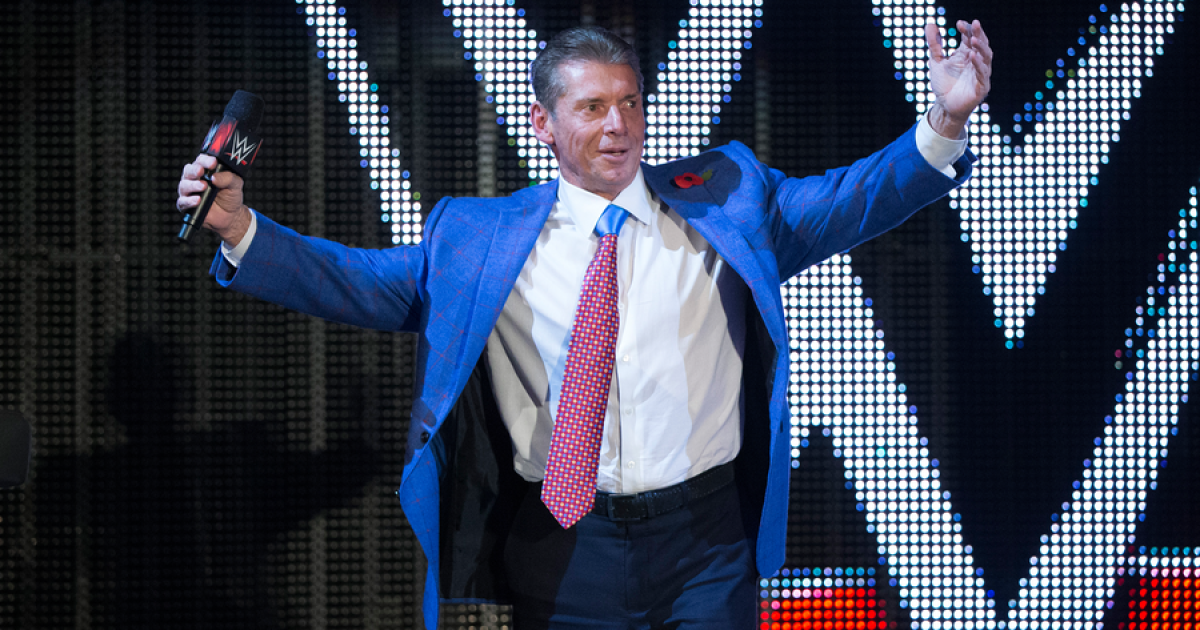
Vince McMahon and others are sanctioned for destroying evidence in WWE shareholder lawsuit

