Wyoming
Statewide candidates split on Wyoming GOP’s plans to defy state law and make endorsements – WyoFile


After the Wyoming GOP voted to defy a state law prohibiting the party from backing one Republican over another before the primary election, statewide candidates are split on whether they would accept such an endorsement.
Some told WyoFile they agree with the party’s decision and will seek out an endorsement, while others said they oppose a political party breaking election law. A few said they were taking a wait-and-see approach.
“Jury’s still out on this one for me,” Wyoming State Auditor Kristi Racines said Wednesday.
For years, the Wyoming Republican Party has argued that because it is a private organization, state laws that govern its organizational structure and prohibit it from endorsing or financially backing candidates in opposed primary election races are unconstitutional.
At its convention in Douglas last weekend, the party took things into its own hands, voting to adopt bylaws establishing a process for vetting, endorsing and spending money to support candidates ahead of the primary.
Supporters of the new bylaws point to a U.S. Supreme Court ruling from 1989, which struck down California’s ban on political party endorsements, ruling that the law violated the First Amendment’s guarantees of free speech and association. Opponents, meanwhile, raised concerns at the convention about the bylaws breaking the law, litigation costs and unintended consequences.
The new bylaws are widely expected to spark lawsuits, while the Wyoming Republican Party has said it plans to file its own legal challenge against the state.
In the meantime, the new bylaws lay out a process for evaluating candidates based on “commitment to the Wyoming Republican Party Platform, demonstrated loyalty to the Party’s principles, legal eligibility to hold office, and for incumbents, their voting record.”
The state party will consider candidates running for Wyoming’s state-elected officials — including governor, secretary of state, superintendent of public instruction, treasurer and auditor — as well as congressional candidates. Otherwise, county parties “may vet all other races on their respective County Ballots,” according to the new bylaws.
The state party, as well as each county party, “shall each create and oversee a Candidate Vetting Committee empowered to review and recommend approval or disapproval of candidates based on established criteria,” the bylaw states. “The Committee shall provide candidates an opportunity to respond to concerns prior to issuing a recommendation.”
Candidates
Brent Bien, who is running for governor, told WyoFile the bylaw changes are “a long time coming,” pointing back to the 1989 ruling.
“I think we just got to make sure we get those folks that truly believe on the Republican side of the equation, who truly believe in the platform and what Wyoming stands for,” Bien said. “And I just don’t think there’s been any enforcement mechanism to do that.”
At the convention, Bien was a clear favorite among many attendees who wore his campaign buttons and t-shirts. Still, Bien said he wouldn’t be surprised if he didn’t get the party’s endorsement.
“I didn’t get Trump’s endorsement,” Bien said. “And some of these legislators around the state, you know, they haven’t endorsed me.”
Bien’s take isn’t shared by all the gubernatorial candidates.
“Contested primaries should be decided by voters,” Gillette Sen. Eric Barlow wrote in a statement. “The role of the state party is to unite Republicans around shared values and help grow the party, not decide elections before voters have had their say.”
“Under current law, the state party should not choose sides in Republican primaries, and I will not ask them to start now,” he wrote. “My job,” running for governor, “is to earn the trust of Wyoming voters directly.”
At the convention, supporters of the bylaws said the party had tried to get the Legislature to change state statute. Barlow directly pushed back on that argument.

“As a legislator for the past 14 years, this issue has never come before us,” Barlow said. “If it had, it would have ensured all Wyomingites could weigh in and decisions would have been made openly and transparently — not in the courts and not a few months before an election.”
Secretary of State Chuck Gray, who is running for U.S. House, told WyoFile he supports the new bylaws.
“I will participate in the Party’s vetting process and will seek their support because I’m the only candidate in this race with a proven record of standing up for conservative principles — even when it wasn’t popular with the media and the insiders,” he wrote in a statement.
As secretary of state, Gray is Wyoming’s chief election officer and oversees statewide election administration. Asked if he wanted to comment in his official capacity on the Wyoming Republican Party’s decision to defy state law, Gray did not respond by publishing time.
U.S. House candidate David Giralt took a more cautious approach when asked for his opinion on the new bylaws.
“I trust Wyoming Republicans to make good decisions for our party, and I’ll let the process play out,” Giralt said. “I’m focused on getting in front of as many Wyoming voters as possible and making the case for why I’m the right person to represent this state in Congress.”
Kevin Christensen, another U.S. House candidate, said he wanted to see how fair, transparent and consistent the process played out before weighing in.
“The Wyoming people are the ones that make the determination in the primary, not the party,” he said. “That being said, if this is about supporting candidates and determining who is really a Republican and who’s just putting an ‘R’ next to their name, that seems like that would be consistent with being the Republican Party.”
Jillian Balow, yet another candidate for U.S. House and former superintendent of public instruction, said she “would be honored to accept an endorsement and money from the state party only if it is in accordance with Wyoming and federal law.”
“The contingency of our party at the convention knew the changes they made defied state law and they curtailed delegate discussion to pass new by-laws anyway,” Balow wrote in a statement. “Some delegates were appalled, some were gleeful, and many were silent, because they were silenced. This is not the way Wyoming does business.”
U.S. House candidate Reid Rasner also pushed back on the new bylaws.
“As a pro-Trump conservative, I always expected the political establishment to try and stop our campaign,” he wrote in a statement. “But, after making over 200 stops across our communities, one thing is clear: people are tired of the political games.”
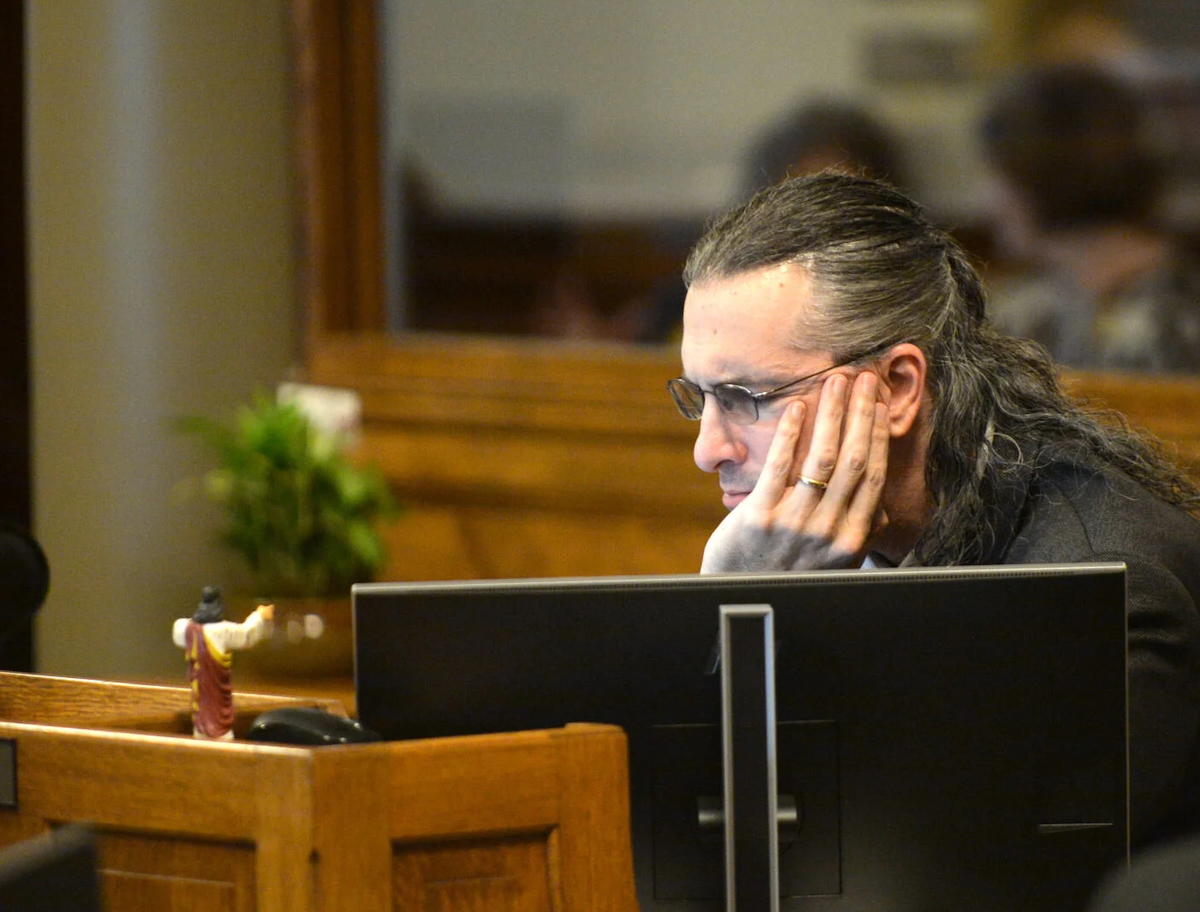
Sheridan Republican Rep. Tom Kelly, who is running for superintendent, said while he opposes “the idea of parties having the power to disallow anyone from running under their banner,” he thinks “parties should be able to express publicly which people they would like to represent them.”
Though he’s not actively seeking endorsements, Kelly said he would accept support from the state party.
“Financial backing? Absolutely,” Kelly said. “Contrary to a popular false narrative, I have no wealthy D.C. donors bankrolling me.”
And if the party endorsed one of his opponents, Kelly said he would tell them, “Congrats. I should have done a better job presenting myself.”
WyoFile reached out to other statewide Republican candidates, including those running for governor, secretary of state, superintendent, U.S. House and U.S. Senate. They did not respond by publishing time.
Update: This story has been updated to include comments from Reid Rasner.



Wyoming
How Investors May Respond To Black Hills (BKH) Customer‑Funded Wyoming Data Center Infrastructure Plan

- Black Hills Corp. recently reported continued progress on its proposed 1.8‑gigawatt data center project in Cheyenne, Wyoming, including equipment procurement, over US$200,000,000 in refundable customer construction contributions, and regulatory filings to support new substation infrastructure.
- An interesting aspect is that the prospective large-load customer is directly funding long lead-time generation milestones and substation development, signaling strong commitment to this long-horizon Wyoming data center build.
- We’ll now examine how this customer-backed generation plan for the Wyoming data center could reshape Black Hills’ investment narrative and risk profile.
This technology could replace computers: discover 31 stocks that are working to make quantum computing a reality.
Black Hills Investment Narrative Recap
To own Black Hills, you need to be comfortable with a regulated utility that is leaning into large, concentrated data center load as a key growth driver, while managing heavy capital needs and regulatory scrutiny. The Wyoming data center update, with over US$200,000,000 in refundable construction contributions and long lead-time equipment secured, supports the near term catalyst around data center backed growth, but it does not remove the core risks tied to execution, regulation, and load concentration.
The most relevant recent announcement is the pending all stock merger with NorthWestern Energy, which aims to create a larger, more diversified regulated utility platform and broaden infrastructure investment opportunities. For investors watching the Wyoming data center project, this potential combination could interact with the same catalyst of tech driven load growth while also reshaping how capital, regulatory exposure, and project risk are shared across a bigger footprint.
Yet behind this growth story, investors still need to be aware that the heavy capital expenditure burden and timing of regulatory recovery could…
Read the full narrative on Black Hills (it’s free!)
Black Hills’ narrative projects $3.6 billion revenue and $578.3 million earnings by 2029. This requires 16.8% yearly revenue growth and about a $290 million earnings increase from $288.3 million today.
Uncover how Black Hills’ forecasts yield a $83.00 fair value, a 14% upside to its current price.
Exploring Other Perspectives
Simply Wall St Community members have only two fair value estimates for Black Hills, ranging from about US$68.60 to US$83.00, underscoring how far apart personal models can be. Set against the Wyoming data center backed growth catalyst, this spread invites you to weigh different expectations about how concentrated tech load and regulatory decisions may shape future performance.
Explore 2 other fair value estimates on Black Hills – why the stock might be worth 6% less than the current price!
Reach Your Own Conclusion
Disagree with existing narratives? Extraordinary investment returns rarely come from following the herd, so go with your instincts.
Interested In Other Possibilities?
Our top stock finds are flying under the radar-for now. Get in early:
This article by Simply Wall St is general in nature. We provide commentary based on historical data
and analyst forecasts only using an unbiased methodology and our articles are not intended to be financial advice. It does not constitute a recommendation to buy or sell any stock, and does not take account of your objectives, or your
financial situation. We aim to bring you long-term focused analysis driven by fundamental data.
Note that our analysis may not factor in the latest price-sensitive company announcements or qualitative material.
Simply Wall St has no position in any stocks mentioned.
Valuation is complex, but we’re here to simplify it.
Discover if Black Hills might be undervalued or overvalued with our detailed analysis, featuring fair value estimates, potential risks, dividends, insider trades, and its financial condition.
Access Free Analysis
Have feedback on this article? Concerned about the content? Get in touch with us directly. Alternatively, email editorial-team@simplywallst.com

A stoned Vietnam War lieutenant’s inside joke slipped right past Army brass and straight into history.
The lieutenant, Joe McCarthy, slyly christened his improvised gun truck “Uncle Meat,” his favorite track on the 1969 rock album by Mothers of Invention.
“He used to listen to that while he was stoned,” National Museum of Military Vehicles owner Dan Starks told Cowboy State Daily. “It was his little secret act of rebellion to name his gun truck after a stoner album, and the Army didn’t pick up on it and never objected to the name.”
Today, the lieutenant’s inside joke lives on in a serious place.
A replica of the gun truck is the latest new artifact at the National Museum of Military Vehicles near Dubois, which boasts the world’s largest private collection of military vehicles, with more than 500 that are fully restored or operational.
“To be clear, the truck is a reproduction,” Starks said. “Gun trucks were all unauthorized weapons, improvised in Vietnam. None of them came from the United States and only one of them was ever brought back.”
The one surviving original gun truck is called “Eve of Destruction.” It’s displayed at the Army Transportation Museum in Fort Eustis, Virginia.
The rest of the gun trucks were all destroyed or left in Vietnam.
The Road Called Ambush Alley
Gun trucks tell a particularly poignant story about Vietnam.
At the time, there was essentially one road between the deep-water port of Qhi Nhon and the strategically important Central Highlands — Highway 19.
It might have been called a highway, but it was more like a rough two-track. Just picture 110 miles of unpaved, mountain-hugging, jungle-choked dirt road with no shoulders, hairpin curves and 1-foot-deep potholes.
This was the only route available to supply American combat forces in the Highlands.
“There was a lot of strategic significance to our being able to maintain a presence in the Central Highlands and keep the enemy from using it as a safe haven to launch attacks into other parts of Vietnam,” Starks said. “So, what the enemy figured out is, here we (had) all these combat troops (in the) Central Highlands and they realized, ‘Hey, we don’t need to fight all these combat troops. All we’ve got to do is cut the road.”
America’s convoys, meanwhile, were not set up to face intense combat, which made them sitting ducks.
“We’re sending 19- and 20-year-old truck drivers down Ambush Alley literally every day, and sometimes twice a day, on a 220-mile round trip,” Starks said.

A Gun Truck Is Born
One day, the enemy decided to close the route. That day was Sept. 2, 1967. In a particularly brutal attack, Vietnamese fighters waylaid a 39-truck convoy, destroying 34 and killing many young Americans.
“The colonel in charge of convoys had to send trucks right back down that same road the next day, and the next day, and the next day,” Starks said. “The Army doctrine was the security for truck convoys is a matter for military police.”
There weren’t enough military police, however, which meant the truck drivers were usually on their own.
So the colonel took it upon himself to defy army protocols. He ordered some of the truck drivers to turn their convoy trucks into weapons.
“He went to truck drivers and said, ‘Hey, truck driver, you are now a machine gunner’,” Starks said. “They had no training. He just said you are now a machine gunner.”
But saying it wasn’t enough to make it happen.
“The Army wouldn’t issue him any machine guns, because it was outside of regulations,” Starks said. “So they had to steal them. They had to trade whiskey for them. They had to take them off of downed helicopters. And they had to make them out of spare parts.”
They also had to figure out how to create gun boxes on the trucks to protect those machine gunners, who would now become prime targets.
“They took these gun trucks and sprinkled them through the length of the convoy,” Starks said.
When the enemy next ambushed the convoy, it was they who were surprised.
The new strategy had gun trucks racing into the heart of the ambush as fast as they could go to drive the enemy away. Everyone else was to drive out of the killing zone and get away.

Built By A Survivor
The museum’s replica was built by a Vietnam veteran who was among the 19- to 20-year-old men who served on the original Uncle Meat. Werth’s service was in 1970/71. For Werth, building the replica was a way to remember his buddies and make sure their story didn’t disappear.
“Logan lost a bunch of buddies in the truck ambushes back there in Vietnam,” Starks said. “And he was lucky to survive himself.
“He came back to the United States 100% disabled and in the years he was working to recover from his Vietnam War experience he decided to create this reproduction of the truck he served in.”
Three friends were killed in ambushes that Werth survived, so he put their names on the truck. They were Michael Hunter, Richard Frazier and Robert Thorne.
“He used the truck to keep alive the story of these teenagers, making up their own weapons to try and stay alive,” Starks said. “And he wanted it preserved forever.”
Werth was approached many times by people who wanted to buy Uncle Meat, but he was never willing to sell it — not for any amount of money.
After his death, he charged a friend with finding someone who would preserve it, and that’s how it has come to Dubois.
A Rolling Fortress
Werth’s attention to detail and the story behind it he worked so meticulously to preserve make the reproduction one of the best in existence, Starks said.
“This shows you exactly what a gun truck looked like back then,” Starks said. “And I’ve got a lot of history on this from people who were there and commented to him about how perfect this reproduction was and giving him little tidbits of information to make sure he would get it exactly right.”
Uncle Meat was outfitted with four M2 .50-caliber machine guns — one on each side and a twin-.50 setup mounted at the rear.
There were additional hand-held machine guns so that the gunners could hit targets that were too close or too low for the M2s to hit.
The gun box was double-steel armor, with a space between the plates that could be filled with sandbags. The cab was double-armored, too, and included ballistic glass windshields.
The driver had an M79 grenade launcher, with his own set of rounds, which included smoke to mark positions for support. The truck also carried rations, extra tires, tools and stretchers — because Uncle Meat doubled as both gun truck and rolling service truck for the convoys it protected.
Not Just A Relic
Uncle Meat won’t be part of the museum’s regular display. It will be a rolling exhibit instead, for parades and touch-a-tank events where people are invited to climb into military vehicles or take rides.
“We’ll keep it in our parade building so it will be well-protected,” Starks said. “And we’re going to drive it in the Fourth of July parade this year.”
The day before July 4 will also be an America 250 celebration at the museum, with free vehicle rides, as well as tank demonstrations, speakers, and other activities.
Telling the story of Uncle Meat has never been more important than it is now, Starks added. Vietnam veterans are in their 70s and 80s. They came home to a country where many did not honor their service. They were spat upon and called names such as “baby killer.”
“I know a lot of these truck drivers and a bunch of them ended up dying of Agent Orange and nobody knows their story,” he said. “They lived through all of this and it’s still haunting them.”
Starks wants as many of them as possible to know before they die what they did has not only been seen, it’s going to be remembered and honored.
What began as a stoned lieutenant’s inside joke has outlived the war — and many of the young men who rode in it — and found a lasting place in history.
Renée Jean can be reached at renee@cowboystatedaily.com.

by Katie Klingsporn, WyoFile
Three years ago, Judy Rogers was nearly 80 years old and living alone in the Lander home she had occupied for decades. It wasn’t a huge house, but with two levels, it was a lot to maintain for the retired teacher, who had increasing trouble with balance and mobility related to diabetes and other health issues. Rogers hired a woman to do laundry and change linens twice a week. That helped.
“But my sister was still falling a lot,” Walt Rogers said. About 20 times over the course of a year, in fact — including several falls that resulted in EMT responses. The once-great cook also wasn’t feeding herself properly, he said. “And when I visited her, I said, ‘Jude, you need more help.’”
Walt Rogers, who lives hundreds of miles away in Idaho, began researching options. His big sister adamantly did not want to go to a nursing home, he said. But Medicare doesn’t cover indefinite long-term care. Many private insurance plans don’t either. In-home caregiving services that are covered are often limited to medical tasks.
That leaves private home healthcare, which is expensive. In 2025, the average monthly median cost for non-medical caregivers in Wyoming was $7,974 for 40 hours, according to CareScout’s Cost of Care Survey. Long-term care costs have been outpacing inflation in recent years, CareScout found.
A 2023 AARP scorecard on long-term services ranked Wyoming 40th overall and gave the state particularly low scores in the areas of “affordability and access” and “choice of setting and provider.”
Back in Idaho, Walt Rogers faced an all-too-common conundrum: how to obtain affordable, quality long-term care for the crucial but often overlooked needs of an elderly or chronically ill loved one.
So often people assume that home healthcare is an easy and available option, said Sarah Wilzbacher, who founded the Lander caregiving nonprofit Anam Cara. The truth, however, is more complicated and likely more expensive than people anticipate.
The entire country is entering an elder care crisis, Wilzbacher said, one that is exacerbated in Wyoming by a quickly aging rural population, an ethos of self-reliance and a shortage of healthcare professionals and specialists.
“Wyoming being just a rural state, there’s very limited options for people to be able to stay at home and have quality care,” Wilzbacher said.
Unpaid and unprepared
Research suggests that most Americans will need long-term care. This reality generally clashes with what people imagine their dotage will look like, according to Wilzbacher. She calls this phenomenon “magical thinking,” and said it’s a central driver of the elder care crisis.
Misunderstandings of financing elder care also contribute. More than 20% of adults incorrectly believe that Medicare would pay the bill for their own or a loved one’s time in a nursing home if they had a long-term illness or disability, KFF found in 2022. And while it will generally cover temporary home healthcare, Medicare doesn’t pay for long-term care, which refers to help with daily tasks like bathing, cooking or managing medication.
Medicaid does cover nursing home services and in-home caregiving — but only for people with very low income and assets. Wyoming is experiencing an uptick in need for these services — so much so that the Wyoming Health Department asked for legislative approval for two new positions in its Medicaid long-term care eligibility unit.
“What we’ve seen in recent years is a pretty dramatic growth in the volume of applications we’re receiving, mostly from seniors and disabled seniors who are in need of nursing home or long-term care coverage,” Department Director Stefan Johansson told the Joint Appropriations Committee in December. Lawmakers granted the request.
Another problem Wilzbacher observes is a lack of communication and advance planning, which she said results in people burying their heads in the sand and believing the system will take care of it. “And then a crisis happens,” she said. “A fall, dehydration, heart issues …”

And suddenly, an individual or family is forced to figure it out under duress. In that case, options are limited. A common outcome is that a family member becomes a caregiver. Nationwide, the care family members provide is equivalent to the amount of work done by about 17% of the nation’s full-time workers, a 2026 AARP report found.
Some 23% of adults in Wyoming are family caregivers, according to AARP data. That equates to about 106,000 people, said Sam Shumway, former AARP Wyoming state director, “which is a huge number.”
Unpaid caregiving can strain budgets, pull people out of the workforce and cause significant emotional and financial distress, Shumway told WyoFile. Family caregivers handle everything from grocery shopping to complex medical tasks, often with little training. About 80% of caregivers pay out of their own pockets to meet loved ones’ needs, according to AARP.
And because their efforts keep patients out of nursing homes, and Medicaid pays for the majority of nursing home stays, Shumway said, “these caregivers are providing a tremendous benefit — not only to the person that they’re caring for, but to the state of Wyoming. And it just goes unnoticed.”
Rachael Price, the co-executive director of development and strategy for Anam Cara in Lander, knows firsthand the impacts caregiving can have. When her own mother became severely ill and moved in with Price’s family, Price quit her former job to care for her full-time. “And that has this cascading effect,” as the family budget shrinks, social security contributions are reduced and stress mounts.
Of course, there is a third scenario, that of a person in need of care who doesn’t have family support. The social safety net of Medicaid will catch those folks. But eligibility requirements mean they have to essentially spend all their money before they can access its services.
And when a person doesn’t have enough family support, doesn’t qualify for Medicaid and can’t afford private care, the outcomes can be awful, Price and Wilzbacher said. They have seen this unfortunate scenario lead to poor hygiene, dehydration, malnutrition, squalor, erratic medication, chronic medical problems and regular ER visits.
“It’s heart-wrenching, the deficit that people live with,” Price said.
The lucky
When Walt Rogers was trying to figure out how to care for his sister, the siblings were fortunate that she had savings. He contacted a home-health company, but it did not offer the kind of non-medical assistance, like linen changing, that would ease her life at home, he said. The company referred them to Anam Cara, and they enlisted its help.
An Anam Cara employee began visiting Judy Rogers to help with small tasks. Rogers, who had grown accustomed to living alone with her cat, was skeptical at first of a stranger entering her home.

Walt Rogers was insistent, and before long, his sister enjoyed the visits. A caregiver helped make sure she was getting nutritious food, administered her insulin and other medication, shuttled her to physical therapy and kept tabs on her for regular reports to her brother. And when he persuaded his sister that her house was unmanageable, an Anam Cara caretaker helped her pack up her belongings.
After selling the house, Rogers had a nest egg to pay for rent at an independent living apartment in a retirement facility, which offers perks like daily meals and home maintenance. When she moved in two years ago, Anam Cara caretakers came with her. These days, the 82-year-old keeps busy visiting with neighbors, playing bingo, attending coffee time and other activities. Caregivers come in three times daily to help her with meals and manage things like showers.

“This has been a blessing right here,” Walt said in May, gesturing around Judy’s apartment. He was in town to visit his only sibling — they bantered good-naturedly, their strong Massachusetts accents seemingly amplified by each other’s company.
Although Judy Rogers misses her home, she enjoys her new apartment and the social opportunities it brings. She’s especially lucky to have such a good brother, she said. “All my friends want to adopt him,” she said, laughing.
A different approach
Wilzbacher, who has a background in nursing, psychotherapy and end-of-life care, started Anam Cara after moving to Lander from Colorado and identifying that elder care options were extremely limited. The name Anam Cara refers to an ancient Celtic concept that focuses on holistic and compassionate end-of-life care.
What started as a one-woman service quickly grew. One patient, whom Anam Cara helped through his final days in his home, bequeathed his assets to the company. That spurred Anam Cara to morph into a non-profit.

By raising money through grants and fundraising, Anam Cara subsidizes the cost of care, which allows it to charge much less than the $50-per-hour it costs to operate, Wilzbacher said. The aim is to help clients retain dignity and receive quality care in what is a crucial life chapter.
“This community is very lucky to have an organization like Anam Cara to care for people like my sister,” Walt Rogers said. “To have this resource, it’s tremendous. They’ve made my sister’s life a lot better.”
Even with Anam Cara, gaps remain, Wilzbacher said. Medicare and Medicaid are subject to a barrage of restrictions or threats of cuts that are hard to keep up with. Wyoming’s rural health system is short on specialists like neurologists and dermatologists, and the same can be said for palliative care and memory care facilities.
“We don’t have the specialties that help people age with dignity and intention, and to craft their advance directives,” Wilzbacher said. Help with this legal document, which specifies preferences for medical care should someone lose the ability to communicate or make decisions, is “another piece that’s missing in rural communities.”
DISCLOSURE: The author’s family members became clients of Anam Cara during the course of reporting this story. -Ed.
This article was originally published by WyoFile and is republished here with permission. WyoFile is an independent nonprofit news organization focused on Wyoming people, places and policy.
Related
-

 Delaware5 minutes ago
Modest Delaware Home Boasts Incredible Connections to American History Over 250 Years
-

 Florida8 minutes ago
8 Best Small Towns On Florida’s Emerald Coast For A Crowd-Free Summer
-

 Idaho13 minutes ago
Renewing a Sanctuary for Salmon and People
-

 Georgia13 minutes ago
Georgia football trying to flip Grayson CB recruit
-
Hawaii20 minutes ago
I took my 30-year-old son on a vacation to Hawaii. We had to set ground rules first.
-

 Illinois28 minutes ago
Lake County detectives rescue girl from man they say drove to Illinois from Georgia to meet her
-

 Indiana35 minutes ago
US Education Department Oks Indiana Waiver To ‘Streamline’ Education Spending
-

 Iowa38 minutes ago
Emmy-winning TV anchor gets choked up as he quits job and journalism — and slams his station live on air

