Entertainment
The hottest new rock star is the Vampire Lestat — with help from Bowie, Iggy and Freddie


In early June, hundreds of fans dressed to the nines were in attendance at a rock star’s sold-out show at New York’s Beacon Theatre. There was lace everywhere and leather too. Chains dangled from belt loops and wrists. Some attendees arrived with dyed crimson hair, others with orange or pink.
Sheer black outfits that looked pulled from the pages of a gothic romance novel were draped on bodies. If “The Rocky Horror Picture Show” had collided with a modern concert, it might have looked something like this.
Then a man took the stage. Was it Lestat de Lioncourt, the immortal vampire-cum-rock star, or was it actor Sam Reid?
Moments earlier, attendees had watched the first episode of AMC’s “The Vampire Lestat,” the rebranded third season of “Interview With the Vampire” that premiered earlier this month. This season adapts Anne Rice’s novel of the same name, which is told from the perspective of Lestat, played by Reid, and transforms him into a touring musician.
Now Reid, dressed in black with his chest partially exposed beneath an open jacket revealing a scar, stepped on stage and into the role of Lestat in front of the audience. As he moved across the stage, phones shot into the air. Fans screamed. People sang along to a slew of songs, and for a moment, the line between actor and character seemed to disappear.
At first glance, the assignment to turn Lestat into a rock star seemed straightforward. The vampire at the center of Rice’s beloved novels has flirted with music before. In 2002’s “Queen of the Damned,” he emerged as a leather-clad nu-metal frontman capable of commanding massive crowds. But bringing Lestat into the present introduced a different challenge. Rock music no longer occupies the same place in popular culture. Fame is fragmented. Audiences are skeptical of celebrity. Social media can build a star overnight and tear them down just as quickly.
Yet “The Vampire Lestat” asks viewers to believe something as audacious as a centuries-old vampire still being able to captivate people, launch a music career and inspire a movement. Reid thinks part of what drives the character is something surprisingly modern.
“Nobody cares that I exist, nobody cares that I’m not relevant,” Reid said of Lestat’s mindset entering the season. “It’s really fun to see him struggle with that and see him try to find his place in the world and not immediately get world domination.”
Making that fantasy feel believable required far more than putting Lestat in leather and handing him a microphone. To pull it off, the show’s creative team had to build a rock star from the ground up, crafting a visual identity, creating music that could stand on its own outside the series, and transforming Reid into a performer capable of owning a crowd rather than simply acting in front of one.
Sam Reid’s Lestat de Lioncourt crowd-surfs in “The Vampire Lestat.”
(Sophie Giraud / AMC)
“Dropping Lestat down into 2025 and making the decision for him to play rock ‘n’ roll was a really great dramatic switch because while there are many great rock bands that are alive and kicking right now, their hold of the cultural landscape is quite small,” showrunner Rolin Jones said. “You couldn’t think of a worse way to get your message out than going to be a rock star right now.”
That challenge became the foundation of the season.
Step 1: Making the music
A polished aesthetic, marketing and, in Lestat’s case, book buzz can only take a musician so far. It’s the music that had to make diehard fans believe he’s an artistic genius, or at least a star in the making.
That challenge landed with composer Daniel Hart long before a single script was finished. In an unusual twist, many of the songs that would eventually appear throughout the season were written before the writers’ room fully mapped out the story.
“There were so many unknowns when we started,” Hart said. To find a way in, Hart and Jones started with their familiar reference point: David Bowie.
“We settled, I think sort of obviously, on David Bowie as the launch pad for our Lestat,” Hart said. “The way that Bowie was so mercurial, and he was a chameleon. He reinvented himself throughout his career.”
Hart also looked to artists as varied as Kurt Cobain and Chappell Roan, while drawing inspiration from classical music, blues and the old-world sound Lestat would have absorbed over his long life. One early writers’ room exercise even involved breaking down the influences embedded within “Long Face,” the Bowie-coded first single released from Lestat’s fictional album.
“‘Long Face’ feels like a Bowie rip-off to Daniel Molloy [played by Eric Bogosian], and so then Lestat breaks the song down for him and goes into all the other influences that are in there,” Hart said. “ ‘Long Face,’ you could say, was in some way influenced by Bach, and then [he] talked about Willie Dixon, and how the blues had influenced Lestat when he was around the … 1920s and ‘30s.”
“He’s been alive for 250 years,” Hart continued. “He’s seen and heard a lot of music.”
The creative team never set out to replicate the hard-rock sound that defined “Queen of the Damned.” If anything, Jones felt trying to outdo that soundtrack would have been a losing battle.

In “The Vampire Lestat,” Sam Reid sings every song himself, including “Long Face,” “Butterscotch Bitch,” “Your Biggest Fan,” “All Fall Down” and “Black Licorice.”
(Sophie Giraud / AMC)
“I mean, that soundtrack is deservedly very famous,” Jones said. “And I think if we decided to out-Korn Korn, we were going to be in trouble.”
Instead, their Lestat was a musician still searching for his voice. Jones says the season begins in a more performative glam-rock space before gradually evolving into something more personal.
“We thought ‘70s Bowie is where we would start, and that we would musically make a journey with him as we went deeper and deeper,” he said. “He would put his band on one tour, what a normal band would do, over four albums. The music just keeps changing. And as he gets more and more vulnerable, the songs begin to change. They get more raw. They get more exposure, and the music style evolves.”
Reid sang every song himself, including “Long Face,” “Butterscotch Bitch,” “Your Biggest Fan,” “All Fall Down” and “Black Licorice.”
“The more bombastic, the more over-the-top songs — he doesn’t seem to like them by the end of this season,” Hart said. “The more introspective songs that come later on are more in his new wheelhouse.”
That journey also shaped how Reid approached the material. While audiences will ultimately see the songs unfold within the context of the show, Reid encountered many of them before he fully understood where Lestat’s story was heading.
“I think in the beginning, he’s coming from an artificial kind of construct,” Reid says. “As the show goes on, the music becomes more personal, and he becomes less interested in actually finding love through his audience and more about finding who he is as an individual and as an artist.”
When Jones first began adapting “The Vampire Lestat,” he briefly considered making the character the sort of arena-filling superstar audiences might expect, like a Beyoncé or Taylor Swift. But the more the writers discussed it, the less interesting that version felt.
“If we were gonna start chipping away at all the armor that Lestat had, one of the great repetitive ways of a tour is you just can’t seem to break a ceiling,” Jones said. “He’s a niche star. And I think that is part of the gas that fuels this little journey.”
Hart also had the impression that Lestat would be a massive star.
“But it became more apparent that [he might] not exactly have the kind of success that he wanted and desperately felt like he needed — that was a more interesting story to tell,” he said.
Step 2: Getting the rock star look
While the audience has to believe Lestat is a rock star, they also have to believe he’s someone with the look — and worth staring at.
Lex Wood, the show’s costume designer, said that the challenge began long before cameras rolled on Season 3. Jones first floated the idea of rock star Lestat while the team filmed Season 2 in Prague in 2023, giving Wood time to begin imagining what a nearly 300-year-old vampire might wear while reinventing himself as a singer. During a production trip to Paris, she started sourcing pieces and collecting references that would eventually make their way into this season years later.

“The main aim of building costumes for Lestat was to maintain an element of the unachievable,” says show costumer designer Lex Wood. “To emphasize that Lestat is untouchable.”
(Sophie Giraud / AMC)
Being fashionable wasn’t the only goal.
“The main aim of building costumes for Lestat was to maintain an element of the unachievable,” Wood said. “To emphasize that Lestat is untouchable. Hence, building specific costume build shapes and patterns that we adapted throughout the season.”
That idea guided nearly every aspect of the wardrobe. While the first two seasons often presented Lestat through structured tailoring and muted palettes, Season 3 arrives in a much louder world.
“A big thing really was that we wanted to push more color into the season in general,” Wood said.
Wood said the choice reflected where Lestat finds himself emotionally. No longer confined to drawing rooms and period silhouettes, he’s navigating celebrity, performance and self-reinvention. Leather remains. Black remains. But so do bursts of color, softer fabrics and strange patterns.
“We wanted to break Lestat free of the suiting,” Wood said. “Though we wanted to remain true to his roots in the 18th century, we also wanted Lestat’s pieces to feel slightly otherworldly at times.”
That meant weaving in elements of garments from the 18th century and making them feel contemporary. This could look like a very specific cut of a sleeve of a shirt that nods to that time.
Wood also studied the backstage photography of Mick Rock, pulling references of Bowie, Iggy Pop and Freddie Mercury. She blended that with punk-inspired designs from Vivienne Westwood and Jean Paul Gaultier. Goth icon Siouxsie Sioux also became an influence, particularly in the use of layering, texture and attitude.
Wood said the scattered references reflect a character actively trying to figure out who he wants to be.
“He’s investigating social media himself,” she said. “As he’s discovering his presence as a rock star. He’s investigating what it means to be a rock star.”
“He’s finding his persona,” she continued. “And trying on different personas.”
That idea extends all the way down to accessories, with Lestat’s jewelry blending old and new — a custom necklace created by a U.K. silversmith recalls one worn by Mercury during Queen’s early years, while rings featuring sculpted teeth serve as subtle reminders of his vampiric nature.
“We purposefully wanted some of his wardrobe to not be recognizable to any particular brand — at other times, we wanted to celebrate high-end fashion, to explore his playfulness and unpredictable character through his clothing,” Wood said.
Even the shoes became part of the transformation. One of Wood’s earliest conversations with Reid centered on abandoning the heeled footwear that helped define earlier versions of the character. This Lestat needed something heavier for a performer who could pace a stage.
“He wanted something that felt more grounded,” Wood said. “Something he could bounce around more in.”
Wood said the redesigned footwear altered Reid’s posture and movement, helping create a version of Lestat that she noted feels more volatile and more comfortable captivating a crowd than charming one.
Step 3: Becoming the rock star
For all the work that went into the costumes, music and scripts, none of it mattered unless the watchers believed the actor tying it all together.
Reid had already spent two seasons playing Lestat through other characters’ memories and perspectives. This time around required him to carry the character’s story through his own reflections. More importantly, he had to answer a deceptively difficult question: Why would anyone follow Lestat in the first place?

“It’s not fame that he’s after,” says Reid of his character in “The Vampire Lestat.” “Fame is totally temporary for a creature that lives forever.”
(Sophie Giraud / AMC)
The surface answer might be fame. The character launches a music career, records songs and steps into the spotlight. But Reid doesn’t think that’s what drives him.
“It’s not fame that he’s after,” Reid said. “Fame is totally temporary for a creature that lives forever.”
Reid sees Lestat as someone searching for validation.
“Not for the vampire that he is, but for the human being that he was,” he said. “He’s been pretty heavily rejected. From Louis through the book, and then his mother knows exactly how to string him along, when to give him love and when to take it away. So he’s really looking for validation and going into an audience space is where he first experienced that.”
While developing the season, Reid says he became increasingly interested in the gap between the public version of Lestat and the person underneath it.
“His whole life has been performance,” Reid said. “His whole life has been a lot of adversity, and the way that he kind of climbs out of that is to build a construct that he can perform and operate in. It makes a lot of sense for him to do this rock star persona. Through this season you start to see him realize that the music and the art can allow him to access himself as opposed to it just being a performance.”
“He’s trying to discover his sound as a musician,” Reid continued. “But he’s also trying to discover who he is.”
Throughout the season, viewers see a musician struggling to connect.
“Why can’t I sell out 5,000 seats?” Jones says, describing the character’s mindset. “I used to be able to walk into a room and everyone would love me.”
For Jones, that’s ultimately what makes Lestat feel like a contemporary artist. Sure, he may be an immortal vampire, but he’s navigating the same questions that confront plenty of artists: How much of yourself to reveal? How much should one perform? Can admiration ever substitute for genuine connection?
By the time the season reaches its conclusion, Lestat is still larger than life. But he’s also a more complicated performer forced to reckon with the distance between being seen and understood. Jones said none of this would be possible without Reid in the role.
“I think his performance in Season 3 is one of the 10 greatest American TV performances of all time,” Jones says. “I’d put him right next to Carroll O’Connor, Walter White [played by Bryan Cranston] and James Gandolfini.”
“And I’d look at all of them and say, ‘You guys didn’t sing.’ ”


By and large, the zombie subgenre has bitten off more than it can chew in modern times. Between George Romero survival films and camp comedies, the well has become pretty infected. But once in a while, along comes a movie like This Is Not A Test.
Let’s sink our teeth into this new release and see how it stacks up against the classics.
The tone and tenor of this film represent the classic survival movies like Night Of The Living Dead. But the thing that grabs the audience about This Is Not A Test is the trauma of the characters. Holt shines as a withdrawn survivor of an abusive home, trying to cut through the wreckage to reunite with her sister. Each of the main characters have standout traits, and they bathe in strongly acted moments as the stress of the situation changes who they are.
The gore in This Is Not A Test is pretty strong. The attacks spring quickly and when they do, the special effects team does a good job showcasing the battle scars. The camera work is also frenetic in a good way, because the chaos of the chase scenes puts the viewers in a first-person perspective. This film lets you feel like a part of the survivors, so their journeys are interactive.

Longtime fans may say that there’s nothing new in This Is Not A Test, and maybe they’re right. There’s no fresh take on the monsters here, no crazy origin, nothing that we haven’t seen in the past fifty-eight years. But the pacing nails a great balance between getting to know the characters and getting the zombie splatter fest. The mental meltdowns of the characters feel well earned, and the arc of Sloane and her sister brings a lot of heart and investment to the story. Even the most jaded zombie horror fans will find something to appreciate here, even as a background movie.
Adam MacDonald has made another intense hit here, and This Is Not A Test is currently available to stream on Shudder.
Entertainment
‘You’re scaring my people.’ Shia LaBeouf’s alleged stalker arrested after posting viral video
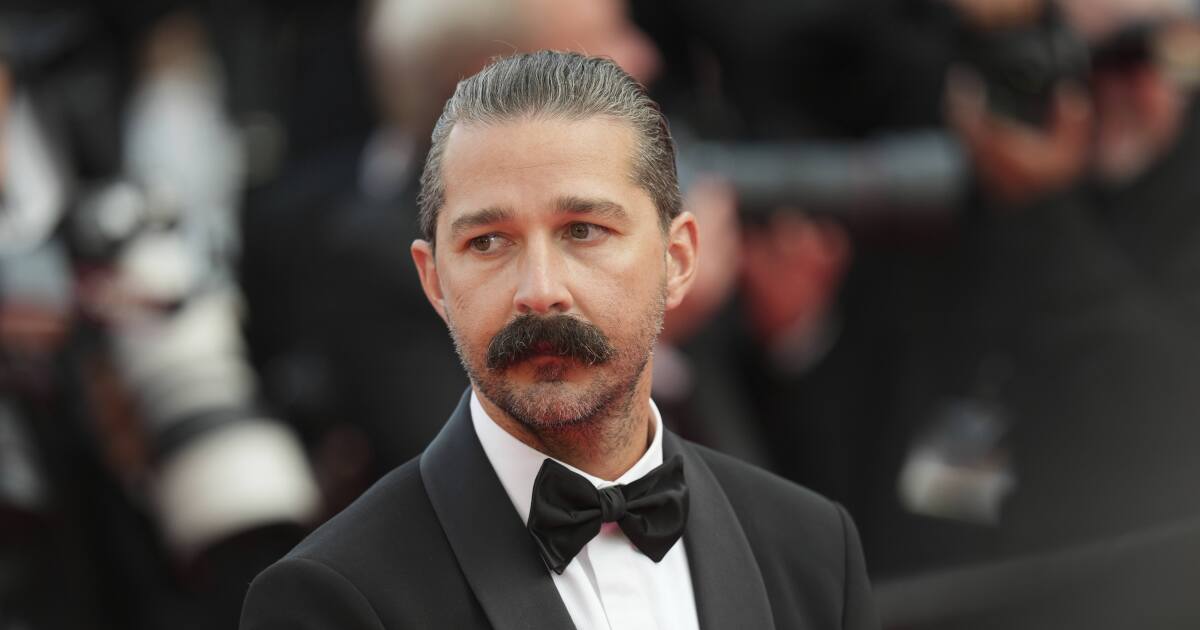
Shia LaBeouf’s alleged stalker has been arrested after posting a video of the actor asking to be left alone.
According to Orleans Parish Sheriff’s Office booking records, Alyssa Lee Couture, 40, was arrested Monday night and booked on a misdemeanor charge of stalking. Hours earlier, Couture had posted a video of a confrontation with LaBeouf in what appeared to be a grocery store parking lot. The “Honey Boy” actor is shown speaking to Couture through the window of a car.
“Leave me alone. God bless you. Leave me alone,” LaBeouf says calmly in the video. “You’re scaring my dad. You’re scaring my people. Leave me alone.”
Couture has posted more than 5,000 videos on her Instagram, most of which feature the woman addressing the embattled actor, whom she appears to believe is her husband. In a GoFundMe launched in May, Couture wrote that she was hoping to raise $70,000 to find permanent housing and that she had been living in her car and staying with family members. She also wrote that she had schizophrenia, among other disabilities.
Although the New Orleans Police Department does not identify Couture’s stalking victim as LaBeouf due to privacy policies, the timeline of her booking appears to line up with the confrontation with LaBeouf.
According to People, LaBeouf left Los Angeles after his split from actor Mia Goth last year and relocated to Louisiana to be closer to family.
In June, he pleaded guilty to three counts of simple battery, months after he went viral for his involvement in a Mardi Gras altercation in New Orleans. The actor, 39, was arrested in New Orleans on Feb. 17. At the time, New Orleans police confirmed LaBeouf was charged with two counts of simple battery for allegedly assaulting two men near a bar in the French Quarter. TMZ published bystander video of the incident and footage of LaBeouf walking through the French Quarter hours before the brawl.
The actor was released from jail shortly after his arrest and posted $100,000 in bond. More than a week after LaBeouf’s initial arrest, the New Orleans Police Department issued a second warrant for the actor’s arrest in connection with the same incident, and he racked up an additional simple battery charge. Prior to the second arrest, a New Orleans judge ordered LaBeouf to begin substance abuse treatment and undergo weekly drug testing.
Times staff reporter Alexandra Del Rosario contributed to this report.

- THE ODYSSEY
- Starring: Matt Damon, Tom Holland and Anne Hathaway
- Directed by: Christopher Nolan
- Rated: R
- Running time: 2 hrs 45 mins
- Universal
Our score: 4.5 out of 5
EPIC. If I was asked to describe Christopher Nolan’s latest film, that is the word I would use. He has mounted a film that rivals the greatest achievements of filmmakers like Cecil B. DeMille or David Lean. And, like the films of those mentioned, it’s runs a tad too long.
I was shocked, but pleased, to see that my 12-year-old granddaughter recently did a school paper on King Agamemnon. Thank goodness they’re still teaching History in our schools. Based on Homer’s “The Odyssey,” the film tells the story of King Odysseus (Damon) and his adventures which, if you’ve read “The Odyssey,” include the Trojan Horse, the Cyclops and assorted angry Greek gods. The film covers each of these adventures in great detail, sparing nothing in the production design department. While Odysseus is away – and he’s gone for a l-o-n-g time, his wife Penelope (Hathaway) has to endure a never ending string of “suitors,” men lining up in the hopes of replacing the King should he not return. The men are nothing more then scavengers, taking advantage of the law of Zeus, which decrees no one should be turned away. This angers the Queen’s son, Telemachus (Holland), who must control his temper when the men try to bait him into a fight, the idea being if Telemachus is killed, the new husband would become the King. It’s all very interesting and complicated. And long.
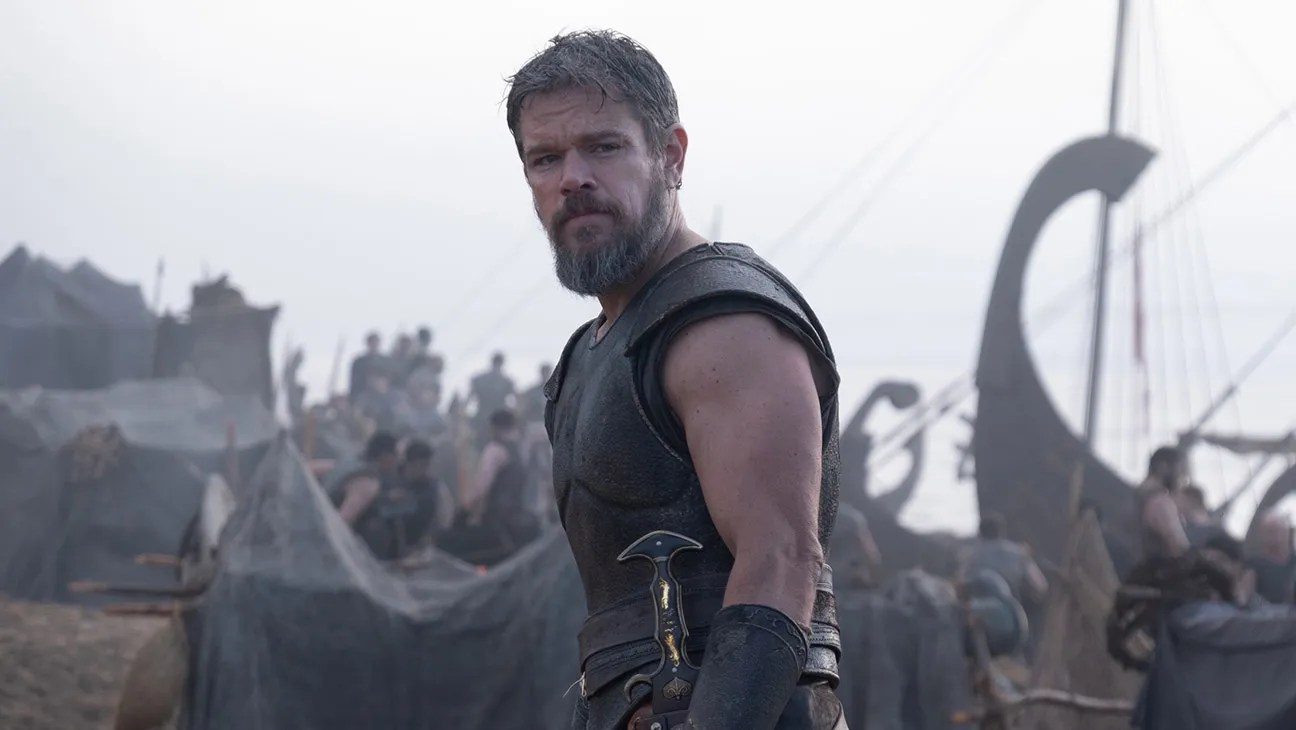
Director Nolan is one of the rare filmmakers who, in my opinion, has never made a bad film. From “Memento” to the “Dark Knight” trilogy to the Oscar-winning “Oppenheimer,” he has proven himself a true master of cinema. “The Odyssey” only adds to that distinguished resume’
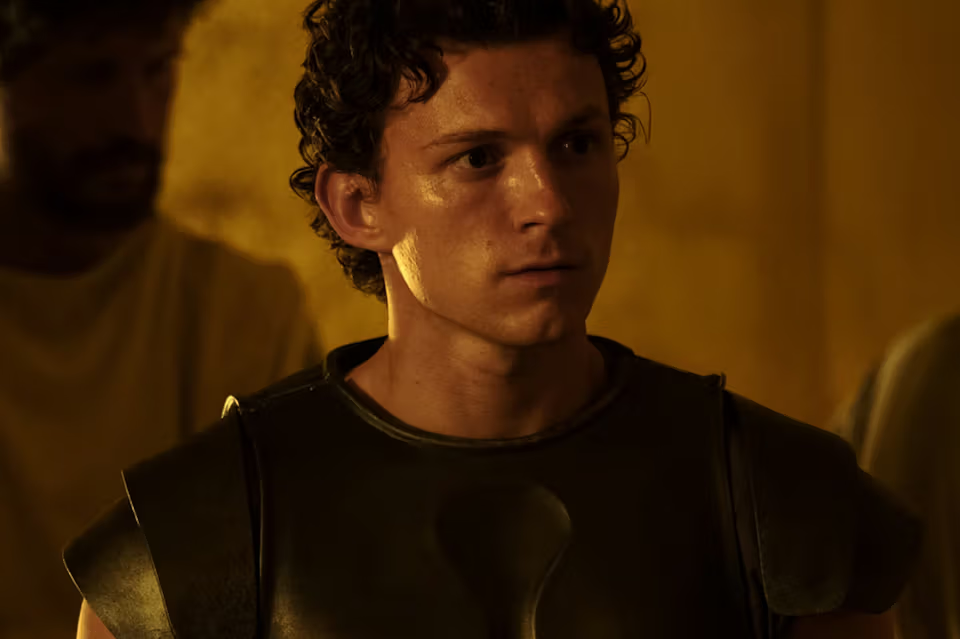
The cast is a tribute to Nolan himself who, like Woody Allen, can pretty much get anyone he wants for his films because, as an actor, why wouldn’t you want a credit in one of his films. Besides the three stars named above, the cast includes Robert Pattinson, John Leguizamo, Zendaya, James Remar, Jon Bernthal, Oscar nominees Samantha Morton and Elliot Page as well as Oscar winners Charlize Theron and Lupita Nyongo. As MGM used to advertise, “more stars than there are in heaven.”
The script and story are pretty faithful to the source material, though for some reason it bothered me whenever Telemacus referred to Odysseus as “dad.” Never father. The weird things you notice. Visual.y the film is stunning and the Trojan Horse and battle of Troy are worth the price of admission alone. I will add that I did see the film in 70 mm and, if that format is playing in your town, I urge you to see it in that format.
On a scale of zero to five, “The Odyssey” receives ★★★★ ½
-

 Crypto4 minutes ago
Luno Pushes South Africa to Rewrite Crypto Rules Through Parliament, Not Proclamation
-

 Finance10 minutes ago
SixCap Healthcare Finance Appoints Carroll as Senior Relationship Manager
-

 Fitness16 minutes ago
Sue Barker, 70, keeps fit with cardio, strength training and NEAT exercise – her lifelong fitness formula
-

 Movie Reviews28 minutes ago
Adam MacDonald’s ‘THIS IS NOT A TEST’ (2026) – Movie Review – PopHorror
-

 World40 minutes ago
Getting Down to Business: 4 Takeaways for Argentina vs. Spain
-
Politics52 minutes ago
Fate of Blanche’s Nomination Could Rest on One Republican Senator
-
 Lifestyle1 hour ago
Trump relished in being compared to dictators like Hitler and Stalin, journalist says
-

 Technology2 hours ago
Skullcandy’s bass-boosting Crusher headphones now come with Bose’s ANC

