Wyoming
Pete Fox announces candidacy for Wyoming House District 56


CASPER, Wyo. — On Tuesday, Pete Fox announced his candidacy to represent the residents of Wyoming House District 56 in Casper.
A release from Fox says that he graduated from the University of Wyoming with a bachelor’s degree in mechanical engineering and he spent his career within the oil & gas industry, gaining both domestic and international experience.
Fox retired several years ago and returned home to Casper with his wife, Lijuan, who currently works as a substitute teacher in Natrona County schools, as well as their son.
Fox is a longtime Casper resident, husband, father, and the current Natrona County Republican Precinct Committeeman. He said he is running because “Wyoming families need leaders laser-focused on improving and protecting our state.”
“House District 56 deserves strong, balanced representation that reflects the full
breath of our community, not simply the belief system of a district’s
representative,” Fox said. “District 56 is one of the most politically diverse districts in our
State supporting people across our entire social and economic spectrum. They
deserve a representative who listens broadly, works hard and focuses squarely on
solving real problems.
“This race is not about personalities—it’s about effective representation. After
watching the direction of the Legislature and reviewing the issues facing Wyoming
families, I believe our district needs a representative employing a wide-angle lens,
focused on practical solutions, fiscal responsibility, and smart long-term economic
growth.
“I’m a republican, easily earning the party’s new endorsement monogram
standing for 80% of the party platform. More importantly, I’ll vote in the
Legislature as a moderate. Voting at either side’s extremes misrepresents
District 56 and disenfranchises the majority of our constituents.”
“The middle class and younger generations really need help.”
To address these concerns, Fox says his campaign will focus on three major priorities: protecting Wyoming citizens, growing Wyoming jobs and opportunities, and protecting Wyoming’s resources and future.
Fox highlighted affordability challenges, healthcare costs and disparate property tax issues being among the various drivers increasing pressure on working people, families, retirees, and young parents.
“Too many residents feel like they’re working harder just to keep their heads
above water,” Fox said. “One remedy is enacting policies that help Wyoming citizens keep
more of what they earn.”
Additionally Fox believes that another remedy is to aggressively pursue new economic opportunities while protecting legacy industries and world-class natural treasures.
“With trillions of dollars in mainstreet manufacturing and business investment
now pouring back into our country, Wyoming should be aggressively competing
for those jobs while jealously protecting our one-of-a-kind statewide beauty,” he said.
“We need SMART growth that strengthens our middle class and creates
opportunities that entice our children and grandchildren to stay here.”
With decades of experience in the energy industry, Fox says that Wyoming must carefully manage growing demands on water and power infrastructure.
“We have tremendous opportunities ahead, but we must ensure growth
benefits Wyoming residents without placing unnecessary burdens on our
communities, resources, or pristine environment,” Fox said. “I’m running because I believe Wyoming’s best days are calling. Capturing success requires serious leadership and thoughtful planning from both the government and private sectors. I’m prepared to serve and ready to roll up my sleeves and get to work.”
Fox said he plans on meeting directly with voters during his campaign through community events. town halls, and direct outreach across House District 56.
For more information, visit PeteFoxHD56.com or follow him on Facebook at facebook.com/Pete.Fox.HD56.
Related


CHEYENNE, Wyo. — As the Aug. 18 primary election approaches, Cap City News is introducing candidate questionnaires to help voters make informed decisions at the ballot box.
Every candidate in the primary field was sent the same three questions and given a limit of 500 words, which could be distributed among their answers as they saw fit. To ensure a fair and direct line to the community, all responses are published exactly as submitted, without edits or alterations.
Candidates were asked:
- What are the most crucial challenges your constituents are facing?
- If elected, how will you address these challenges?
- What qualities or qualifications do you possess that have prepared you to meet these challenges?
Questionnaires are being published on a rolling basis online through Aug. 11. They will be accessible via the Cap City News Election Tracker.
Jessica Crowder (R), Wyoming House District 43
What are the most crucial challenges your constituents are facing?
Wyoming is built on hard work, strong communities, and the responsible use of our natural resources. The families in House District 43 and Wyoming face real challenges — from the need for a more resilient, diverse economy to the increasing outmigration of young people. Wyoming families also face rising costs of healthcare, housing and more. House District 43 deserves a representative that puts people first and works to strengthen the place we call home through steady and thoughtful leadership.
If elected, how will you address these challenges?
As a legislator, I will use my experience working with landowners, businesses, and local governments to support the industries that define Wyoming while encouraging thoughtful growth and diversification. Our future depends on good jobs, strong schools, and communities where families can put down roots and thrive. We can honor the values that make Wyoming what it is while building something that lasts—an economy that works for working people, an education system that prepares the next generation, and communities that remain resilient and connected.
The rising cost of healthcare and the difficulty of accessing services are real challenges for Wyoming families. We need reforms that reduce costs, expand access—including to mental health resources—and meet people where they are. The 2026 Health Insurance Affordability Task Force is working to address rising costs, and I will work with this group and others to develop effective solutions that deliver the quality care our communities deserve.
Tax and housing reforms must be reviewed for possible refinement so people can afford to buy homes, stay in their homes, and build equity and pride of place. At the same time, every Wyoming county depends on a different mix of revenue, and we all rely on stable, predictable local funding for essential services. I will participate in honest, informed conversations about how to provide relief to those who need it most without jeopardizing essential services.
Wyoming’s economy depends on our core industries and new businesses that invest here. Both need clear, consistent processes and regulations so they have confidence in choosing Wyoming. Economic growth also relies on strong infrastructure and a skilled workforce. When these pieces work together—predictable regulations, reliable infrastructure, workforce readiness, and responsible budgeting—they create a stable environment that encourages growth, provides good jobs, and protects taxpayers.
What qualities/qualifications do you possess that have prepared you to meet these challenges?
I believe we maintain and create opportunity by respecting the people who live here and the land that sustains us. I grew up on a ranch and now raise my family in Laramie County, where we run a ranch and small business, so I understand the challenges facing families, landowners, and employers. With over 20 years of experience in agriculture, land management, and public policy, I’ve supported working lands, defended local interests, and strengthened communities. The values that guide this work—practical problem solving, respect for local knowledge, and a commitment to community—have broad application beyond land management and would serve me well in the legislature.
Related

TETON COUNTY, Wyo. — The Wyoming Department of Health recently confirmed two additional cases of measles in Teton County, bringing the statewide total to six cases, with five cases having occurred in Teton County.
A release from the WDH states that one recently-confirmed case is an adult with no identified links to the previous three Teton County cases, while the other case is also an adult, who had direct exposure to a previously identified case.
“This underscores the highly contagious nature of the measles virus,” the release states.
According to the release, the public may have been exposed to measles at the following locations and times:
Target Jackson Hole, 510 S Highway 89, Jackson, Wyoming 83001
- July 5, 2026, 7:00 AM through 7:00 PM
- July 6, 2026, 7:00 AM through 7:00 PM
- July 7, 2026, 7:00 AM through 7:00 PM
Smith’s Food and Drug, 1425 South Highway 89, Jackson, Wyoming 83001
- July 8, 2026, 9:00 AM through noon
“Measles is very contagious and can cause serious illness, including pneumonia, encephalitis, hospitalization, and death,” the release states. “Vaccination is the best way to prevent measles infection.”
For more information on measles, including case counts, exposure locations, and guidance on what to do if exposed, visit the Wyoming Department of Health website.
Related

Carl McDaniel, 65, from Washington state suffered broken bones after he was charged by a 2,000lb (900kg) bull during a visit to Yellowstone with his grandson on Friday. The encounter was recorded by Mike MacLeod, a professional photographer, who said the animal was ‘agitated, pissed off and charging anything and everything’
-

 Michigan2 minutes ago
University of Michigan’s David C. Miller chosen to succeed Jeff Balser as Vanderbilt Health’s President and CEO and Dean of Vanderbilt University School of Medicine
-

 Massachusetts8 minutes ago
Massachusetts Broadband Institute distributes devices to underserved communities
-

 Minnesota14 minutes ago
Smoke from wildfires in Minnesota and Canada exposes millions to dangerous air quality
-

 Mississippi20 minutes ago
How permanent daylight saving time would impact Mississippi
-
 Missouri26 minutes ago
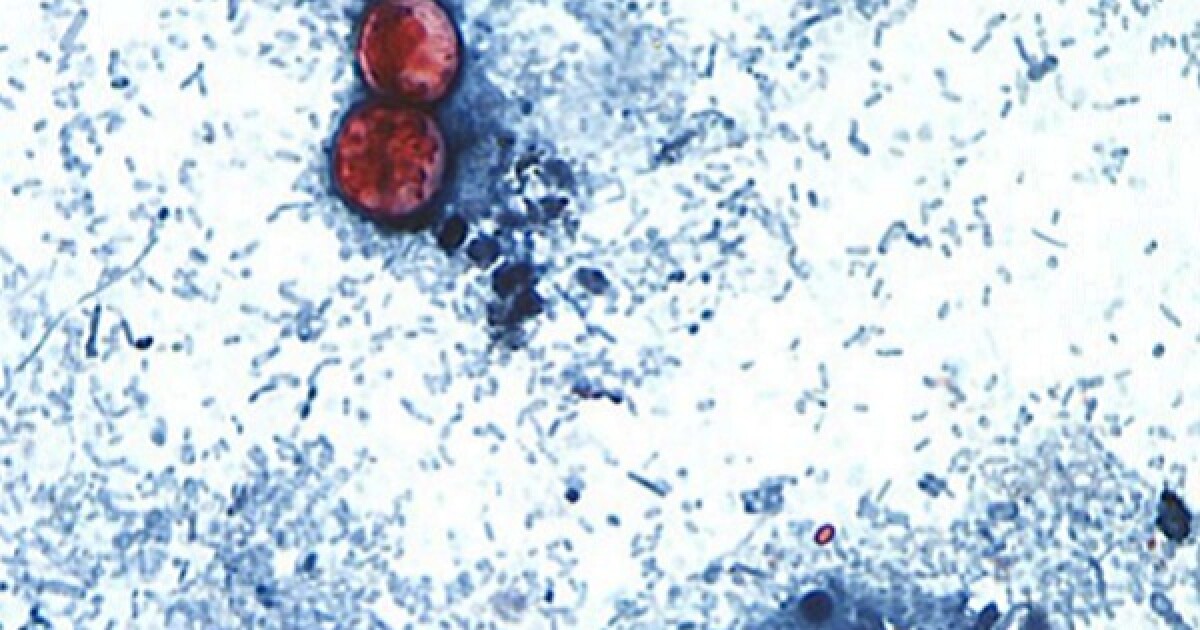
Missouri reports 43 cases of parasitic infection that’s sickened thousands nationwide
-

 Montana32 minutes ago
Governor Gianforte Announces Montana Ranks as Top 10 State for Job Growth
-

 Nebraska38 minutes ago
Roanoke County teen heads to national rodeo finals in Nebraska
-

 Nevada44 minutes ago
Nevada’s modern boomtowns are these fast-growing cities, study said

