West
What is 'America First': People or profits?

NEWYou can now listen to Fox News articles!
Editor’s note: This op-ed is partially adapted from Rachel Campos-Duffy’s monologue on “Jesse Watters Primetime” on December 30, 2024.
In the wake of President-elect Trump’s victory, the MAGA movement has been struggling with this question: What is ‘America First’? Is it people or profits? Many insist America is defined by its economic and military might. However, America is more than GDP growth, the stock market or even the “idea” of self-government. It’s a physical place, with people who share common history, traditions, and culture.
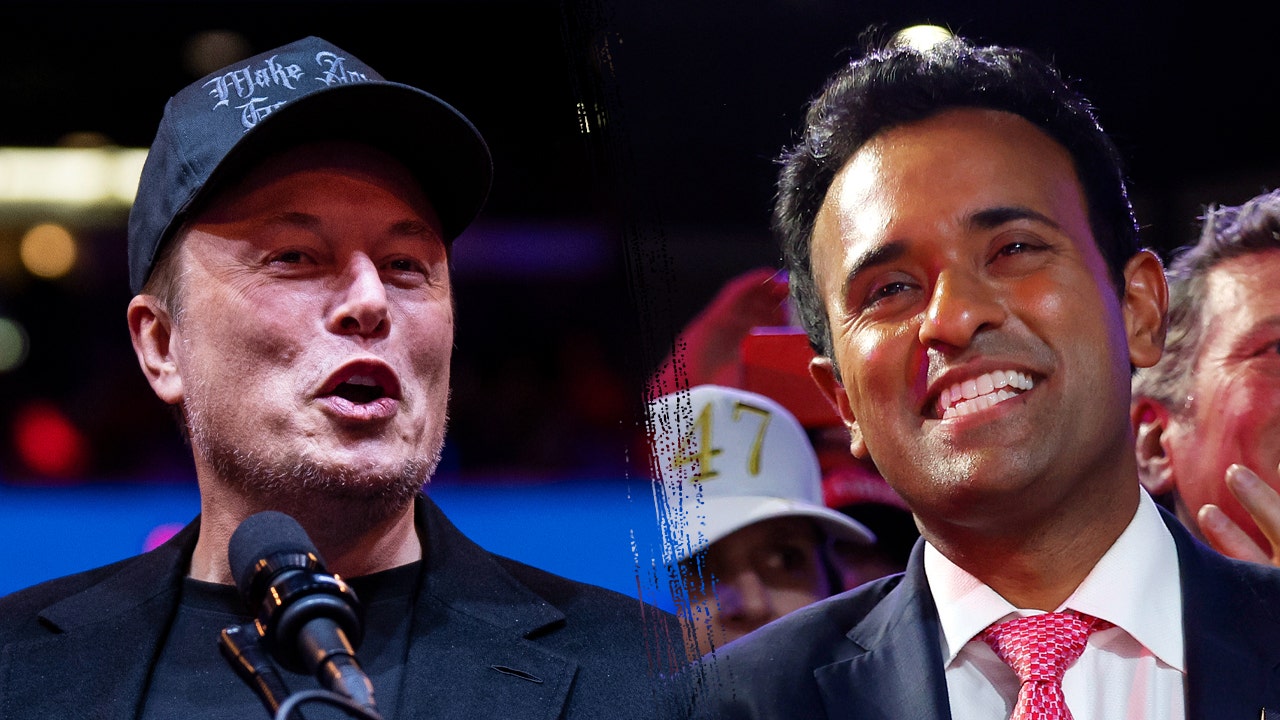
Central to the “America First” question is the online debate raging over the expansion of the H–1B visa program, which allows American employers to hire foreign workers, and is vehemently defended by tech billionaires like Elon Musk and Vivek Ramaswamy.
Ramaswamy and Musk are competitive men, and their desire for America to win in the global game against our adversaries appears sincere. But the question is, what is your definition of winning? And at whose expense should the game be played?
MUSK AND RAMASWAMY IGNITE MAGA WAR OVER SKILLED IMMIGRATION AND AMERICAN ‘MEDIOCRITY’
The H-1B policy was created to bring the “best and brightest” to America and address labor shortages in specialized fields. On paper, it sounds noble. In practice, however, it has been wildly abused and undercuts American workers in tech jobs no one can credibly argue Americans don’t want to do.
A 2021 U.S. Census Bureau study found that as many as 72% of STEM graduates in America aren’t even working in STEM-related fields. So, is this really about labor shortages or is it about corporate profits at the expense of citizens who can’t compete with cheap foreign labor?
Who can forget what happened at Disney in 2014 when IT workers were laid off and forced to retrain their foreign-born replacements if they wanted to receive their severance check? Americans aren’t opposed to bringing in more geniuses like Musk. But let’s not pretend Disney’s foreign replacements were all budding Einsteins. These workers come on restrictive terms, are paid less, work longer hours, and are unable to leave their jobs without risking deportation. They also come with the hope of becoming citizens and bringing their families over through chain migration. It’s a rigged game, designed to create cheap labor and make it impossible for American citizens to compete.
DAVID MARCUS: MAGA’S H-1B ‘CIVIL WAR’ IS EXACTLY HOW POLITICS IS SUPPOSED TO WORK
Ramaswamy argues that the problem isn’t mass immigration, but American culture itself. We need these foreign workers, he says, because our culture has “venerated mediocrity” for decades. We celebrate the prom queen over the math champ. The jock over the valedictorian.
It’s a convenient theory, but one that misses the mark entirely.
American culture isn’t the issue; it’s the destruction of it that’s at the core of the problem. American culture gave the world electricity, airplanes, cars, Elvis, the internet, Rocky Balboa, and “Star Wars.” What we’re witnessing now isn’t the failure of American culture but the deliberate erosion of it — a demoralization campaign fueled by decades of mass immigration and an education system poisoned by cultural Marxism — a foreign and utterly un-American ideology.
Elon Musk and Vivek Ramaswamy are competitive men, and their desire for America to win in the global game against our adversaries appears sincere. But the question is, what is your definition of winning? And at whose expense should the game be played? (Getty Images)
Dissing prom queens and promoting “America Last” visa policies won’t restore our greatness. It’s a distraction from the real issue: the dismantling of our national identity, the takeover of our schools by communist activists, and the devaluation of American labor.
CLICK HERE FOR MORE FOX NEWS OPINION
The Constitution tells us that the paramount duty of our government is to “promote the general welfare” and “secure the blessings of liberty” for the American people. There was a time when America lived up to that promise. During his travels through America in the early 19th century, French philosopher Alexis de Tocqueville observed that America is great because America is good.
Sadly, we’re replacing goodness with Godlessness. Some of MAGA’s newest members are Silicon Valley atheists who envision a cold tech and corporate future for us—one that fails to appreciate the humanity and vulnerability of our own citizens.
Secularism, transhumanism, and AI will never satisfy the soul. America needs God, family, love and a return to real, not virtual, relationships. And that includes the relationship between citizens and their government — a government that genuinely cares and prioritizes them.
The answer to our woes isn’t importing millions of people from around the world. The answer is rediscovering who we are. Ben Franklin, the Wright brothers, Sunday church, family dinners, rodeos, skyscrapers, rock and roll, Friday night lights, and homecoming queens. The answer is fixing what’s been deliberately broken in our culture and institutions.
America is not a sports team and winning in the stock market is not the definition of success for America. “America First” is not a slogan; it is a guiding principle.
MAGA is about honoring our history and Christian values. It’s about prioritizing our people, our families, and our American way of life.
Evita Duffy-Alfonso is host of “Bongino Report Early Edition with Evita.”
RACHEL CAMPOS-DUFFY
Read the full article from Here

San Francisco, CA
Discovery Bay driver arrested for San Francisco fatal vehicle collision | Contra Costa Herald

Killed pedestrian, struck 3 more people
By San Francisco Police Department
On May 25, 2026, at approximately 12:13 am, San Francisco Police officers responded to the area of 16th and Mission Streets regarding a vehicle collision.
Officers were advised that a collision occurred between a vehicle and a pedestrian.
Officers arrived on scene and located a pedestrian victim being treated by paramedics for life threatening injuries. Paramedics transported the victim to a local hospital.
Despite lifesaving efforts of medical staff, the victim was later declared deceased at the hospital.
A preliminary investigation revealed that a vehicle collided with a pedestrian and struck three additional victims.
The three victims were medically assessed on scene for non-life-threatening injuries.
Through the course of the investigation, officers located the suspect vehicle and detained the occupant of the vehicle.
The Traffic Collision Investigations Unit (TCIU) responded to scene and conducted their investigation.
Through the course of the investigation, TCIU investigators developed probable cause to arrest the driver identified as 57-year-old Samuel Powell of Discovery Bay on June 30, 2026.
Powell was arrested and charged for vehicular Manslaughter 192(c)(2) PC and the driver’s responsibility to exercise due care for the safety of any pedestrian within the roadway 21955(b)(3) CVC.
Although an arrest has been made, this remains an open and active investigation. Anyone with information is asked to contact the SFPD at 415-575-4444 or text a tip to TIP411 and begin the message with SFPD.

After an extended wait of no activity from the Denver Nuggets in this year’s free agency period, the team has finally made its first new signing.
That signing just so happens to be the No. 2 pick from the 2018 NBA Draft, Marvin Bagley III.
According to ESPN‘s Shams Charania, the Nuggets and Bagley have agreed to a one-year, veteran minimum deal for the 2026-27 season, effectively providing some solid depth in the frontcourt.
Free agent center Marvin Bagley III has agreed to a one-year deal with the Denver Nuggets, sources tell ESPN. A critical frontcourt addition for the Nuggets. pic.twitter.com/enHBVxgfYl
— Shams Charania (@ShamsCharania) July 2, 2026
With Denver’s first free agency signing now officially in the books, here’s what the move to bring in Bagley might mean for the Nuggets moving forward into free agency and this offseason, as well as entering next season.
Marvin Bagley Brings Frontcourt Depth to Denver’s Lineup
Bagley split his time between the Washington Wizards and Dallas Mavericks this past season to put together one of his better years of production in recent memory.
In the 60 combined games he played, Watson averaged 10.5 points, 6.1 rebounds, and 1.4 assists while shooting a career-high 61.8% from the field and 46.2% from three on a little less than one attempt per game.
Bagley’s a big who’s game centers more around his offensive skillset. He spent most of his time shooting last season at the rim or in the mid-range, shooting a stout 64.1% on two-pointers last season that can bring a bit of an interior presence into Denver’s frontcourt.
Defensively, he leaves a little bit more to be desired. And he’s still not quite the most impressive three-point shooter, even coming off his most efficient season from deep.
But for the cost of a veteran minimum contract, he acts as a nice budget-friendly addition who can shoulder some of the load offensively, and has shown value as an offensive rebounder as well. It’s tough to find much better for the price Denver’s paying.
While entering the league slotted in primarily as a power forward, it’s been in the past few seasons that Bagley’s settled in more as a full-time five; having spent 95% of his minutes during the 2025-26 campaign playing at the five.
That might give you a bit of a hint as to how the Nuggets plan to use him this next season, though they might also have some stretches where he’s placed alongside Nikola Jokic at the four for a bit of a larger frontcourt lineup.
The Writing’s On the Wall for Jonas Valanciunas
Looking at what Bagley’s addition might mean for the Nuggets’ current roster, no one in the picture gets more impacted by Jonas Valanciunas.
Valanciunas was Denver’s primary backup behind Jokic at the five last season following his trade from the Sacramento Kings, and entered this offseason with an uncertain future because of his contract situation.
The veteran big man has an expiring $10 million contract heading into the 2026-27 season, but one that’s not fully guaranteed, giving the Nuggets the opportunity to release him and save $8 million, while incurring a dead cap hit of $2 million that can be stretched over multiple years.
Such a move can give the Nuggets further cap flexibility that they’ll need this offseason to re-sign key pieces like Peyton Watson and Spencer Jones, which to this point haven’t been done, but becomes a bit easier now that Denver can take that next step in pivoting off of Valanciunas.
Perhaps Denver might also look deeper into a trade involving Zeke Nnaji, now that they’ve got a cheaper option in Bagley that might even sit ahead of him on the initial depth chart. However, it remains to be seen if the Nuggets have any takers on the two years remaining on his contract. To this point, they haven’t found anyone to bite.
When factoring in Valanciunas and Nnaji though, Bagley’s addition now brings the Nuggets to a total of 10 players signed onto traditional contracts for the 2026-27 season.
That leaves them with four open spots left to utilize in the days and weeks ahead. How they decide to use that space remains to be seen, but at the very least, the Nuggets’ long-awaited first offseason signing has now officially come to light.
Sign up for our free Denver Nuggets On SI newsletter, and get breaking Nuggets news delivered to your inbox daily!
 Add us as a preferred source on Google
Follow

(2024 reader photo of fireworks damage on Nino Cantu SW Athletic Complex turf)
Here’s the annual announcement from Seattle Parks – we’ve excised the non-local parks:
Seattle Parks and Recreation will turn on field lighting on ballfields throughout the city on the evening of Friday, July 3 and Saturday, July 4 to protect the surfaces. The ballfield lights will be turned on at approximately 9 PM.
The lights will be turned on to discourage the use of fireworks. Fireworks are illegal in the city of Seattle and will destroy the artificial turf on the fields or surrounding facilities. The approximate replacement cost for the synthetic surface based on per average full-size field (110,000 square feet) is $1.2 million. All the fields have been renovated in the past several years and benefit field users including soccer, football, baseball, ultimate frisbee and lacrosse.
The fields will be monitored from 9 PM to 3 AM
Lights at the following synthetic fields will be turned off at 3 AM on July 3 and 4:
Delridge Playfield, 4458 Delridge Way SW
Hiawatha Playfield, 2700 California Ave. SW
South Park Playfield, 8319 8th Ave S
Walt Hundley Playfield, 6920 34th Avenue SWLights will be turned off at the following grass fields at 11 PM on July 3 and 4:
West Seattle Stadium, 4432 35th Ave. SW
Comparing this to last year’s announcement, the lights will be on longer the night before the 4th, and the “monitoring” will be an hour later.
-
 Sports4 minutes ago
Lakers announce summer league schedule, roster
-
World12 minutes ago
How the Entry-Exit System is becoming a nightmare for Europe's summer travellers
-

 News37 minutes ago
Newsom’s office responds to SCOTUS ruling on women’s sports as California faces ongoing trans athlete wave
-

 Los Angeles, Ca2 hours ago
Family of boy, 8, killed by falling tree branch at Calabasas park to get $14.6M
-

 Detroit, MI2 hours ago
The worst Detroit sports uniform from every pro team
-

 San Francisco, CA2 hours ago
Discovery Bay driver arrested for San Francisco fatal vehicle collision | Contra Costa Herald
-

 Dallas, TX3 hours ago
Erling Haaland’s Dallas Western wear purchase goes viral
-

 Miami, FL3 hours ago
Miami’s FIFA Fan Fest draws thousands to Bayfront Park to watch Team USA win World Cup match against Bosnia

