MS. RAMPELL: Hello, and welcome to Washington Post Live. I’m Catherine Rampell, an opinion columnist here at The Washington Post, and I am delighted to welcome two Post contributing columnists today. We have Natasha Sarin, who is a professor at Yale Law School and recently launched The Budget Lab at Yale Law. Most importantly, she is a fellow Broadway theater nerd and often accompanies me to musicals. And then we also have Larry Summers, a former Treasury Secretary and National Economic Council director under a couple of different Democratic administrations. Thank you, Larry and Natasha, for joining me today.
Washington
Transcript: The State of the U.S. Economy


DR. SUMMERS: Happy to be with you.
DR. SARIN: Thanks so much for having us.
MS. RAMPELL: So let’s jump right in. Today is the day after Tax Day. I hope everyone out there filed in time or got an extension, as it may be, and we’re here to talk a little bit about the future of tax policy and its role in the U.S. economy and U.S. politics.
Natasha, I thought I would start with you. You recently launched The Budget Lab at Yale. I’m wondering if you could tell us a little bit about what that project is and what hole it is trying to fill, what problem you’re trying to solve with it.
DR. SARIN: Yeah. Thanks, Catherine, and thanks to all of you for listening.
Part of what I got to do when I was in government was be part of some pretty exciting legislative debates about what ultimately became the CHIPS Act, the Bipartisan Infrastructure Law, Build Back Better, which then became the Inflation Reduction Act. And in the context of all of those debates, what ended up being like a very important element that often drove what policies made it into the legislation and what policies didn’t was the score that scorekeepers assigned a particular policy change, and the score is essentially like a cost estimate. It’s like over 10 years, either how much revenue is a particular tax change going to generate for the government or how much cost is a particular spending program going to cost.
But it struck us, me and my co-founders, Danny Yagan, who’s an economist at Berkeley, the former chief economist of the OMB, and Martha Gimbel, who was a senior staffer at the CEA in both the Biden administration and in the Obama administration–it struck us that for a lot of policies that we would like to see ultimately legislated, things like a more generous child tax credit, the right way to evaluate them wasn’t a 10-year cost estimate, because when you invest in kids, it takes a long time for those investments to pay off.
And so part of what we’re trying to do with The Budget Lab is develop the infrastructure to create a more holistic analysis of both the costs and benefits of different types of policy changes.
MS. RAMPELL: Larry, when you were in government, did you see the need for something like this? How did the existing scoring process that Natasha just laid out affect or constrain the kinds of policies you would recommend or that were feasible?
DR. SUMMERS: Look, if you’re a business, you don’t get to make an investment project without bringing to your board the costs and benefits of the project, what it’s going to cost, what subsequent cash flows are going to be, what its impact on your strategy is going to be in a comprehensive way.
We’ve been making progress in the economics profession at bringing that kind of thinking to the public sector, but we’ve got a long way to go. People on the right side of the political spectrum, the conservative side of the political spectrum, have been working to incorporate ideas like that if you cut taxes, maybe, possibly, there will be more entrepreneurship into scoring for a long time. But we’ve never had any ways of recognizing that if you educate kids, you’re less likely to need to imprison them, that if you give people preventive healthcare, you’re less likely to have to give them heart transplants down the road, that if you invest money in the IRS, the IRS will collect money–collect more money and you won’t have to raise taxes.
So there’s been a big gap, and it’s always the case. If you go back to the whole idea of GDP figures, academics in universities were doing them, and then once the concept was proved out, the government started doing it as a routine thing.
And that’s why what Natasha’s doing here is so hugely important. It’s both going to inform current debate, and it’s going to establish procedures and practices that will ultimately come to be incorporated in the standard work of government. So this is social science’s version of laboratory science, where the abstract science of today becomes the drug treatments of tomorrow.
MS. RAMPELL: So, Natasha, there are, to be fair, a few of these alternative scoring outfits, some of them politically aligned with certain groups, some of them also trying to be neutral arbiters akin to the CBO, but obviously separate from the CBO. I’m wondering what you make of that. I mean, my fear is that there’s a risk of sort of undermining the CBO as–the Congressional Budget Office, for those listening–as a neutral arbiter, you know, that there is the risk of sort of emboldening those who want to fight with the rap, which does happen, right? Like, when there is an inconvenience score for a health care bill showing that it will cause a lot of people to lose health insurance, or when there’s an inconvenience score for a bill that costs a lot of money, how do you maintain the usefulness of the Congressional Budget Office as a neutral arbiter while still doing this sort of supplemental or alternative kind of analysis that you are working on?
DR. SARIN: Yeah. And I want to say sort of explicitly that CBO and the Joint Tax Committee and also their sort of counterparts within the executive branch, the Office of Tax Analysis at Treasury, and the Office of Management and Budget folks within the White House, they do kind of like yeoman’s work trying to produce these cost estimates. And it’s not easy to do. It’s in time-constrained ways.
Ultimately, the reason that they’re not doing this sort of cost-benefit analysis that Larry laid out that maybe corporate executives do is because that’s not their remit. They’ve been tasked with something very particular, and I’ve been really interested, sort of, of recent in kind of the origins of scorekeeping and how it arose over the course of the last several decades. And it was in response to concerns about short-term deficits and budget rules and the rules that govern processes like reconciliation, which require them to derive these, like, very precise short-run cost estimates.
I think sort of what Danny and Martha and I bring to the table with respect to this particular sense of, like–I would think about it more as supplemental than as alternative types of analysis–is we’re trying to do a translation exercise that I think is pretty important.
In the economics profession–and Danny and I are both economists who spend time in our sort of academic lives working on exactly these questions. In the economics profession, there’s been a ton of interest in applied work that is able to trace out over the long run, over the medium term, what particular policy interventions are delivering in terms of benefits. If you invest in health care, if you invest in emissions reduction, what are you actually seeing over time?
The challenge is that there hasn’t been much of a translation effort to make that type of information particularly useful or particularly well suited for policy analysis by policymakers, and I think that that kind of translation is a very useful role to play. But it has to be, Catherine, as you described in sort of a central focus of our work, is that it’s scientific in its concerns. And it’s very much focused on sort of being on the level with respect to not putting a thumb on the scale with particular choices or particular assumptions that we’re making, and in fact, we’re elucidating all of our choices and our assumptions and all of our models. They’re open source. This is about democratizing and innovating on the budget process, and that means allowing people to make their own choices with respect to what they think some of these elasticities are or what the evidence tells us.
DR. SUMMERS: Catherine, Natasha was–
MS. RAMPELL: Oh. Yeah, go on, Larry.
DR. SUMMERS: Natasha was my student. So I’m going to brag on her a bit by saying three things. First, there wasn’t always a Congressional Budget Office. The reason we have one was that Alice Rivlin started doing work estimating the long-term costs of programs at the Brookings Institution, and then it took hold in government. Natasha is taking that work and is today’s Alice Rivlin, carrying this kind of thing to a next level and the next approach by building in all the feedback effects.
And second, I understand the argument you made. It’s the argument that the NFL referees made when video replay got invented, but ultimately, people decided that with video replay, refs got better. And there got to be more confidence, not less confidence, in the integrity of football.
And the last thing I’d say is I was in on some of the planning meetings for all of this. I’ve got the honor of being one of the advisors to this project, and something Natasha absolutely insisted on was that this project could only happen if there were people who had served prominently in both Democratic and Republican administrations who would have roles as advisors and fiduciaries of the project.
But so you’re right to worry about what you’re worried about, frankly, Natasha has been all over it.
MS. RAMPELL: Okay, fair enough, Larry.
And actually, the reason why I’m delving into–why we are all delving into these nuts and bolts of how you evaluate policies and what criteria you use to determine their cost, for example, is that we are going to have a major overhaul of the U.S. Tax Code next year. As I’m sure viewers out there know, a large portion of the Trump era tax cuts are expiring, and there’s going to be a bit of a free-for-all, I guess I would say, for what replaces it, what gets extended, what new tax breaks go in or come out. And I’m curious, Larry. What is your best prediction of how much of that set of tax cut extensions is likely to happen, A, and be paid for, B?
DR. SUMMERS: Depends on what happens in the election. The Trump tax cuts will do very differently if Donald Trump is president of the United States, God forbid, than if he isn’t.
But I can tell you some things I’m pretty sure of. I’m pretty sure that it was a dumb idea to cut the corporate tax rate to 21 percent when the Business Roundtable’s idea was that it should only be cut to 25 percent. I’m pretty sure that some of the tax cuts that took the form of subsidies to companies that are making huge money, but somehow never show any reported U.S. profits–I’m pretty sure that those tax cuts are mistakes. So my guess is that there will be some of it that is extended. I hope that a lot of that will be paid for.
Look, on net, we need to be raising taxes in the United States of America. Nobody wants to say it. Nobody who’s looking to be in office will say it. But what does the government do? It takes care of old people. There are going to be vastly more old people in the future than in the past. It buys services like health care and education. They go up much more rapidly than the prices of television sets or shirts. It keeps our national–it keeps our nation secure. Defense spending is going up fast. So we need to be raising taxes, not just to cover for any new tax cuts, but also to hold off the huge accumulation of debt that we are suffering.
If your viewers take only one thing away from this show, I hope it’s this idea.
MS. RAMPELL: So, Nastha–
DR. SUMMERS: Borrowing money and running a budget deficit is not an alternative to raising taxes or cutting spending. It’s a way of deferring doing those things and making them harder.
MS. RAMPELL: So, Natasha, Larry just sort of picked on some Republican proposals, cutting the corporate tax, other kinds of measures that limit our ability to raise revenue. To be fair, President Biden has also pledged not to raise taxes on the bottom 90 percent of Americans, those making $400,000 or less, which does also limit our ability to both levy new kinds of taxes but also raise revenue in general. Do you think in retrospect that pledge was a mistake?
DR. SARIN: I guess what I’d say, Catherine, is that I’ve heard versions of this comparison between Republicans–44 sitting Republican senators and over 200 members of Congress have signed a pledge that says no new taxes ever. And Democrats, where you see coming out of the Biden administration, $5 trillion of revenue raisers from this most recent Green Book.
And, like, I take the point very deeply that the universe that we’re talking about with respect to these tax increases, it’s much of what Larry described on the corporate side and also making sure that we are aligned with respect to our commitment to minimum tax rate on multinationals, no matter where they profit and no matter where they decide to book income.
And on the individual side, it’s very focused on things like raising the capital gains tax rate for the highest earners, things like–and hopefully, we’ll get a chance to talk about it–making sure we’re able to invest in the IRS to be able to collect taxes from those at the very top of the distribution. And so it strikes me as like a totally reasonable premise to have the view that as you start to deliver the tax increases that Larry is totally accurate in describing that we desperately need, given our fiscal situation, the place to start is with wealthy corporations and those at the very top of the distribution who have the greatest ability to pay. And so, in that sense, I have a lot of sort of deep empathy for various versions of what’s come out of the Biden administration over the course of the last several months, and I would hope to see much of it legislated.
I will also say that something that I’m worried about that Larry started to describe is that the contours of the 2025 debate are going to be set by what is expiring. So, like, the debate’s going to be like how much of the expiring provisions do we actually let expire versus how many of them do we decide to keep, and depending on where you are in the political spectrum, you have different views on the answer to that question.
I worry that we’re not going to embrace the importance of using this as a real moment to think seriously about deficit reduction because we are in a fiscal situation where, to Larry’s point, we’re no longer–we’re currently no longer sustainable, but our unsustainability is only going to grow over time because of demographic pressures and other pressures on greater spending needs that the country’s going to face over the years to come.
MS. RAMPELL: Larry, what do you think of the kinds of revenue-raising tax proposals that have come out of this administration? So I’m thinking things like some significant changes to the capital gains tax or a billionaire minimum tax. What do you make of those kinds of ideas, and could you talk through what some of them are for our audience?
DR. SUMMERS: The spirit and general direction is right. Many of the specifics are right. It’s nuts that people who made more than $10 million a year don’t even get noticed when they don’t file a tax return because of insufficiency with the IRS. It’s nuts how easy it is for an entrepreneur to earn huge sums, start a company that’s worth $20 billion, borrow money against that company to buy that–against that stock to buy a yacht, bequeath that stock to his kids, and nobody ever pays any taxes anywhere along the road. And the Biden administration’s doing the right thing by trying to close that. It’s crazy how easy it still is for companies to put their money in the Cayman Islands, and the Biden administration’s on the right side of that.
But even great, dedicated, thoughtful people sometimes go to places they probably shouldn’t venture, and I think the ideas that are in the Biden budget under the label “billionaires tax” about taxing people whose stocks have gone up in value but who actually haven’t gotten any money because they haven’t sold the stock and they haven’t borrowed against the stock, I think that’s a plan that may destroy too many family businesses, it doesn’t correspond to most people’s idea of fairness. And I actually think that’s–sorry to say it–a place where academic thinking wasn’t stopped by adults. So I don’t support that particular line of thought. But the general direction and general impulse, I think is very much a right and proper one.
MS. RAMPELL: We actually have a question from an audience member. Suzanne Bartholomae from Iowa asks, how can tax policy be used to reduce wealth inequality? Which I think is related to all of the things we’re talking about. It’s not just some of the objectives of tax policy or not only about raising revenue. There are equity concerns presumably. Natasha, do you want to try to tackle that? How can tax policy be used to reduce wealth inequality?
DR. SARIN: Yeah. It’s kind of a big question and it has like several answers, I would say, and one of the precepts driving some of the reform proposals that Larry and I have made in the past and that Kim Clausing and I made in a piece that we wrote ahead of the 2025 debate were exactly oriented around, like, how do you get more equity in the tax code?
And I think there are several levers, but I’ll just say three. One is that currently in this country, we have like a two-tiered tax system, because if you’re a wage earner who, you know, has W-2 income, your tax liabilities are automatically withheld. So your tax compliance yesterday on Tax Day was 100 percent mechanically.
If you’re someone who earns income in opaque ways, which is disproportionately people at the very top of the distribution, you have the option kind of to decide whether or not you want to fulfill your civic duty.
And so from an equity perspective, from a revenue-raising perspective, there’s a ton of money there because it turns out that 3 percent of GDP on an annualized basis, that’s about $700 billion a year that’s owed to the IRS is uncollected. But from an equity perspective, making sure that the same set of rules apply no matter how you earn your income or no matter where you are in the wealth distribution strikes us as like super first order.
I also think that much of what Larry is describing with respect to sort of the general ethos of not living in a society where if you happen to be handed assets from your family or happen to be handed shares of a profitable business that your family has started and you are using, ultimately deploying those assets in your own lifetime, but there’s no taxes that are ever assessed because of the nature of how we have a step up in basis upon the transfer of those particular assets, that’s like fundamentally unfair. And it creates sort of inequities that persist across generations, because it’s not just inequities that are in society today. It actually allows people to build up dynastic wealth in ways that ultimately no tax revenue is ever borne from. So that also has to be first order, not just from a revenue-raising perspective, but also from the perspective of equity.
And last thing I’ll say is that, currently, if you have–the current nature of our tax system is such that if you’re a large multinational that has at your disposal, the tools and the tax planners that can help you figure out where you want to locate profits in order to minimize your tax liability, that’s sort of available to you in a way it’s not available to companies that are domiciled in the United States exclusively or small companies. And that’s another layer of inequity. It’s different types of tax treatment depending on what type of corporation you are or how you organize yourself.
The same thing is true with respect to partnerships. They get to organize themselves in ways that the rest of us aren’t able to and are able to take advantage of tax opportunity or lowering their tax liabilities and tax loopholes that allow them access to preferential treatment.
All of these rules need to be changed, not just because we’re going to raise a lot of money to meet our pressing revenue needs, but also because we’re going to create a more equal society.
MS. RAMPELL: So that’s a great segue into another big topic that I wanted to make sure we got to, which is the enormous investment in the Internal Revenue Service that came as a result of the Inflation Reduction Act that passed a couple of years ago. Larry, I know you have been on record as supporting the $80 billion invested in the IRS. So has Natasha. So have I, frankly. How do you think that money has been spent–or how well do you think it’s been spent to date? What in your view has the agency done well? What gives you pause, if anything?
DR. SUMMERS: I’d give the IRS so far on its expenditure of that money an incomplete. There are some very promising plans, and they’ve done some good things, but I don’t think we really yet know just how effective it is going to be. There is enormous potential in this area.
My hope would be that the IRS can stay focused. Natasha and I are generally in agreement, but a place where I don’t agree with Natasha and don’t agree with the IRS is this idea that they should be working hard to develop a system to help fill out the tax returns of middle-income people and lower-income people. Let TurboTax do that. They already do it and largely give it away free or at very low cost, and until the IRS has figured out how to audit the rich people who are paying in returns, tax the people who are using abusive tax shelters, answer the phone consistently, I think they need to avoid mission creep.
And I think the Biden administration has not been good about avoiding mission creep, which is an important part of keeping the IRS focused on collecting the taxes that are owed and providing decent, reasonable, legitimate service to taxpayers with questions or taxpayers who want to file.
But overall, the main problem with the $80 billion is that it’s not $120 billion because there’s enormous potential to absorb resources in collecting more.
MS. RAMPELL: Natasha, I want to make sure–we only have a couple minutes left–that I wanted to make sure that you got a chance to respond to that. What role do you think the IRS should be playing in terms of facilitating Americans’ ability to file their taxes?
DR. SARIN: You know–and Larry is right. This is an area in which we disagree. The average American spends 12 hours and $200 filing their taxes. In countries like Australia and Sweden, you fulfill your tax obligations by saying yes to a text message that you receive, and so I think it is sort of first order for the IRS as they think about enforcement efforts, think about high-end enforcement efforts. Larry and I, like, are very much aligned that that needs to be a focus.
But thinking about how to better serve the American people through investments in programs like Direct File, which again, this was a pilot program, it sort of started late in filing season. It started in March, but 100,000 taxpayers were able to fulfill their tax obligations directly with the IRS, able to get assistance with respect to tax questions directly from the agency.
Work that I did and we put out in The Budget Lab last week suggests that the IRS today has the information that it needs to pre-fill 40 percent of American taxpayers’ tax returns. That type of decrease in tax burden would be huge and meaningful for the American people, and it’s within reach.
The thing that I’m worried about–Larry’s worried it’s 80, not 120. I’m worried that the 80 has actually become 60. And as you go forth in this political process where ultimately the IRS is subject to a whole host of criticisms that are deeply unfair and sort of standard fare, I guess, in our political discourse, you’re going to see these investments decrease, not increase. And I think it really needs to be first order for policymakers to realize that when they make those choices to defund the agency, they’re making choices to decrease the equity of our Tax Code, but they’re also making choices to hurt their constituents with respect to the types of services they’re able to receive.
MS. RAMPELL: Well, on that note, I think we can all look forward to the IRS or maybe AI doing our taxes for us at some point in the future. But unfortunately for today, we are out of time. So we will have to leave it there. Thank you so much for joining us, Natasha Sarin and Larry Summers. Appreciate it.
DR. SARIN: Thanks, Catherine.
MS. RAMPELL: And thank you, of course, to all of you out there for watching. For more of these important conversations, sign up for a Washington Post subscription. You can get a free trial by visiting WashingtonPost.com/live. That’s WashingtonPost.com/slash live. I’m Catherine Rampell. Thank you again for joining us today.



Trinity Rodman signs record deal with Washington Spirit
USWNT forward Trinity Rodman signed a three-year deal with the NWSL’s Washington Spirit. The deal makes Rodman the highest-paid female footballer in the world.
unbranded – Sport
Washington Spirit goalkeeper Aubrey Kingsbury has announced that she and her husband Matt are expecting a baby in July.
The couple made the announcement in a video on the Spirit’s social media channels, holding a baby goalkeeper jersey on the pitch at Audi Field.
Kingsbury becomes the most recent Spirit star to go on maternity leave, following defender Casey Krueger, midfielder Andi Sullivan and forward Ashley Hatch.
Sullivan gave birth to daughter Millie in July, while Hatch welcomed her son Leo in January.
Krueger announced she was pregnant with her second child in October.
Kingsbury has served as the Spirit’s starting goalkeeper since 2018, and has been named the NWSL Goalkeeper of the Year twice (2019 and 2021).
The 34-year-old has two caps with the U.S. women’s national team, and was named to the 2023 World Cup roster.
The club captain will leave a major void for the Spirit, who have finished as NWSL runner-up in back-to-back seasons.
Sandy MacIver and Kaylie Collins are expected to compete for the starting role while Kingsbury is on maternity leave.
The Spirit kick off their 2026 campaign on March 13 against the Portland Thorns.

YAKIMA, Wash. — Yakima could soon take a major step toward redesigning Sixth Avenue after the Washington State Public Works Board awarded the city a $985,600 loan.
The loan was approved for the design engineering phase of the Sixth Avenue project. The funding can also be used along Sixth Avenue for utility replacement and updated ADA use.
The Yakima City Council must decide whether to accept the award. If the council accepts it, the city’s engineering work will move forward with the design of Sixth Avenue.
The cost of installing trolley lines is excluded from the plan. The historic trolleys would need to raise the funds required to add trolley lines.
The award is scheduled to be discussed during next week’s City Council meeting.

Microsoft will ramp up its investment in the University of Washington.
Brad Smith, the company’s president, made the announcement at a press conference with University of Washington President Robert Jones on Tuesday.
That means hiring more UW graduates as interns at Microsoft, he said.
And he said all students, faculty, and researchers should have access to free, or at least deeply-discounted, AI.
“ Some of it is compute that Microsoft is donating, and some of it is pursuant to an agreement where, believe me, we give the University of Washington probably the best pricing that anybody’s gonna find anywhere,” Smith said. He assured the small group of reporters present that it would be “many millions of dollars of additional computational resources.”
The announcement today didn’t include any specific numbers.
But Smith said Microsoft has already invested $165 million in the UW over several decades.
He pointed to Jones’ vision to spur “radical collaborations with businesses and communities to advance positive change,” and eliminate “any artificial barriers between the university and the communities it serves.”
Microsoft’s goal is for AI to help UW researchers solve some of the world’s biggest problems without introducing new ones.
At Tuesday’s announcement, several research students were present to demonstrate how AI supports their work.
Amelia Keyser-Gibson is an environmental scientist at the UW. She’s using AI to analyze photographs of vines, to find which adapt best to climate change.
It’s a paradox: AI produces carbon emissions. At the same time, it’s also a new tool to help reduce them.
So how do those things square for Keyser-Gibson?
“ That’s a great question, and honestly, I don’t know the answer to that,” she said. “I’m highly aware that there’s a lot of environmental impact of using AI, but what I can say is that this has allowed us to make research innovations that wouldn’t have been possible otherwise.”
“If we had had to manually annotate every single image that would’ve been an undergrad doing that for hours,” Keyser-Gibson continued. “And we didn’t have the budget. We didn’t have the manpower to do that.”
“AI exists. If we don’t use it as researchers, we’re gonna fall behind.”
Microsoft reports on its own carbon emissions. But like most AI companies, it doesn’t reveal everything.
That’s one reason another UW student named Zhihan Zhang is using AI to estimate how much energy AI is using.

Crypto6 minutes ago
Better Cryptocurrency to Buy With $5,000 and Hold Forever: XRP vs. Ethereum | The Motley Fool

Finance12 minutes ago
Cornell Administrator Warren Petrofsky Named FAS Finance Dean | News | The Harvard Crimson

Fitness18 minutes ago
Adults hop on viral ‘rebounding’ trend to make exercise fun again — ‘I feel like a kid’

Movie Reviews30 minutes ago
MOVIE REVIEWS: “Mercy,” “Return to Silent Hill,” “Sentimental Value” & “In Cold Light” – Valdosta Daily Times

World42 minutes ago
Trump says he is directing federal agencies to cease use of Anthropic technology

Florida1 year ago
Florida High School Football Rankings: Top 25 teams – Oct. 21

Connecticut2 years ago
Cleary's 21 help Le Moyne down Central Connecticut State 69-64 in OT

Oregon2 years ago
How old is Bo Nix? What to know about Oregon quarterback ahead of 2024 NFL Draft

Virginia2 years ago
99th annual Pony Swim held in Virginia

Indiana1 year ago
Indiana Members Credit Union announced as new anchor tenant at Bottleworks District

Politics2 hours ago
ICE blasts Washington mayor over directive restricting immigration enforcement

World3 hours ago
Did the EU bypass Hungary’s veto on Ukraine’s €90 billion loan?
News3 hours ago
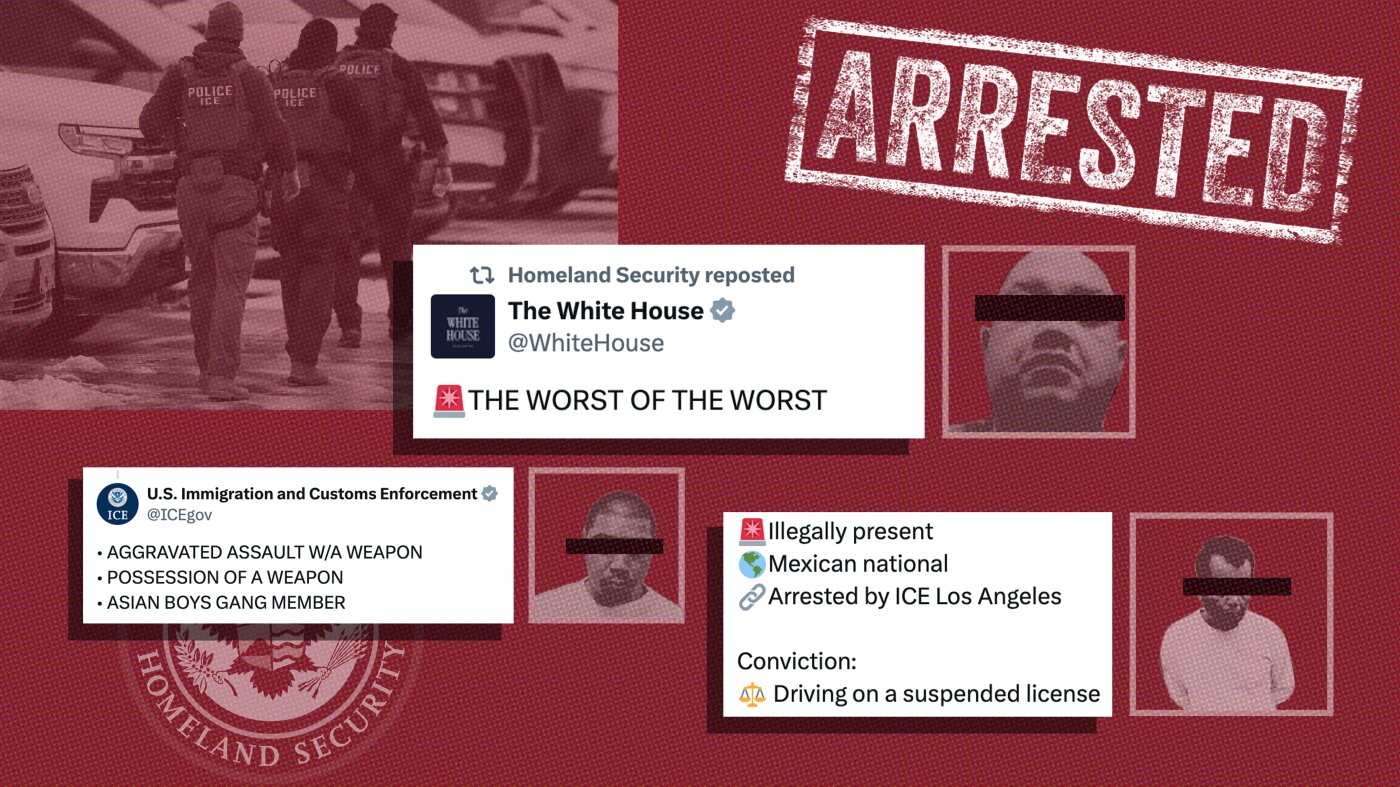
How the federal government is painting immigrants as criminals on social media

Politics14 hours ago
Where Iran’s ballistic missiles can reach — and how close they are to the US

World15 hours ago
Has India’s influence in Afghanistan grown under the Taliban?
-

 World2 days ago
Exclusive: DeepSeek withholds latest AI model from US chipmakers including Nvidia, sources say
-

 Massachusetts2 days ago
Mother and daughter injured in Taunton house explosion
-

 Montana1 week ago
2026 MHSA Montana Wrestling State Championship Brackets And Results – FloWrestling
-

 Louisiana5 days ago
Wildfire near Gum Swamp Road in Livingston Parish now under control; more than 200 acres burned
-

 Denver, CO2 days ago
10 acres charred, 5 injured in Thornton grass fire, evacuation orders lifted
-

 Technology7 days ago
YouTube TV billing scam emails are hitting inboxes
-

 Technology7 days ago
Stellantis is in a crisis of its own making
-

 Politics7 days ago
OpenAI didn’t contact police despite employees flagging mass shooter’s concerning chatbot interactions: REPORT