Washington
Farmers say proposed drinking water requirements would drive up costs • Washington State Standard


The state Department of Health is considering an update to how it exempts small farms from some drinking water requirements.
The department says it’s a simple fix to outdated and inaccurate language to what’s known as the “same farm exemption,” but farmers say the changes could be costly and burdensome – especially for farms with onsite housing for employees.
Under a 1995 state law, water systems with four or fewer connections, serving residences on the same farm and providing water to fewer than 25 people a day are excluded from some regulatory requirements that larger public water systems face.
The updated language would require those exempt farms to reapply every five years for the exemption. If at any point, the farms didn’t qualify, the Department of Health would have the authority to take away the exemption.
Jay Gordon, at the Washington State Dairy Federation, said proving that they fit the requirements every year could be expensive, unnecessary and go against what the Legislature intended when setting up the exemption in state law.
“We don’t actually know what’s going to be required as every well is somewhat different,” Gordon said. “But you’re asking a lot of people to prove they’re exempt from something that the Legislature already says they’re exempt from.”
Gordon said the changes could have broad financial implications on small farms that are already struggling. Testing water and reapplying could cost thousands of dollars, he said.
If a farmer owns multiple rentals on their property that they use to house workers temporarily, they’ll have to follow the new application process, Gordon said.
“Either the farmer eats that money or passes it off to employees or tenants,” Gordon said.
Roberto Bonaccorso, spokesman for the Department of Health, said the only change to current policy is requiring the five-year approval for the exemption, which allows the state to maintain safe and reliable drinking water for the employees of agricultural entities.
The five-year application would be similar to what businesses complete in a water facilities inventory form, which requires them to state their water system’s source and treatment as well as the number of connections it uses, Bonaccorso wrote in an email.
The department is proposing the change following a request from the U.S. Environmental Protection Agency to study unregulated public water systems in the lower Yakima valley, Bonaccorso said.
Some of those farms were claiming a same farm exemption, despite being a larger facility than what the exemption allows, in part because of the 1995 law, which the department said was unclear and needed to be updated. “This misunderstanding caused DOH to review the policy and update to clarify its implementation,” he added.
In a June letter to the Department of Health, Yakima County’s public services director Lisa Freund wrote that the department should keep local governments and their regulations in mind when finalizing the rule. Counties are the ones who have to implement the rules, Freund wrote, and the water monitoring standards vary across them.
There is a public comment period open through Aug. 26. Ben Tindall, executive director at Save Family Farming, said the department has been responsive to some of their concerns so far.
But there are still questions surrounding the cost of this change, how many people it could affect and why the change is being made, Tindall said.
“This is very much a step in the wrong direction, and it’s going to damage farms throughout the state,” Tindall said.
Gordon said another concern is that the department does not have the authority to change this policy in the way that they are doing it. He said the department should either go through a formal rulemaking process or leave it up to the Legislature to change the exemptions process as they are the ones who made the law in the first place.
“They’re proposing pretty broad changes, and we certainly don’t think they have the legal authority to do this,” Gordon said. “At a high level, this is really bad governance.”
Bonaccorso wrote that there has been a discussion about requesting legislation but that a policy update can be done in a shorter time frame and implemented accurately to address the concerns regarding unregulated public water systems.
“It is common to update internal policies,” he said.
Following the public comment period, the department will review the feedback and consider making changes to the draft policy, which will then be updated on their website. There is no timeline for implementation yet.



The new law allows Rivian and Lucid to sell directly to consumers, highlighting growing pressure on traditional franchise systems.
On the Dash:
- Washington’s law allows Rivian and Lucid direct sales, signaling potential pressure on franchise protections.
- Rivian’s nearly $5 million ballot push, with up to $25 million planned, forced a legislative compromise.
- Nearly 70% consumer support direct sales, highlighting shifting buyer expectations in EV retail.
Electric-vehicle startup Rivian has secured an influential policy win in Washington state, gaining the ability to sell vehicles directly to consumers after a prolonged battle with dealer groups. The measure, signed this month, applies specifically to Rivian and Lucid and follows years of resistance rooted in franchise laws requiring automakers to sell through independent dealers.
The breakthrough came after Rivian signaled it would take the issue to voters through a ballot initiative, a move that carried an estimated cost of nearly $5 million, with the company prepared to spend an additional $25 million. Faced with that prospect, the state’s dealer lobby dropped its opposition and supported the legislative compromise.
Sign up for CBT News’ daily newsletter and get the latest industry stories delivered straight to your inbox.
Rivian’s internal polling showed that nearly 70% of respondents favored allowing manufacturers to sell vehicles directly to consumers. But, slightly fewer supported a model limited specifically to EV makers. Lawmakers ultimately approved a narrow exception, maintaining broader franchise protections while granting Rivian and Lucid direct-sales rights.
The decision arrives as Rivian works to expand its retail and profitability strategy. The company currently operates under a patchwork of state laws, with direct sales permitted in roughly half of U.S. states, though some impose limits on the number of locations. In states with restrictions, Rivian retail locations can showcase vehicles like the R1S SUV and R1T pickup, but cannot complete transactions or disclose pricing in-store.
The Washington outcome could influence similar efforts in other states, particularly those that allow ballot initiatives, including Arkansas, Ohio, Oklahoma, Montana, Nebraska, and South Dakota. Meanwhile, franchise laws in more than a dozen states continue to prohibit direct sales entirely.
Traditional automakers and dealer groups have pushed back against the Washington measure, arguing it creates an uneven playing field and could open the door to additional exceptions. Dealer advocates maintain that the franchise system supports competition, affordability, and local economic stability.
Lawmakers described the compromise as a balance between expanding consumer choice and preserving the existing dealership model, which remains a cornerstone of the U.S. auto retail system.
Washington
!∇∯$[+[!LIVESTREAMs!]+]Washington Wizards vs Portland Trail Blazers Game 𝐋𝐈𝐕𝐄 Stream Free ON Tv Channel
![!∇∯$[+[!LIVESTREAMs!]+]Washington Wizards vs Portland Trail Blazers Game 𝐋𝐈𝐕𝐄 Stream Free ON Tv Channel](https://i1.wp.com/www.tvyayinakisi.com/wp-content/uploads/2021/01/sportstv.png?ssl=1 "!∇∯$[+[!LIVESTREAMs!]+]Washington Wizards vs Portland Trail Blazers Game 𝐋𝐈𝐕𝐄 Stream Free ON Tv Channel")
Cleveland Browns – Chicago Bears
Portland Trail Blazers vs Washington Wizards live: Portland Trail Blazers vs Washington Wizards look to seize control of thrilling Portland Trail Blazers vs Washington Wizards. Every team in the Portland Trail Blazers vs Washington Wizards has two wins apiece as we go into the final two game weeks. Portland Trail Blazers vs Washington Wizards will host Portland Trail Blazers vs Washington Wizards at Live NBA mAtch Durban’s Kings Park Stadium with the Portland Trail Blazers vs Washington Wizards a single point ahead of Portland Trail Blazers vs Washington Wizards in the standings and just one behind leaders Portland Trail Blazers vs Washington Wizards.

Washington Capitals vs Vegas Golden Knights
Washington Capitals vs Vegas Golden Knights live: Washington Capitals vs Vegas Golden Knights look to seize control of thrilling Washington Capitals vs Vegas Golden Knights. Every team in the Washington Capitals vs Vegas Golden Knights has two wins apiece as we go into the final two game weeks. Washington Capitals vs Vegas Golden Knights will host Washington Capitals vs Vegas Golden Knights at Durban’s Kings Park Stadium with the Washington Capitals vs Vegas Golden Knights a single point ahead of Washington Capitals vs Vegas Golden Knights in the standings and just one behind leaders Washington Capitals vs Vegas Golden Knights.

WNC wildfire updates for Monday, March 30, 2026

North Dakota punches ticket to 23rd Frozen Four in SF

Ohio EPA funding emergency generator projects to keep water moving

Oklahoma high school slowpitch softball: Top storylines, players to watch in 2026 season
Oregon Lottery Pick 4 results for March 29

Florida High School Football Rankings: Top 25 teams – Oct. 21

How old is Bo Nix? What to know about Oregon quarterback ahead of 2024 NFL Draft

Cleary's 21 help Le Moyne down Central Connecticut State 69-64 in OT

99th annual Pony Swim held in Virginia

Indiana Members Credit Union announced as new anchor tenant at Bottleworks District

Video: Iran to Allow More Oil Ships Through Strait of Hormuz, Trump Says

Dem senator warns deportation could let Virginia woman’s illegal immigrant killer ‘escape accountability’

Newsletter: G7 ministers to hold talks on war’s economic fallout
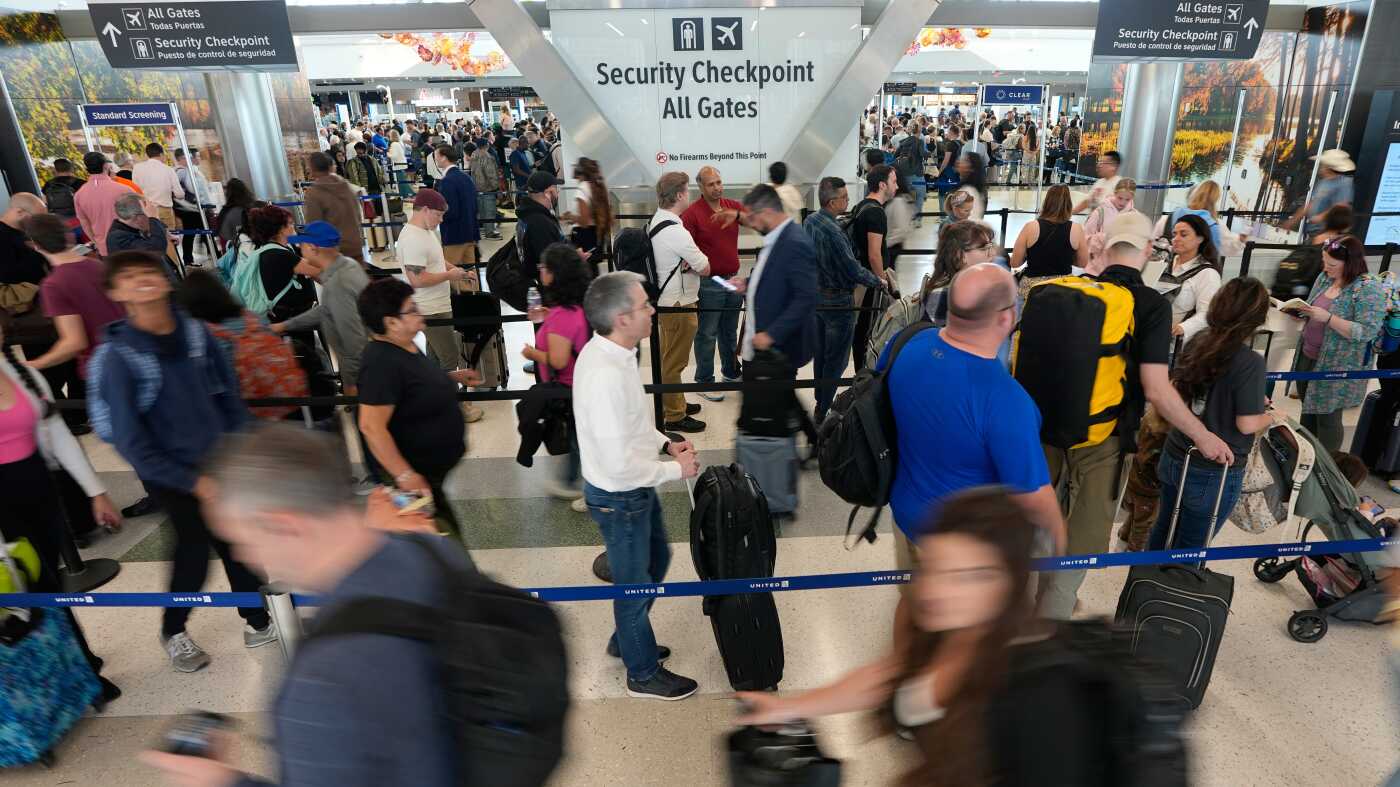
ICE officers could remain at airports after TSA workers are paid

Scathing report claims nation’s oldest labor union ‘betrayed’ MAGA members through ‘shocking’ spending
-

 Sports1 week ago
IOC addresses execution of 19-year-old Iranian wrestler Saleh Mohammadi
-

 Miami, FL4 days ago
Jannik Sinner’s Girlfriend Laila Hasanovic Stuns in Ab-Revealing Post Amid Miami Open
-

 New Mexico1 week ago
Clovis shooting leaves one dead, four injured
-

 Politics1 week ago
Schumer gambit fails as DHS shutdown hits 36 days and airport lines grow
-

 Tennessee7 days ago
Tennessee Police Investigating Alleged Assault Involving ‘Reacher’ Star Alan Ritchson
-

 Minneapolis, MN4 days ago
Boy who shielded classmate during school shooting receives Medal of Honor
-

 Science1 week ago
Record Heat Meets a Major Snow Drought Across the West
-

 Technology1 week ago
YouTube job scam text: How to spot it fast