Utah
Utah’s reservoirs are at about 90% capacity, except Lake Powell


Kyle Dunphey
(Utah News Dispatch) Utah’s reservoirs are still at what the state calls “impressive” levels, with most hovering around 90% capacity — by comparison, statewide levels were a little over half full this time last year.
But Lake Powell, the country’s second-largest reservoir, is an outlier. According to the U.S. Bureau of Reclamation, it’s currently at about 35% capacity.
During a Legislative Water Development Commission meeting in Salt Lake City last week, director of the Utah Division of Water Resources Candice Hasenyager gave lawmakers an update on the state’s water outlook.
“Our reservoirs are about full, we’re at about 90% of our statewide average,” she said. But, she noted Lake Powell as a glaring exception.
“That’s still definitely a concern that we have,” Hasenyager told lawmakers.
In a statement, the U.S. Bureau of Reclamation said Lake Powell should not be compared to other reservoirs in the state because of its size and the various policies that dictate its levels.
“Lake Powell is substantially larger, with a live capacity of nearly 25 million acre-feet,” a spokesperson for the bureau said. “This capacity is more than eight times the capacity of Strawberry Reservoir.”
Those levels are often out of the state’s control, and are in part due to the complexity of the Colorado River Basin and the system that allocates water to seven states and Mexico, called the Colorado River Compact.
Through the compact, the bureau “has modified the operating guidelines for Glen Canyon and Hoover dams through 2026, to protect these facilities and lake levels if poor hydrologic conditions persist,” the spokesperson said.
Despite Lake Powell appearing to be far behind Utah’s other reservoirs in terms of capacity, the bureau noted that the situation is much better than last year — currently, it sits at about 24 feet higher than last May, and officials say levels will continue to rise, expected to hit about 41% capacity in June. After that, the bureau said it will decline until spring runoff in 2025.
Still, the state’s lack of control over Lake Powell drew some disapproval from outgoing Rep. Phil Lyman, R-Blanding, who is currently running for governor. Lyman, a fierce critic of the federal government’s presence in Utah, lamented the levels being “set by the Secretary of the Interior.”
“Are we working with the Secretary of the Interior, are we working with the federal government to keep that at a viable level?” Lyman asked. “What we’ve really seen is intentional, keeping that below a viable recreation level and I hope the legislature can influence that decision in the future.”
In response to Lyman’s comments, the Bureau of Reclamation pointed to the bevy of compacts, federal laws, court decisions, contracts and regulatory guidelines that control flows in the Colorado River and levels at Lake Powell.
“Reclamation has a long-standing history of working with all stakeholders in the basin on cooperative agreements that help define operational actions at critical times and to protect the levels at Lake Powell and sustain and protect the Colorado River Basin,” the bureau said.
When asked about Lyman’s comments, Utah Gov. Spencer Cox responded, “I have no idea what he’s talking about.”
“People can make up stuff all they want. Nobody is deliberately keeping the water levels low at Lake Powell,” the governor said during his monthly PBS news conference on Thursday, calling his gubernatorial opponent’s claim “bonkers.”
Cox pointed to ongoing negotiations among water managers from Colorado River basin states who are working on a new management plan ahead of 2026, when the current guidelines expire.
Cox told reporters the state has been releasing its own water from Flaming Gorge Reservoir to ensure the Glen Canyon Dam at Lake Powell can continue generating power. Some of that water was released to Lake Mead, he said — now, the state is hoping to get that water back.
“There are big discussions about where that water goes and where our portions of the water go. We’ve had huge releases from upstream reservoirs that have gone into Lake Powell,” Cox said. “That’s mostly our water. …These are very, very complex negotiations that are going back and forth, and part of the negotiations and what we’re doing right now is making sure we can restore the water that we released.”
‘Exactly what we need’
On Thursday, the Division of Water Resources said over half of the snow from this winter has melted, with recent weather patterns resulting in “optimal spring runoff.”
“A slow warmup is exactly what we need to have a safe and effective spring runoff,” Hasenyager said in a statement. “We still have a good amount of snow in the mountains, so we are hoping for a gradual snow melt.”



Utah’s power play went 2-for-4, and it was the first time the Mammoth have scored two power play goals in a game since the last time they played the Capitals (Mar. 3, at Washington). Dylan Guenther and Logan Cooley each capitalized on the man-advantage in the first period. Cooley was added to the top unit with Barrett Hayton out of the lineup (week-to-week, upper-body injury), and he shared what was working for the top unit.
“Just trying to establish a shot,” Cooley explained. “Trying to build off that and then things start to open up. We have a lot of great players on that unit that can make a lot of plays, and I think when we establish a shot first (mentality) that’s when we’re going to get our opportunities, and find seams and different rebounds like that.”
“They were rolling,” Tourigny said of the power play. “The way they were attacking, the way they were direct, they were really aggressive. They were intentional, their aggressiveness, that paid off.”
In addition to his power play goal, Guenther also scored three minutes and 55 seconds later. The forward has six multi-goal efforts this season and he set a new career-high in points (61). This is his second consecutive season with 60 or more points. Guenther has been a consistent scorer for the Mammoth as he has nine goals in the month of March and has scored eight of those in the last 11 games. He trails on Boston’s Pavel Zacha (9) for the league lead in that span.
MacKenzie Weegar scored his first goal as a member of the Mammoth in the third period. He’s contributed a point in two-straight games and has grown his role with Utah. In addition to playing alongside alternate captain Mikhail Sergachev on the top d-pairing, Weegar contributes to both sides of special teams.
It’s a close playoff race in the Western Conference and Utah is still in the first wildcard spot. However, the Mammoth will need to raise their game, keep a high level of intensity, and manage their emotions in the final nine games of the regular season. Utah’s next game is a tough test against the Los Angeles Kings on the road.
“Everyone’s gotta look in the mirror, we all got better and we all know that,” Keller said. “Still super confident with our group. This is the most exciting part of the year and the most exciting hockey. We’re all positive, and we’ll learn from it and go to L.A..”
“Yeah, I think we started out good,” Cooley reflected. “Special teams were good. I thought the first period, we were moving it well. I think we kind of just started to let it slip, give up some odd-man rushes, and they capitalized. Every game is so important right now, and it stings. It’s two points that we probably should have had, especially early on with the way we were playing. We got to make sure that we are ready for a heck of a battle with L.A.”
Additional Notes from Tonight (per Mammoth PR)
- Sergachev registered three assists in the first period marking the first three-assist frame of his NHL career. This also marked his second career three-point period, both of which have come against Washington, as well as his fourth three-point game this season.
- Alexander Kerfoot posted an assist on Weegar’s third-period goal, marking his 300th career NHL point. He is the 16th player from his draft class to reach that milestone. He joins Sergachev as the second skater to accomplish the feat with Utah.
- Keller posted three primary assists tonight for his eighth three-point game, third three-assist game, 23rd multi-point game, and 13th multi-assist game in 2025-26, all of which are team highs. The Captain has seven points over his last six games (3G, 4A).
- Utah’s captain has tallied at least 70 points for the fourth consecutive season and he became the 12th NHL player to accomplish this feat over that stretch. According to NHL PR, Keller is the fifth player in NHL history to eclipse the 70-point mark in each of a franchise’s first two seasons.
Upcoming Schedule

FOR IMMEDIATE RELEASE
March 26, 2026
Media Contacts:
Louisa Tavlas
ltavlas@niskanencenter.org
Arnold Ventures
media@arnoldventures.org

Olin: Legislators, Cox, “providing law enforcement with additional resources to improve investigative outcomes” and keep Utah safe.
Washington, DC (March 26, 2026) — The Niskanen Center and Arnold Ventures applaud the Utah State Legislature and Governor Spencer Cox for passing new, bipartisan legislation designed to solve more crimes and provide support for crime victims. The bill, H.B. 137, passed both the Utah House of Representatives and the Utah Senate by wide, bipartisan margins and was signed into law by the Governor today.
“Making Utah as safe as possible requires ensuring law enforcement has every available resource to identify and arrest every criminal who preys upon innocent citizens,” said Jason Olin, senior government affairs manager for criminal justice at the Niskanen Center. “HB 137 establishes a Violent Crime Clearance Rate Fund that will provide law enforcement with additional resources to improve investigative outcomes. We thank Rep. Clancy and Sen. McKell for their leadership on this critical issue and Gov. Cox for signing this important piece of legislation.”
“Solving more violent crimes quickly can bring peace to victims and reduce the number of future victims,” said Kevin Ring, vice president of criminal justice advocacy at Arnold Ventures. “Would-be offenders need to know that they will be held accountable, and this law will make it more likely they will. We thank legislative leaders, including Rep. Clancy and Sen. McKell, and Gov. Cox for making sure Utah taxpayers and communities get the biggest public safety bang for their buck.”
H.B. 137, sponsored by Rep. Tyler Clancy (R-60) and Sen. Mike McKell (R-25), creates the Violent Crime Clearance Rate Fund to assist Utah law enforcement agencies in solving violent crimes. The fund will support hiring additional law enforcement officers and providing them with the tools they need to solve crimes. H.B. 137 includes provisions to ensure that resources from the fund reach departments of all sizes across both urban and rural jurisdictions. It will also help researchers conduct rigorous evaluations of the policies and practices that are most effective in solving crimes.
Utah is one of the safest states in the nation. But since 2019, the state’s violent crime clearance rate has hovered around 53%. That means nearly half of all violent crimes reported in Utah result in no arrest and no accountability. Even Utah’s 2024 homicide clearance rate of 74% — well above the national average — leaves more than 1 in 4 murders unsolved. Behind each of those unsolved cases is a victim whose family has been denied justice.
Olin, Ring, and other criminal justice experts are available for interview or comment.
More information on the Niskanen Center’s criminal justice policy work can be found here.
More information on AV’s criminal justice policy work can be found here.
###
The Niskanen Center advances an evidence-based agenda to reduce the social costs of crime and punishment. Our priority is to deter crime and reduce violence by building effective systems that deliver proportional punishment swiftly and predictably, and by ensuring law enforcement has the capacity to keep our neighborhoods safe.
Arnold Ventures is a philanthropy that supports research to understand the root causes of America’s most persistent and pressing problems, as well as evidence-based solutions to address them. By focusing on systemic change and bipartisan policy reforms, AV works to improve the lives of American families, strengthen communities, and promote economic opportunity.

The Utah Jazz are clearly doing everything they can to keep their pick in the upcoming NBA draft. Something tells me that next season, we won’t see as many players on the injury report as this season. That means that the core of this Jazz team will play, and it’s clear they’re going to play well. The question is, of the current Jazz roster, who is going to be the most important player next season? Now, Utah may win the lottery and that could change this entire question. If Utah drafts someone like Darryn Peterson or AJ Dybantsa, that changes everything. That said, let’s just ignore the lottery and draft for the sake of this question. If we’re looking at the odds, it’s statistically a little more likely Utah doesn’t draft in the top four of the draft anyway.
Welcome to SB Nation Reacts, a survey of fans across the NBA. Throughout the year we ask questions of the most plugged-in Jazz fans and fans across the country. Sign up here to participate in the weekly emailed surveys.
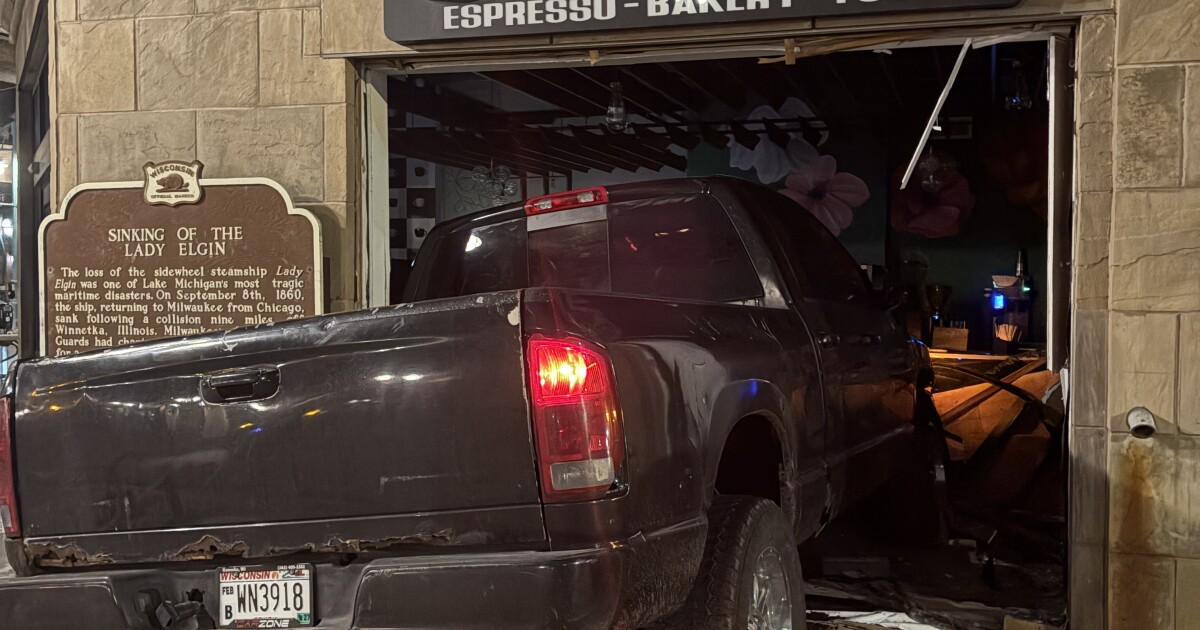
Truck drives in to Grace Coffee in Milwaukee’s Historic Third Ward overnight

Power outage impacts more than 5,000 customers in Midtown Atlanta

Man dead, 2 others hurt in overnight shooting in Minneapolis

Cooler temps Friday with some afternoon sun, warmer weekend | March 27, 2026

CMU acquires Chatham’s Eastside location, will lease back part of property

Florida High School Football Rankings: Top 25 teams – Oct. 21

How old is Bo Nix? What to know about Oregon quarterback ahead of 2024 NFL Draft

Cleary's 21 help Le Moyne down Central Connecticut State 69-64 in OT

99th annual Pony Swim held in Virginia

Indiana Members Credit Union announced as new anchor tenant at Bottleworks District

Video: Will ICE Change Under Its New Leader?

DHS shutdown breakthrough comes at cost for Republicans as funding fights nears end

Rubio joins crucial G7 talks as Iran war set to dominate second day

A surprise resignation could open the door for an independent to win a Montana Senate seat

Video: Savannah Guthrie Says She Believes Her Mother Was Taken for Ransom
-

 Detroit, MI1 week ago
Drummer Brian Pastoria, longtime Detroit music advocate, dies at 68
-

 Science1 week ago
How a Melting Glacier in Antarctica Could Affect Tens of Millions Around the Globe
-
 Science1 week ago
I had to man up and get a mammogram
-

 Movie Reviews1 week ago
‘Youth’ Twitter review: Ken Karunaas impresses audiences; Suraj Venjaramoodu adds charm; music wins praise | – The Times of India
-

 Sports6 days ago
IOC addresses execution of 19-year-old Iranian wrestler Saleh Mohammadi
-

 New Mexico5 days ago
Clovis shooting leaves one dead, four injured
-
 Business1 week ago
Disney’s new CEO says his focus is on storytelling and creativity
-

 Texas1 week ago
How to buy Houston vs. Texas A&M 2026 March Madness tickets