Utah
Utah’s bar license reforms now coming into final focus


Remember when I told you to temper your expectations last month? Remember when I told you to not get too excited? You did listen, right? News from several outlets this week (FOX13, Trib, KPCW) seems to point to what is increasingly looking like the final iteration of Utah’s annual omnibus liquor bill. One bill to rule them all. Well, rule all the drinkers.
Amongst the items on the proposed HB548 is the banning of high ABV products like Everclear, adding a few cents tax to your liquor bill, and also allowing guests to take hotel bar drinks back to their room. I’ll go over the full list when the final bill is stamped and signed. Until then, a look at bar licenses in the state – 2023’s hot topic item.
Antimatter, neodymium, Utah bar licenses – so goes the list of the most scarce resources in the Beehive. The relative exhaustion of Utah’s inventory has forced DABS commissioner’s hands into contriving what are now known as the “ready to operate” guidelines. Simply put: appear before the commission for your golden ticket to open a bar, and you’ll need to demonstrate your ability to open right now. No waiting on a final hire, no promises the stools will arrive tomorrow. Skip away from the meeting and be prepared to unlock your doors – today.
On paper the logic seems solid, why hand out a license to a business not ready to operate? As we saw in the previous year though, the lack of certainty can put businesses in a huge financial bind; having to support a litany of ongoing expenses without clarity or confidence. 2023 had plenty of precarious examples – Edison House having to retain staff to the tune of $70,000 per month while waiting indefinitely for the greenlight – just one.
As a reminder, the dearth of bar licenses is a completely avoidable one. One bar license is presently permitted per 10,200 residents in Utah. That number? Arbitrarily plucked from the ether some six years ago. With that in mind, and kudos to the state for appreciating that point – the folks in charge arranged a study of other control states. What exactly was everyone else up to?
At the start of this year, FOX 13 ran an interview covering what the study discovered. No one was surprised to learn that the ratio in other states, was indeed lower. Much lower. On average, like-minded control states saw a ratio closer to one per 5000. While you’d probably need the smelling salts if I told you Utah was set to double the number of bars overnight – lawmakers did throw out a range of one license per 7-8000 as something that might make this year’s bill. Note: in the notoriously debauched state of Idaho, the limit is one per 1,500 residents (per city). Just sayin’
Sean Means’ piece in the Tribune this week had some granular detail that proved enlightening. While I previously cautioned against getting too hot under the collar about Utah returning to a quota of 1 per 7850 (merely reverting to 2018 limits) it’s possible we now might see a somewhat racy quota of one per 7,246 residents. As Means explained in his article, expect that to boost the state’s current 350 bars by another 136. Crack open the babycham right? Wrong.
Those 136 new licenses will be doled out incrementally through 2031. Should that happen uniformly over the proposed seven-year period – expect 19 (ish) new licenses each year. And of course, sprinkle a few more in there for population increases. There’s just one small wrinkle in the plan.
Even in a year drier than the West Dessert, Utah managed to dole out 28 bar licenses in 2023. Slightly more names than that appeared (and still do) on wait lists. Remember that commissioners themselves called last year’s fifteen new licenses, “basically a Band-Aid”. This presumably makes 2024’s triage ostensibly more of the same treatment, albeit with a little kiss, and some soothing there theres.
What this all means, unless any substantial changes expect the DABS policy of “ready to operate” to continue for at least the next half-decade.
Want to stay on top of the SLC food scene, minute by minute, dish by dish? Here are a few other places you should follow along:
- FREE newsletter – never miss a story and signup for our weekly Utah food news
- PAID subscription – support the website, the ads and popups go bye bye!
- Instagram – follow us here for a dish by dish look at what’s hot
- Food talk group – chew the fat with other likeminded Utah foodies
- Best of SLC 2023 – our ever updating list of what’s best in the Beehive

Hi, I’m Stuart, nice to meet you! I’m the founder, writer and wrangler at Gastronomic SLC. I’m a multiple-award winning journalist and have written in myopic detail about the Salt Lake City dining scene for the better part of seventeen years.
I’ve worked extensively with multiple local publications from Visit Salt Lake to Salt Lake Magazine, not least helped to consult on national TV. Pause those credits, yep, that’s me! I’m also a former restaurant critic of more than five years, working for the Salt Lake Tribune. I’m largely fueled by a critical obsession with rice, alliteration and the use of big words I don’t understand. What they’re saying about me: “Not inaccurate”, “I thought he was older”, “I don’t share his feelings”.
Want to know more? This is why I am the way I am.
This article may contain content provided by one of our paid partners. These are some of the best businesses in Utah. For a list of all our current and past relationships see our partnership history page.



SALT LAKE CITY — A controversial Utah proposal to crack down on the presence of immigrants in the country illegally that had seemed stalled gained new life Friday, passing muster in new form in a relatively narrow vote.
In a 39-33 vote, the Utah House approved HB386 — amended with portions of HB88, which stalled in the House on Monday — and the revamped measure now goes to the Utah Senate for consideration.
The reworked version of HB386, originally meant just to repeal outdated immigration legislation, now also contains provisions prohibiting immigrants in the country illegally from being able to tap into in-state university tuition, certain home loan programs and certain professional licensing.
The new HB386 isn’t as far-reaching as HB88, which also would have prohibited immigrants in the country illegally from being able to access certain public benefits like food at food pantries, immunizations for communicable diseases and emergency housing.
Moreover, Rep. Trevor Lee, R-Layton and the HB88 sponsor, stressed that the new provisions in HB386 wouldn’t impact immigrants in the country legally. He touted HB88 as a means of making sure taxpayer money isn’t funneled to programming that immigrants in the country illegally can tap.
Rep. Lisa Shepherd, R-Provo, the HB386 sponsor, sounded a similar message, referencing, with chagrin, the provision allowing certain students in the country illegally to access lower in-state tuition rates at Utah’s public universities. Because of such provisions “we’re taking care of other countries’ children first, and I want to take care of Utahns first. In my campaign I ran and said Utahns first and this bill will put Utahns first,” she said.
If we stop young folks who have lived here much of their life from going to school and getting an education, it is really clear to me that we have hurt that person. It’s not clear to me at all that we have benefitted the rest of us.
–Rep. Ray Ward, R-Bountiful
The relatively narrow 39-33 vote, atypical in the GOP-dominated Utah Legislature, followed several other narrow, hotly contested procedural votes to formally amend HB386. Foes, including both Democrats and Republicans, took particular umbrage with provisions prohibiting immigrants in the country illegally from being able to pay in-state tuition and access certain scholarships.
As is, students in the country illegally who have attended high school for at least three years in Utah and meet other guidelines may pay lower in-state tuition, but if they have to pay out-of-state tuition instead, they could no longer afford to go to college.
“If we stop young folks who have lived here much of their life from going to school and getting an education, it is really clear to me that we have hurt that person. It’s not clear to me at all that we have benefitted the rest of us,” said Rep. Ray Ward, R-Bountiful.
Rep. Hoang Nguyen, D-Salt Lake City, noted her own hardscrabble upbringing as an immigrant from Vietnam and said the changes outlined in the reworked version of HB386 run counter to what she believes Utah stands for.
“I fear that what we’re doing here in Utah is we are eroding what truly makes Utah special, the Utah way. We are starting to adopt policies that are regressive and don’t take care of people. Utahns are one thing. Citizens are one thing. People is the first thing,” she said.
Rep. John Arthur, D-Cottonwood Heights, said the measure sends a negative message to the immigrant students impacted.
“If we pass this bill today, colleagues, we will be telling these young people — again, who have graduated from our high schools, these kids who have gone to at least three years of school here — that you’re no longer a Utahn,” he said.
If we are compassionate to those who come the legal way and we are compassionate to those who already live here, that does not mean that we lack compassion for others in other ways.
–Rep. Kristen Chevrier, R-Highland
Rep. Kristen Chevrier, R-Highland, said the debate underscores a “fallacy” about compassion. She backed the reworked version of HB386, saying Utah resources should be first spend on those in the country legally.
“If we are compassionate to those who come the legal way and we are compassionate to those who already live here, that does not mean that we lack compassion for others in other ways,” she said.
The original version of HB386 calls for repeal of immigration laws on the books that are outdated because other triggering requirements have not been met or they run counter to federal law.
The Key Takeaways for this article were generated with the assistance of large language models and reviewed by our editorial team. The article, itself, is solely human-written.

SALT LAKE CITY (KUTV) — A man died after he was caught in an avalanche in Big Cottonwood Canyon over the weekend.
A spokesperson for the Salt Lake County Sheriff’s Office confirmed on Thursday that Kevin Williams, 57, had died.
He, along with one other person, was hospitalized in critical condition after Saturday’s avalanche in the backcountry.
MORE | Big Cottonwood Canyon Avalanche
In an interview with 2News earlier this week, one of Williams’ close friends, Nate Burbidge, described him as a loving family man.
“Kevin’s an amazing guy. He’s always serving, looking for ways that he can connect with others,” Burbidge said.
A GoFundMe was set up to help support Williams’ family.
BE THE FIRST TO COMMENT
_____

CONTENT WARNING: This report discusses suicide and includes descriptions of audio from 911 calls that some viewers may find disturbing.
LAS VEGAS — Exclusively obtained 911 recordings detail the hours leading up to the discovery of an 11-year-old Utah girl and her mother dead inside a Las Vegas hotel room in an apparent murder-suicide.
Addi Smith and her mother, Tawnia McGeehan, lived in West Jordan and had traveled to Nevada for the JAMZ cheerleading competition.
The calls show a growing sense of urgency from family members and coaches, and several hours passing before relatives learned what happened.
MORE | Murder-Suicide
Below is a timeline of the key moments, according to dispatch records. All times are Pacific Time.
10:33 a.m. — Call 1
After Addi and her mother failed to appear at the cheerleading competition, Addi’s father and stepmother called dispatch for a welfare check.
Addi and her mother were staying at the Rio hotel. The father told dispatch that hotel security had already attempted contact.
“Security went up and knocked on the door. There’s no answer or response it doesn’t look like they checked out or anything…”
11:18 a.m. and 11:27 a.m. — Calls 2 and 3
As concern grew, Addi’s coach contacted the police two times within minutes.
“We think the child possibly is in imminent danger…”
11:26 a.m. — Call 4
Addi’s stepmother placed another call to dispatch, expressing escalating concern.
“We are extremely concerned we believe that something might have seriously happened.”
She said that Tawnia’s car was still at the hotel.
Police indicated officers were on the way.
2:26 p.m. — Call 5
Nearly three hours after the initial welfare check request, fire personnel were en route to the scene. It appeared they had been in contact with hotel security.
Fire told police that they were responding to a possible suicide.
“They found a note on the door.”
2:35 p.m. — Call 6
Emergency medical personnel at the scene told police they had located two victims.
“It’s going to be gunshot wound to the head for both patients with notes”
A dispatcher responded:
“Oh my goodness that’s not okay.”
2:36 p.m. — Call 7
Moments later, fire personnel relayed their assessment to law enforcement:
“It’s going to be a murder suicide, a juvenile and a mother.”
2:39 p.m. — Call 8
Unaware of what had been discovered, Addi’s father called dispatch again.
“I’m trying to file a missing persons report for my daughter.”
He repeats the details he knows for the second time.
3:13 p.m. — Call 9
Father and stepmother call again seeking information and continue to press for answers.
“We just need some information. There was a room check done around 3:00 we really don’t know where to start with all of this Can we have them call us back immediately?”
Dispatch responded:
“As soon as there’s a free officer, we’ll have them reach out to you.”
4:05 p.m. — Call 10
More than an hour later, Addi’s father was put in contact with the police on the scene. He pleaded for immediate action.
“I need someone there I need someone there looking in that room”
The officer confirmed that they had officers currently in the room.
Addi’s father asks again what they found, if Addi and her mother are there, and if their things were missing.
The officer, who was not on scene, said he had received limited information.
5:23 p.m. — Call 11
Nearly seven hours after the first welfare check request, Addi’s grandmother contacted police, describing conflicting information circulating within the family.
“Some people are telling us that they were able to get in, and they were not in the hotel room, and other people saying they were not able to get in the hotel room, and we need to know”
She repeated the details of the case. Dispatch said officers will call her back once they have more information.
Around 8:00 p.m. — Press Conference
Later that evening, Las Vegas Metropolitan Police held a news conference confirming that Addi and her mother, Tawnia McGeehan, were found dead inside the hotel room.
The investigation remains ongoing.
______

Sen. Denise Ricciardi & Jeff Rogers: Stopping super speeders can save lives in New Hampshire

N.J. group demands review of Trenton immigration arrest operation at auto shop

Public Service Company of New Mexico Declares Preferred Dividend

Disaster as fencing wire gets tangled in spinning car wash in North Carolina

Broncos won’t repeat as NCHC hockey champs, lose to N. Dakota: ‘We broke down’

Florida High School Football Rankings: Top 25 teams – Oct. 21

Cleary's 21 help Le Moyne down Central Connecticut State 69-64 in OT

How old is Bo Nix? What to know about Oregon quarterback ahead of 2024 NFL Draft

99th annual Pony Swim held in Virginia

Indiana Members Credit Union announced as new anchor tenant at Bottleworks District

ICE blasts Washington mayor over directive restricting immigration enforcement

Did the EU bypass Hungary’s veto on Ukraine’s €90 billion loan?
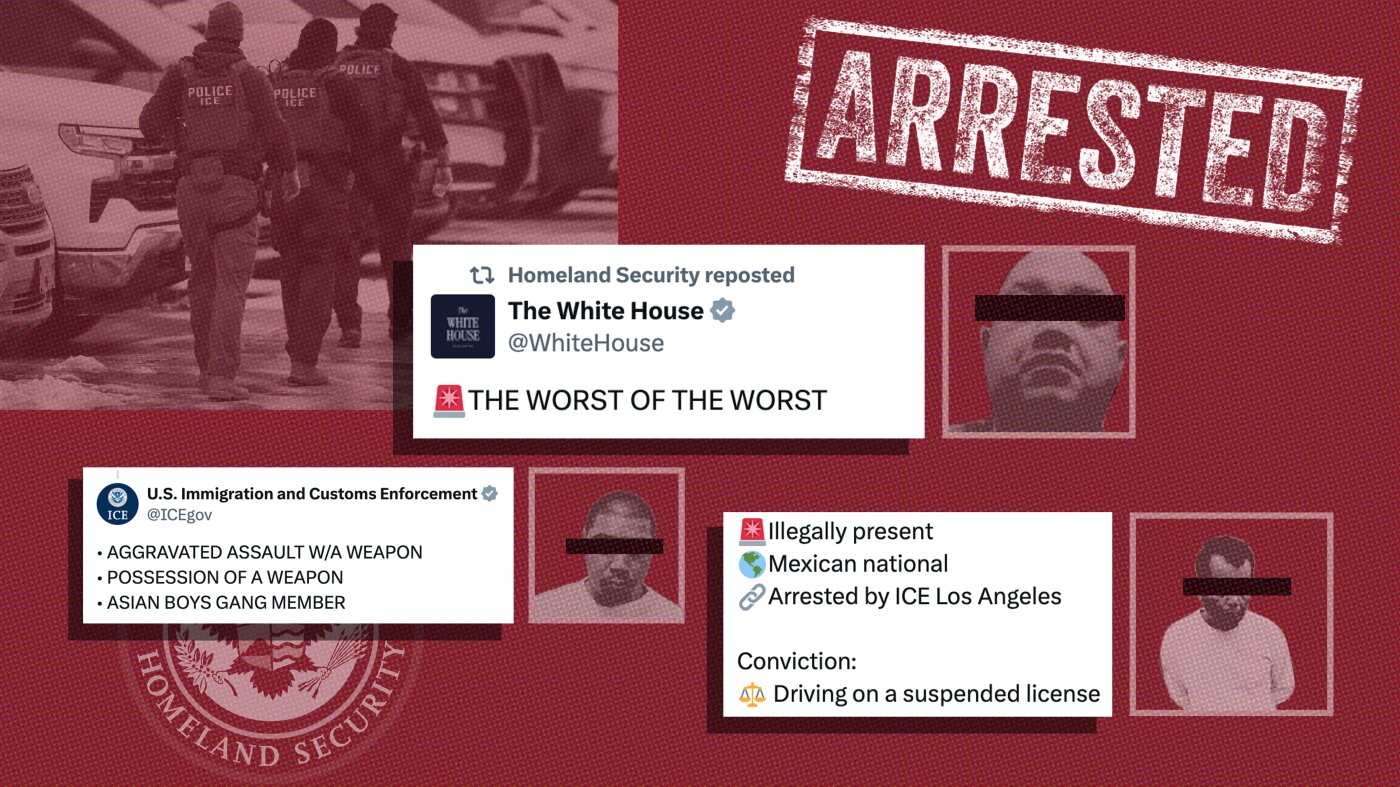
How the federal government is painting immigrants as criminals on social media

Where Iran’s ballistic missiles can reach — and how close they are to the US

Has India’s influence in Afghanistan grown under the Taliban?
-

 World2 days ago
Exclusive: DeepSeek withholds latest AI model from US chipmakers including Nvidia, sources say
-

 Massachusetts2 days ago
Mother and daughter injured in Taunton house explosion
-

 Montana1 week ago
2026 MHSA Montana Wrestling State Championship Brackets And Results – FloWrestling
-

 Louisiana5 days ago
Wildfire near Gum Swamp Road in Livingston Parish now under control; more than 200 acres burned
-

 Denver, CO2 days ago
10 acres charred, 5 injured in Thornton grass fire, evacuation orders lifted
-

 Technology7 days ago
YouTube TV billing scam emails are hitting inboxes
-

 Technology7 days ago
Stellantis is in a crisis of its own making
-

 Politics7 days ago
OpenAI didn’t contact police despite employees flagging mass shooter’s concerning chatbot interactions: REPORT