Utah
Utah Legislature votes to join lawsuit on federal lands


The state Legislature’s Management Committee voted Tuesday to file a friend of the court brief before the U.S. Supreme Court in support of the Utah Attorney General’s lawsuit filed in August over 18.5 million acres of “unappropriated” public lands under federal ownership.
A tie vote of 4-4 was broken by leadership, as per rules, when House Speaker Mike Schultz, R-Hooper, and Senate President Stuart Adams, R-Layton, voted once again in favor of supporting the unique lawsuit.
Both Schultz and Adams said it is well past time that Utah do something about the vast amount of land controlled by the federal government that they say is often left in disarray and neglected.
“I’ve had the opportunity to watch Utah’s public lands over the last almost 40 or almost 50 years,” Schultz said. “And what is happening to our public lands kills me. As a conservationist at heart, who spends a lot of his own money, a lot of my own money, on improving land and making it better — to see the mismanagement that’s happening on our Forest Service lands, on our BLM lands, on all of the federally managed lands, is sickening, and we should all be ashamed of it. It’s going backwards.”
The amicus curiae, or friend of the court brief, comes in response to a lawsuit announced last month in a press conference by Utah Gov. Spencer Cox, joined by Utah Attorney General Sean Reyes.
The country’s highest court has yet to take up the case. But if it were to rule in Utah’s favor, control of a significant portion of public lands would shift to state capitals like Phoenix, Boise and Salt Lake City, instead of the nation’s Capitol 2,000 miles away.
It is those people, Schultz added, in charge of those lands in Utah — “bureaucrats” far removed from the state — who are out of touch with what is going on with the landscapes.
“It is not right and it is not fair,” he asserted.
Adams said the lawsuit leaves untouched places already under active management by federal agencies such as national parks, wilderness areas, national forests, monuments, tribal lands or military properties — land he describes as appropriated and serving a designated use. That amounts to 18.8 million acres.
But 18.5 million acres of federal land is unencumbered for a special purpose, land that the state fears will soon change with public land restrictions that no longer make the land public multiuse and for purposes of sustained yield — something etched in stone under the Federal Lands Policy Management Act passed in 1976.
The land ownership by the federal government puts Utah at a distinct disadvantage, Adams said.
“In comparison the federal government owns less than 1% of the ground in Connecticut, New York and Rhode Island. Our Founding Fathers took care of those three states,” Adams said. “If you move on, less than 3% of the land is federally owned in Delaware, Maine, Massachusetts, Ohio and Pennsylvania, and yet they own 70% of the land here in Utah.”
Look but don’t touch
Some GOP lawmakers have said the federal government is whittling away access to land they control, via restrictions that include 500 miles of roads closed and more to come. Grazing allotments are at risk as well, due to a new position by the Bureau of Land Management that nongovernment organizations are on an equal footing when it comes to being granted leases — but for conservation purposes lawmakers say have the potential to decimate public access.
“It takes a hands off, don’t touch, stay out approach, and they’re going to continue to close down more roads. This is access to some of those of us that love to get out and recreate, camp and climb or whatever it is,” Schultz said. “Hiking in our public land, they’re no longer going to have access to some of their favorite areas unless they’re willing to walk in 15 to 20 miles to get … to this area or to the area where they historically had access — and that is not fair to people with disabilities and that is not fair to people who can’t hike that far in.”
Several Democratic members of the Legislative Management Committee made clear their objection to Utah’s involvement, citing the costs that will run into the millions and the small chance of any tangible victory.
“I think it’ll be taxpayer money being lost in another fruitless litigation. But we will lose outdoor recreation opportunities. We will lose habitat for wildlife, and this will provide us with an opportunity to privatize some of the 70% of the land we all recreate on,” said Sen. Kathleen Riebe, D-Cottonwood Heights.
Rep. Jen Dailey-Provost, D-Salt Lake City, also wanted her name put on record as opposing the legal action.
But if the state is successful, it would take over leasing on those federal lands.
Utah has hired former U.S. Solicitor General Paul Clement and leading Supreme Court advocate Erin Murphy to argue the case, which could add up to $14 million in costs.



The Utah Jazz won their final summer league game against the Portland Trail Blazers 83-79. It was a fun game that came down to the wire, with a few Jazz players showing promise that could help the team.
The player who surprisingly didn’t help as much as you’d hope was Blake Hinson, who shot just 1/9 from three. Hinson was a sharpshooter for the Jazz last season, and it’s too bad that he couldn’t show that shooting stroke in the summer league. It’s likely not a big deal, but it would have been nice to see that shooting continue in the summer league. It does make you wonder why all the players who played for Utah last season, or will be getting regular minutes next year, didn’t shoot well in Las Vegas. Is that a trend? Or is it just a coincidence? It makes you wonder if the Jazz have been running hard practices, or if the players are tired from enjoying their time in Las Vegas? There’s no way to really know, but it’s interesting.
Utah’s strongest performer, in terms of plus-minus, was Bez Mbeng. He was a team-leading +14 and, even though he didn’t shoot the ball well either, his defense and intensity really shows on the floor. In this one, Mbeng had 4 steals and handled the ball for a lot of the game. He was also one of the top players in minutes with 20 in this one. I personally really like Mbeng and I’m rooting for him to make the team. I do think he can be a defensive-focused do-it-all player who could really contribute if he keeps improving.
Justin Harmon scored the ball well, leading the team in scoring with a team-leading 21 points. He had 6 free throws in this one and was a positive contributor overall. Harmon could be a nice addition to the training camp roster and, if he can show out, maybe he can earn himself a roster spot. He’s worth watching going forward at the very least.
And with that, the summer league is now over, and we now enter a long summer that will lead into one of the most exciting eras of Jazz basketball I can remember. It will be led by the best prospect in Jazz history to actually suit up for the Utah Jazz, and I can’t wait to see him develop into a superstar wearing the purple and blue.

Jon Anderson will be charged with moving the Orem school forward following the death of conservative commentator Charlie Kirk on campus last year.
(Bethany Baker | The Salt Lake Tribune) Incoming UVU President Jon Anderson poses for a photo with his family after an event announcing his selection at Utah Valley University in Orem on Friday, July 17, 2026.

BEAVER COUNTY, Utah — A massive community effort is underway as volunteers and Beaver County crews distribute thousands of sandbags to protect homes from the potential path of floodwaters.
After the Cottonwood Fires, residents have been waiting for weeks for relief to come in the form of rain, though officials now warn it may come all at once with an increased risk of flooding and debris flow.
Emergency Service Director Les Whitney believes that the fire has left plenty of debris to bring trouble for residents.
“We got a lot of water. We’re bringing debris with it, so tree branches, tree limbs, logs, lots of different size firewood, and that’s all in the creeks. We’re worried about that plugging up our bridges and stuff, so we have heavy equipment and excavators located in strategic places so that we can keep those bridges open,” said Whitney.
An estimated 140 homes and condominiums were spared from the flames, but remain in the paths of floodwaters.
Residents can also pick up sandbags at the Beaver County Sheriff’s Office or at the Beaver County Rodeo Fairgrounds.
-

 Kentucky4 minutes ago
Two-vehicle crash injures one in Pike County, Kentucky, troopers say
-
 Louisiana10 minutes ago
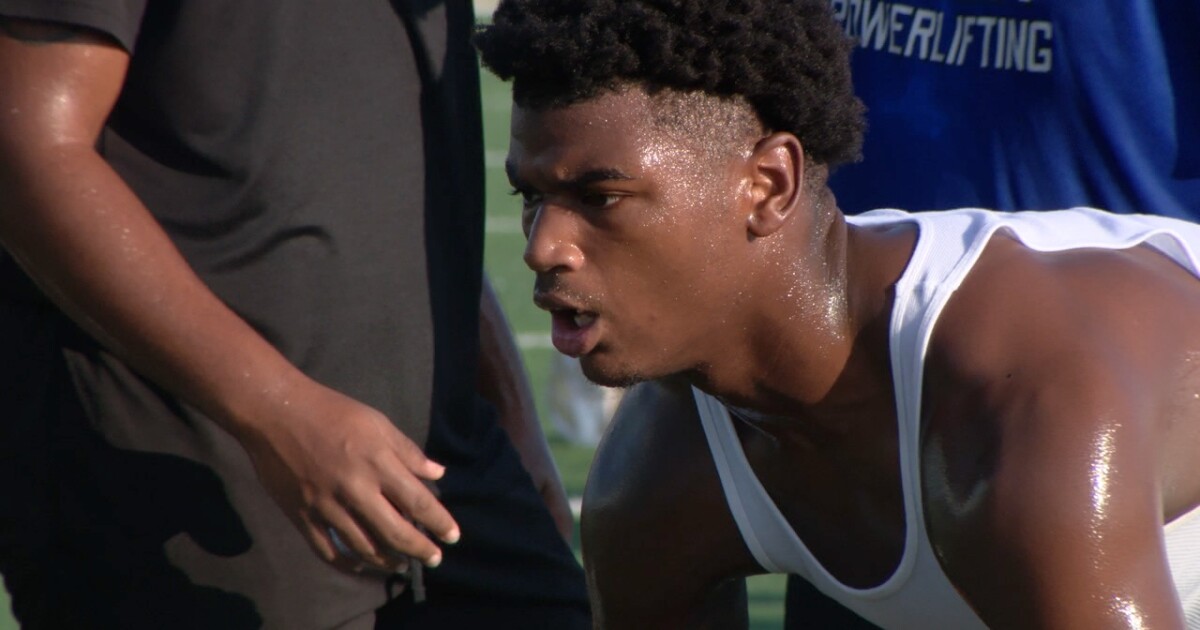
Lafayette Renaissance edge rusher Ansinneo Charles commits to Louisiana
-

 Maine16 minutes ago
Maine Trust announces 2 hires in Augusta, Waterville
-

 Maryland22 minutes ago
What Doesn’t Change in Chevy Chase, Maryland
-

 Michigan28 minutes ago
Huntington Bank to close 13 Michigan branches by the end of August — see full list here
-

 Massachusetts34 minutes ago
Massachusetts RMV under fire after illegal immigrant trucker kills state trooper
-

 Minnesota40 minutes ago
Thousands expected to attend Minnesota Yacht Club festival in St. Paul
-

 Mississippi46 minutes ago
Mississippi Lottery Mississippi Match 5, Cash 3 results for July 17, 2026

