Utah
Utah leaders say gas prices will fall thanks to new agreement – KSLTV.com

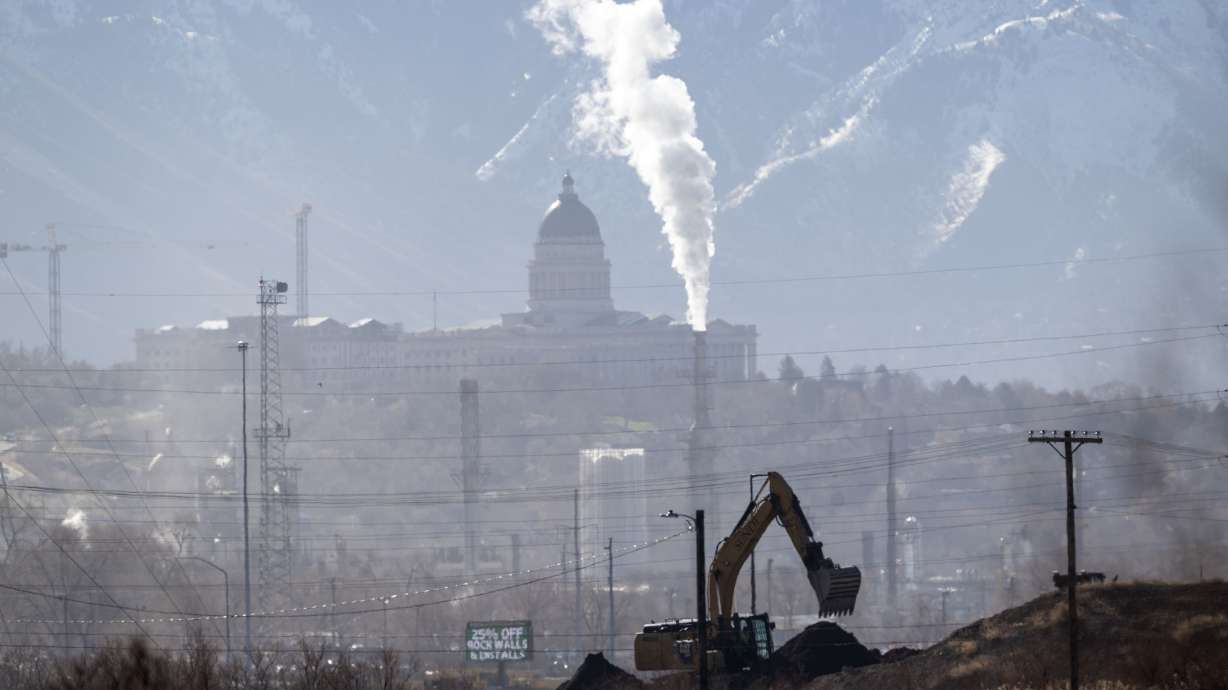
SALT LAKE CITY — State leaders announced a partnership with the petroleum industry that they said will increase fuel supply, lower gas prices and resolve an ongoing feud with Idaho.
The announcement comes after weeks of tension between Utah and Idaho leaders over a plan floated by Utah lawmakers to tax fuel exports. Officials in Idaho said that could have raised gas prices there.
Instead of taxing exports, the Legislature plans to cut the state gas tax by 15% while working with the oil and gas industry to increase the supply of fuel at Utah’s refineries, House Speaker Mike Schultz, R-Hooper, announced Monday.
“If you want lower prices, you have to increase supply. It’s that simple,” Schultz said. “This agreement will bring in nearly 800,000 additional gallons of fuel into the market every single day, boosting competition and putting real downward pressure on prices at the pump.”
At the same time, leaders in Idaho have tentatively agreed to work to increase water supply on the Bear River system, which runs through Idaho, Wyoming and Utah. Gov. Spencer Cox signed a memorandum of understanding about that during a press conference at the state Capitol. Idaho Gov. Brad Little was expected to sign it soon, a spokesperson said.
“We are at a critical crossroads in Utah’s energy and water future and we are choosing an abundance mindset over managing scarcity,” the governor said. “This partnership not only benefits Utahns, but it will benefit the entire Intermountain region.”
He said industry leaders have committed to increase refinery production in Utah by 23,500 barrels of oil per day within the next five years. The state is also investing in fuel storage to help meet seasonal demand and infrastructure to aid production and delivery of fuel, Cox added.
The agreement with Idaho won’t secure any new water rights in the Bear River system, but will let both states work together on managing excess flows and water sustainability.
“We have so much in common — probably more in common with Idaho than any other neighbor out there — and so I’m grateful that the relationship is coming out even stronger,” Cox told reporters.
Meanwhile, the proposal to cut the gas tax, HB575, is moving through the Legislature in the final weeks of the session. Besides slashing the tax, the bill also requires refineries to report to the state how many barrels of oil and other petroleum products they produce. It also aims to make it easier to build pipelines in the state that would increase the supply of gasoline.
The bill, sponsored by Rep. Cal Roberts, R-Draper, was unanimously approved by a House committee last week and is awaiting a vote in the full House of Representatives.
Rikki Hrenko-Browning, the president of the Utah Petroleum Association, said “tightening supplies” in the fuel market has led to some higher prices.
“We stand together with state leadership to reaffirm our commitment to the state, to our neighbors and to our customers,” she said. “We look forward to working together to grow Utah to become an energy leader across the Intermountain West.”



SALT LAKE CITY — An Oklahoma-based kratom manufacturer is suing over Utah’s new law limiting sales of the compound, saying it could cost the company more than $10 million when it takes effect next month.
Botanic Tonics LLC manufacturers, distributes and sells a dietary supplement made of kratom and noble kava root known as “feel free,” according to a lawsuit filed in federal court on March 31. The company said SB45, which lawmakers passed in the recent legislative session, would prohibit it and three other companies from selling products at more than 300 retail locations statewide.
“Immediate projected losses to plaintiffs due to the statute’s ban on combination kratom dietary supplements exceed $10,704,428,” the complaints states. “To comply with the statute, plaintiffs have notified their direct to store distributors that all kratom leaf products combined with any other ingredient must be removed from store shelves and not made available for sale as of May 6, 2026, unless action is taken by this court to enjoin implementation of the statute.”
It went on to say that the law “denies access to such products for which there is clinical trial data establishing that they do not present a significant or unreasonable risk of illness or injury.”
The lawsuit was filed against Utah Attorney General Derek Brown and several state officials: Kelly Pherson, commissioner of the Utah Department of Agriculture and Food; Amber Brown, deputy commissioner of the Utah Department of Agriculture and Food; and Bradon Forsyth, director of the Utah Specialized Product Division.
Botanic Tonics filed the suit in conjunction with the Kratom Coalition Inc., asking a judge to declare Utah’s limits on kratom sales unconstitutional and block the state from enforcing it through a preliminary injunction. The company sued Utah’s Department of Agriculture and Food in a separate state court last year, but that complaint was eventually dismissed.
Kratom comes from a tropical tree and is used by some people for pain management. Kratom products have been sold in retail shops and include powders, gummies, teas and energy drinks.
The substance has been called “gas station heroin” because it can act on the same receptors in the brain that opioids do. Synthetic products derived from kratom can lead to overdose.
SB45 takes effect May 6 and will only allow for the sale of pure leaf kratom in Utah, and only in smoke shops and similar stores. It also gives manufacturers one year to stop producing anything other than pure kratom leaf in the state.
The bill’s sponsor, Sen. Mike McKell, R-Spanish Fork, said the law was meant to protect Utahns from the product. He said based on an informal poll he took of gas station clerks, “feel free” is one of the most popular kratom products sold in Utah, and called the product “extremely potent, extremely addictive.”
“I’m not worried about it being struck down,” he said of the law. “And the lawsuit doesn’t surprise me. This company has been very aggressive. They’ve sued the state in the past. Ultimately that case was dismissed, but I am confident in our case.”
The Key Takeaways for this article were generated with the assistance of large language models and reviewed by our editorial team. The article, itself, is solely human-written.

Utah regulators have cleared Y Combinator-backed Legion Health to let its artificial intelligence (AI) renew certain psychiatric prescriptions without a doctor signing off each time, The Verge reported on Friday (April 3). The $19-a-month pilot runs for a year and covers non-controlled, non-benzodiazepine maintenance medications.

By HANNAH SCHOENBAUM and ANDREW DALTON
SALT LAKE CITY (AP) — A Utah judge is set to hear arguments Tuesday on a protective order sought by a former partner against Taylor Frankie Paul, the star of “The Secret Lives of Mormon Wives” and a recently filmed season of “The Bachelorette” that was canceled over abuse allegations in the relationship.
Dakota Mortensen, who has temporary custody of his and Paul’s 2-year-old son, is asking the court to turn a short-term protective order against her into a long-term one as authorities investigate domestic violence reports from earlier this year.
Paul and Mortensen are expected to participate in the hearing remotely while their lawyers appear in person at the Salt Lake City courthouse. Details of the temporary protective order have been kept sealed.
Attorneys are expected to address reports under investigation from February, not a 2023 fight that led to Paul’s arrest and resurfaced just before her “Bachelorette” season was supposed to premiere, though the older issues may be discussed.
ABC last month announced the unprecedented move of shelving an entire, already-filmed new season of “The Bachelorette” with Paul in the title role. The network and its parent company Disney blamed the cancellation on a leaked video, shot in 2023 and posted by TMZ on March 19, in which Paul appears to punch, kick and throw chairs at Mortensen while her young daughter watches and cries.
Police body camera footage of Paul’s arrest in that case was featured in the series premiere of “The Secret Lives of Mormon Wives,” which first aired in 2024. Paul is shown calling it “the worst night of my life.” Video of the fight itself, which appears to be from Mortensen’s point of view, was not made public until last month’s leak.
Paul was charged with aggravated assault and other offenses, including domestic violence in the presence of a child. She pleaded guilty to a misdemeanor assault charge, and the other counts were dismissed.
Paul has two children with her ex-husband, Tate Paul, along with the son she had with Mortensen after their 2023 dispute.
A Paul representative said after the cancellation that she had been “silently suffering extensive mental and physical abuse as well as threats of retaliation” and was “finally gaining the strength to face her accuser.”
Mortensen said in a statement that he was “used to these baseless claims about me and our relationship, which I categorically deny.”
Production has also been paused on the fifth season of “The Secret Lives of Mormon Wives,” the Hulu series that made Paul a reality star. Her casting on “The Bachelorette” offered synergy between the shows for Disney, which owns both Hulu and ABC.
She became known as an influencer in the #MomTok community, a group of women from The Church of Jesus Christ of Latter-day Saints sharing their lives on TikTok. The group, and Paul’s admissions of polyamory within it, helped spawn the hit reality show.
On Sunday, Paul announced she was leaving what is widely known as the Mormon church. She said on Instagram that she will always have love and respect for the Utah-based religious institution but, “It’s time to detach myself.”
Dalton reported from Los Angeles.

Wellness Hangouts Are the New Happy Hours

Water prices increase for outdoor use in Denver due to drought conditions

Who are your all-time favorite late-round Seattle Seahawks draft picks?

Police track down man suspected of killing victim with one punch at Trolley station

This Milwaukee Bar Is a Total “Mullet” Experience

Florida High School Football Rankings: Top 25 teams – Oct. 21

How old is Bo Nix? What to know about Oregon quarterback ahead of 2024 NFL Draft

Cleary's 21 help Le Moyne down Central Connecticut State 69-64 in OT

99th annual Pony Swim held in Virginia

Indiana Members Credit Union announced as new anchor tenant at Bottleworks District

AOC doubles down on call for Trump’s ouster even after ceasefire announcement

EU made ‘no diplomatic effort’ to end Iran war, says MEP Botenga

U.S. and Iran agree to 2-week ceasefire

Democrat swing candidate called Biden’s border handling ‘a huge misstep’ after backing his approach as mayor

‘Policy of abuse’: Women march in Cuba against US energy blockade
-

 Atlanta, GA4 days ago
1 teenage girl killed, another injured in shooting at Piedmont Park, police say
-

 Movie Reviews6 days ago
Vaazha 2 first half review: Hashir anchors a lively, chaos-filled teen tale
-

 Culture1 week ago
Do You Know Where These Famous Authors Are Buried?
-

 Georgia1 day ago
Georgia House Special Runoff Election 2026 Live Results
-

 Pennsylvania2 days ago
Parents charged after toddler injured by wolf at Pennsylvania zoo
-
 Entertainment6 days ago
Inside Ye’s first comeback show at SoFi Stadium
-
 Milwaukee, WI2 days ago
Potawatomi Casino Hotel evacuated after fire breaks out in rooftop HVAC system
-

 Indianapolis, IN6 days ago
Fighting Illini begin Final Four preparations in Indianapolis