Utah
Utah could require device manufacturers to add content filters to phones, tablets for kids


Estimated read time: 4-5
minutes
SALT LAKE CITY — The state of Utah could require cellphone and tablet manufacturers to enable obscenity filters on devices used by minors, under a proposal that received initial support from a Senate committee on Wednesday.
Sen. Todd Weiler, R-Woods Cross, the sponsor of SB104, told the Senate Judiciary, Law Enforcement and Criminal Justice Committee last week the Utah Legislature approved a similar bill several years ago, which would only have gone into effect if at least five other states adopted the same legislation.
Tired of waiting for action from other states — which have so far declined to enact similar laws — Weiler said he’s ready for the Beehive State to move forward on its own, if need be.
“In the years since, we’ve made ourselves an outlier when it comes to social media and foreign websites,” Weiler said, in reference to the state’s high-profile social media regulations passed last year.
So, why not be an outlier when it comes to blocking pornography and other potentially harmful content on devices used by minors?
“The idea is to provide minors with protection and opportunities that they deserve as children to protect them from developing maybe an addiction to pornography before they’re even adults and allow them time to develop good online habits while they’re still young,” the senator said.
Weiler said many phones made by major manufacturers come with preinstalled software to enable content filtering, but they are deactivated by default and sometimes not easily enabled by parents.
His bill would allow the state attorney general to sue manufacturers who don’t comply with the requirements.
Elder Mervyn B. Arnold, a general authority seventy of The Church of Jesus Christ of Latter-day Saints, spoke in favor of the bill during its initial hearing on Jan. 23. Arnold — who joined Weiler as a private citizen to present the bill — praised efforts to keep children from coming across obscene material.
“This state has a fabulous record … for being out in front and protecting our children and grandchildren from these kinds of issues,” he said. “We do have a right to protect our children from obscene material.”
SB104 was supported by several parents and sexual exploitation advocates, but an earlier version of the bill was held in committee last week after a handful of business groups expressed concern that the bill could present liability to businesses beyond just the manufacturers.
Dave Davis, president and chief legal officer for the Utah Retail Merchants Association, asked why lawmakers aren’t waiting for other states before moving forward. The purpose of the earlier bill was to ensure “a critical mass for manufacturers so that Utah wouldn’t be on an island, and you just don’t get devices.”
He also called the criminal penalties “very, very, very heavy-handed,” and said he was concerned about the potential impact to retailers who sell phones. Representatives from mobile carriers AT&T and Verizon said they hoped to address concerns about liability to retail clerks who sell phones to Utahns.
“We’re just opening the box,” said Jodi Hart with AT&T.
Those with concerns all said they’re supportive of keeping pornography out of the hands of minors, as did Dylan Hoffman with TechNet, a national network of technology companies.
“However,” Hoffman said, “we must respectfully oppose this bill on the basis that we don’t believe that there’s a technically feasible way to comply.”
Instead, he said parents can install free or commercial third-party software to block inappropriate content, and raised the possibility that manufacturers could block sales of smartphones and tablets in Utah as a way to avoid liability.
Hoffman on Wednesday said his organization “(agrees) wholeheartedly with the intent of this bill,” but said he believes it may not pass constitutional muster.
Weiler acknowledged during the Jan. 23 hearing that the bill still needed some tweaks, and asked the committee to hold it without taking a vote while he worked to resolve them.
He introduced an amendment to the bill stating that nothing in it creates a cause of legal action against against the retailer of a device. The amendment also states that an adult — other than a parent or legal guardian — who disables a content filter on a minor’s device “for the purpose of disseminating pornography to the minor” can be charged with a class A misdemeanor subject to a fine up to $5,000.
The bill cleared committee unanimously on Wednesday after lawmakers adopted Weiler’s amendments.
The bill would allow the state attorney general to block a company’s action in violation of the law and seek civil penalties up to $5,000 for each violation. The attorney general would also be allowed to seek to strip companies of their license to operate in the state if they are found in violation.
Weiler was the sponsor of a bill last session that required adult websites to verify the ages of users. The law sparked the ire of the pornography industry and PornHub has since blocked access to users in the state.
Industry groups and the Free Speech Coalition challenged the law in court, but their lawsuit was dismissed in August 2023.
Related stories
Most recent Utah Legislature stories
More stories you may be interested in



Utah
Case dismissed for Wyoming man charged with allegedly kidnapping missing Utah girl – East Idaho News

POCATELLO — After a search for a missing Utah girl resulted in the arrest of a Wyoming man last November, a motion was accepted to dismiss the man’s case.
Anthony Holm of Star Valley, Wyoming, was originally charged on Nov. 17 with one felony count of second-degree kidnapping, but these charges were dismissed on March 17 during his preliminary hearing.
According to court documents, Bannock County Prosecutor Alan Boehme filed a motion to dismiss the case against Holm, as Utah will bring charges against him.
The motion was granted by Magistrate Judge Carol Tippi Jarman.
EastIdahoNews.com checked Utah court records, and no charges have been filed at the time of publication.
RELATED | Man arrested on kidnapping charges; missing Utah juvenile located safely
RELATED | Wyoming man charged with kidnapping thought teenager was 18, court documents say
The original incident occurred on Nov. 14, when Bannock County Sheriff’s deputies were contacted by the Box Elder County Sheriff’s Office in Utah, which requested assistance in locating a missing juvenile.
The juvenile was believed to be with Holm, who was driving a 2024 Ford Bronco, and was suspected to be in the Lava Hot Springs area.
Court documents state that the vehicle was spotted at a hotel in Lava Hot Springs; however, the license plate did not match the reported one. Bannock County Dispatch reported that the vehicle belonged to Holm, and later confirmed that he was staying at the hotel.
Deputies spoke with Holm and the 16-year-old girl outside of a hotel room.
When asked by deputies how he knew the girl, he said they met on the app Ashley Madison the day before, and that the girl told him she was 18.
RELATED | Ashley Madison isn’t the only place to cheat. Infidelity thrives on social media
Deputies spoke with the 16-year-old, who confirmed that she had told Holm she was 18, but did not want the man to go to jail. She later told deputies the plan was for them to stay in Lava Hot Springs to swim and spend the night there.
Documents state that in Willard, Utah, Holm had picked up the juvenile and traveled to Salt Lake City, where the two stayed at a hotel, before traveling to Idaho.
=htmlentities(get_the_title())?>%0D%0A%0D%0A=get_permalink()?>%0D%0A%0D%0A=htmlentities(‘For more stories like this one, be sure to visit https://www.eastidahonews.com/ for all of the latest news, community events and more.’)?>&subject=Check%20out%20this%20story%20from%20EastIdahoNews” class=”fa-stack jDialog”>

Utah’s power play went 2-for-4, and it was the first time the Mammoth have scored two power play goals in a game since the last time they played the Capitals (Mar. 3, at Washington). Dylan Guenther and Logan Cooley each capitalized on the man-advantage in the first period. Cooley was added to the top unit with Barrett Hayton out of the lineup (week-to-week, upper-body injury), and he shared what was working for the top unit.
“Just trying to establish a shot,” Cooley explained. “Trying to build off that and then things start to open up. We have a lot of great players on that unit that can make a lot of plays, and I think when we establish a shot first (mentality) that’s when we’re going to get our opportunities, and find seams and different rebounds like that.”
“They were rolling,” Tourigny said of the power play. “The way they were attacking, the way they were direct, they were really aggressive. They were intentional, their aggressiveness, that paid off.”
In addition to his power play goal, Guenther also scored three minutes and 55 seconds later. The forward has six multi-goal efforts this season and he set a new career-high in points (61). This is his second consecutive season with 60 or more points. Guenther has been a consistent scorer for the Mammoth as he has nine goals in the month of March and has scored eight of those in the last 11 games. He trails on Boston’s Pavel Zacha (9) for the league lead in that span.
MacKenzie Weegar scored his first goal as a member of the Mammoth in the third period. He’s contributed a point in two-straight games and has grown his role with Utah. In addition to playing alongside alternate captain Mikhail Sergachev on the top d-pairing, Weegar contributes to both sides of special teams.
It’s a close playoff race in the Western Conference and Utah is still in the first wildcard spot. However, the Mammoth will need to raise their game, keep a high level of intensity, and manage their emotions in the final nine games of the regular season. Utah’s next game is a tough test against the Los Angeles Kings on the road.
“Everyone’s gotta look in the mirror, we all got better and we all know that,” Keller said. “Still super confident with our group. This is the most exciting part of the year and the most exciting hockey. We’re all positive, and we’ll learn from it and go to L.A..”
“Yeah, I think we started out good,” Cooley reflected. “Special teams were good. I thought the first period, we were moving it well. I think we kind of just started to let it slip, give up some odd-man rushes, and they capitalized. Every game is so important right now, and it stings. It’s two points that we probably should have had, especially early on with the way we were playing. We got to make sure that we are ready for a heck of a battle with L.A.”
Additional Notes from Tonight (per Mammoth PR)
- Sergachev registered three assists in the first period marking the first three-assist frame of his NHL career. This also marked his second career three-point period, both of which have come against Washington, as well as his fourth three-point game this season.
- Alexander Kerfoot posted an assist on Weegar’s third-period goal, marking his 300th career NHL point. He is the 16th player from his draft class to reach that milestone. He joins Sergachev as the second skater to accomplish the feat with Utah.
- Keller posted three primary assists tonight for his eighth three-point game, third three-assist game, 23rd multi-point game, and 13th multi-assist game in 2025-26, all of which are team highs. The Captain has seven points over his last six games (3G, 4A).
- Utah’s captain has tallied at least 70 points for the fourth consecutive season and he became the 12th NHL player to accomplish this feat over that stretch. According to NHL PR, Keller is the fifth player in NHL history to eclipse the 70-point mark in each of a franchise’s first two seasons.
Upcoming Schedule

FOR IMMEDIATE RELEASE
March 26, 2026
Media Contacts:
Louisa Tavlas
ltavlas@niskanencenter.org
Arnold Ventures
media@arnoldventures.org

Olin: Legislators, Cox, “providing law enforcement with additional resources to improve investigative outcomes” and keep Utah safe.
Washington, DC (March 26, 2026) — The Niskanen Center and Arnold Ventures applaud the Utah State Legislature and Governor Spencer Cox for passing new, bipartisan legislation designed to solve more crimes and provide support for crime victims. The bill, H.B. 137, passed both the Utah House of Representatives and the Utah Senate by wide, bipartisan margins and was signed into law by the Governor today.
“Making Utah as safe as possible requires ensuring law enforcement has every available resource to identify and arrest every criminal who preys upon innocent citizens,” said Jason Olin, senior government affairs manager for criminal justice at the Niskanen Center. “HB 137 establishes a Violent Crime Clearance Rate Fund that will provide law enforcement with additional resources to improve investigative outcomes. We thank Rep. Clancy and Sen. McKell for their leadership on this critical issue and Gov. Cox for signing this important piece of legislation.”
“Solving more violent crimes quickly can bring peace to victims and reduce the number of future victims,” said Kevin Ring, vice president of criminal justice advocacy at Arnold Ventures. “Would-be offenders need to know that they will be held accountable, and this law will make it more likely they will. We thank legislative leaders, including Rep. Clancy and Sen. McKell, and Gov. Cox for making sure Utah taxpayers and communities get the biggest public safety bang for their buck.”
H.B. 137, sponsored by Rep. Tyler Clancy (R-60) and Sen. Mike McKell (R-25), creates the Violent Crime Clearance Rate Fund to assist Utah law enforcement agencies in solving violent crimes. The fund will support hiring additional law enforcement officers and providing them with the tools they need to solve crimes. H.B. 137 includes provisions to ensure that resources from the fund reach departments of all sizes across both urban and rural jurisdictions. It will also help researchers conduct rigorous evaluations of the policies and practices that are most effective in solving crimes.
Utah is one of the safest states in the nation. But since 2019, the state’s violent crime clearance rate has hovered around 53%. That means nearly half of all violent crimes reported in Utah result in no arrest and no accountability. Even Utah’s 2024 homicide clearance rate of 74% — well above the national average — leaves more than 1 in 4 murders unsolved. Behind each of those unsolved cases is a victim whose family has been denied justice.
Olin, Ring, and other criminal justice experts are available for interview or comment.
More information on the Niskanen Center’s criminal justice policy work can be found here.
More information on AV’s criminal justice policy work can be found here.
###
The Niskanen Center advances an evidence-based agenda to reduce the social costs of crime and punishment. Our priority is to deter crime and reduce violence by building effective systems that deliver proportional punishment swiftly and predictably, and by ensuring law enforcement has the capacity to keep our neighborhoods safe.
Arnold Ventures is a philanthropy that supports research to understand the root causes of America’s most persistent and pressing problems, as well as evidence-based solutions to address them. By focusing on systemic change and bipartisan policy reforms, AV works to improve the lives of American families, strengthen communities, and promote economic opportunity.
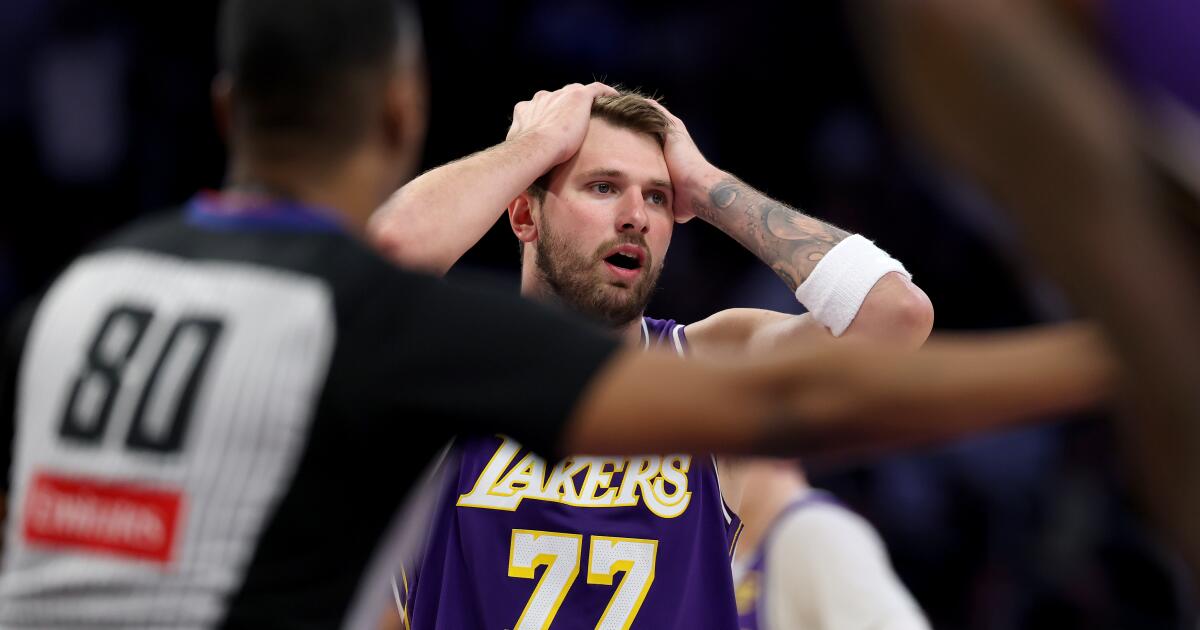
Lakers beat Nets, but Luka Doncic is facing suspension again after 16th technical

EU Parliament unblocks key political hurdle in digital euro talks

Man arrested in plot to firebomb Palestinian activist’s home after undercover op

Video: We Analyzed the Deadly Crash at LaGuardia

PWHL players bond with women’s hockey pioneers at Detroit clinic | NHL.com

Florida High School Football Rankings: Top 25 teams – Oct. 21

How old is Bo Nix? What to know about Oregon quarterback ahead of 2024 NFL Draft

Cleary's 21 help Le Moyne down Central Connecticut State 69-64 in OT

99th annual Pony Swim held in Virginia

Indiana Members Credit Union announced as new anchor tenant at Bottleworks District
EU Parliament unblocks key political hurdle in digital euro talks
Man arrested in plot to firebomb Palestinian activist’s home after undercover op

WATCH: Senate hearing goes silent after Angel Father confronts top Dem over daughter’s death

US diplomat Marco Rubio denounces settler violence, tolls in Hormuz strait

Iran-linked hackers have breached FBI Director Kash Patel’s personal emails | CNN Politics
-

 Detroit, MI1 week ago
Drummer Brian Pastoria, longtime Detroit music advocate, dies at 68
-

 Movie Reviews1 week ago
‘Youth’ Twitter review: Ken Karunaas impresses audiences; Suraj Venjaramoodu adds charm; music wins praise | – The Times of India
-

 Sports7 days ago
IOC addresses execution of 19-year-old Iranian wrestler Saleh Mohammadi
-

 New Mexico5 days ago
Clovis shooting leaves one dead, four injured
-
 Business1 week ago
Disney’s new CEO says his focus is on storytelling and creativity
-

 Technology6 days ago
YouTube job scam text: How to spot it fast
-

 Tennessee4 days ago
Tennessee Police Investigating Alleged Assault Involving ‘Reacher’ Star Alan Ritchson
-

 Texas1 week ago
How to buy Houston vs. Texas A&M 2026 March Madness tickets