


- President Donald Trump is expected to sign executive orders reducing the size of Utah’s Grand Staircase-Escalante and Bears Ears national monuments on Monday.
- The monuments have shifted in size between administrations, with Trump reducing them in 2017 and President Joe Biden restoring their original boundaries in 2021.
- Environmental groups and Utah officials are divided over the potential reduction, with critics threatening legal challenges and supporters seeking more local control.
Utah
Thunder beat Jazz despite late-game challenge blunder

/cdn.vox-cdn.com/uploads/chorus_asset/file/25235925/merlin_3015362.jpg "Thunder beat Jazz despite late-game challenge blunder")
When the officials blew their whistle with 12.3 seconds left in the fourth quarter of a tight game between the Utah Jazz and Oklahoma City Thunder Thursday night, signaling that the ball had gone out of bounds, there was confusion on the faces of the officials.
Whose ball was it?
Collin Sexton had driven into the paint, drawn two defenders and passed to his left to a cutting Walker Kessler.
It was a great play. Unfortunately, Chet Holmgren bailed out on Sexton once he saw what was developing and blocked Kessler’s shot.
Once the ball was loose, it landed in the middle of a cacophony of hands and bodies, and by the time it popped out and sailed out of bounds, the officials weren’t sure who touched it last.
Due to the confusion, they called a jump ball.
Jazz coach Will Hardy looked down the bench at George Rodman, the member of his staff in charge of determining whether a challenge is worthwhile.
Rodman believed it was off the Thunder, but Hardy saw that the Jazz only had one timeout left and then looked at Kessler.
“George had decent confidence in it, but I’ve seen George way more adamant with me to challenge than that play,” Hardy said.
“In the moment with Walker on the court, I just looked at Walk and said, ‘Win the jump.’ I had faith that he would win it.”
But to most everyone’s surprise, in the final seconds before play resumed, Thunder coach Mark Daigneault signaled for a timeout and a challenge.
“Their own guys were saying, ‘No, no, no don’t challenge it,’” Kessler said. “I think they knew it was not their ball.”
Apparently, not everyone knew because Daigneault was willing to take the risk. Although there was a small chance that on replay the officials still wouldn’t be able to determine who last touched the ball, which would result in an unsuccessful challenge and the Thunder losing a timeout, any successful determination would mean that the Thunder would keep their timeout.
But if the determination was that it was in fact Jazz ball, the Jazz would have possession and a chance to cut the lead to just a single point. And that’s exactly what happened.
“After review, the replay-center official overturns the call on the floor from a jump ball to Utah possession,” official James Williams said.
“Because the call on the floor was changed, the challenge by Oklahoma City is successful. They maintain their timeout and they still have a challenge remaining. Utah ball, 12.3 on the game clock.”
On the ensuing possession, had the Jazz been able to hit a 3-pointer, this could be a completely different story — one about a massive blunder of a challenge that changed the tide of a game for the Thunder when it seemed like they had the game in hand.
But after the challenge, OKC was very lucky that 39.3% 3-point shooter Simone Fontecchio missed a wide open look.
“If you had shown me a snapshot of the look that Simo got I would have signed up for that,” Hardy said.
“(The Thunder) kind of blew up the initial part of the action. Collin threw the ball in quick to Jordan (Clarkson), but Jordan had great recognition of the situation and Simo sprang into space and he’s a good shooter and he got a good look.”
But Fontecchio missed.
Clarkson got the rebound and missed a mid-range bank shot, but by that time it was over. Holmgren hit a free throw on the other end and then time expired.
The Utah Jazz’s six-game win streak was ended with a 134-129 loss to the Thunder.


Not only the Utah that we are today, but the Utah that we can choose to become.
(Rick Egan | The Salt Lake Tribune) Gabriel Meneses makes one of the limited edition flags for the United States 250th anniversary at Colonial Flag in Sandy on Monday, June 1, 2026.

President Donald Trump plans to sign an executive order on Monday afternoon shrinking the size of two national monuments in Utah, which currently cover a combined 5,094 square miles, the Deseret News confirmed on background with a Utah source.
The two national monuments — Grand Staircase-Escalante and Bears Ears — have oscillated in size through the previous several presidential administrations.
Grand Staircase-Escalante National Monument was created by President Bill Clinton in September 1996. Bears Ears National Monument was created by President Barack Obama in December 2016. Both designations received a mixed reception among Utahns.
In 2017, Trump reduced Bears Ears by about 85% and Grand Staircase by about 46%.
Then when former President Joe Biden took office in 2021, he restored them to their original sizes.
Trump is expected to sign the executive orders in the Oval Office on Monday at 4:30 EST.
In a statement to the Deseret News on Friday, the White House said, “Any policy announcement will come directly from the President. This reporting about potential executive orders is pure speculation.”
National monument designations place restrictions on what recreational and economic activity residents and visitors can do on the land. The designation also prohibits anyone from pursuing new mining claims, oil and gas leasing, coal exploration or new commercial infrastructure projects.
However, the Bureau of Land Management previously found that Bears Ears and Grand Staircase have little to offer in terms of oil and gas potential, the Deseret News previously reported.
For nearly three decades since Clinton designated the first monument, Utah’s federal delegation has asked for reductions in land size for more local control, recreation and grazing.
Recently, Utah Rep. Celeste Maloy challenged the monument’s resource management plan to return to a plan the first Trump administration outlined in 2020 with help from local Utahns.
However, her bill died after missing a key deadline to make it to the Senate for a vote.
People react to the potential land reduction

Based on an initial report by ABC4, environmental groups are already vocalizing their disapproval over a potential reduction of monument land.
Southern Utah Wilderness Alliance Executive Director Scott Braden described the potential executive order as “unlawful, unwise and unacceptable,” in a press release sent to the Deseret News.
“This action will only bring uncertainty and chaos to places that should instead be protected for their rich biodiversity, unique geology, and remarkable cultural values,” he wrote. Braden said SUWA was preparing to fight the executive order through lawsuits or by lobbying in Congress.
On X, former Utah state Sen. Nate Blouin referenced the land reduction in conjunction with the Babylon Fire, which as of Friday is 25% contained and has covered more than 100,000 acres in southeastern Utah.
“As the largest wildfire in the U.S. burns pristine landscapes in southeastern Utah, Trump is threatening to shrink both Grand Staircase & Bears Ears National Monuments,” Blouin wrote. “This unprecedented move is happening without input from the region’s ancestral inhabitants.


PROVO — The preliminary hearing for Tyler Robinson is expected to wrap up Friday morning in Provo. But it will still be several weeks before a decision is made on whether there is enough probable cause to bind him over for trial.
Robinson, 23, is charged with 10 crimes, the most serious being aggravated murder, in the death of conservative political activist Charlie Kirk, who was shot and killed on the campus of Utah Valley University on Sept. 10, 2025. A preliminary hearing is held to determine whether there is sufficient probable cause to go to trial on the charges levied against a defendant.
The Utah County Attorney’s Office finished calling their witnesses to testify on Thursday. Robinson’s defense team, who have already called two forensic experts from the FBI and ATF to testify, are expected to call one more on Friday before resting. Robinson has been attempting to cast doubt on the reliability of DNA testing, arguing that test results are subjective.
Prosecutors have objected several times to the line of questioning, arguing that it falls well outside the bounds of what is needed for a preliminary hearing. Even 4th District Judge Tony Graf warned defense attorney Michael Burt on Thursday during one line of questioning, “I feel we are exiting the orbit of probable cause.”
At the end of a preliminary hearing, both sides typically give closing arguments, and the judge decides if there is enough evidence for a defendant to proceed to trial. On Thursday, Graf granted a defense motion for each side to first submit briefs summarizing their arguments. The state will submit its brief by July 28, followed by the defense’s reply on Aug. 11 and the state’s rebuttal on Aug. 18. After that, another hearing will be held on Sept. 1 for both sides to present their cases in court.
Also on Thursday, portions of the video interview of Robinson’s roommate and boyfriend at the time of Kirk’s death, Lance Twiggs, were shown to the courtroom after much debate.
In addition, screenshots of the text messages exchanged between Twiggs and Robinson, a note Robinson left for Twiggs and messages on Discord that Robinson allegedly sent to his friend group prior to turning himself in, were all displayed in court.
For each piece of evidence introduced during the week-long hearing, Graf has had to decide:
- Whether to admit that evidence into the record;
- Whether that evidence should be shown to everyone in the courtroom;
- Whether that evidence can be filmed by the livestream camera broadcasting the hearing.
Robinson’s defense team remains adamant that broadcasting evidence to people outside the courtroom will jeopardize their client’s right to a fair trial by prejudging a future jury pool. Prosecutors want the evidence shown to everyone for the sake of transparency. Graf has compromised on several pieces of evidence by allowing them to be displayed to people in the courtroom but not on the livestream feed.
The extended debates over what evidence can be shown to the public and what is only viewed by attorneys and the judge have prompted Jeff Neiman, the attorney for Erika Kirk and the Kirk family, to address the courtroom several times, both in person and in a briefing filed Wednesday night, calling on the court to make all evidence public.
“For 10 months, the victim’s family has waited for this preliminary hearing. Erika Kirk, the widow of Charlie Kirk, and his grieving parents traveled to this courtroom for one reason: to be present at these proceedings and to bear witness to the evidence concerning the death of their husband and son. At certain points throughout the preliminary hearing, the Kirk family sat in the room while evidence was admitted but not presented for their viewing. They were present in body, yet denied the very thing their presence was meant to secure: their ability to meaningfully observe the preliminary hearing,” Neiman said. “The victim’s family’s position is simple. At a minimum, every exhibit entered into evidence during the preliminary hearing must be visible to every person lawfully present in the courtroom.”
Erika Kirk and Charlie Kirk’s parents have been in the courtroom all week for the preliminary hearing.
At Neiman’s request, Graf agreed that at the end of court on Friday, he will show to the courtroom only the enhanced UVU surveillance video allegedly showing Robinson’s movements across the roof of the Losee Center and when he drops off the roof and runs to a wooded area off Campus Drive. The video includes moments in which film editors zoom in on the alleged gunman and impose a red circle around him to make it easier to view. The video was originally submitted as evidence but was only shown to Graf and attorneys.
Friday’s hearing begins at 9 a.m. Watch it livestreamed here:

-

 Politics3 minutes ago
Trump-aligned House holdouts accused of holding ‘life-saving’ veterans bill ‘hostage’ over SAVE America Act
-

 Health10 minutes ago
Simple sitting change linked to lower risk of cancer death, study finds
-

 Sports12 minutes ago
Golf star records lowest round in LPGA major history with astounding performance at Evian Championship
-

 Technology18 minutes ago
Meta Verified scam threatens Facebook deletion
-
 Business25 minutes ago
Meta discontinues Instagram feature on new AI image generation tool after Hollywood backlash
-
 Entertainment28 minutes ago
Huey Lewis details how he ‘can’t enjoy music’ anymore because he is ‘basically deaf’
-
 Lifestyle33 minutes ago
Twice the stink! Two rare corpse flowers at the Huntington are set to bloom
-
 Politics40 minutes ago
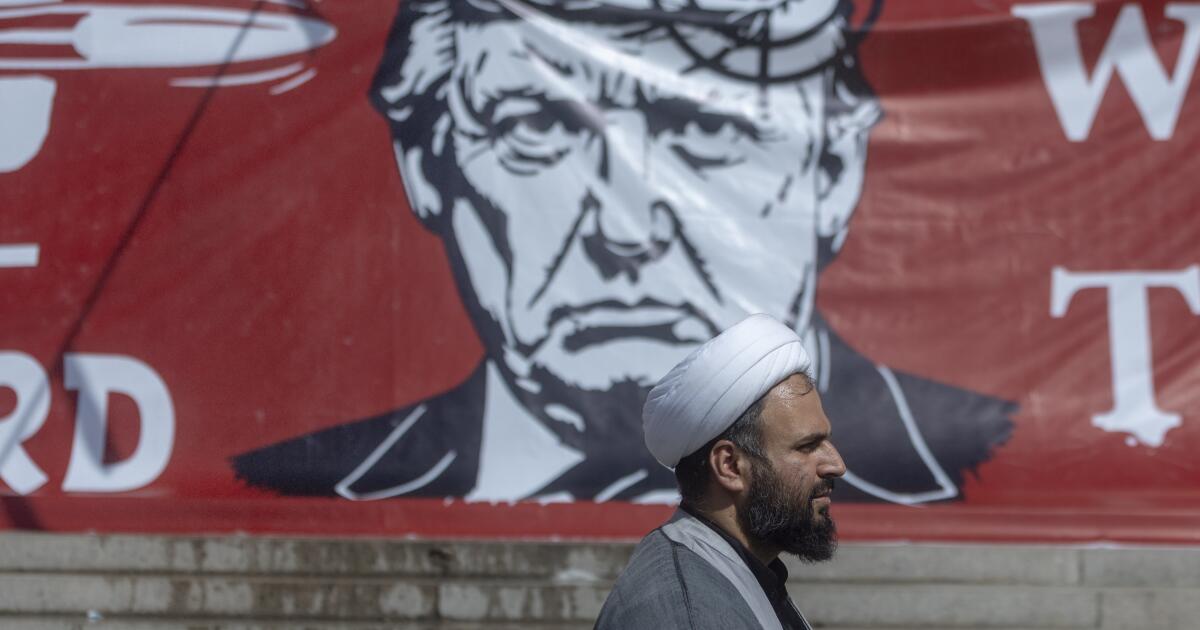
Assassinations unleashed under Trump haunt Iran war endgame

