After a difficult past year both personally and professionally, Utah Valley University President Astrid Tuminez is stepping down.
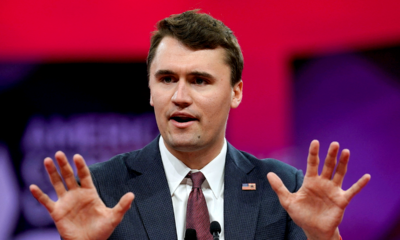
The sudden announcement came Wednesday as Tuminez addressed campus during her annual “State of the University” address. It falls about four months after the shooting death of political commentator Charlie Kirk catapulted UVU into the national spotlight.
Tuminez took the helm of the Orem school in September 2018 and is currently the longest serving public university president in the state. She will end her term on May 1, with a speech at UVU’s graduation as her final public event, according to her announcement.
That timing will mark just shy of eight years of Tuminez leading Utah’s largest university.
“If you’re lucky like me, you get to have a job you fall in love with,” Tuminez said Wednesday during her address.
Her hourlong speech was marked by dancing and singing as Tuminez twirled on stage in a pair of sparkly green boots — UVU’s signature color and a display of her signature spunk. The announcement of her departure came at the end, as she choked back what she said were happy tears.
“The momentum is tremendous, and it goes on without me. I just don’t know if your next president will be a dancer,” Tuminez said with a laugh.
The audience at UVU erupted in cheers and claps, with hundreds more also watching online, as Tuminez grooved off the stage to Taylor Swift, one of her favorite artists.
(Rick Egan | The Salt Lake Tribune) UVU President Astrid Tuminez dances with Wayne Vaught, provost, during a break in her annual “state of the university” address in the Keller Building on Wednesday, Jan 14, 2026.
Tuminez has been a celebrated leader during her historic tenure — both as the first woman and first person of color to run UVU.
“UVU is in a better place since when she started,” said Utah higher education Commissioner Geoff Landward.
In her time there, Tuminez has championed equality in education, even in the face of the Utah Legislature prohibiting campus offices for diversity, equity and inclusion, or DEI, at the state’s public schools. She also defended the liberal arts during state-imposed budget cuts last year.
But her tenure was rocked with Kirk’s killing on Sept. 10, which came as Tuminez was still grieving the death of her husband, Jeffrey Tolk, who died earlier last year. The shooting also fell on Tolk’s birthday. She mentioned Tolk during her speech Wednesday, with a photo of him as part of her presentation.
She had been on her way out of the country for a trip to Rome in memory of her husband on the day Kirk was shot, but she flew back to Utah as soon she got word.
“As difficult and heartbreaking as everything was — and frightening, to be honest — our students stepped up,” she said during her speech Wednesday.
Tuminez has shepherded UVU and the Utah County community in the aftermath, organizing extra security, hosting a campus vigil and opening therapy to any attendees. She’s also spoken publicly about attending therapy herself as the “trauma piled on top of trauma.”
“I do a ton of therapy,” she told The Salt Lake Tribune in October. “And it’s the first time in my life that I am doing that.”
Tuminez has since prioritized campus events focused on peace and conversation amid disagreement as a way to move forward. The move has been influenced by her past work.
She was a surprising and somewhat unconventional choice when she was selected as president of UVU in 2018.
“I had not gone through the ranks of academia,” she previously told The Tribune in 2024. “I’d never been a department chair or a provost.”
(Bethany Baker | The Salt Lake Tribune) Utah Valley University President Astrid Tuminez participates in a panel during the 2025 AI Summit at Salt Palace Convention Center in Salt Lake City on Tuesday, Dec. 2, 2025.
Instead, prior to the coming to UVU, she was in Singapore serving as Microsoft’s regional director for corporate, external and legal affairs over Southeast Asia. Her experience as a higher education leader was limited to about four years as vice dean of research and assistant dean of executive education at the Lee Kuan Yew School of Public Policy at the National University of Singapore.
Most of her professional life was spent in global conflict resolution, working with warring religious groups in Russia and her native Philippines. She said that helped prepare her for the response to Kirk.
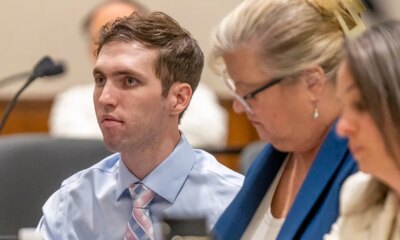
The university has faced some criticism, though — that its relatively small police force didn’t adequately prepare for having the high-profile controversial speaker on campus. Tuminez has called for an independent review and said she will wait to talk more until that report is finalized, likely sometime in the spring.
When she sat down with the Tribune in October, she expressed some uncertainty when asked about continuing her tenure at UVU.
“I wish I knew my plans for the future. Everybody would like to know,” she said then.
Tuminez added at the time: “Utah was not in my life plan, but I am truly, deeply and sincerely grateful. … I embraced this challenge of higher education, truly embraced it — truly embraced the mission that we formulated to educate every student for success in work and life.”
Going forward, she said Wednesday, she is not sure what she will do next.
“I don’t know where I’ll be, to be honest,” she said. “I think that’s a good thing — a little bit of a leap in the dark.”
A champion for education
As part of her ethos, Tuminez has pushed for Utah Valley University to remain open to all, giving every student an opportunity to pursue education.
Even as it has grown, the school has kept its open enrollment policy, accepting any student, no matter their test scores or GPA.
When she first started, she said: “Potential is not always obvious, so open enrollment is a wonderful thing.”
That direction has beckoned ballooning enrollment at the school, which saw its student population jump from about 39,000 when Tuminez started her tenure to a record 48,670 this fall. She has seen growth every single year — the school’s biggest challenge and her biggest success.
She also heralded a graduation rate increase. When she began, 35% of UVU students were completing their degrees in six years. By spring 2024, Tuminez saw that jump to 46%. That’s an 11 percentage point gain. It also surpassed a goal she set when she took the helm, accomplishing it two years ahead of when she’d planned.
Similarly, for Tuminez’s first commencement ceremony as president in spring 2019, there were fewer than 6,000 graduates. This April, there were 12,600.
The school has expanded to accommodate that, adding new buildings each year and a massive pedestrian bridge over Interstate 15 for students to walk to campus. Tuminez highlighted during her speech the new art museum and soccer stadium on campus — and plans for a wellness-focused campus to come in the future in Vineyard.
The school is also planning to launch several accelerated three-year bachelor’s degrees. And Tuminez has pushed for more classrooms to build artificial intelligence into the curriculum to educate a new generation of students.
Part of her eagerness for access comes from her own background. Tuminez has spoken extensively about being raised in the slums of the Philippines and how education offered her a different trajectory.
When she was 5 years old, she recalled during her inauguration speech, Catholic nuns offered seats to her and her sisters at a nearby school. She read everything she could — from cereal boxes to “Nancy Drew” books to learn.
“I started life as a statistic, and I would’ve been a statistic if people hadn’t helped me,” she said then from the stage.
She showed a picture of herself at 10 years old in her presentation Wednesday, standing outside a small hut on the ocean. She grew up deathly afraid of typhoons, she said, but “somehow, I always lived to see another day.”
This past year, she added, has been full of storms and she’s similarly persevered.
Tuminez went on to study at the University of the Philippines before transferring to Brigham Young University in Provo, Utah — after her fourth application for a visa; that experience has also led her to advocate for immigration. At BYU, she was valedictorian and got her bachelor’s degree in Russian literature.
She joked Wednesday that she was still glad she got to see UVU beat her alma mater twice in basketball during her tenure as president.
Tuminez later got her master’s degree from Harvard University and a doctorate from Massachusetts Institute of Technology — defending her dissertation in 1996 while seven months pregnant with her first kid.
At UVU, Tuminez has become known for both her determination and school spirit.
(Rick Egan | The Salt Lake Tribune) The Utah Valley Wolverines President, Astrid S. Tuminez, dances during a time out, in overtime action, between the Brigham Young Cougars and the Utah Valley Wolverines in Orem, on Wednesday, Dec. 1, 2021.
(Rick Egan | The Salt Lake Tribune) UVU President Astrid Tuminez announces that she is leaving Utah Valley University, during her “state of the university” speech on Wednesday, Jan 14, 2026.
She’s on the sidelines at nearly every sporting event at the school, cheering and waving her green pom-poms — which she brought with her to the stage Wednesday. The wrestling team has been so honored by her presence that they’ve gifted her a singlet with her name that now hangs in her office.
The petite president — who stands at 4-foot-11 — also regularly sports green streaks in her hair. And she can’t walk down a hallway at the school without being stopped, greeted and hugged by students she knows personally.
“At this point, I think she’s basically adopted all of the students here,” said Tuminez’s daughter, Michal Tuminez Tolk, during Tuminez’s inauguration ceremony in March 2019.
Her three children have grown up while she’s been in office, Tuminez said. Her youngest, Leo, was 8 years old when she started, and now he is driving. Her middle child, Whitman, is now getting a second associate degree. And Michal is recently engaged.
Part of her reason for stepping down, she said, is to spend more time with them.
Leah Hogsten | The Salt Lake Tribune Utah Valley University president Astrid Tuminez looks to her husband Jeffery Tolk and motions for him to stand in recognition. Astrid Tuminez became the university’s seventh president, March 27, 2019 and will oversee a campus of over 37,000 students with a top-tier teaching program, a competitive business school and a popular open admissions policy. Born and raised in the Philippines, she has a bachelor’s degree from Brigham Young University, a master’s degree from Harvard University and a doctorate from Massachusetts Institute of Technology.
‘Ups and downs’
Tuminez has, at times, drawn her fair share of critics, too.
In spring 2024, she moved to end the Intensive English Program at UVU that aided students who don’t speak English as a first language.
She said studies have shown those students do better immersed in traditional classes, and there are other resources for them on campus. Staff, though, spoke out against the closure.
Tuminez also faced heat in 2021 when UVU chose Wendy Watson Nelson as its commencement speaker. The former nurse, professor and widow of the late Latter-day Saint Church President Russell M. Nelson has published works where she suggests “homosexual activities” hurt the institution of marriage and labels gay relationships as “distortion and perversion.”
Students started a petition and requested an apology from the administration.
Tuminez, who is also LDS, said at the time that 70% of UVU’s student population identifies as members of the faith.
UVU also recently closed it Center For Intercultural Engagement (including affiliated programs for LGBTQ students, multicultural students and women) under the Legislature’s requirements that state-funded schools eliminate DEI initiatives.
Tuminez tried to keep those open, as part of her belief in programming for underserved student populations, but ultimately said the school wasn’t able to.
Tuition increases, too, were necessary to deal with the school’s explosive growth, she has said. But UVU remains the fifth cheapest of the state’s eight public higher education institutions at $6,674.37 per year, including fees.
“Being the longest serving [president], there have been a lot of lessons,” Tuminez previously told The Tribune. “There have been ups and downs.”
(Bethany Baker | The Salt Lake Tribune) UVU President Astrid Tuminez speaks with The Salt Lake Tribune during an interview at Utah Valley University in Orem on Tuesday, Oct. 21, 2025.
Her legacy
The reason she applied to be president more than seven years ago, Tuminez said in October, was because UVU was “the antithesis of all the universities I’ve been at.”
“This is a university where 41% of our students are first to attempt college,” she said. “We are almost 20% students of color. And nearly 75% work while going to school.”
The point of a university, she said Wednesday, is to give students a path to follow their dreams. And she repeated something she had said at her inauguration: “Dreams are free.”
Tuminez had been making $397,000 annually in the post, according to the latest Utah public salary data.
Her departure will continue the turnover trend among the state’s higher education leadership. Currently, Weber State University is also looking for a new president after its previous leader, Brad Mortensen, was selected to fill the vacancy at Utah State University.
The Utah System of Higher Education, or USHE, announced Wednesday that it will use a new model when hiring a president to replace Tuminez. Going forward, it will appoint a transition team — made up of UVU and USHE officials — to help lead the school in the interim and support the newly chosen president in their first six months. It’s similar to what many companies do in the private sector.
The search for Tuminez’s successor will begin immediately.
(Rick Egan | The Salt Lake Tribune) UVU President Astrid Tuminez talks to Gary Herbert, after she announced that she is leaving the university, on Wednesday, Jan 14, 2026.
Former Utah Gov. Gary Herbert was in the audience for Tuminez’s announcement Wednesday. He said there has been “remarkable success” at UVU under her leadership.
Tuminez said the school will continue that under a new leader, who will hopefully also have as many green outfits as she did, she said with a laugh, noting how her wardrobe grew under the job from one green dress at the start to a closetful by the end.
Tuminez told The Guardian last month that she hopes her legacy leaving UVU will not be the Kirk shooting.
“My legacy is the culture we build in the wake of it,” she said.
It will also reverberate in the relationships she had with students, her openness about her own challenges and her push to make education attainable for all.
“This place,” she said Wednesday, “has meant everything to me.”
(Rick Egan | The Salt Lake Tribune) Utah Valley University President Astrid Tuminez hugs student body president Kyle Cullimore on Wednesday, Sept. 17, 2025, one week after Charlie Kirk was shot and killed on campus.