West
Tyler Robinson’s lover Lance Twiggs no longer protected by FBI: What we know about alleged assassin’s partner

NEWYou can now listen to Fox News articles!
PROVO, Utah – The transgender roommate and romantic partner of Charlie Kirk’s alleged assassin Tyler Robinson is no longer being trailed by a four-man security detail, a law enforcement source confirmed to Fox News Digital.
The revelation comes amid the FBI pulling its protection of Lance Twiggs more than four months after Robinson allegedly gunned down Kirk at a Turning Point USA event on Sept. 10 at Utah Valley University in Orem, Utah, Fox News Digital has learned.
The FBI did not provide a public explanation regarding why Twiggs’ protection has ended, and Twiggs has not been charged with any crime.
Twiggs was initially thrust into the national spotlight after investigators revealed Robinson had allegedly confessed to assassinating Kirk in a note left behind at the pair’s shared apartment shortly after the murder.
CHARLIE KIRK ASSASSINATION: LEGAL EXPERT UNPACKS DEFENSE CHALLENGES AND WHY EVIDENCE SECRECY COULD BE CRUCIAL
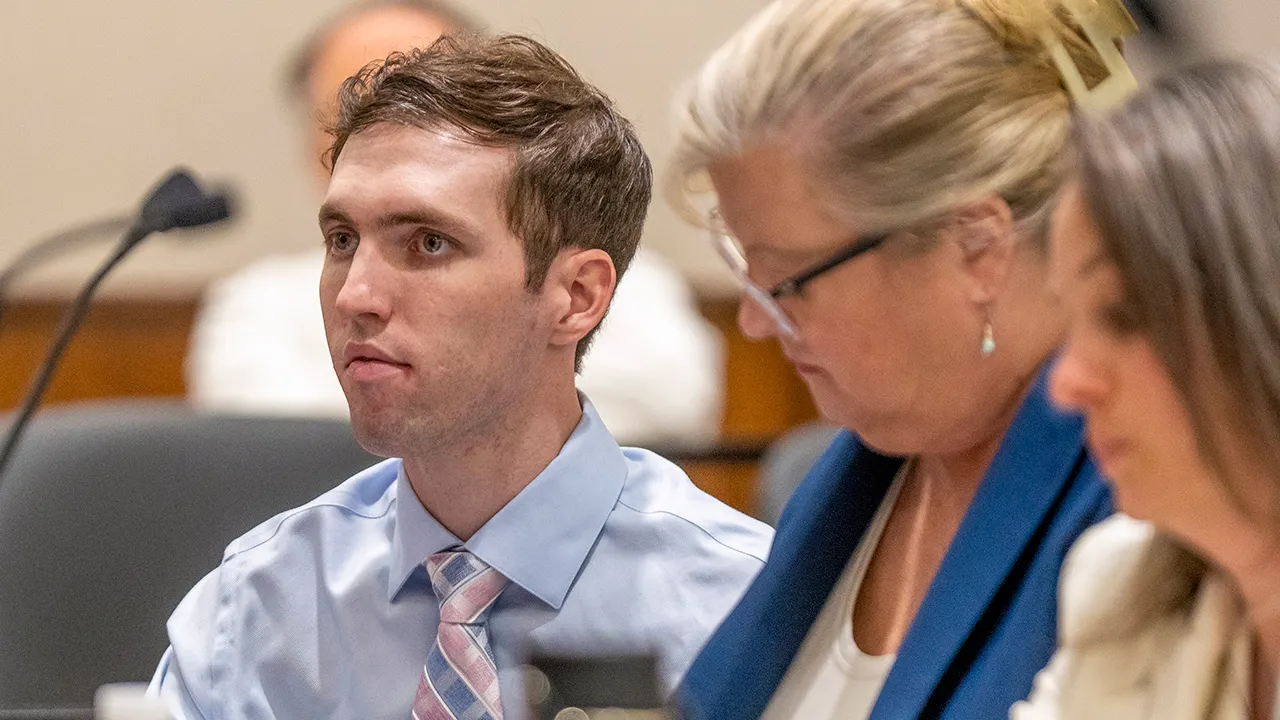
Tyler Robinson, accused of the murder of Charlie Kirk, appears during a hearing in Fourth District Court in Provo, Utah, Thursday, Dec. 11, 2025. (Rick Egan/The Salt Lake Tribune via Pool)
A relative previously told Fox News Digital that Twiggs had moved into a townhome in St. George, Utah, with several college roommates while transitioning from male to female. Twiggs, 22, previously lived with his grandparents after being kicked out of his parents’ home at the age of 18, according to the relative.
“He was maintaining a job and able to pay rent, and was technically an adult,” she said.
The relative pointed to a history of conflict between Twiggs and other family members over his gender identity, while also citing Twiggs’ reported history of drug abuse and alcoholism as the cause of him moving into his own place.
CHARLIE KIRK’S WIDOW FIGHTS TO KEEP NEWS CAMERAS IN COURTROOM FOR ACCUSED ASSASSIN’S TRIAL
Charlie Kirk was a conservative activist who led Turning Point USA. (Alex Brandon/The Associated Press)
“But the real reason he was acting out was because he was using drugs and alcohol, and was addicted to gaming,” the relative said. “He had always tried to put on the act that he had changed.”
After the other roommates moved out, Robinson began living in the townhome, and the pair ultimately entered a romantic relationship, the relative said. Both Robinson and Twiggs continued living together for about a year until Robinson’s arrest in September 2025.
Following Robinson being taken into custody over his alleged connection to Kirk’s killing, authorities tracked down Twiggs — who was later described as “cooperative” — and brought him in for questioning, the relative said.
CHARLIE KIRK’S SUSPECTED ASSASSIN WILL NOT SHOW FACE IN COURT, KEY HEARING POSTPONED
The scene after shots were fired at an appearance by Charlie Kirk at Utah Valley University on Sept. 10, 2025 in Orem, Utah. Kirk, founder of Turning Point USA, was speaking on his “American Comeback Tour” when he was shot in the neck and killed. (Trent Nelson/The Salt Lake Tribune/Getty Images)
Court documents reveal that shortly before the murder, Robinson allegedly texted Twiggs to “look under my keyboard” in the pair’s shared apartment.
Investigators say the message pointed to a handwritten note from Robinson, in which he said, “I had the opportunity to take out Charlie Kirk, and I’m going to take it.”
Additionally, authorities say Twiggs and Robinson allegedly exchanged multiple text messages immediately following the killing, in which Twiggs asked his partner if he truly was the one who shot Kirk.
TYLER ROBINSON PROSECUTORS SAY CHARLIE KIRK SHOOTING TEXTS SHOW CONFUSION, NOT BIAS, TO REBUT CONFLICT CLAIM
Amber Robinson (left) arrives at Utah’s Fourth District Court, located in Provo, Utah, Friday, Jan. 16, 2026. Her son, Tyler Robinson, is accused of assassinating Charlie Kirk last year. (Alec Thornock for Fox News Digital)
“You weren’t the one who did it right????” Twiggs allegedly asked.
“I am, I’m sorry,” Robinson allegedly responded, according to court filings.
Immediately after Robinson’s arrest, Washington County Sheriff Nate Brooksby told reporters Twiggs was in a “safe space very far away from St. George,” and that law enforcement from a separate agency were speaking with Twiggs’ associates.
ALLEGED CHARLIE KIRK ASSASSIN TYLER ROBINSON TO MAKE FIRST IN-PERSON COURT APPEARANCE
Matt Robinson (left) arrives at Utah’s Fourth District Court, located in Provo, Utah, Friday, Jan. 16, 2026. His son, Tyler Robinson, is accused of assassinating Charlie Kirk last year. (Alec Thornock for Fox News Digital)
“They need to lay low for a long time,” Brooksby previously said, referring to both Twiggs’ and Robinson’s family members.
Twiggs has since moved out of state and retained an attorney.
“He hates conservatives and Christians,” Twiggs’ relative previously told Fox News Digital. “He hated us. He was not raised that way, but he, over the years, has become really detached [and] been radicalized.”
“He has obviously gotten progressively worse the last year or two,” the relative said, adding that he’s “always very angry.”
CLICK HERE TO DOWNLOAD THE FOX NEWS APP
Robinson is charged with aggravated murder, two counts of obstruction of justice, felony discharge of a firearm causing serious bodily injury, two counts of witness tampering and commission of a violent offense in the presence of a child.
Fox News Digital’s Stepheny Price contributed to this report.
Read the full article from Here



A massive wave of cyclists ranging from kids as young as 9 to grandparents in their 80’s just launched a 207-mile journey from Seattle to Portland. They are keeping completely off the highway, sticking to backroads and local bike trails. Meanwhile, local commuters are feeling the squeeze as northbound Interstate 5 gridlock forces heavy weekend traffic onto those exact same surface streets.

For The Union-Tribune
Among life’s most magical moments is when you stand quietly in your garden and a hummingbird hovers less than a foot away in front of your face, seemingly taking you in and letting you do the same.
It’s not exactly interspecies communion, but it can feel like communication of some kind. Especially when it happens more than once. Which it can if you have hummingbirds visiting daily because you’ve created a space that welcomes and nourishes them.
Apparently a lot of us in the U.S. have been doing just that. According to Emergen Research, the hummingbirds feed market, which includes nectar solutions, feeders and supplements, was valued at half a billion dollars in 2024 and is expected to reach $1.2 billion by 2034.
But hummingbirds don’t live on sugar water alone, so while hanging some feeders is useful, creating a holistic habitat that provides them with other nutritional and life needs is just as critical.
Keep in mind, caring for hummingbirds is a commitment to maintenance:
• Making sugar water, keeping it fresh and the feeders clean and protected from ants, bees, wasps and other intruders.
• Providing clean water for bathing in sheltered, clean bird baths.
• If possible, growing native plants that not only flower but attract the insects that hummingbirds eat and the spider webs they use to create their little nests.
• You have to keep your cats indoors, too, and be strategic when placing feeders and fountains to protect the birds as much as possible from other potential predators, like hawks.

Creating an ecosystem with food sources
Birds find most of their nutritional needs in nature, explained Dan Payne, owner of Wild Birds Unlimited in Scripps Ranch, which sells feeders, food and other backyard bird gear.
“What we do is supplement their feeding in a way that helps bring them closer to us so that we can see them and enjoy having them in our lives,” he added.
Essentially, he said, what we’re doing is a hobby.
But it’s a hobby that potentially goes beyond satisfying our enjoyment. By creating an ecosystem in our gardens, we’re contributing to the health of our environment. We’re attracting pollinators. Some will do their jobs and fly off. Others become a source of food for hummingbirds and other birds.
-

Colorful, tubular blooms of Mexican honeysuckle at McLeod’s home fit the birds’ long beaks. (Luke Johnson / The San Diego Union-Tribune)


1 of 2
Colorful, tubular blooms of Mexican honeysuckle at McLeod’s home fit the birds’ long beaks. (Luke Johnson / The San Diego Union-Tribune)
Expand
Hummingbirds, said Kelcy Coleman, conservation coordinator with the San Diego Bird Alliance, use nectar for most of their diet, and sugar water is a great replacement for that if you don’t have native plants.
“But they eat protein for a complete diet,” she noted. “They feed on small, tiny little bugs, and especially during breeding season, they will feed the bugs to their chicks, so the chicks will have more protein and grow faster. They also need shelter plants, like bushier plants or trees, to be able to rest on, as well as build nests, so a layer of habitat.
“What I mean by a layer is blooming and flowering plants,” Coleman added, “And then, bushes or coastal sage scrub habitat, where the bushes are taller than the smaller plants, and then sporadic trees as well.”
Native plants are recommended for several reasons. You’ll have more success with plants that prefer the soil and climate where they naturally grow. Many have low water needs. Wildlife is dependent on them for food and shelter. And if you plant natives, you’re connecting your habitat with others, including in our canyons and fields, giving the birds a broader home base.
Making plant choices
What native plants are we talking about? The most often mentioned is the California Fuchsia (Epilobium canum), with its brilliantly colored tubular flowers — designed for those long hummingbird bills. Coleman also recommended Dudleya, a succulent that flowers from spring to midsummer, again with vibrantly colored tubular flowers.
Then there are monkey flowers: The bush monkey flower has orange and yellow blooms, while red bush and scarlet monkey flowers, of course, have red, trumpet-shape flowers.
Others suggested to me were coral bells and Western columbine.
-
Fuchsia-flowering gooseberry (Ribes speciosum) at Anstine Nature Preserve, seen during a nature walk, is a plant that attracts hummingbirds. (San Diego Bird Alliance)


1 of 2
Fuchsia-flowering gooseberry (Ribes speciosum) at Anstine Nature Preserve, seen during a nature walk, is a plant that attracts hummingbirds. (San Diego Bird Alliance)
Expand
If you’re sensing a pattern, you’re right, hummers have great vision and are drawn to bright colors, especially reds. (That’s why the most popular hummingbird feeders are red.) So a good way to attract more hummingbirds is to grow native plants that have those brilliantly colored flowers. You can find them at nurseries across San Diego County.
A good source for finding both plants for your specific needs and nurseries that sell them is the Calscape website, calscape.org. Also, advised Coleman, try to choose plants that bloom in succession. Anna’s and Allen’s hummingbirds are species that tend to be year-round residents in San Diego, instead of migrating, so we need to have a variety of plants that can bloom throughout the year.
And don’t have anything to do with pesticides. Use the bugs to your advantage: They’re the food that hummingbirds — and other birds — need as part of their diet. You don’t want to poison what you’re working so hard to attract.

All this may lead you to think that if you don’t have an in-ground garden, you can’t attract and keep hummingbirds. Renee McLeod, a Certified Access Birding Outing leader who leads tours for the San Diego Bird Alliance and inclusive tours with EveryBody Birds San Diego, would beg to differ.
McLeod and her husband’s outdoor space is a large deck, which she’s outfitted with several feeders, a couple of birdbaths, platform feeders for other birds and some flowering shrubs. Not only does she get visits from hummingbirds throughout the day — although mostly in early morning and at dusk — there are times when more than half a dozen hit the bar together.
Over the years, McLeod has changed feeder types as she realized they were harder to clean, were getting moldy or were hard to fill.
“When we first started, we were using purchased powdered food, and we stopped doing that pretty quickly,” she said. “That stuff is not good at all, and just the regular sugar is great.”
In fact, you may find something called electro nectar for sale, with ingredients such as sucrose, potassium sorbate, citric acid, sodium bicarbonate and potassium bicarbonate.
“I don’t think we need to feed birds anything except for just the sugar,” said McLeod. “They get all the rest of their stuff from tiny little gnats. In fact, when they’ve got a lot of babies, and we go to empty the feeder, it’ll have all these little, tiny gnats and bugs inside, and that’s because they’re dipping their beaks into the nectar with them into the feeder, and then going to feed the babies.”

Choosing a hummingbird feeder
How do you choose the right feeder? According to Mark Hocking, the former owner of California Backyard Birds in Encinitas (who still works there part-time), try to buy a feeder that has at least some red on it.
“They see red at farther distances, and it tends to be their favorite color,” he said. “You want to buy a hummingbird feeder that’s easy to clean, because you want to clean it thoroughly, and you want to clean it every third day, and to get all that gunk out of there. The sugars ferment and that’s bad for the bird — and it ferments faster in hot weather.”
-
McLeod recommends a simple-to-make sugar water solution for the feeder, using granulated sugar, not powdered food. (Luke Johnson / The San Diego Union-Tribune)


1 of 3
McLeod recommends a simple-to-make sugar water solution for the feeder, using granulated sugar, not powdered food. (Luke Johnson / The San Diego Union-Tribune)
Expand
Look for feeders that have large necks that allow you easier access to clean inside. Try to find ones that have raised ports, not ones with replaceable flowers, because mold can get trapped in them. The ones with yellow flowers on the ports are also said to attract bees and wasps, so skip them.
And look for units with water moats, either built into the feeder or that you can hang the feeder from. They prevent ants from crawling in. Just remember to keep the moat filled with water.
Cleaning the feeder
You’ll need scrub brushes to get inside the bottle for cleaning. There are different opinions on how to clean. Some experts suggest using distilled white vinegar, others a 9-to-1 ratio of water and household bleach. McLeod said she’s been cleaning her feeders for years with dish soap.
“I think the thing is to wash them,” she said. “The big thing is you don’t really need to disinfect them unless they get full of mold.” Examine for black dots inside and around the feeder. That could be mold.
Also scrub the threads of the bottle neck, the feeder section and its threads, as well as the ports. You can find tiny brushes that look like mascara wands to clean inside the ports. Rinse it all thoroughly and dry.
Filling the feeder
Once the feeder is cleaned and prepared, fill it with a solution of 1 cup water to a quarter-cup of granulated sugar (not powdered sugar, and not honey). The easiest way to dissolve the sugar is to measure and boil the water in a kettle and add it to sugar in a bowl. Stir and let it come to room temperature before filling your feeder.
When you start out, just fill partway to get a sense of how many birds you’re feeding to avoid wasting the sugar water. One way to expedite feeding is to make a larger batch and store that in the refrigerator for up to a week. But again, bring the sugar water to room temperature before filling the feeder.
Placing the feeder
There are a few factors to keep in mind when selecting a spot to hang feeders: sun exposure, territorial behavior and safety.
“If you’re looking at a small space, keep it away from windows, because bird strike is a very common issue when they go into a feeder and they don’t realize how close that window is,” said Hannah St. John, conservation assistant with the San Diego Bird Alliance and coordinator for the 11-acre Anstine Nature Preserve in Vista. “There are decals you can put on windows so birds register it’s actually a solid surface.”
She added that if possible, keep feeders in the shade to keep the nectar from fermenting. If you put up multiple feeders and you find that you have territorial male hummingbirds (they’re the ones with all the color), place feeders as far from each other as possible and even blocked from one another.

Considering water needs
Another crucial component for hummingbirds is a clean water source. According to St. John, they enjoy water, not just for drinking, but also baths.
“Hummingbirds also might get pollen on their feathers, so maybe that’s a way to clean themselves off, but most birds do enjoy taking baths, and so they’ll splash around a bit, and then that will kind of help them realign their feathers, and they usually preen after a quick bath.”
Some birds will come to still water, but moving water is attractive. Buy a fountain or place a small solar fountain in a flower pot saucer filled only an inch or so. Add rocks for perching. And clean it weekly to keep it free of debris and algae.
Most of your setup will start as trial and error. It takes patience when you start — and even as you continue. You may get a single hummingbird for a while, then a couple and then, hopefully, more. Then not as many for a few days. If there are males, you’ll see them driving off other males to protect what they see as their territory. Some may not return.
Some weeks you’ll need to fill the feeders daily and then think, “Where did they go?” But stick with it. You’re both witness to wildlife in all their behaviors — and because hummingbirds seem to be very tolerant of people, you can get truly up close and personal with them.

Anchorage, AK—U.S. Senators Lisa Murkowski and Dan Sullivan and Congressman Nick Begich (all R-Alaska) today applauded the U.S. Army Corps of Engineers’ (Corps) approval of a permit to facilitate construction of a life-saving road between the isolated community of King Cove, Alaska and nearby Cold Bay. The one-lane gravel connector will provide reliable transportation access from King Cove to Cold Bay, which is home to an all-weather airport.
“This is more good news for King Cove and all who care about the health, safety, and wellbeing of the hundreds of people who live there,” Murkowski said.“After decades of relentlessly making the case and pushing with everything we have, this life-saving road is finally almost a reality. A combination of careful analysis and common sense from the Trump administration—the Department of the Interior and now the Army Corps—have brought us to this point. I thank them for their continued commitment to protecting and improving these Alaskans’ lives.”
“For Alaskans, the decades-long King Cove Road impasse has been a symbol of an uncaring, out-of-touch, faraway federal government that prioritizes the lives of birds over people,” said Sullivan. “The great residents of King Cove time and again have kept hope alive, despite setbacks, most recently when the Biden administration disregarded the voices of the community and withdrew the previously approved land exchange. The permit issued by the Corps of Engineers today is vindication for King Cove, putting us closer than ever before to delivering a lifesaving, 11-mile, single-lane gravel road to the all-weather airport in Cold Bay. I want to thank the Administration, especially Secretary Burgum and Assistant Secretary of the Army for Civil Works Telle, for listening to Alaskans, for caring about their safety and well-being, and for putting us on the cusp of a historic breakthrough for safe and reliable access for King Cove.”
“This permit approval by the U.S. Army Corps of Engineers is a critical milestone in a decades-long effort to provide the people of King Cove with the infrastructure they need to build an essential life-saving road,” said Begich. “For nearly 50 years, the community has advocated for a road connecting King Cove to the all-weather airport in Cold Bay. This project addresses an obvious public safety need and will provide a reliable route for emergency access in adverse weather conditions. I commend everyone who helped move this project forward, from residents who never stopped advocating, to Secretary Burgum, the Army Corps of Engineers, Governor Dunleavy, and Alaska’s congressional delegation over many years.”
King Cove is located between two volcanic peaks near the end of the Alaska Peninsula, and its small gravel airstrip is typically closed by bad weather for more than 100 days each year. Many flights not canceled are delayed by wind, turbulence, fog, rain, or snow squalls; travel by boat is often impacted by waves that can top 12 feet and the lack of suitable dock infrastructure in Cold Bay. By comparison, Cold Bay, which is less than 30 miles from King Cove, has one of the longest runways in the state and it is closed an average of just 10 days per year.
At present, there are roads leading out of both King Cove and Cold Bay but no connection between them. The lack of dependable transportation access to Cold Bay routinely forces emergency medevacs from King Cove that risk the lives of patients and responders alike. It also creates significant quality-of-life issues, ranging from King Cove residents’ inability to regularly receive mail to week-long travel delays for students returning home from various activities.
King Cove residents have sought this life-saving connector road for decades. In late 2025, a major breakthrough occurred when the Trump administration conveyed490 federal acres to the King Cove Corporation in exchange for 1,739 acres of KCC-owned land near the Kinzarof Lagoon and the relinquishment of selection rights to more than 5,430 acres still owed to KCC under the Alaska Native Claims Settlement Act.
The Corps permit issued this week is valid for five years and allows for dredge and fill activities to occur on just over five acres of land. For perspective, the Izembek National Wildlife Refuge spans 315,000 acres and there are at least 130 million acres of wetlands across Alaska.
More information is available here.
###
-

 Seattle, WA2 minutes ago
Cyclists fill backroads for annual summer Seattle-to-Portland ride
-

 San Diego, CA7 minutes ago
So you want to create a hummingbird habitat? Here’s how.
-

 Milwaukee, WI14 minutes ago
Milwaukee dives into the Global Swimmable Cities Alliance
-

 Atlanta, GA17 minutes ago
Atlanta Starting Lineup: July 2026 (NASCAR O’Reilly Series) – Racing News
-

 Minneapolis, MN22 minutes ago
Former Obama press aide accused of stealing cash, credit cards, from Minneapolis coworkers to buy kratom
-

 Indianapolis, IN29 minutes ago
Woman killed in downtown Indianapolis hit-and-run crash
-

 Pittsburg, PA32 minutes ago
Game Discussion (Let’s Try This Again): Milwaukee Brewers (59-34) @ Pittsburgh Pirates (47-47)
-

 Augusta, GA37 minutes ago
8 school district cops lose certifications over cheating scandal

