Seattle, WA
Seattle Kraken Check-In: How is Matty Beniers' 2nd season going?


The Seattle Kraken have rebounded from a rough start to 2023-24, as they recently used a six-game win streak to get over .500 for the first time in this NHL season.
A similar thing could be said about the player that many hope will be the face of the franchise, Matty Beniers.
Why are Seattle Kraken surging? Coach Hakstol says they’ve found their identity
The 6-foot-2, 178-pound center ran away in the voting to win the Calder Memorial Trophy as the NHL’s rookie of the year for 2022-23. He earned 160 of a possible 196 votes for first place after leading the league’s rookies in goals (24), points (57) and plus/minus (plus-14) in 80 games, while also ranking second in assists (33).
But after his sterling debut campaign helped the Seattle Kraken reach the Stanley Cup Playoffs in just their second season of existence, he had trouble repeating his performance out of the gate this fall. In fact, his plus/minus (the specific goal differential for a player’s team when they are on the ice) was at minus-12 through 11 games, when he finally registered his first positive plus/minus this season in a single game.
“I think he’s learned a life lesson in hockey,” said John Forslund, a longtime NHL broadcaster who is the voice of the Kraken on ROOT Sports, when he joined Seattle Sports’ Wyman and Bob last week. “… I think what we saw in the first six to eight weeks of the season a player that had lost his way, and a player that had lost his way offensively and then lost his confidence. And because he was losing confidence, he was forgetting how to play defensively. He was forgetting where to go on the ice to put himself in a better spot to break the puck out to defend better. And because of that, his plus/minus started go down around a minus-20, which is very uncharacteristic because he’s smarter and he’s better than that.”
How Beniers turned things around
Why were things tough in the opening months this season for Beniers?
“As he progressed through his first year, there was a lot of awareness, obviously, and there was a lot of gameplanning against him,” Forslund said. “But as this season started, the first number in terms of the forwards that the other coach would circle is No. 10 (Beniers’ number), and that’s tough, and it’s tough for him to learn.”
The Kraken have won eight of their last 10 games – and earned a point in the standings in each of those 10 games, as well. Beniers’ play has been a big part of it, as his plus/minus over that stretch is plus-seven, with no individual games in the minus category. He also has five points on his own in those 10 games.
“What’s happened is he’s turned the corner, and you can see it. You can see the step that he has now; he doesn’t appear to be as slow,” Forslund said. “Usually when players appear slow, it’s because they don’t have confidence. He’s going now with a purpose and conviction, which we saw in his first year, even when he had scoring droughts. Even when he went six, seven games without a point, his defensive game never vacillated, he never came off of it. This season it did, so I think it’s a lesson for him.”
Beniers’ role for Seattle Kraken
The 21-year-old Beniers is learning how important it is for the Kraken that he plays well due to his position and the expectations that come with being a talented former first-round pick.
“He’s learned (that) he’s surrounded by a lot of players, but when he’s not going, then Jordan Eberle is not going right. And whoever the left winger is, whether it be (Jaden) Schwartz or (Jared) McCann as it was at the front of the season – you know, it’s difficult,” Forslund said.
That’s not to say the Kraken’s resurgence is entirely due to Beniers finding his footing again. Their recent stretch of success has almost completely coincided with the addition of forward Tomas Tatar in a trade with Colorado, which has had a direct impact on Beniers because they are now playing on the same line.
“There was a trade made about three weeks ago and Tomas Tatar came in, a veteran guy who wasn’t scoring with his new team in Colorado, didn’t have a good slot in that lineup because of the star power that they have,” Forslund said. “So (Kraken general manager Ron) Francis went out and got him, they put him on on Beniers’ line with Eberle and now that’s a good fit, and you see Matty now starting to play off of him a little bit.”
The adjustment period
Forslund related Beniers’ brief second-year slump to what Seattle Mariners star Julio Rodríguez, who was also a Rookie of the Year winner a year ago, went through in 2023.
“I think Julio went through a little bit of that at the beginning of the baseball season. It’s hard for a young player to just automatically show up and do it again, but as they learn these lessons and they get it, then you have perennial output, perennial stats that are always there and that leads to stardom. I’m not saying this guy is going to be – I’m not going to go there and put that pressure on him, but the expectation is that he will get there, and I think he’ll work hard enough to be there someday and be the centerpiece of the franchise. … I think he’s going to have a great second half. I really do. We all know he’s going to be here a long time.”
You can listen to the full Wyman and Bob conversation with ROOT Sports Seattle Kraken broadcaster John Forslund in the podcast at this link or in the player near the top of this post.
Seattle Kraken Takeaways: Is this win streak the start of a run back to playoffs?



NHL.com/kraken is the official web site of the Seattle Hockey Partners, LLC d/b/a Seattle Kraken, and cannot be used or reproduced without the prior written consent of Seattle Kraken. The NHL Shield, word mark and image of the Stanley Cup and NHL Conference logos are registered trademarks of the National Hockey League. All NHL logos and marks and NHL team logos and marks as well as all other proprietary materials depicted herein are the property of the NHL and the respective NHL teams and may not be reproduced without the prior written consent of NHL Enterprises, L.P. Copyright © 2025. All Rights Reserved.

The Seattle Mariners enter this season with fewer question marks than they’ve had in any year in recent memory.
Mariners unveil 2026 opening day roster and who’s on IL
The club began spring camp with few open spots on a big league roster set to return many of the same faces from last year’s run to the American League Championship Series. And outside of what are believed to be short-term injuries to shortstop J.P. Crawford and right-hander Bryce Miller, the M’s left their spring training facility in Peoria without much to be concerned about.
ESPN MLB insider Jeff Passan is high on this year’s Mariners, even picking them to represent the American League in the World Series. But there is one question he has about the team as the season begins, he told Seattle Sports’ Brock and Salk on Wednesday.
“Cal Raleigh had a once-in-a-lifetime season last year, and while he’s still going to be excellent his year, once in a lifetime is once in a lifetime. So how does the offense make up for – I’m not gonna even say lack of production – but the difference in production from what they got from Cal Raleigh last year?” Passan said.
After leading MLB catchers in home runs during the 2023 and 2024 campaigns, Raleigh led all of baseball with a historic 60-homer season in 2026 that nearly doubled his previous career high of 34 hit in 2024. Raleigh’s 60 homers broke Salvador Perez’s single-season record of 48 for a primary catcher, Hall of Famer Mickey Mantle’s record of 54 for a switch-hitter and Hall of Famer Ken Griffey Jr.’s Mariners record of 56.
While Raleigh has displayed premier slugging abilities since becoming a full-time starter in 2022, Passan expects a significant drop from the 60 he hit last year.
“I don’t think it would be fair or reasonable to expect 60 home runs again from Cal Raleigh because let’s not forget no catcher in history had come close to that number,” Passan said. “I don’t even know if 50 is a reasonable expectation, frankly. But a 40-plus home run season from Cal Raleigh (is reasonable).”
Hear the full conversation at this link or in the audio player in this story. Listen to Brock and Salk weekdays from 6-10 a.m. or find the podcast on the Seattle Sports app.
More on the Seattle Mariners
• Cable TV channels for Seattle Mariners games this season are set
• Drayer: This season, the Mariners replace hope with expectations
• Morosi: Seattle Mariners made the right decision on Mitch Garver
• How prospect expert views Seattle Mariners OF Lazaro Montes
• M’s dust off a classic in latest commercial featuring Cal Raleigh

Seattle, WA
NBA to explore expansion opportunities in Seattle and Las Vegas after Board of Governors votes in favor of move

The NBA took its first major step toward bringing back the Seattle Supersonics on Wednesday. The league’s Board of Governors reportedly voted in favor of the NBA exploring expansion opportunities in both Seattle and Las Vegas, according to ESPN’s Shams Charania.
The vote was expected, as Charania reported in mid-March that the league would put the issue up to a vote at its Board of Governors meeting later in the month.
The vote does not guarantee Seattle and Las Vegas will receive expansion teams in the near-future, but it allows the league to explore those opportunities. Given the amount of money at stake — Charania reported bids could be in the $7 billon to $10 billion range — it should not come as a major surprise that the Board of Governors allowed the league to move forward with the process.
Advertisement
Draft your Yahoo Fantasy Baseball team for the 2026 MLB Season
There are still a few more steps the league and Board of Governors must take before officially expanding to 32 teams. Wednesday’s vote was just the first step in the process. The league and Board of Governors will likely vote to finalize the motion later in the year, Charania reported in mid-March. He also stated that momentum was moving toward expansion being approved, as a “growing number of owners are believed to support” the idea. In order for the motion to pass, 23 of the league’s 30 owners need to vote in favor of it.
If the league is allowed to continue down this road, the NBA would likely look to add both teams to the league ahead of the 2028-29 season. If Seattle and Las Vegas both receive teams, they would be put in the Western Conference, which would lead to some team re-alignment around the league.
Advertisement
For Las Vegas, the news opens up the possibility for the first-ever NBA franchise in the city. Las Vegas has shown the ability to support professional sports teams in recent year, with the NHL’s Golden Knights, WNBA’s Aces and NFL’s Raiders already in the city and MLB’s Athletics on the way.
Seattle hasn’t had an NBA franchise since the Supersonics left to become the Oklahoma City Thunder after the 2007-08 NBA season.
The NBA last expanded in 2004, when the Charlotte Bobcats — now the Hornets — started play.
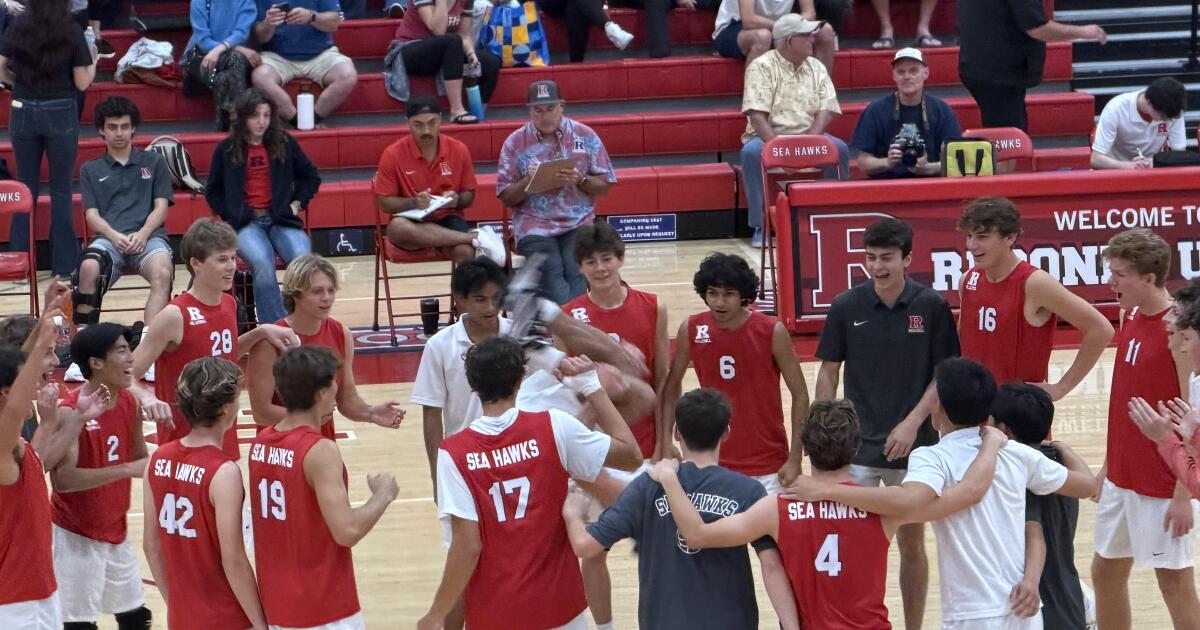
Prep sports roundup: Redondo Union takes down No. 1 Mira Costa in boys volleyball

Rubio joins crucial G7 talks as Iran war set to dominate second day

A surprise resignation could open the door for an independent to win a Montana Senate seat

Metro Detroit weather forecast, March 26, 2026 — 11 p.m. Update

Man convicted in the deadly 2021 assault of a Thai grandfather in San Francisco avoids prison

Florida High School Football Rankings: Top 25 teams – Oct. 21

How old is Bo Nix? What to know about Oregon quarterback ahead of 2024 NFL Draft

Cleary's 21 help Le Moyne down Central Connecticut State 69-64 in OT

99th annual Pony Swim held in Virginia

Indiana Members Credit Union announced as new anchor tenant at Bottleworks District
Rubio joins crucial G7 talks as Iran war set to dominate second day
A surprise resignation could open the door for an independent to win a Montana Senate seat

Video: Savannah Guthrie Says She Believes Her Mother Was Taken for Ransom

Stefanik grills University of Michigan leader on lack of audit after string of Chinese national arrests

Photos: More than one million displaced by Israel’s evacuations in Lebanon
-

 Detroit, MI1 week ago
Drummer Brian Pastoria, longtime Detroit music advocate, dies at 68
-

 Science1 week ago
How a Melting Glacier in Antarctica Could Affect Tens of Millions Around the Globe
-

 Movie Reviews1 week ago
‘Youth’ Twitter review: Ken Karunaas impresses audiences; Suraj Venjaramoodu adds charm; music wins praise | – The Times of India
-
 Science1 week ago
I had to man up and get a mammogram
-

 Sports6 days ago
IOC addresses execution of 19-year-old Iranian wrestler Saleh Mohammadi
-

 New Mexico4 days ago
Clovis shooting leaves one dead, four injured
-

 Texas7 days ago
How to buy Houston vs. Texas A&M 2026 March Madness tickets
-

 Tennessee3 days ago
Tennessee Police Investigating Alleged Assault Involving ‘Reacher’ Star Alan Ritchson