Seattle, WA
Salk: 5 things Seattle Seahawks should prioritize in coach search


The Seattle Seahawks have an enormous decision to make with the search for their next head coach. And when that happens, fan bases get antsy.
More specifically, fans start picking favorites and getting attached to the idea of specific names filling specific roles for reasons that often have more to do with projections and the past than they do with the optimal outcome.
Why is Seattle Seahawks’ head coach job so appealing?
That isn’t necessarily a problem, but there are times when being on the outside hurts our ability to understand the traits that each candidate brings to the table.
Nowhere is that more evident than in the polar extremes available in this coaching search.
With former coaches, current coordinators and college leaders all available, we only have certain information on which to judge the options.
The former coaches have a résumé we can dissect, but the young coordinators? All that most of us have to go on is how successful their offense or defense has been, and that goes against what many believe are the most important qualities for a head coach.
Now that doesn’t mean that scheme is irrelevant, nor should it disqualify hot names like Lions offensive coordinator Ben Johnson and Ravens defensive coordinator Mike Macdonald. But it means those candidates should show something in the interview process that isn’t necessarily observable to most of us watching the process play out.
If I was suddenly put in charge of hiring the next coach of an NFL team, I would start by deciding what qualities were most important for that person to have. My top five would be:
1. Leadership
I feel very confident that leadership is at the top of this list. No matter who you ask, they all say everything starts here. It’s a broad term that encompasses multiple parts of the job, but to me it includes personal leadership skills combined with the organizational skills and personality to set a course for a whole building.
Seattle Seahawks Notebook: What GM John Schneider said about coach search
A head coach not only gets the most out of his players, but sets the tone for the other coaches, administrators, and employees of the team. If you can’t lead, no one knows what to do. So the first job of any coach is to set the culture first and foremost.
2. Communication
This is second on my list because it’s necessary for those players to buy in and to understand their roles in the bigger picture. To be a great communicator, most coaches have authenticity, relatability and an ability to use creative means to teach and help players understand their jobs. They have to understand their students and devise the best ways to reach each one.
Oh, and they are also the prime conveyor of information to the public so how they choose to communicate that info is an enormous part of setting the tone.
Pete Carroll was so good at this – he spent an enormous amount of time devising creative, fun ways to teach and then using his relentless positivity to pump up his players in the press.
3. Identity/vision
The best coaches have a clear vision for what kind of team they want to be on the field. Do they want to be more physical or do they want to finesse their opponents? Do they favor a passing or running attack? What do they want their team to be know for?
Many of the candidates this year have done this well. Jim Harbaugh and Mike Vrabel, for instance, want physical teams that are strong on the line of scrimmage and run the ball. I keep thinking of the way Joel Klatt described Harbaugh’s Michigan defense and how each level of the team was designed to compliment one another. That only works when you have a clear vision and a slavish devotion to it.
4. Hiring
One you know the vision, you have to hire right people to execute it! The best coaches have a stable of bright assistants who make it all work. No coach can do everything at once and many of the best ones get to that point by delegating to and empowering those around them. As I look back at the last few years of Seahawk mediocrity, this feels like one of the main culprits. If their was a clear vision, it certainly wasn’t translating onto the field and the assistants either weren’t capable or weren’t allowed to spread their wings.
5. X’s and O’s
Here you go. Here is the one that is most accessible to the public.
We might not be able to tell how an assistant communicates or know much about those they would hire, but we can judge them based on their ability to scheme.
Is it important? Yes. Leaders need to understand the scheme in order to project confidence to everyone around them. Would you listen to advice from someone who doesn’t have a detailed understanding of the job they are asking you to perform?
Furthermore, in order to hire the smart people below them, it sure helps to be smart yourself! Most high achievers want to learn from and work for smart people themselves.
But I tend to assume that most everyone who makes it to a head coaching interview has at least some idea of how to devise a scheme and understands where the players should be.
I see this ability as important, just not as important as the four above it. Yet for a segment of the fanbase, it has been a clear deciding factor. Why? While I can’t speak for anyone else, I believe it is for two reasons.
First, as I mentioned above, it’s all we know. Most of us don’t know what kind of personality Ben Johnson has, but we sure like the scheme he devised in Detroit. We don’t know if Mike Macdonald can lead, but we sure want a defense like they have in Baltimore. And that leads to the second point: We desperately miss having the edge that a great coordinator brings to a team!
We are understandably sick of watching the Rams and 49ers staffs run rings around the Seattle staff. We know there is a talented roster here that hasn’t been able to take full advantage of its unique skills. But whereas I also want the team to have those kinds of advantages, I believe what we really want is a group of coordinators that can provide it. We want our own Johnson/Macdonald combo that other teams are looking to pluck.
It’s very possible that the next head coach in Seattle can scheme his way past the competition or that they hire the best coordinator from one of the best teams this year. I just hope if they do so, it’s because that coach can lead, communicate, has a vision and can hire good people around him and not just because they are the smartest schemer around.
More on Seattle Seahawks coach search
• What stands out about two NFL DCs in mix for Seattle Seahawks coach
• Seahawks Coach Search: Could Rams DC Raheem Morris be the pick?
• Will next Seahawks coach be Texans OC Bobby Slowik? Three things to know
• Seahawks Candidate Deep Dive: Isaiah Stanback on Dan Quinn
• ESPN insider details what Seattle Seahawks have asked coach candidates



FIFE, Wash. – A portion of southbound I-5 will be closed overnight in Fife Friday and Saturday night, according to WSDOT.
The Washington State Department of Transportation says the purpose of the closure is to install a new electronic sign and will need two nights to do it.
Crews will close southbound I-5 from 54th Avenue to Port of Tacoma Road starting at 11 p.m. Friday night until 7:30 a.m. Saturday morning. Closures will resume Saturday night starting at 11 p.m. as well, and lanes will reopen Sunday morning at 8:30 a.m.
WSDOT says the closure will include the 54th Avenue ramps to southbound I-5.
Detours for weekend I-5 closure in Fife, WA

MORE NEWS FROM FOX 13 SEATTLE
Family from Japan has kimonos stolen outside Seattle Center: ‘Irreplaceable’
Do you recognize him? Sketch released of WA man found dead under SR 520 bridge
West Seattle homeless encampment swept despite mayor’s promise
Snapchat to lay off over 90 Seattle, Bellevue employees
Off-roading for a cause, Thurston Co. Sheriff’s Jeep Patrol looking for volunteers
To get the best local news, weather and sports in Seattle for free, sign up for the daily FOX Seattle Newsletter.
Download the free FOX LOCAL app for mobile in the Apple App Store or Google Play Store for live Seattle news, top stories, weather updates and more local and national news.
The Source: Information in this story comes from the Washington State Department of Transportation.

Seattle Mariners outfielder Luke Raley entered this season as one of the team’s biggest bounce-back candidates. So far, he’s on his way to quite the rebound year.
Seattle Mariners’ slow start has featured some bad luck
The 31-year-old Raley has been one of the best Mariners hitters early on, as he was during his first year with the team in 2024. In his first 18 games, Raley is batting .328 (20 for 61) with a 1.002 OPS, four homers, four doubles and one triple.
Raley’s strong early performance featured a candidate for his best game at the plate as a big leaguer on Wednesday against the Padres. He turned in his first career four-hit game, which included a homer and a double. It was the third time in a four-game span Raley had at least three hits.
Just about all of the damage Raley has done has come against right-handed pitching since he’s used as the left-handed side of a platoon in right field. So far this season, he has just two at-bats against lefties.
During Thursday’s edition of Seattle Sports’ Wyman and Bob, co-host Bob Stelton made the case that the Mainers should ride the hot hand and give Raley more opportunities in left-on-left matchups.
“When somebody’s hot – you got very few hitters in this lineup that are hot, Donovan is another guy – I don’t care if there’s a lefty on the hill. Let Luke hit. Let Donovan hit. Let whoever’s hot (hit),” Stelton said. “… This guy is seeing the ball really well right now, let him keep going.”
What the right-handed options to replace Raley have done thus far is another reason Stelton would like to see the outfielder get more same-handed matchup opportunities. Veteran Rob Refsnyder, who is currently on paternity leave, has yet to get a hit in his first 19 plate appearances. And outfielder Victor Robles is on the injured list, leaving Connor Joe as the other right-handed option in right field. Joe has only five at-bat this season, but he hit just .221 in 157 combined games over the 2024 and 2025 seasons.
The issue of Raley hitting against lefties came up Thursday night when he was pinch hit for by Joe with the bases loaded and out in the sixth inning down 4-2 against Padres left-hander Adrian Morejon. Joe ended up striking out on three pitches.
However, Raley’s track record against left-handers hasn’t been good. He has a career .182 average and .533 OPS against southpaws in 194 plate appearances.
“It’s comfort for a lot of these guys… Maybe it’s just a matter of seeing lefties enough,” Stelton said. “… You’re going to get better by getting used to it and facing those guys… I would think if they’re feeling good at the time, if they’re on a roll, then show them, you know what, I’ve got that much confidence in you. They’re running the lefty out there today and you’re in the lineup, so get ready.”
Hear the full conversation at this link or in the audio player below. Listen to Wyman and Bob weekdays or find the podcast on the Seattle Sports app.
More on the Seattle Mariners
• It may be time for Seattle Mariners’ Cal Raleigh to make some tradeoffs
• Trevor May: Mariners’ Brendan Donovan ‘has been as advertised’
• Changes helping Seattle Mariners’ Luke Raley look like his old self
• Former Seattle Mariners clubhouse favorite continuing career in Mexico
• How will Bryce Miller’s return impact Seattle Mariners rotation?
Seattle, WA
Seattle SWAT arrests man accused of waving handgun at passerby in Roosevelt neighborhood

SEATTLE — Seattle police arrested a 37-year-old man Wednesday evening after investigators say he threatened people with what appeared to be a handgun in the Roosevelt neighborhood.
At about 7:18 p.m., officers responded to a report of a man standing in the street and waving a handgun at passersby in the 7800 block of Lake City Way Northeast.
Police said officers arrived and found a black BMW stopped in the street that was reported stolen, with a man seated in the passenger seat holding a handgun.
The officers tried to contact him, but he appeared to be in a mental crisis or under the influence of an unknown substance, continued yelling, and did not comply with commands.
Police then called the Hostage Negotiation Team and SWAT, and SWAT moved in with an armored vehicle and took the man into custody without further incident.
The vehicle was towed to the North Precinct. Police said officers later served a search warrant and recovered a realistic black BB gun.
The man was transported to King County Jail and booked for investigation of felony harassment, possession of a stolen vehicle, and a felony warrant.
Anyone with additional information is asked to call the Seattle Police Department’s Violent Crimes Tip Line at (206) 233-5000.

Tornadoes touch down in Rochester area

13 Actors You Should Never Miss on the New York Stage

Detroit Tigers call up prospect Hao-Yu Lee, place Zach McKinstry on IL

Maria Isabel Is a Masterclass in Mariscos and Moles

The Dallas Stars’ Secret Weapon Is a Canadian Hockey Genius

Florida High School Football Rankings: Top 25 teams – Oct. 21

How old is Bo Nix? What to know about Oregon quarterback ahead of 2024 NFL Draft

Cleary's 21 help Le Moyne down Central Connecticut State 69-64 in OT

99th annual Pony Swim held in Virginia

Indiana Members Credit Union announced as new anchor tenant at Bottleworks District
Tornadoes touch down in Rochester area

Minnesota Republicans reveal which far-left candidate they want to challenge in open Senate race

Swedish rights groups slam ‘honest living’ criteria for migrants

Orbán’s defeat is a win for democracy and a warning to Trump, some say

Firefighters Likely Had Limited View of Approaching Plane in LaGuardia Crash
-

 Ohio3 days ago
‘Little Rascals’ star Bug Hall arrested in Ohio
-

 Arkansas1 week ago
Arkansas TV meteorologist Melinda Mayo retires after nearly four decades on air
-

 Austin, TX1 week ago
ABC Kite Fest Returns to Austin for Annual Celebration – Austin Today
-

 Politics3 days ago
Dem fundraising giant in the hot seat as GOP lawmakers demand answers over dodged subpoena
-

 Politics6 days ago
Trump blasts Spanberger ahead of Virginia meetings, says state faces tax base exodus like New York, California
-
 Science3 days ago
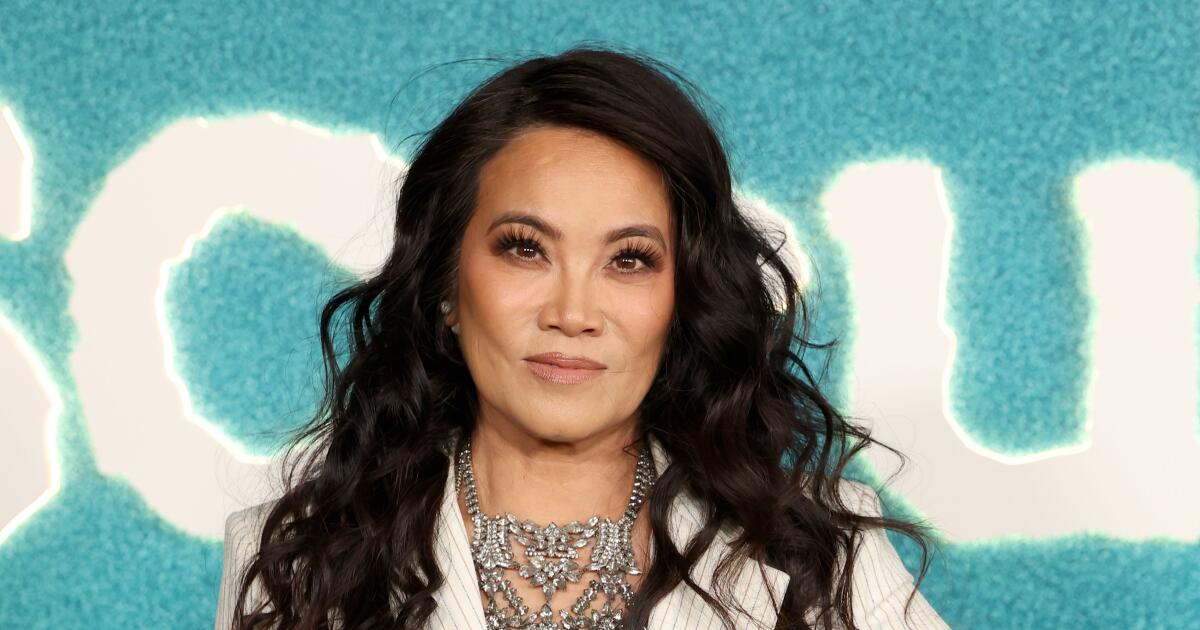
‘Dr. Pimple Popper’ Sandra Lee had a stroke last fall. Here’s how the TV doc is bouncing back
-

 Health1 week ago
Woman discovers missing nose ring traveled to her lungs, causing month-long cough
-

 San Francisco, CA5 days ago
President Trump terminates Presidio Trust