San Diego, CA
San Diego’s Veterans Village says it won’t appeal license revocation


Veterans Village of San Diego will not appeal a state decision to revoke its license to operate a residential substance use treatment center on its campus, the Board of Directors announced following its Friday afternoon meeting.
The move ends VVSD’s service to non-veterans at its Mission Hills campus.
The California Department of Health Care Services on Sept. 5 notified the nonprofit that it was suspending the program and would revoke its license, and VVSD had 15 days to appeal. The suspension of the Drug Medi-Cal Organized Delivery System program, which provides substance use disorder treatment for eligible Medi-Cal members, went into effect Monday.
The program had been at VVSD since 2019, and most of the 76 clients were non-veterans who had been referred by San Diego County Behavioral Health Services.
“We embarked on the DMC (Drug Medi-Cal) program with a bold vision: to extend our world-renowned treatment approach to civilians in need,” the VVSD board said in a statement released Friday. “We undertook this mission amidst an unprecedented surge in fentanyl use, reaching out to the most vulnerable members of our community with crucial support. As we move forward, we proudly refocus our efforts on our core mission — dedicated service to our nation’s heroes.”
Tessa Outhyse, information officer for the California Department of Health Care Services, said the state has revoked the license or certification of five other residential substance use disorder facilities in the past three years.
The California Department of Health Care Services had cited “serious concerns about client safety” and the deaths of seven clients in its notice to VVSD and its program.
VVSD President and CEO Akilah Templeton said the news was devastating to staff members who had worked with clients and now fear they may relapse or return to the street. County staff members were on hand Monday to place people in new programs, but VVSD counselors said they are in the dark about what happened to them.
“I know that on that first day, so many of our residents just left and went back out to the street, just going back to using,” said Meghan Ripley, a program manager who worked with clients.

“And it just breaks my heart, because they were doing so well here,” she continued, fighting back tears as she remembered the program’s last day. “It was so sad. I had clients coming up to me crying, begging me to let them stay, like I had any control over it. Begging, saying that they would come up with the money to be able to pay out of pocket just to be able to stay here because they were safe here. And then they just lost all hope and left.”
“It was so swift, the way they came down,” said clinical associate Isaac Salas, also in tears. “It was so traumatic for everyone involved. It was just devastating. The population we work with, they’re already a bunch of traumatized people. They already have a lot going on. And the way that they handled this, it was inhumane.”
Founded in 1981 to serve veterans facing a variety of challenges, VVSD offers programs to overcome unemployment, addiction, barriers to health and mental health care and other challenges. It created the annual Stand Down event to connect veterans with homeless services, and the program has inspired similar events throughout the country.
A perfect storm
Templeton said several things aligned to lead to the license revocation, beginning with complaints within the organization itself from people who objected to VVSD expanding its programs to include non-veterans, a move she said involved many factors, including a need for additional funding.
VVSD also was restricted from expelling disruptive people from the program during the pandemic, and critics went public with accusations that the environment was unsafe, she said.
And then there was the overall increase in fentanyl use among addicts. All of the overdose deaths cited by the state involved the drug, which is considered more lethal than other street drugs.
“And so this was all the perfect storm,” Templeton said.
Restrictions on the program prohibit clients from being searched, and Templeton said an investigation into one death revealed the fentanyl involved had been brought onto the campus by another client who hid it in a body cavity.
“We can’t do everything,” she said, adding that drugs were rarely found on campus. “We can’t even pat someone down. We can’t say with absolute certainty that substances won’t make their way into the environment.”
“If you have drugs on campus, you are discharged,” said counselor Teresa Najera, who had worked in the program. “No exception. You’re putting the rest of the clients at risk of relapsing.”

Templeton also acknowledged there were deficiencies in the program, but said they had been corrected and none were related to the deaths, which included one from apparent natural causes and others outside the campus.
On-, off-campus deaths
The state cited seven deaths in its notice, with four in 2022, two in 2023 and one last March. Four were on campus, including two that were drug-related.
One client died of a heart attack on campus in February 2022. That same month, another person who had been ill died on campus after he returned from a hospital that had cleared him for discharge.
A third person died in April 2022 of a drug overdose on campus. Templeton said that man had been referred from the County Probation Department and was on campus just two weeks when he died. After his death, Templeton said they learned he had 20 prior drug overdoses and other issues that might have disqualified him from the VVSD program.
In September 2022, a client who was not responding to treatment, relapsing and not complying with urine testing was off campus and supposedly looking for a sober living home when he died of a drug overdose.
Because he was still technically enrolled in the VVSD program, his death was considered to have happened on their watch. The state put VVSD on an 18-month probation because of the deaths in 2022, and the probation was set to end Sept. 9.
In May 2023, a man in the program created a fraudulent pass to leave the campus and died of a drug overdose at his brother’s house, although he was considered still enrolled in VVSD.
In September of that year, another client who was off campus died when he was struck by a train while riding a bicycle.
Last March, two clients overdosed on campus, and one died.
The closing of the program affected 36 employees; Templeton said 19 were furloughed and 17 were assigned other positions.
VVSD still has 199 beds funded for residential treatment, but the action leaves an additional 123 beds without funding.
The nonprofit had submitted $87,136 to the state to renew its license last March, and Templeton said the money is not refundable.
Originally Published:



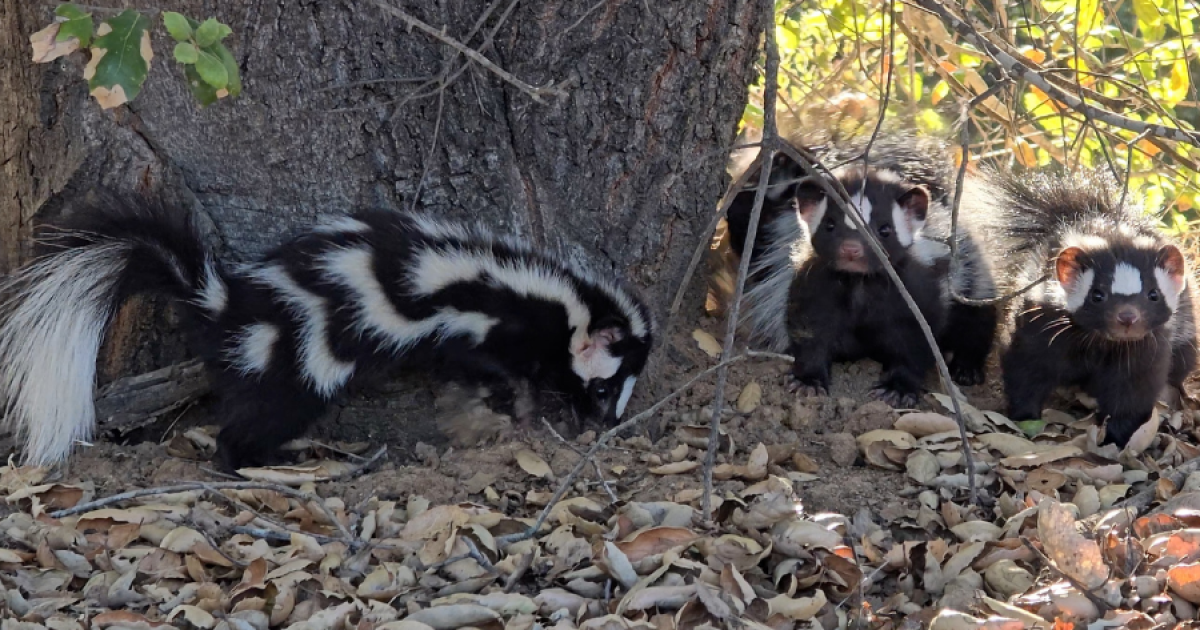
RAMONA (CNS) – Four rare western spotted skunks were released back in the wild after weeks of rehabilitation and socialization at the San Diego Humane Society’s Ramona Wildlife Center, officials announced Wednesday.
The successful release marks a major milestone for a species rarely seen in wildlife rehabilitation. The group included one orphaned skunk that was flown more than 400 miles by Flying Tails Animal Rescue from Sierra Wildlife Rescue in Northern California to join an orphaned group in Ramona, according to the SDHS.
The four skunks were returned to a carefully selected, remote habitat in Valley Center after reaching the necessary weight and developmental milestones to thrive on their own.
Western spotted skunks are a rare sight for the Humane Society’s Project Wildlife team. While the wildlife center typically handles hundreds of striped skunks each year, admitting six spotted skunks from different litters in one season is unusual. Spotted skunks are generally found in remote forested areas and are not as common in urban neighborhoods, officials said.
“We have never seen this many western spotted skunks in a single season before,” said Autumn Welch, wildlife operations manager at the Ramona Wildlife Center. “Because they are more reclusive than striped skunks, they require very specific care and even more secluded release sites to ensure they can stay wild.”
Socialization is critical for orphaned spotted skunks. During their stay at the Ramona Wildlife Center, the group became a bonded unit — exploring, digging and sleeping together, according to SDHS officials. Experts say these social cues prevent habituation to humans and teach the orphans natural skunk behaviors.
While four members of the group have returned to the wild, two spotted skunks remain in care at the facility. The smallest skunk was moved to an outside pre-release habitat and introduced to a slightly older skunk in late June.
Wildlife officials said by keeping the pair together, the wildlife team ensures the younger skunk will have a companion to learn from until they are both ready to be released, likely within the next month or two.
Anyone who finds an injured, sick or orphaned wild animal is encouraged to visit sdhumane.org/wildlifehelp or call 619-299-7012.
Copyright 2026, City News Service, Inc.

SAN DIEGO (FOX 5/KUSI) — A 33-year-old man was sentenced Tuesday to 325 years to life in prison for sexually abusing two 6-year-old girls, in addition to a slew of other felony sex abuse charges, according to the San Diego County District Attorney’s Office.
Christopher T. Gardner was convicted of 15 felony sex abuse charges, which included molesting the two girls, who were relatives of his, over a five-year period.
The abuse reportedly first came to light when one of the victims told a friend in confidence during a sleepover that she had been touched inappropriately. The friend then told her mother, who contacted law enforcement.
After Gardner was arrested, a third victim came forward, who was also a relative. Now a young adult, the victim said that when she was 7-8 years old, Gardner sexually assaulted her.
During the nine-day trial, the first two victims reportedly testified to multiple vulgar acts of sexual abuse by Gardner.
“Predators who rob children of their innocence and inflict lifelong trauma do not belong in our communities,” DA Summer Stephan said. “This sentence sends an unmistakable message to abusers: you will be held accountable. I am deeply grateful to our specialized sexual abuse prosecution team for their dedication in bringing a measure of justice to the survivors.”

Thursday, July 9
• La Jolla Town Council: 6 p.m., La Jolla Recreation Center, 615 Prospect St. lajollatowncouncil.org
Friday, July 10
• La Jolla Golden Triangle Rotary Club: 6:45 a.m., UC San Diego Faculty Club, 270 Muir Lane. lajollagtrotary.org
• Kiwanis Club of La Jolla: noon, La Jolla Community Center, 6811 La Jolla Blvd. kiwanisclublajolla.org
Sunday, July 12
• La Jolla Open Aire Market: 9 a.m. to 1 p.m., Girard Avenue at Genter Street. (858) 454-1699. lajollamarket.com
Monday, July 13
• La Jolla Library Book Club: 1:30 p.m., Community Room, La Jolla/Riford Library, 7555 Draper Ave. The July book is “Fresh Water for Flowers” by Valérie Perrin. sandiego.events.mylibrary.digital/event?id=316631
• La Jolla Planned District Ordinance Committee: (pending items to review), 4 p.m., La Jolla Recreation Center, 615 Prospect St. Email info@lajollacpa.org.
• Laughmasters Toastmasters: 6:30 p.m., online. Email jrmmt@cox.net.
Tuesday, July 14
• San Diego Blood Bank blood drive: 9 a.m. to 2:30 p.m., Hensel Phelps Construction Co., 9404 Genesee Ave. Donors must be 17 or older, weigh at least 114 pounds and be in good health. Photo identification is required. (619) 400-8251. sandiegobloodbank.org
• Rotary Club of La Jolla: noon, La Valencia Hotel, 1132 Prospect St. rotarycluboflajolla.org
• Co-op Toastmasters Club: noon, online at bit.ly/46W13bx (meeting ID: 849 4320 0407, passcode: cccu2020). (669) 900-6833. toastmasters.org/find-a-club/00001125-coop-club
• La Jolla Development Permit Review Committee: (pending items to review), 4 p.m., online. Email info@lajollacpa.org.
Wednesday, July 15
• Torrey Pines (La Jolla) Rotary Club: noon, online. torreypinesrotary.org
• La Jolla Shores Association: 6 p.m., Martin Johnson House, Scripps Institution of Oceanography, 8840 Biological Grade. lajollashoresassociation.org
Thursday, July 16
• La Jolla Sunrise Rotary Club: 6:58 a.m., La Jolla Shores Hotel, 8110 Camino del Oro. Call Cheryl Collins at (760) 936-3272 or Steve Cross at (619) 992-9449.
• San Diego Blood Bank blood drive: 9 a.m. to 2:30 p.m., Sanford Burnham Prebys (patio outside Buildings 6 and 7), 10901 N. Torrey Pines Road. Donors must be 17 or older, weigh at least 114 pounds and be in good health. Photo identification is required. (619) 400-8251. sandiegobloodbank.org
• La Jolla Shores Permit Review Committee: (pending items to review), 4 p.m., online. Email info@lajollacpa.org.
Friday, July 17
• La Jolla Golden Triangle Rotary Club: 6:45 a.m., UC San Diego Faculty Club, 270 Muir Lane. lajollagtrotary.org
Did we miss listing your community event? Email calendar information to Noah Lyons at noah.lyons@lajollalight.com by noon Thursday for publication in the following week’s edition. ♦
-

 Health4 minutes ago
Katie Couric couldn’t remember the year or the president during frightening brain episode
-

 Sports11 minutes ago
Justin Verlander announces he will retire after this season: ‘I’ve realized that time has come’
-

 Technology13 minutes ago
Apple AI security update proves hackers move fast
-
 Business19 minutes ago
Fire-damaged Pacific Palisades shopping center sets reopening date
-
 Entertainment26 minutes ago
Rhea Seehorn celebrates her ‘Pluribus’ Emmy nomination as she waits to hear about Carol and the atom bomb
-

 Lifestyle29 minutes ago
Urban Jürgensen: Introducing Elite Watchmaking to New Audiences
-
 Politics34 minutes ago
Commentary: On Skid Row, it’s been decades of frustration. Will the next mayor have a plan?
-
 Science41 minutes ago
What’s the deal with … coffee enemas?

