San Diego, CA
San Diego unveils Chicano Movement exhibit at City Hall for Hispanic Heritage Month


As National Hispanic Heritage Month gets underway, the city of San Diego on Monday unveiled a new exhibit at City Hall documenting the Chicano Movement.
The exhibit is part of the inaugural “Telling Our Stories and Preserving Our Histories” series and is a collaboration between the Chicano Park Museum and Cultural Center and the City Clerk’s office.
It features historical images, city records and documents that provide a comprehensive view of the Chicano Movement in San Diego. The movement started over a broken promise to build a park in Logan Heights.
It is especially poignant for City Clerk Diana Fuentes.
“As the first Latina city clerk for the city of San Diego, this is the first year that I got to put my thumbprint on the archives exhibit,” she said.
In the 1960s, the city started building highways through communities of color, which usually had fewer resources to fight back. That was happening in Logan Heights.
Interstate 5 and the Coronado Bridge construction divide the neighborhood in half, separating residents from their church, library and post office. The southern half of Logan Heights is now called Barrio Logan.
The community was promised a park, but in April 1970, the city tried to build a Highway Patrol station. That was what led to the Chicano Movement in San Diego.
“What I want people to get is to understand the history that happened in Chicano Park, and how that has really just evolved and shaped the history of San Diego,” Fuentes said. “To show the artifacts, show the documents, and let people make their own conclusions as to what history was being created and what effect it had on the city and its citizens.”
As visitors walk through the exhibit, there are colorful replicas of the murals on the freeway pillars at Chicano Park and documents recording the park’s history.
Alberto Pulido from the Chicano Park Museum said the exhibit is important to show the history of Logan Heights, which is rarely talked about.
“People don’t know that Logan Heights is the first neighborhood of this region,” he said. “Logan Heights went through major changes (due) to the arrival of Interstate 5 and the arrival of the Coronado Bridge. It was rezoned into an industrial zone. So a neighborhood of 20,000 people vanished.”
San Diego City Councilmember Vivian Moreno, who represents the neighborhood, said that history is recorded on the murals at Chicano Park.
“The vibrant murals painted on the freeways, pillars and walls depict powerful images of social justice, resistance and pride, reflecting the community’s fight for civil rights and its deep connection to the land,” she said.
Inside the exhibit is an interactive installation telling the story of the impact of the Chicano Movement.
Afterward, visitors are asked to reflect on what they would have done in the Chicano Movement era and leave a note on the decision tree, which will become a part of the exhibit.
“Telling Our Stories and Preserving Our Histories: The Chicano Movement in San Diego” is on exhibit at San Diego City Hall, 202 C St., through Oct. 18.


So Justin Verlander is calling it quits, effective at the season’s end.
There’s Padres-related history to explore with Verlander, 43.
With it comes many groans.
San Diego passed on Verlander as part of the infamous, franchise-rocking decision to draft Mission Bay High School’s Matt Bush with the first overall pick in 2004.
Had the Padres chosen Verlander and tweaked the Old Dominion alum’s delivery, as the Tigers did soon after selecting him No. 2 overall, the best innings-eater of his generation could’ve headed San Diego’s rotation for many years.
As a National Leaguer, Verlander would’ve pitched against pitchers, rather than designated hitters. His annual ERA would’ve fallen by about a half run, per DH and no-DH data of that time.
The Padres would’ve boasted a generational monster atop their rotation as soon as 2006, when Verlander won the American League rookie of the year award with Detroit, while the San Diego rotation featured next year’s NL Cy Young winner, Jake Peavy.
Recall also that Petco Park, from its opening in 2004 until its remodel in 2012, played as big as Yellowstone National Park.
Not that the DH rule greatly impeded Verlander, a nine-time All-Star.
Many times over, the ace rewarded Tigers general manager Dave Dombrowski and scouting director Greg Smith for drafting him one spot after Kevin Towers and Bill Gayton — their options reduced by Padres owner John Moores’ stated opposition to drafting Scott Boras-assisted prospects Jered Weaver and Stephen Drew — selected Bush, the easy-to-sign but troubled shortstop turned pitcher.
Verlander helped Detroit reach its first two World Series in decades. He led the league in innings three times as part of chewing up 200-plus innings in eight consecutive seasons.
Dombrowski had displayed an unwavering faith in betting big on hard throwers.
Unfazed by power-righty Kyle Sleeth breaking down soon after he took him third overall in 2003, Dombrowski and Smith, a former Padres scout, became dead set on taking Verlander if the Padres didn’t.
Why didn’t Towers and Gayton choose Verlander?
Foremost, the Padres generally didn’t like him as much as the Tigers did.
In fact, they preferred Weaver and Drew.
But Moores all but blocked his scouts there. He was openly critical of their adviser, Boras, saying he didn’t trust him. The two had clashed in the Kevin Brown talks that ended with Brown joining the Dodgers, months after Brown had led the Padres to the 1998 World Series.
Moores was subjected to other kinds of pressure, too. Legal complaints had delayed Petco’s construction. Those complaints all failed in court. But in the interim, the price of steel rose. Padres ownership bore that cost.
Even though Moores’ baseball staffers whiffed on Verlander and failed miserably in choosing Bush, Moores put them in a tough spot. He in effect removed two players who would both pan out as big leaguers.
Someone with the Tigers correctly foresaw that shortening Verlander’s stride would sharpen his control. Untroubled by his 21-18 college record and bursts of subpar accuracy, the Tigers’ duo touted the 6-foot-5, 240-pounder’s “electric” combination of size, velocity and a powerful curveball.
Signing Verlander wasn’t easy.
David Verlander, the pitcher’s father and a union organizer with experience in sticky negotiations, said a contractual impasse led him to negotiate directly with Smith, leading to a deal, per CWA-Union.org.
The sides agreed on a $3.12 million signing bonus, which was less than the $3.15 million bonus the Padres paid to Bush, who was advised by Jeff Moorad.
The Boras-advised Weaver and Drew, who went 12th and 15th to the Angels and Diamondbacks, respectively, got $4 million apiece — but they and Verlander each got major league contracts, increasing the value of all three deals.
It wasn’t until close to the 2005 draft that Weaver was signed. He nonetheless returned great value to the Angels.
Verlander went on to pitch for the Astros after GM Jeff Luhnow obtained him at age 34 from Detroit.
Verlander became a better pitcher with Houston, benefiting from the tech-and-data-driven edges the Astros provided him. Verlander embraced high-speed camera data, eventually dropping his two-seam fastball and limiting his rising fastball to high in the zone. Prodded by high-speed imagery, he adjusted his slider grip.
He won his second and third Cy Youngs with the Astros, and now stands 266-159 with a 3.33 career ERA in nearly 3,600 innings.
For baseball’s hungriest fanbase, he represents a case of what might have been.
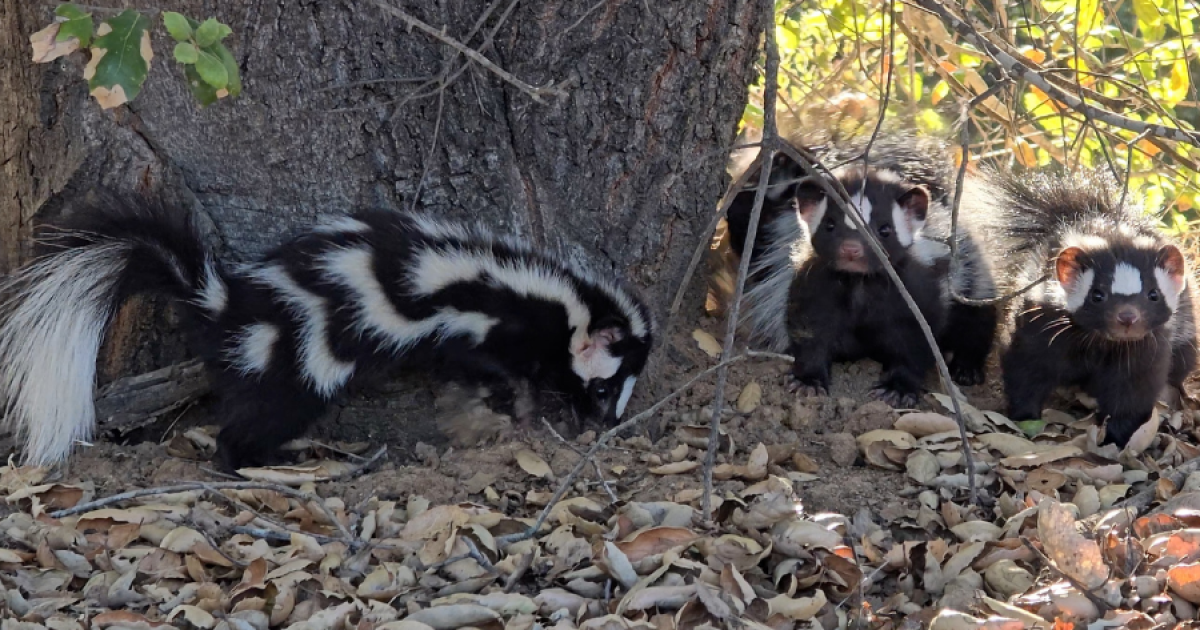
RAMONA (CNS) – Four rare western spotted skunks were released back in the wild after weeks of rehabilitation and socialization at the San Diego Humane Society’s Ramona Wildlife Center, officials announced Wednesday.
The successful release marks a major milestone for a species rarely seen in wildlife rehabilitation. The group included one orphaned skunk that was flown more than 400 miles by Flying Tails Animal Rescue from Sierra Wildlife Rescue in Northern California to join an orphaned group in Ramona, according to the SDHS.
The four skunks were returned to a carefully selected, remote habitat in Valley Center after reaching the necessary weight and developmental milestones to thrive on their own.
Western spotted skunks are a rare sight for the Humane Society’s Project Wildlife team. While the wildlife center typically handles hundreds of striped skunks each year, admitting six spotted skunks from different litters in one season is unusual. Spotted skunks are generally found in remote forested areas and are not as common in urban neighborhoods, officials said.
“We have never seen this many western spotted skunks in a single season before,” said Autumn Welch, wildlife operations manager at the Ramona Wildlife Center. “Because they are more reclusive than striped skunks, they require very specific care and even more secluded release sites to ensure they can stay wild.”
Socialization is critical for orphaned spotted skunks. During their stay at the Ramona Wildlife Center, the group became a bonded unit — exploring, digging and sleeping together, according to SDHS officials. Experts say these social cues prevent habituation to humans and teach the orphans natural skunk behaviors.
While four members of the group have returned to the wild, two spotted skunks remain in care at the facility. The smallest skunk was moved to an outside pre-release habitat and introduced to a slightly older skunk in late June.
Wildlife officials said by keeping the pair together, the wildlife team ensures the younger skunk will have a companion to learn from until they are both ready to be released, likely within the next month or two.
Anyone who finds an injured, sick or orphaned wild animal is encouraged to visit sdhumane.org/wildlifehelp or call 619-299-7012.
Copyright 2026, City News Service, Inc.

SAN DIEGO (FOX 5/KUSI) — A 33-year-old man was sentenced Tuesday to 325 years to life in prison for sexually abusing two 6-year-old girls, in addition to a slew of other felony sex abuse charges, according to the San Diego County District Attorney’s Office.
Christopher T. Gardner was convicted of 15 felony sex abuse charges, which included molesting the two girls, who were relatives of his, over a five-year period.
The abuse reportedly first came to light when one of the victims told a friend in confidence during a sleepover that she had been touched inappropriately. The friend then told her mother, who contacted law enforcement.
After Gardner was arrested, a third victim came forward, who was also a relative. Now a young adult, the victim said that when she was 7-8 years old, Gardner sexually assaulted her.
During the nine-day trial, the first two victims reportedly testified to multiple vulgar acts of sexual abuse by Gardner.
“Predators who rob children of their innocence and inflict lifelong trauma do not belong in our communities,” DA Summer Stephan said. “This sentence sends an unmistakable message to abusers: you will be held accountable. I am deeply grateful to our specialized sexual abuse prosecution team for their dedication in bringing a measure of justice to the survivors.”
-

 Oregon5 minutes ago
Pierce County Sheriff: Homicide ‘suspect was shot and killed by police in Seaside, Oregon’
-

 Pennsylvania12 minutes ago
‘Natural splendor at its best’: Penn’s Cave may become Pa.’s next state park
-

 Rhode Island15 minutes ago
Throwback: USS Rhode Island commissioned in Newport
-

 South-Carolina20 minutes ago
Watch out for SC’s 5 most common ticks and take steps to avoid bites
-
South Dakota27 minutes ago
SD Lottery Powerball, Lotto America winning numbers for July 8, 2026
-
Tennessee30 minutes ago
TN Lottery Powerball, Lotto America winning numbers for July 8, 2026
-

 Texas35 minutes ago
Texas reports 48 cyclospora cases and the source is still unknown
-

 Utah42 minutes ago
Utah Jazz vs Washington Wizards: Summer League Preview, start time, how to watch

