Navarro is community opinion editor at The San Diego Union-Tribune. She is a transfronteriza who lives on both sides of the border.
San Diego, CA
Opinion: Mexican is not a nationality, it’s a state of mind


When Costa Rican-born ranchera singer Chavela Vargas rose to international fame in the past century, she was asked in an interview if she was Mexican and she said yes. Immediately, reporters asked her how come she was Mexican if she was born in Costa Rica and her answer immortalized her. In a more folkloric way, she said that Mexicans are born wherever they want.
When someone asks me “Where are you from?” I tend to give a longer explanation than most people. I usually say, “I was born in San Diego, and raised in Tijuana,” because I have always felt like I am from both sides of the border, and because just like Chavela, I feel Mexican even if I wasn’t born there.
I am American because my parents decided to have my birth on the northern side of the border. According to them, the day after I was born, I was brought to Tijuana. (When recalling that story, my father remarks that no child seat was required to leave the hospital back then.)
And my case is not unique. In Tijuana and in other parts of the world, some families decide to pay to have birth deliveries in the United States. Just like Baja California Gov. Marina del Pilar Ávila, who lives in Mexicali and decided to have her youngest child born in Imperial Valley in 2022.
During my school years, when Tijuana was a smaller city, I had classmates, friends and later in life even colleagues who were born on the northern side of the border. Some, like me, have decided to use their American nationality to work and others don’t.
These are not “anchor babies,” so please don’t even start arguing that. These are middle or high-income tourists who pay for a birth delivery service in a foreign country, and as long as they pay the hospital bill, there’s nothing illegal about it.
While American, being raised on Mexican soil had a powerful effect on me. During my younger years, I went to school in Mexican classrooms, traveled around many Mexican cities and fell in love with the culture of my parents and ancestors. Back then, I was convinced that I was Mexican, because my skin gets goosebumps while listening to the “Mexican National Anthem” the same way that it does with “The Star-Spangled Banner.”
When I became the mother of an American boy in 2012, I made a big effort to raise him bilingual and I even moved back to Tijuana to enroll him in a Mexican school for four years. I feel proud when I see that he is fluent in English and Spanish, and ashamed when he tells me of the racial slurs he has been called by those who believe he is not American enough. Last year, he visited Mexico City for the first time and he quickly learned that just standing in front of the Zócalo in Plaza de la Constitución is one of the proudest moments for any Mexican.
Since he was a little boy, our favorite Mexican celebration is on Nov. 2 for Day of the Dead, and on Sept. 16, we have our second favorite Mexican celebration, Independence Day.
I usually watch the TV transmission from Mexico City and directly from the Zócalo plaza. We see when the president recreates “el grito,” or the shouting, that was the call that triggered Mexicans to start their independence fight against Spain’s crown in 1810 and then he rings the bell, just like the priest Miguel Hidalgo, the father of Mexican independence, did it in his church.
And without food our Mexican celebration wouldn’t be complete. That’s why I learned to make pozole, a classic Mexican dish, that transports me back home.
While neither my son nor I were born in Mexico, we know our Mexican heritage is there, in my food and in our souls. We both know we are connected with our roots because like Chavela makes clear, being Mexican is more than a nationality, it is also an attitude, a state of mind and a way of life.
¡Viva México!

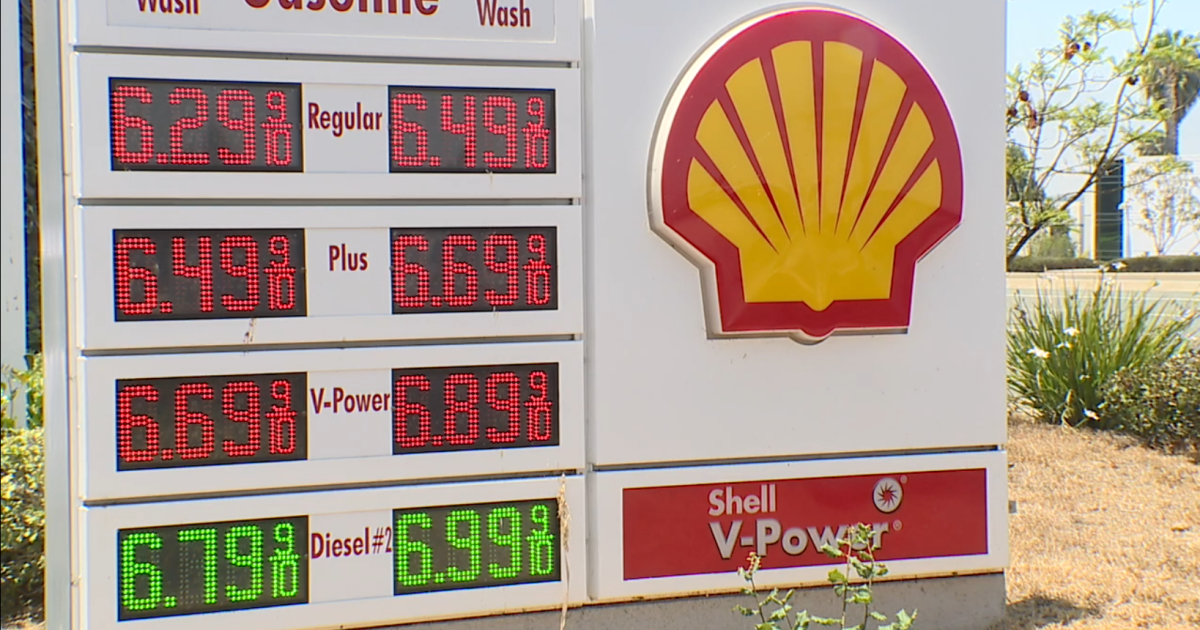
SAN DIEGO (CNS) — The average price of a gallon of self-serve regular gasoline in San Diego County dropped for the 44th time in 45 days today, falling eight-tenths of a cent to $5.42, its lowest amount since March 12. The average price has fallen 74.9 cents over the past 45 days, including eight-tenths of a cent Saturday, according to figures from the AAA and Oil Price Information Service. It is 9.8 cents less than one week ago and 53.2 cents less than one month ago, but 80 cents more than one year ago. The national average price dropped for the 43rd time in 45 days, falling six-tenths of a cent to $3.804, its lowest amount since March 17.
It has decreased 76 cents over the past 45 days, including 1.3 cents Saturday. The national average price is 6.3 cents less than one week ago and 41.6 cents less than one month ago, but 65.6 cents more than one year ago. “Crude oil prices have fallen to their lowest levels in months, dropping to the $60 a barrel range,” the AAA said Thursday. “Overall, gas prices remain the highest they’ve been in 4 years, but the downward trend since late May is welcome news during the busy summer driving season.”
Copyright 2026, City News Service, Inc.

The journey is about to end — at least for Hand Over the Hero’s popular The Last Airbender plush. Following the success of last year’s YouTooz x Avatar: The Last Airbender Appa Plush at San Diego Comic-Con, Hand Over Hero is bringing it back, for one final production run, finished with exclusive yellow and black tags. Once […]

CHULA VISTA (CNS) – The California Highway Patrol activated a Silver Alert today to help locate a 79-year-old woman last seen in Chula Vista.
Evangeline Rodriguez was last seen about 5:55 a.m. Thursday at Wildbrook Place and Woodspring Drive in Chula Vista. She is believed to be driving a white 2018 Honda CRV with California license plate 9JBS786.
Rodriguez is Hispanic, 5 feet, 2 inches tall, 130 pounds, with brown hair and brown eyes, last seen wearing a T-shirt and blue jeans.
Anyone who sees Rodriguez, or knows where she is, is urged to call 911.
The CHP activates a Silver Alert when an elderly or developmentally or cognitively impaired person is missing and determined to be at risk. It is
hoped providing immediate information to the public will aid in their swift
recovery.
Copyright 2026, City News Service, Inc.
-

 Arkansas2 minutes ago
Arkansas Storm Team Forecast: Thunderstorms will start to pop around 2:00 this aftenoon
-

 Colorado12 minutes ago
Startups move to Colorado amid concerns state losing its luster for tech companies
-

 Connecticut17 minutes ago
Parts of Connecticut could see nearly 7 inches of rain Monday
-
Delaware24 minutes ago
What Delaware’s New Probate Threshold Means for Your Estate Plan
-

 Florida27 minutes ago
South Florida’s top deals: Davie school building sells for $16M
-

 Georgia32 minutes ago
10 Best Towns In Georgia For Retirees
-

 Hawaii39 minutes ago
Paid parking lots debate continues – Hawaii Tribune-Herald
-

 Idaho42 minutes ago
ATV Crash in Pine Takes Life of Gooding Man

