San Diego, CA
New police chief cites emergency exception to get more surveillance cameras up in Hillcrest


San Diego’s new police chief is flexing his emergency powers to quickly get more surveillance cameras up in Hillcrest amid an increase in hate crimes against the LGBTQ+ community and before the Pride Parade later this month.
The move prompted swift criticism from privacy advocates who’ve long worried the legal exception would be abused and drew mixed reactions from the LGBTQ+ community, with members expressing both support and concern.
Last year, the City Council approved the Police Department’s proposal to install 500 streetlight cameras equipped with license plate readers at specific locations across San Diego, a project that will cost about $12 million over the next five years. Although those pre-approved spots included streetlights in Hillcrest, the locations currently being considered were not among them.
Since then, the department has installed 440 so-called smart streetlight cameras that have been used to aid about 120 investigations, police officials said.
A few dozen cameras have not been installed because of a variety of infrastructural issues, such as light poles not having power or buildings blocking camera views. The struggle has led to a new proposal that would give the department greater flexibility in choosing where it puts its cameras, but it will take a few more weeks for City Council to approve that change.
San Diego police Chief Scott Wahl argued it’s a decision that can’t wait, especially if the technology is going to be in place before Pride week, which kicks off Saturday. The parade is set for July 20.
At a Monday morning press conference inside Rich’s San Diego, a gay nightclub in Hillcrest, Wahl, flanked by a handful of LGBTQ+ community members and business leaders, said he would be using an emergency clause in the city’s surveillance ordinance — the law that governs how technologies can be used in San Diego — to fast-track the installation of 14 cameras in Hillcrest without City Council approval.
According to a memo about the decision, the cameras will be installed on six thoroughfares: Goldfinch Street, Park Boulevard, Sixth Avenue, University Avenue, Washington Street and West Washington Street.
“It’s absolutely critical that if we’re going to provide the highest level of safety and protect our community, that we mobilize the resources necessary to put the unused cameras to good, productive use,” Wahl said.
The surveillance ordinance says that if city departments want to use a previously approved technology in a new location, the Council needs to sign off on the change — unless exigent circumstances are involved.
Exigent circumstances have been defined by California courts as “an emergency situation requiring swift action to prevent imminent danger to life or serious damage to property, or to forestall the imminent escape of a suspect or destruction of evidence.” It’s a legal exception that sometimes allows officers to make warrantless entries, searches and seizures, which are generally prohibited under the Fourth Amendment.
The city’s surveillance ordinance provides a similar definition, describing exigent circumstances as “an emergency involving danger of death or serious physical injury to any individual, or imminent danger of significant property damage, that requires the use of surveillance technology, as determined by City staff acting in good faith upon known facts.”
Wahl said the upcoming San Diego Pride Parade, a long-running LGBTQ event that attracts hundreds of thousands of visitors every year, as well as the almost 75 percent increase seen in hate crimes between 2022 and 2023 — some of which were reported in Hillcrest — qualifies as the kind of emergency that would allow the department to bypass the usual process.
“I don’t want to use this in a laissez-faire manner,” Wahl said. “I think this is a very unique situation and circumstance that I do not want to overuse.”
According to statistics released in March, reported hate crimes in San Diego jumped from 38 in 2022 to 66 in 2023. Although most incidents were racially motivated, about 30 percent, or 21 incidents, stemmed from bias against someone’s sexual orientation. That’s a five-fold increase when compared to the four incidents that were motivated by sexual orientation in 2022.

Wahl said Monday that no San Diego neighborhood has seen more reported hate crimes than Hillcrest over the last four years. During a recent incident in May, suspects in a passing vehicle fired gel pellets at people outside four Hillcrest businesses. Multiple people were struck, including Eddie Reynoso, the publisher of LGBTQ San Diego County News, who took a pellet to the eye and was seriously injured. Reynoso stood next to Wahl on Monday to express his support for the additional cameras.
“No one should have to look over their shoulder while working or enjoying a night out in town,” Reynoso said. “No one should have to rush home out of fear for their safety. … By supporting the completion of smart streetlights, we take a significant step toward reclaiming our streets and ensuring that they are as safe as they are vibrant.”
Some community advocates and legal experts disagreed with the chief’s interpretation of the emergency exception.
“To me, it sounds like those are reasonable concerns that the Police Department has to make a change to their existing surveillance system,” said Seth Hall, a member of TRUST SD, the consortium of community groups that helped craft the surveillance law. “What it doesn’t sound like to me is an emergency. … Their concerns should be processed through the normal oversight process. That’s why that process is there.”
The exigent circumstances clause included in the surveillance ordinance has long been a source of concern among advocates who helped put together the oversight law, Hall said. An early draft of the ordinance didn’t even include the emergency clause, partly out of concern that it would be used to tunnel under the ordinance’s requirements.
Those sentiments were echoed by Saira Hussain, senior staff attorney for the Electronic Frontier Foundation, who said appropriate uses of exigent circumstances have been laid out in case law and involve emergencies such as crimes in progress in which someone could be seriously hurt.
“Instances in which you would imagine, ‘OK, we need to act quickly because this is out of the ordinary,’” she said. “And here, police are basically saying the process that is in place, that the City Council has approved of, is taking too long, so we’re going to try to claim exigent circumstances. … It’s really just a misuse of exigent circumstances.”

Some LGBTQ+ organizers also disagreed. About a dozen people rallied in front of Rich’s to oppose the Monday morning decision. They were not permitted entry to the news conference.
“Using Pride as an exigent circumstance feels totally disingenuous,” said Frances Yasmeen Motiwalla, a member of Activist San Diego. “Pride happens every year, it’s not a surprise, it’s not a sudden thing that’s happening.”
Although the department isn’t waiting for approval before putting up the cameras, the City Council will have the opportunity to weigh in on the additional placements at the end of July. Wahl said if the City Council rejects the proposal, department officials will take down the newly placed cameras.



Letter to the Editor: Apartment Vacancy Rates Paint an Incomplete Picture
By David Malcolm | Voice of San Diego
In last Saturday’s “Politics Report,” Will Huntsberry tackled the thorny issue of apartment vacancy rates (apparently the highest in this century) and the impact on affordability. He also correctly wrote that the city of San Diego needs “strategies beyond build, build, build.”
What’s Really Happening
My company owns and operates apartment rental complexes in San Diego County (San Marcos, Encinitas, La Jolla, El Cajon and South Bay) and in Temecula (Riverside County). Here is what we are seeing.
Base rents are stable … but offers of two months’ free rent are common. That is a de facto 16.7 percent reduction on annualized rents. Reducing base rents is not possible in the face of rent control measures and, even more importantly, bank loan covenants. Thus, concessions like two months’ free rent are not hard to find.
Read more
New study shows promising step forward in improving Parkinson’s treatment
by Nicole Abrams | Times of San Diego
A small molecule was found to increase the benefits and reduce the side effects of the standard drug for Parkinson’s disease, according to a new study from UC San Diego startup called Sinopia Biosciences.
L-dopa or levodopa is the main treatment for Parkinson’s disease, but its benefits wane over time and can cause involuntary movements called dyskinesia. About 90% of patients with Parkinson’s disease develop dyskinesia in 9 or more years of using L-dopa, and 70% develop motor fluctuations in 9 or more years of using the drug, according to the study.
Read More
San Diego, CA
EXCLUSIVE: Ignition Press Welcomes eBay Live & Revenge Of to San Diego Comic-Con Ignition Pavilion

The Ignition Press – Ignition Pavilion is leveling up in a big way for San Diego Comic-Con this year.
Following last year’s successful debut, Ignition Press is expanding its offsite with several major new partners, transforming the Ignition Pavilion into a hub for comics, collectibles, livestream shopping, food, and drinks. The free experience at the San Diego Wine & Culinary Center (200 Harbor Dr.) will now feature activations from eBay Live and Revenge Of, alongside the return of Seven Seas Roasting Company and several new fan experiences.
One of the biggest additions this year is a dedicated eBay Live selling lounge, where livestreams will broadcast throughout the convention, bringing Comic-Con to fans around the world.
Stop by throughout the week to find live sketches and signings with comic legends Bill Sienkiewicz (hosted by Big Clutch) and Jim Lee (hosted by ANZ Collects), while Storage Wars star Rene Nezhoda will showcase a rare PSA-pedigreed collection of vintage, Silver Age, and Bronze Age comics.
Fans can also tune in for the debut of an exclusive DC x eBay Live Absolute Batman & Absolute Catwoman connecting cover, shop signed Ignition Press SDCC exclusives, rare comics, and other collectibles, and catch appearances from fan-favorite creators and influencers throughout the weekend.
The Pavilion also welcomes Los Angeles lifestyle brand Revenge Of, making its San Diego Comic-Con debut with a curated comics and pop culture experience, while its sister company, FTB.Design, is handling the Pavilion’s production design.
“Both eBay Live and Revenge Of TV are going to give both fans onsite and at home the opportunity to get in on special programming and chances to get SDCC exclusive merchandise,” said Creative Director Jeremy Haun. “We’re doing something new, big, and different here at the Ignition Pavilion. You’re not going to want to miss it.”
Coffee lovers can once again grab a free drink from Seven Seas Roasting Company between 12pm-4pm, Thursday through Sunday, by signing up for the Ignition Insiders newsletter. The first 200 fans each day can redeem a voucher for coffee, espresso drinks, chai, or tea.
Later each afternoon (Thursday-Saturday, 5pm-7pm), the coffee bar transforms into the Ignition Pavilion Happy Hour, serving themed cocktails, beer, wine, mocktails, and complimentary drink tickets with qualifying purchases. Fans can also preorder a limited-edition bottle of Ignition Proof Rum, created in partnership with Los Angeles distillery The Obscure.
The Ignition Pavilion is free and open to the public at the following times:
- Wednesday, July 22: 5:00pm-9:00pm
- Thursday, July 23: 12:00pm-8:00pm
- Friday, July 24: 12:00pm-8:00pm
- Saturday, July 25: 12:00pm-8:00pm
- Sunday, July 26: 12:00pm-6:00pm

Karepango, the colorful and unapologetic brand that aims to bring a smile in the most unexpected time, is coming to Comic-Con to spread joy, and give attendees the chance to show the world they are imperfect, yet still proud.
Find them at booth #5034, located in the Hall G area of the convention center, and will have dozens of their classic bestsellers, recent products and even a brand new exclusive (and very limited) shirt.
All purchases will receive free gifts, with an extra special gift for purchases over $100.
All clothing is available in sizes XS through 2XL, but in limited quantities per size.
Let’s get shopping:
Have A Good Day Shirts – $48
Limited to 75 pieces
Purple or brown with front and back printing
100% Cotton Knit Sweaters – $88
Oversized and pre-shrunk

100% Cotton T-Shirts – $48
Various Designs
Oversized and pre-shrunk


Tote Bags, Plush Bags, Puffy Bags, IRO Bags, All Sorts of Bags – $28-$45
Various designs
Drink Holders, Mesh Pouches, Nylon Pouches, Headbands, Blind Box Toys, Plush Trinkets – $15-$25
Various designs


Caps, Bucket Hats, Plush Hats, Beanies – $28-$30
Various designs


Bags, Plush, Rugs, Scarves – $50-$80
Various designs
Stickers, Socks, Pins, Air Fresheners – $4-$15
Various designs


Seek and ye shall find:

-
 Sports4 minutes ago
World Cup championship and third-place game: Start times and how to watch
-

 World16 minutes ago
Rule of Law in Hungary shows ‘radical change’ under Magyar, EU says
-

 News46 minutes ago
Where Wildfire Smoke Is The Worst Right Now—And What To Do About It
-

 Los Angeles, Ca2 hours ago
LADWP begins long-term repairs after West Hollywood water main rupture
-

 Detroit, MI3 hours ago
Livestream: Mayor Sheffield, Detroit health chief to address wildfire smoke threat
-
 San Francisco, CA3 hours ago
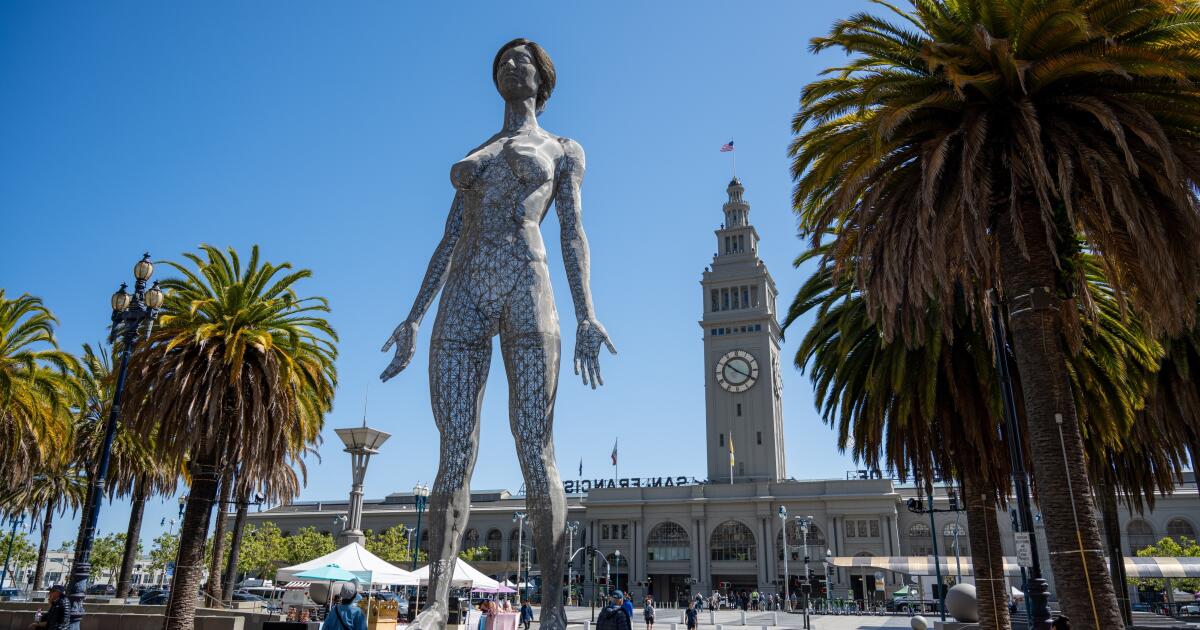
A sculpture of a giant naked woman goes on sale in San Francisco. Bring a crane
-

 Dallas, TX3 hours ago
No ‘straight answer’: Why Pioneer Cemetery is the latest battleground at City Hall
-

 Miami, FL3 hours ago
TSA hosts news conference ahead of World Cup third place match at Miami Stadium

