San Diego, CA
City attorney needs to back up her stand on trash outsourcing


The bitter controversy over City Hall’s plan to implement new trash collection fees on 233,000 households at a far higher cost than San Diego voters were told before they approved such fees in 2022’s Measure B is fueled by the perception that this was an obvious bait-and-switch. In an interview last month, Mayor Todd Gloria rejected the idea that anything untoward was going on. He said the expected standard rate for newly billed homeowners of $53 a month — not the city’s previous forecast of $23 to $29 — reflected residents’ input on the level of trash services they wanted to receive.
But now the debate over Measure B has taken on another dimension that should aggravate all San Diegans, whatever their view of the mayor’s argument: Exactly what does Measure B allow or require the city to do? This has sparked a sense of déjà vu among residents familiar with their city leaders’ long history of not sweating the details on ballot measures, especially on a 2012 pension reform initiative later scrapped by state courts.
The question emerged when residents upset with the city’s fee plan inquired about whether outsourcing trash service to private companies to reduce bills for residents was an option. City Attorney Heather Ferbert says no. “Charter section 117(c) gives the City a choice between engaging in managed competition or using City forces,” she wrote in an email to a U-T reporter. “In the case of Measure B, that choice was given to the voters. The clear language of the ballot measure specified that City forces would continue to provide trash collection for eligible residences.”
But Republican Jan Goldsmith — city attorney from 2008 to 2016 and a state Superior Court judge from 1998 to 2008 — says the City Charter takes precedent over Measure B, which amended an existing law, not the charter. Goldsmith says the California Supreme Court has found that any city law that is at odds with that city’s charter is void.
Given how often such charters have been likened to the local equivalent of the U.S. Constitution, Goldsmith’s analysis carries obvious weight. The nonpartisan League of California Cities’ formal guidance to its members on charter cities’ authority backs him up.
Ferbert has indicated she may take a more formal, in-depth look at this issue. This step is badly needed. Without it, the cynicism about city leaders’ devotion to municipal employee unions — which hate outsourcing of government services — will only keep building. The city attorney, the mayor and the entire City Council are all Democrats.
But this detail shouldn’t — repeat, shouldn’t — matter to Ferbert. So San Diegans need to hear the city attorney cite what court precedents she believes validate her view — and as soon as possible.
Originally Published:



CORONADO, Calif. (FOX 5/KUSI) — Final preparations are underway for NASCAR’s historic race weekend at Naval Base Coronado, where stock cars will compete on an active military installation for the first time in the sport’s history.
Crews, race teams, military personnel, first responders and event staff spent Thursday putting the finishing touches on the temporary road course as thousands of fans prepare to descend on the base for the inaugural event.
“The countdown is on,” as organizers work to transform portions of the installation into a race venue unlike any NASCAR has hosted before.
“It’s a very proud moment for NASCAR and myself and my company for being part of it,” said Jordan Litchko, a NASCAR production partner with ignition production. “It’s the America 250, so what a year to celebrate and be here on the naval base.”
Officials say the event marks the first time a NASCAR national series race has been held on a military base, bringing one of America’s most recognizable motorsports directly onto a working military installation.
Unlike traditional oval tracks, competitors will tackle a temporary road course built specifically for the event.
“It’s a road course race, which adds way more excitement, so it’s going to be ultra challenging,” Litchko said.
Thursday’s preparations included long lines of team members, vendors, staff and emergency personnel picking up credentials and completing security and base access requirements ahead of race weekend.
Meanwhile, drivers and crews got their first close look at the unique layout, which winds through portions of the base and presents a challenge far different from a conventional speedway.
With large crowds expected throughout the weekend, organizers are encouraging fans to plan ahead and allow extra travel time. Traffic delays are anticipated around Naval Base Coronado and nearby access points as spectators arrive for the event.
After months of planning and construction, the wait is nearly over.
On Friday, engines will roar to life aboard Naval Base Coronado, marking a milestone moment for NASCAR and creating a new chapter in the sport’s history. By the weekend’s end, fans will witness a race unlike any ever held before — stock cars competing on a military base in the heart of San Diego.

SAN DIEGO (CNS) – The City of San Diego is beginning to install 286 metered parking spaces this week in downtown San Ysidro in an effort to increase parking turnover, it was announced Thursday.
To develop the plan, city leaders worked with the San Ysidro business community. Revenue collected from the meters is reserved for transportation, parking and safety improvements in San Ysidro.
“Feeding parking meters feeds neighborhood repairs, and we can’t wait to get to work for the San Ysidro community,” said Naomi Chavez, interim director of the city’s Transportation Department. “This new parking zone will bring long overdue change that will help support local business activity and generate revenue that will be reinvested directly into improving neighborhood quality of life in San Ysidro.”
Crews began preparing the bases for the meters last week and installation work is expected to last through June. According to the city, these will be multi-space meter kiosks and drivers should be aware that they will need to go to the nearest kiosk to pay for parking since there won’t be a meter at each space.
Metered parking goes into effect on July 1 and will be enforced 8 a.m. to 6 p.m. Monday through Saturday, excluding holidays. The parking rate is $2.50 an hour, with a maximum time limit of four hours.
City-led parking studies determined vehicles were parking on the streets of the neighborhood for hours or days at a time, making street parking for the area’s businesses scarce.
Drivers who customarily use free street parking when traveling across the border to Mexico are encouraged to use “one of the many paid off-street parking lots in the area,” a city statement read.
“The findings [of the parking study] clearly demonstrate the need for action. High parking occupancy on unregulated segments, along with data showing that 37% of vehicles exceed the existing two-hour limit and an average parking duration of over five hours, indicate that current conditions reduce turnover and limit access for local businesses and visitors,” wrote Alfredo Ripa, president of the San Ysidro Community Economic Development Corporation. “The proposed introduction of approximately 286 metered spaces, along with better signage, clearer designations and continued enforcement, represents a thoughtful and data-driven approach to improving parking availability and supporting economic activity in the community.”
Areas where the meter kiosks will be installed include:
— East San Ysidro Boulevard between Border Village Road to Camino De La Plaza (both sides);
— Border Village Road between East San Ysidro Boulevard (north) to East San Ysidro Boulevard (south), (both sides);
— Front Street between Border Village Road to end of cul-de-sac (south side);
— Bolton Hall Road between East San Ysidro Boulevard to Border Village Road (south side);
— Louisiana Avenue between East San Ysidro Boulevard to end of cul-de- sac (south side);
— Virginia Avenue between East San Ysidro Boulevard to Border Village Road (both sides); and
— East San Ysidro Boulevard between Willow Road and East Park Avenue (south side).

POWAY, Calif. (KGTV) — The San Diego County Sheriff’s Office is asking for any information regarding the whereabouts of a missing Poway man.
59-year-old William Clayton Miller was reported missing by his sister, who last saw him on March 2, 2026.
Miller’s car was later found at the Blue Sky Ecological Preserve in the City of Poway, where it sat for several weeks, according to authorities.
On Saturday, June 13, around 80 Sheriff’s Search and Rescue volunteers and detectives from the Major Crimes Division conducted a search of the Lake Poway area and found nothing of significance.
This is the second coordinated search by the Sheriff’s Office and Search and Rescue teams.
Miller is described as a white male adult, 6 feet 0 inches tall, 210 pounds, bald, of medium build, with brown eyes and white hair.
Miller has been categorized as a voluntary missing adult and is not known to have any life-threatening medical conditions, nor does he require life- sustaining medications.
Anyone with information regarding the whereabouts of William Clayton Miller is urged to contact the Major Crimes Division at 858‑285‑6330.
-

 Sports2 minutes ago
2026 World Cup Odds: How Far Can Mexico Go After Winning Group A?
-

 Technology9 minutes ago
6 in 10 identity crimes now begin with a new account
-
 Business12 minutes ago
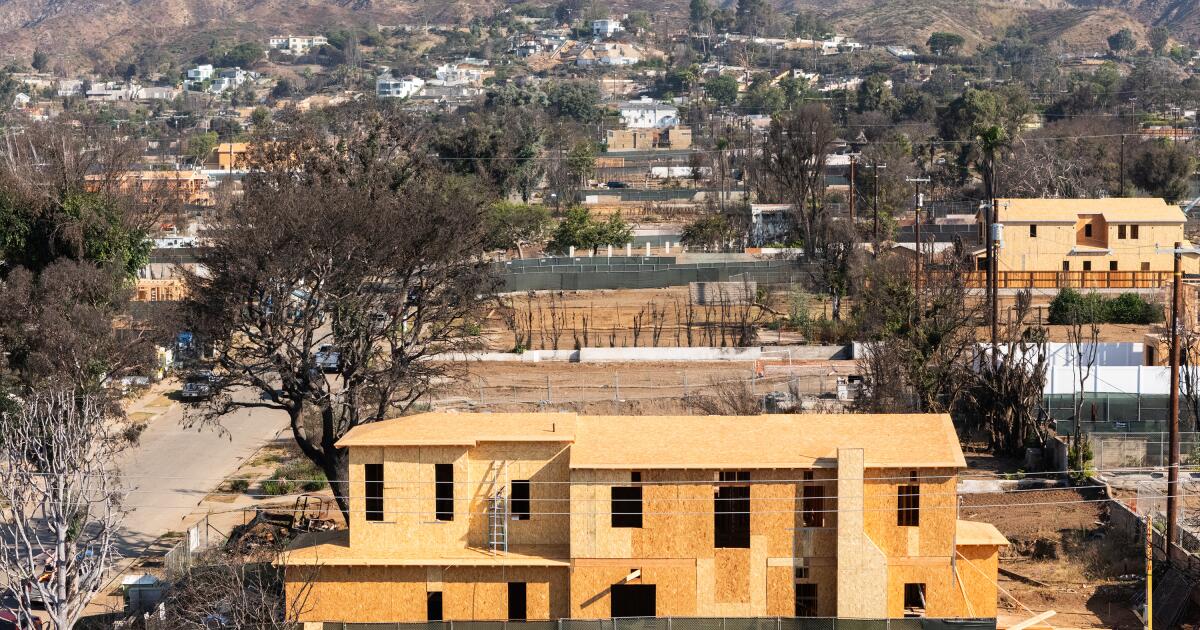
January 2025 wildfire victims seek tougher penalties against State Farm over claims handling
-
 Entertainment17 minutes ago
Review: ‘Sugar,’ with Colin Farrell as an alien private eye, gets a new and improved second season
-
 Politics27 minutes ago
Political watchdog fines Newsom for failing to report $5.5M in solicited donations on time
-
 Sports39 minutes ago
Goalkeeper Raúl Rangel’s elite play and South Korea’s mistake help Mexico advance
-

 World47 minutes ago
US-Iran talks postponed as Israel attacks Lebanon
-
 News1 hour ago
Luigi Mangione’s lawyers withdraw plans for psychiatric defense

